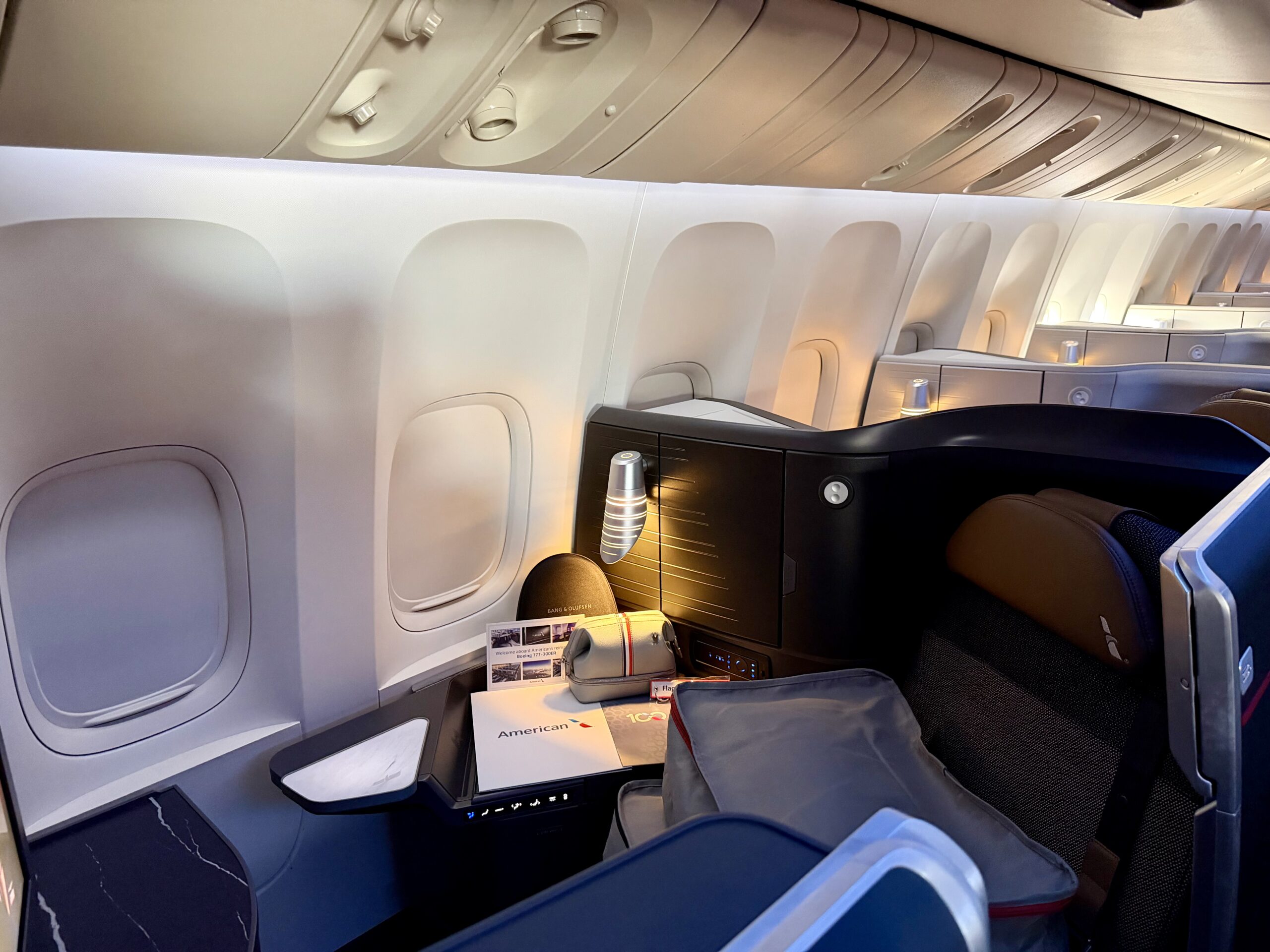
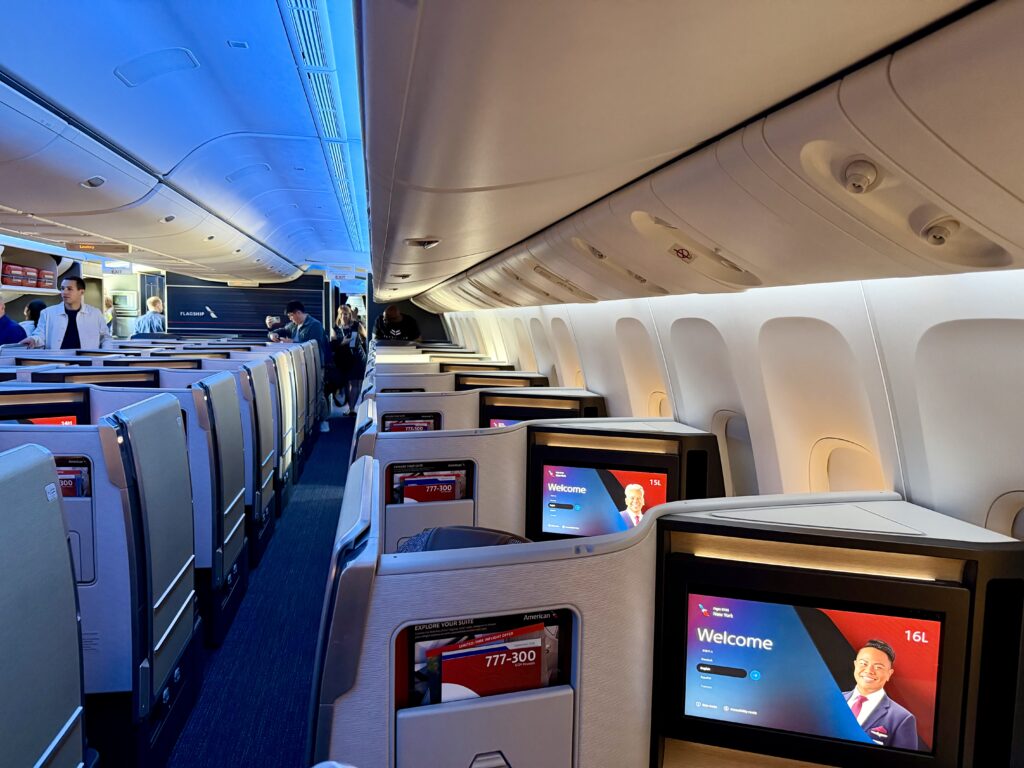
There’s a lot of business class on American Airlines’ newly retrofitted Boeing 777-300ER.
Seventy suites, to be exact.
Ahead of a special charter flight from Dallas Fort Worth (DFW) to New York (JFK) on Wednesday, American’s Chief Commercial Officer Nat Pieper described it as a “sea of business class” that seems to go on and on.
He’s not wrong.
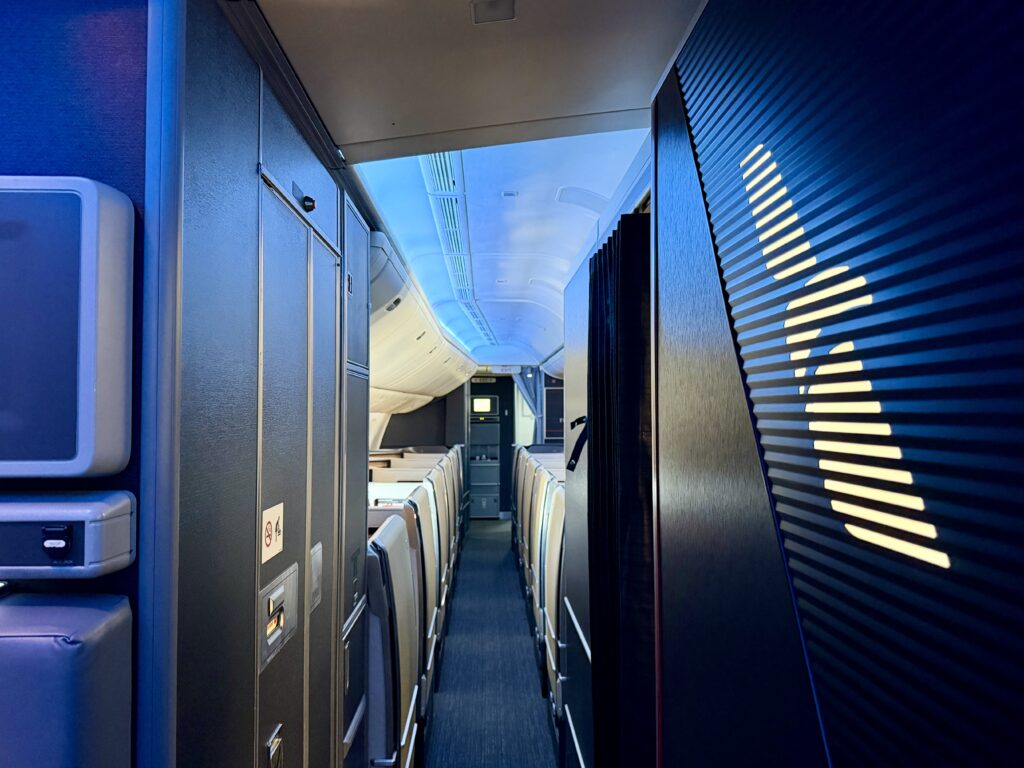
The Flagship Suite cabin stretches through a huge chunk of one of the largest passenger aircraft in American’s fleet. Add 44 Premium Economy seats, and the airline’s newly retrofitted 777-300ER has 114 seats across its two premium cabins.
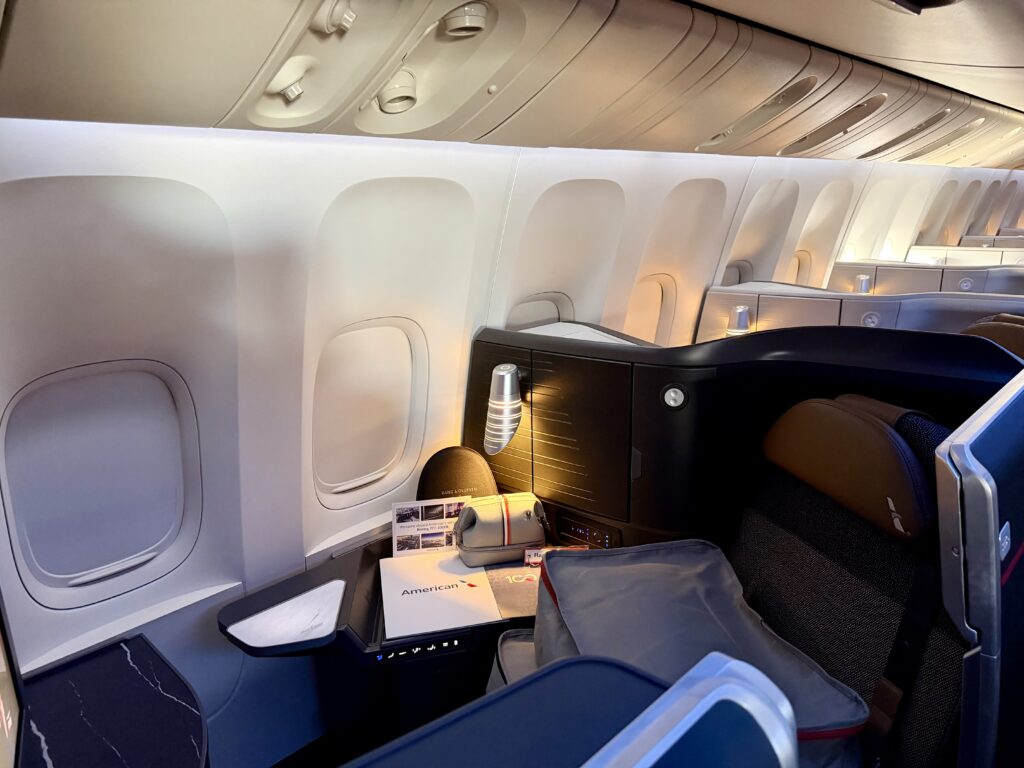
American didn’t start the project with 114 as some magic number.
Pieper told Points Insider that the configuration was driven in part by the physical geography of the 777 itself.
Door locations, galleys, and other fixed parts of an existing airplane helped determine where cabins could begin and end, alongside American’s desire to meet the market’s insatiable appetite for premium travel.
The result just happens to be the most premium-heavy aircraft American has ever flown.
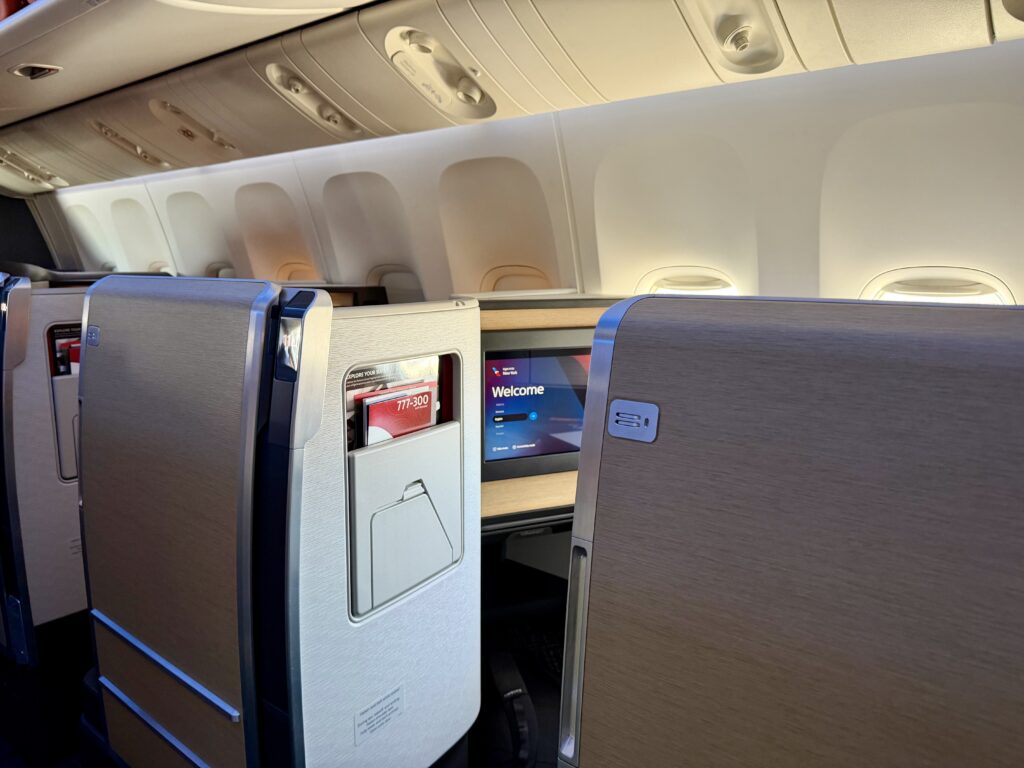
And after spending a few hours aboard the first one, it’s also an airplane that feels remarkably different from the 777 American has been flying for more than a decade.
An Old Airplane That Feels New Again
American’s Boeing 777-300ERs aren’t new.
The airline took delivery of its first one in late 2012, and the aircraft have spent years flying some of American’s most important long-haul routes.
Today, the fleet regularly crosses oceans and borders on flights to cities including London, Tokyo, São Paulo, Buenos Aires, and Sydney.
American isn’t ready to move on from them.
Instead, it’s investing heavily in all 20 aircraft with the expectation that they’ll remain in the fleet for roughly another decade, if not longer.
Pieper said someone walking onto the first completed aircraft wouldn’t be able to tell that it didn’t just come off the factory floor. It’ll even have that new-car smell, he added, though perhaps the smell of an expensive new car given the amount American has invested in the project.
That sounded like the sort of thing an airline executive is supposed to say about a newly refurbished airplane. But after walking onboard, it wasn’t much of a stretch.
The first impression is just how open everything feels.
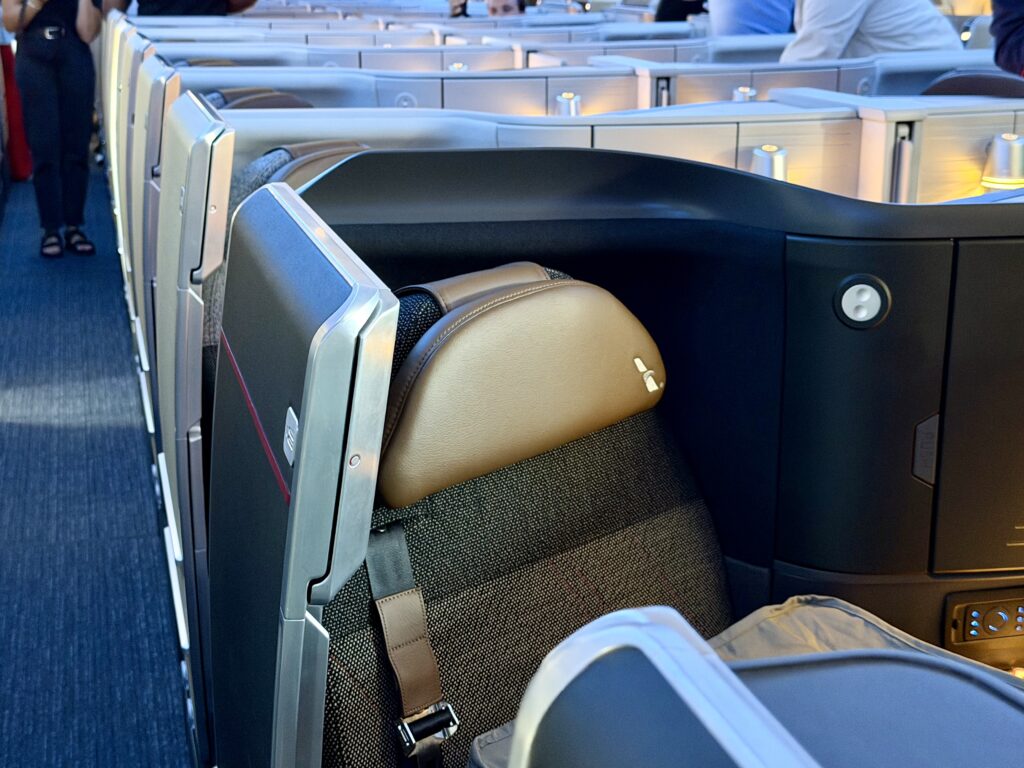
The 777 is already a big airplane, but the new interior really emphasizes that size. Gone are many of the lighter surfaces of the previous cabin. They’ve been replaced by darker dividers, different shades of gray, wood finishes, and restrained red and white accents.
Lighting helps.
Raphael Girardoni, American’s managing director of customer experience product and design, told Points Insider that lighting was an important part of the design and something he’s personally passionate about.
It’s noticeable throughout the Flagship Suite cabin.
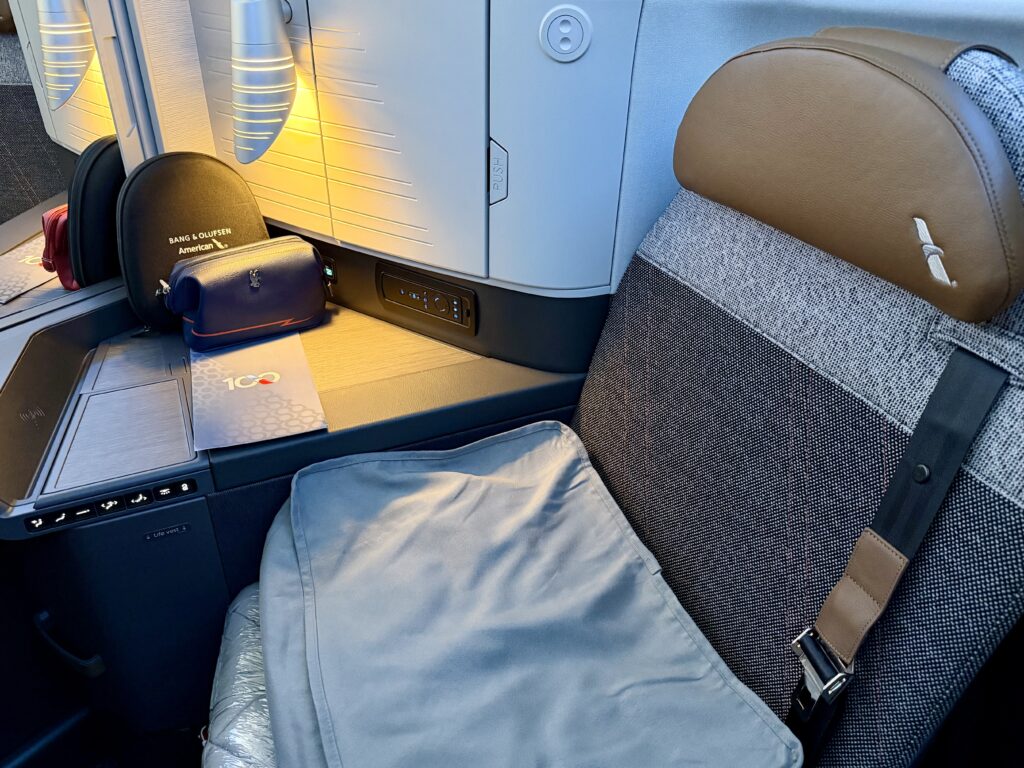
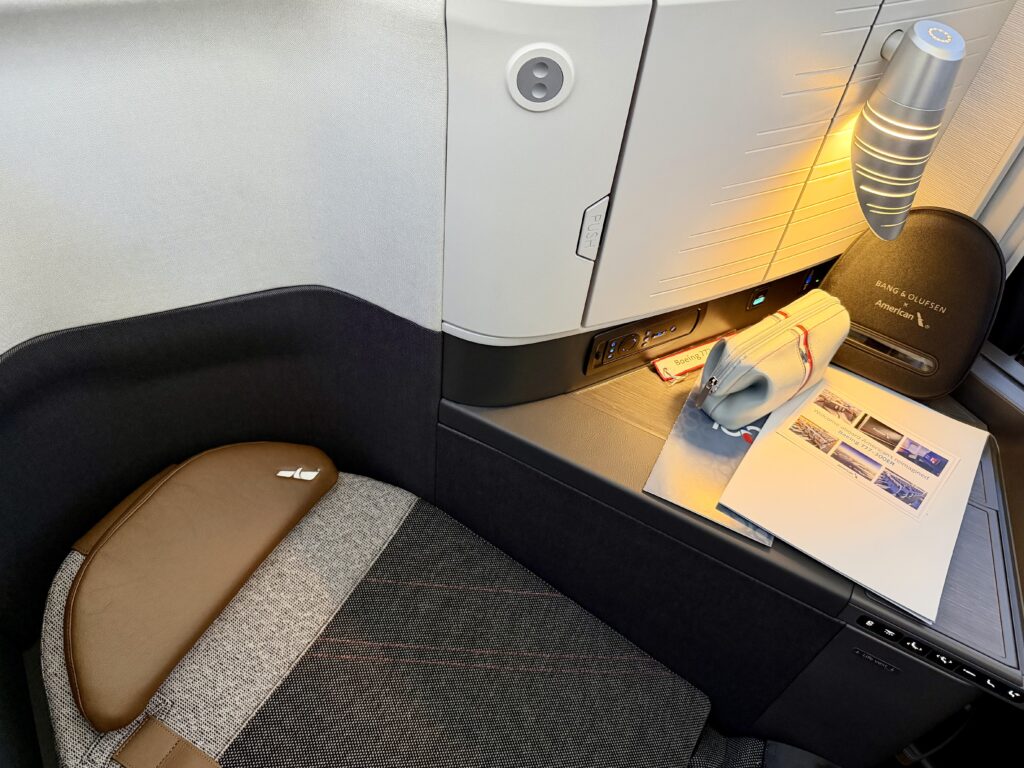
Small sconces and accent lighting illuminate the individual suites. One of the more thoughtful touches is the way the light from the sconce plays off the design surrounding a storage cubby beside the seat.
Even the cabin dividers look more considered, with darker finishes and not-so-subtle Flagship branding.
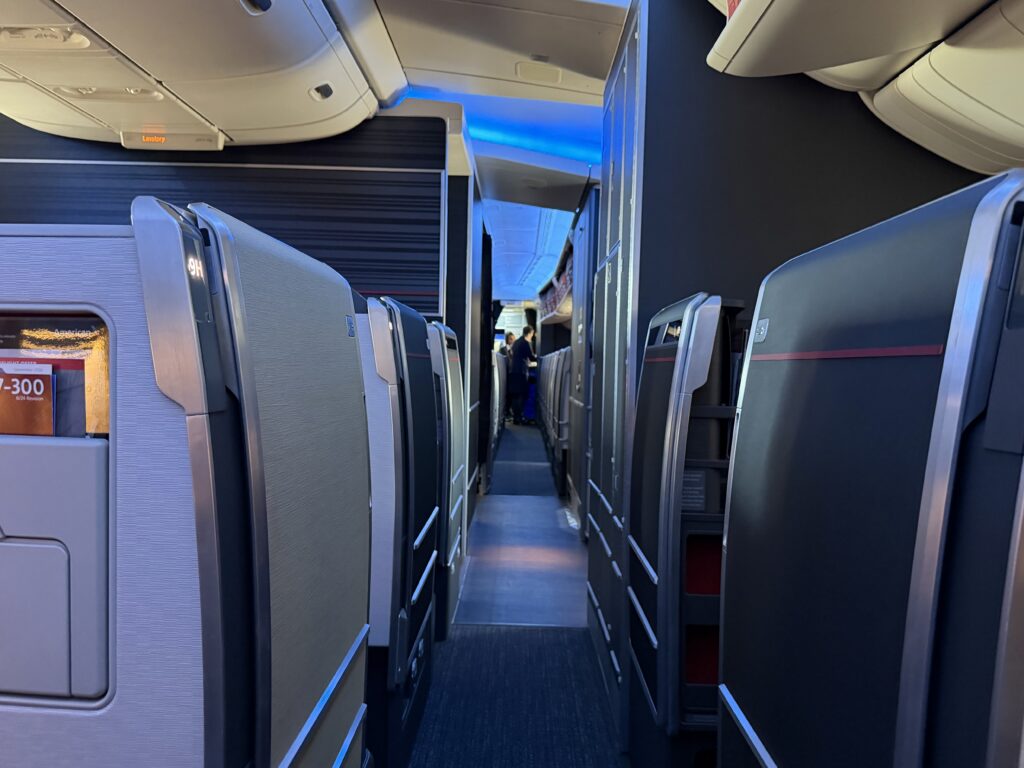
Seventy Flagship Suites Upgrade the 777
Of course, the biggest upgrade is the seats up front.
American is removing the eight Flagship First seats and 52 business-class seats found on its previous 777-300ER configuration. In their place are 70 Flagship Suites, including eight larger seats that the airline calls Flagship Suite Preferred.
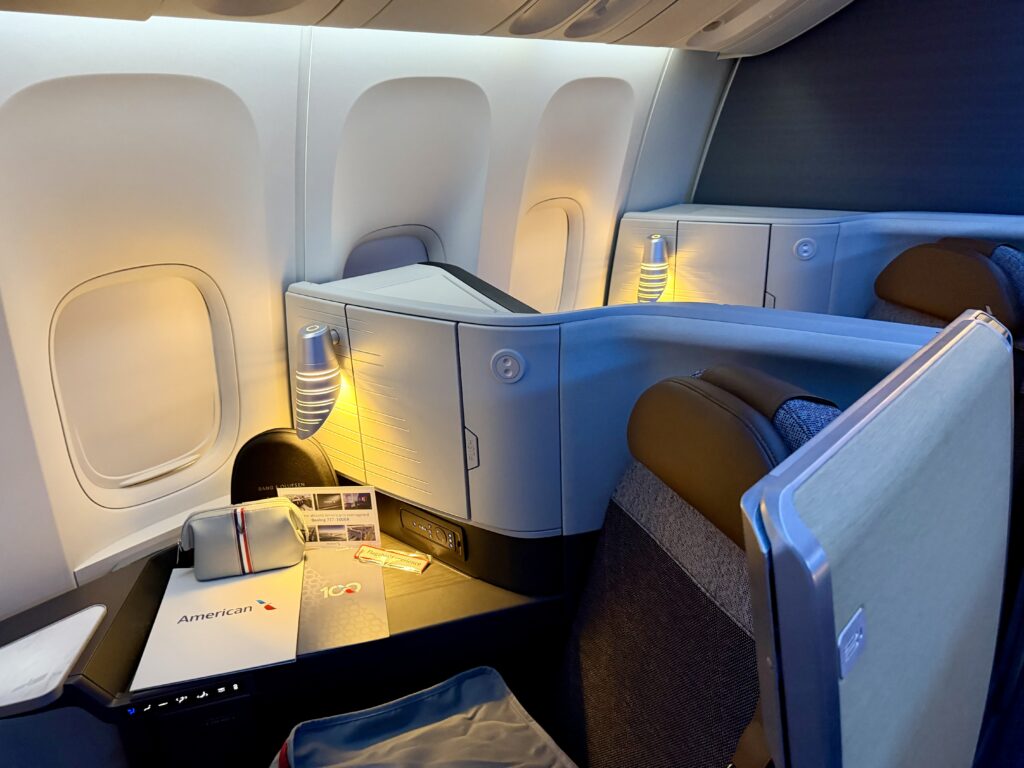
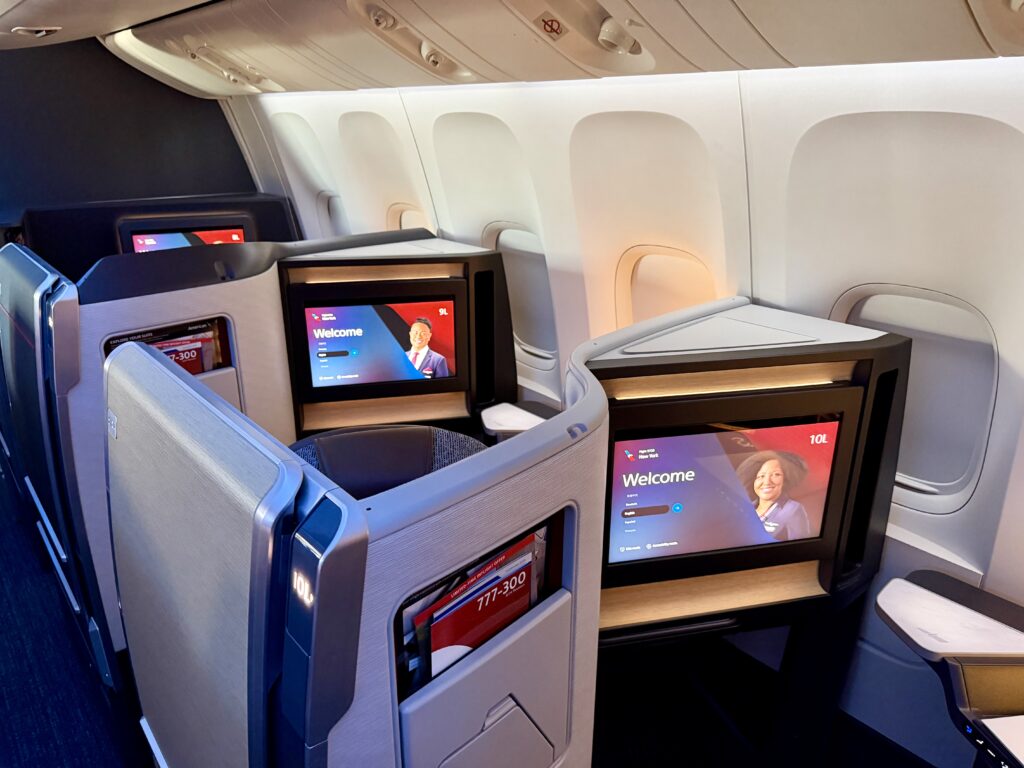
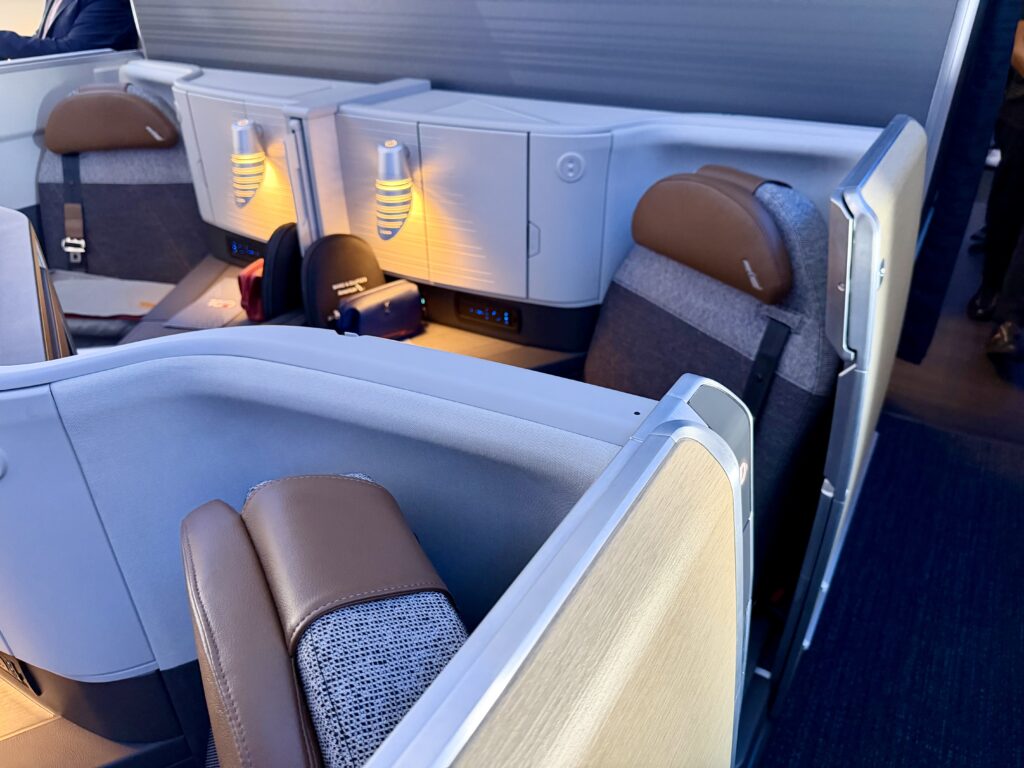
They’re the same seats American introduced on its also-premium-heavy Boeing 787-9P last year, outfitted with sliding privacy doors and direct aisle access.
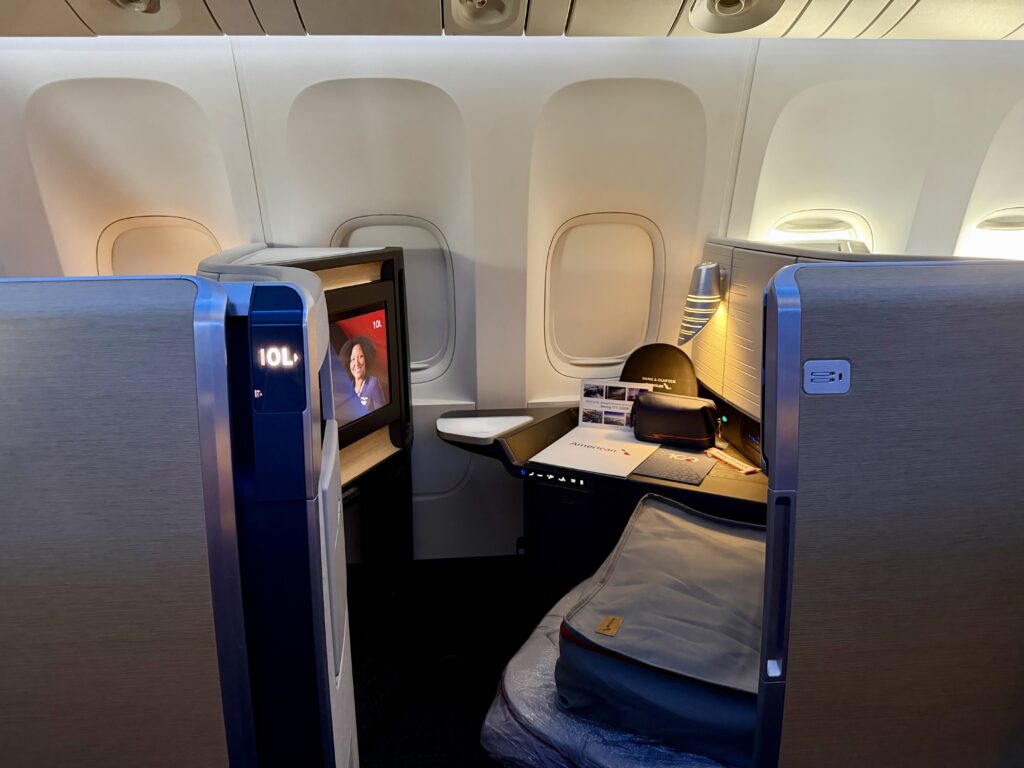
The sheer number of them really is a sight to behold. But what stands out most is how little of that enormous cabin is visible once you’re seated.
Even with the suite door open, I couldn’t see another passenger from my seat beyond the occasional top of someone’s head. Movable dividers between adjoining seats add yet another layer of privacy, too.
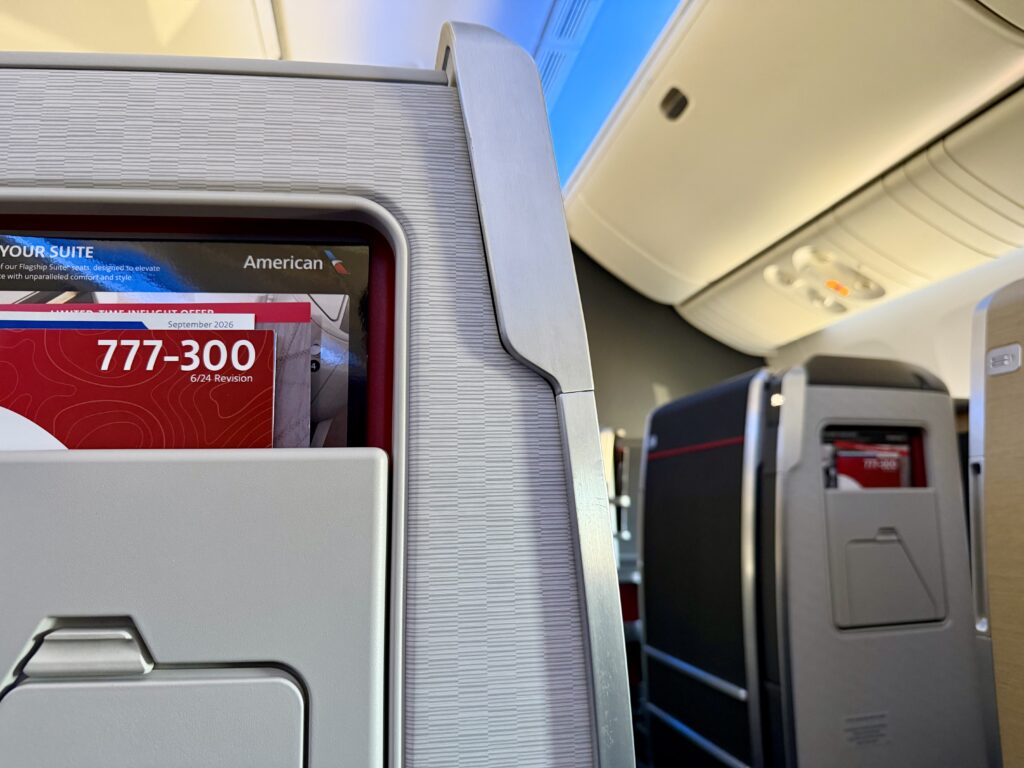
There are also plenty of small touches that become more useful the longer a flight gets.
There’s wireless charging, a drink ledge, a small compartment well suited for a wallet or watch, and various other nooks for keeping things nearby rather than throwing everything into one larger storage bin.
The tray table is enormous. It slides out from beside the seat before rotating into place, leaving plenty of room for a laptop, meal, or whatever else ends up accumulating during a long flight.
The entertainment screen is similarly large and highly responsive, but doesn’t feel oversized for the space.
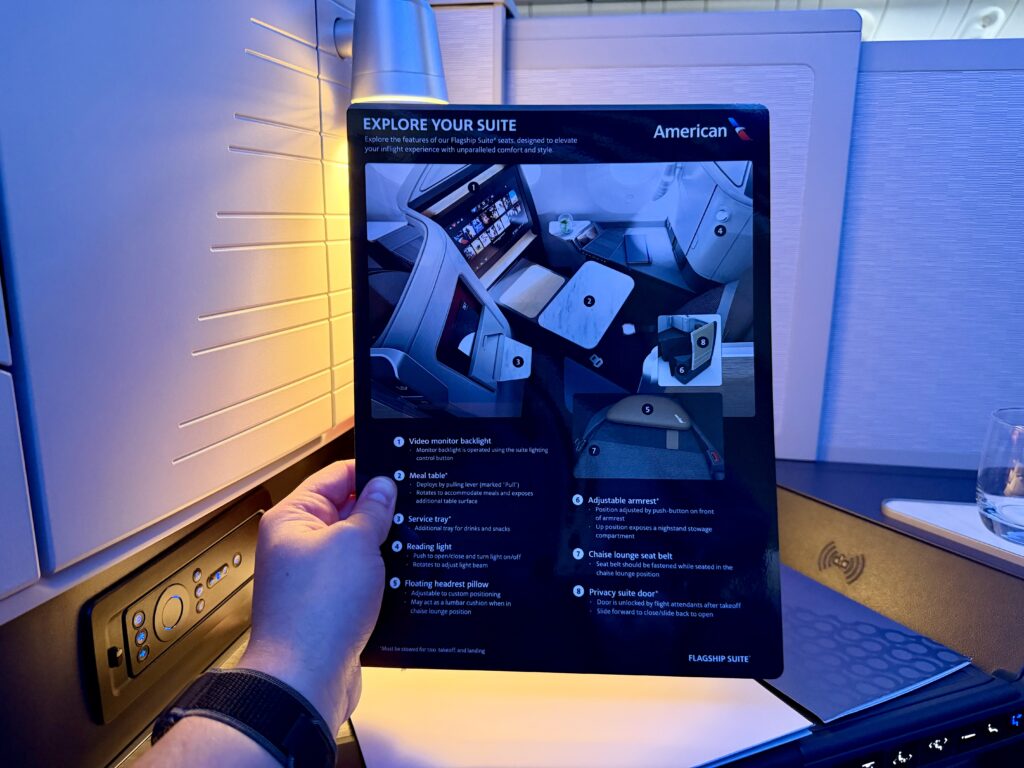
And yes, American kept the individual air nozzles.
That’s a win.
Can American Fill 70 Business-Class Seats?
Putting 70 business-class seats on a single airplane naturally raises another question: Can American consistently fill them?
Pieper doesn’t appear particularly worried.
He said American is comfortable with the configuration and has more tools at its disposal than selling every seat outright at its initial price. Upgrade offers give the airline another way to fill otherwise empty premium seats as departure approaches.
And then there are Systemwide Upgrades, one of the perks available to some of American’s most loyal customers. Those could come in handy on this kind of plane, too.
With 70 Flagship Suites to work with, there are simply more seats that could potentially clear as upgrades.
That flexibility matters when these airplanes will be flying some of American’s biggest long-haul markets for years to come.
It also helps explain the underlying strategy.
Airlines have spent the past several years adding premium seats as demand for higher-end travel has soared. American is doing the same with its new 787-9Ps and Airbus A321XLRs, and the 777-300ER retrofit takes that strategy to another level.
The airline didn’t necessarily set out to hit a particular percentage of premium seats on the 777. But the combination of the aircraft’s physical layout and American’s push toward a more premium experience led it to a configuration with a whole lot of them.
Economy Feels Surprisingly Small
Walk far enough through the Flagship Suite cabin and eventually the airplane starts looking more familiar.
There are 44 Premium Economy seats, followed by Main Cabin Extra and standard economy.
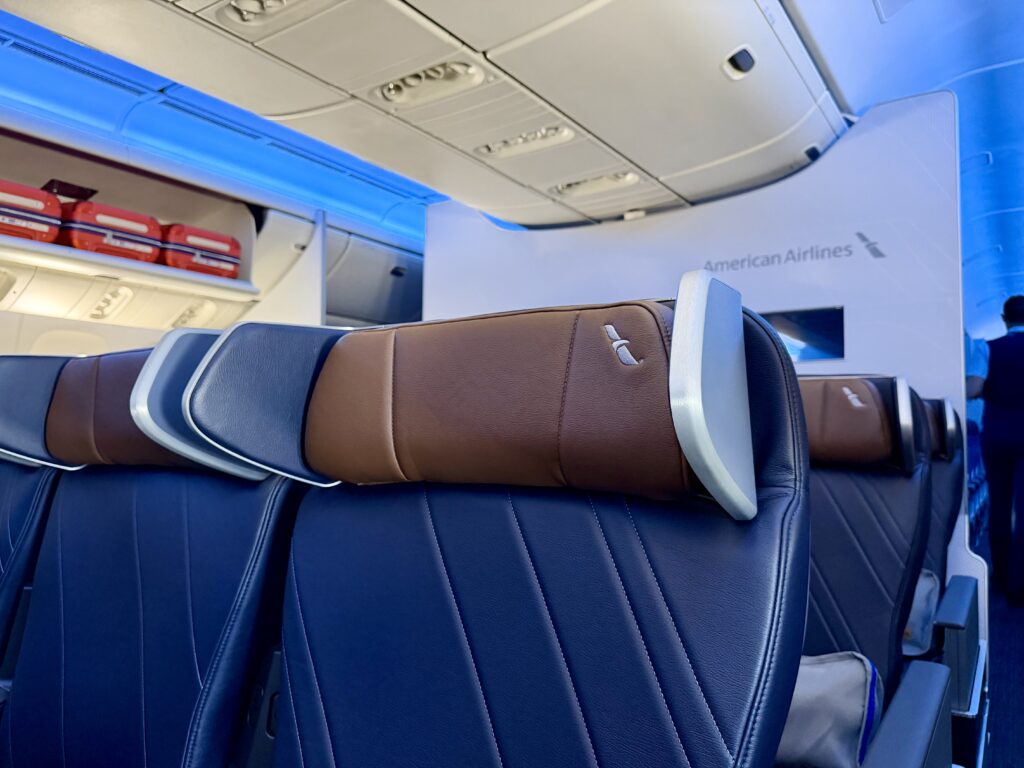
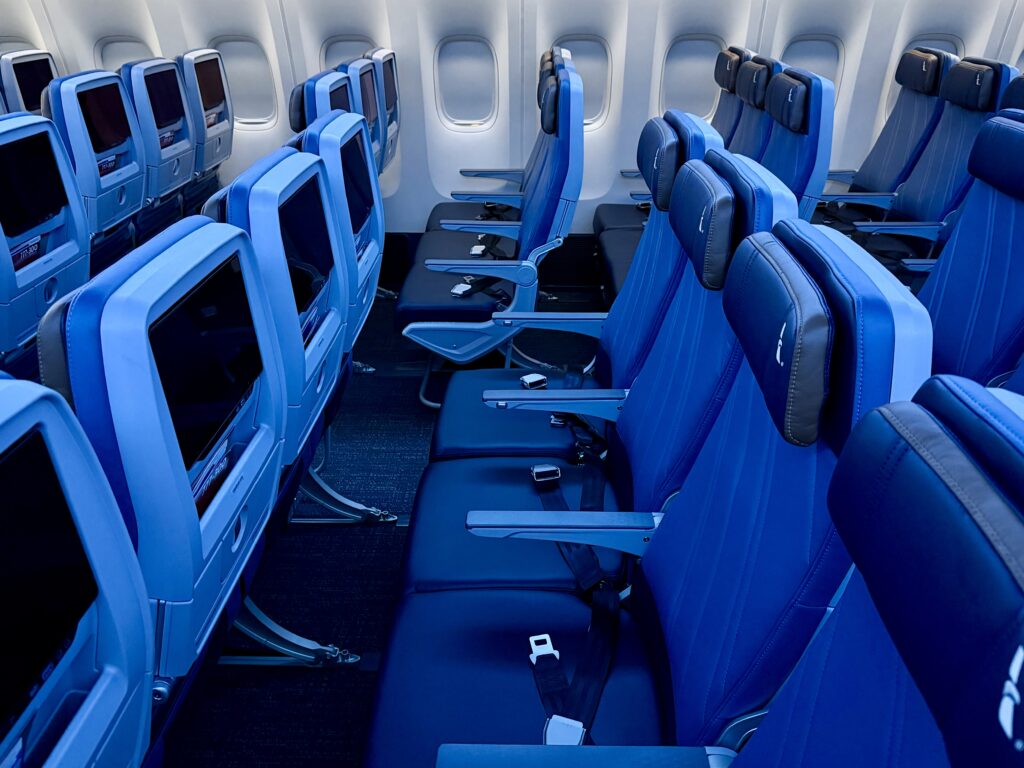
Economy itself isn’t revolutionary. But the cabin has a new lease on life.
Browns and blues replaced some of the older finishes. There are new entertainment screens, in-seat power, and the other updates expected from a modern widebody interior.
A short charter flight isn’t enough to say much about how those seats will feel after 10 or 15 hours.
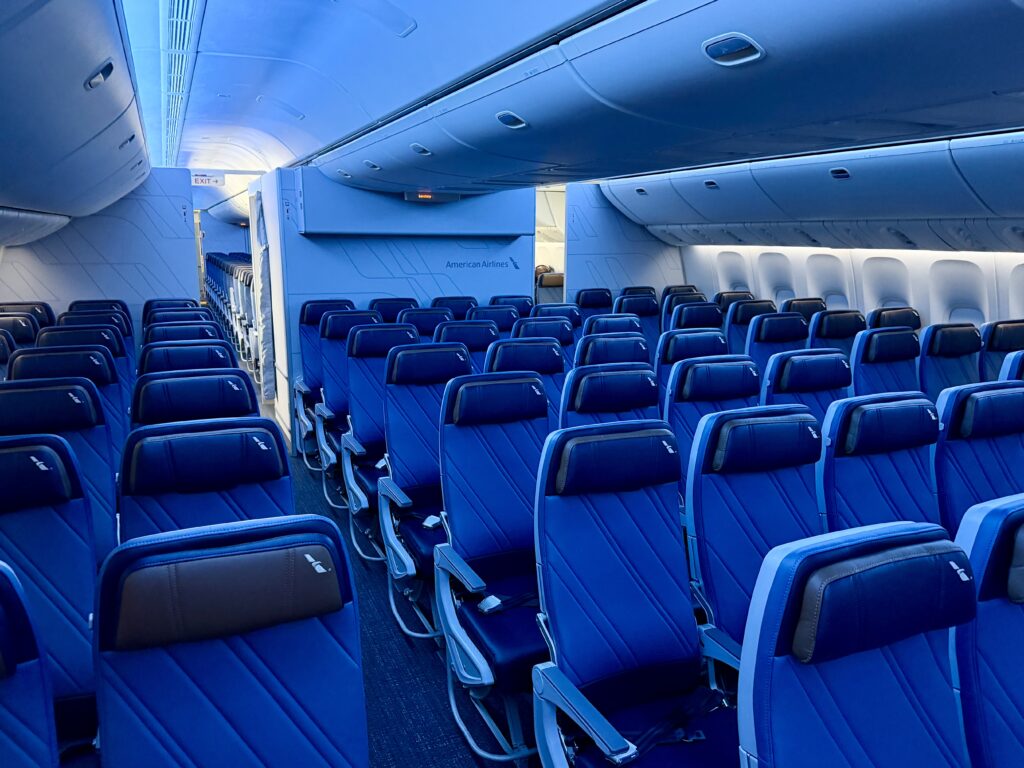
What’s more notable, though, is how little economy there seems to be.
For an airplane as large as a 777-300ER, the two economy sections feel surprisingly small. That’s not because American has done anything unusual within them. It’s because the majority of the airplane’s real estate comes before them.
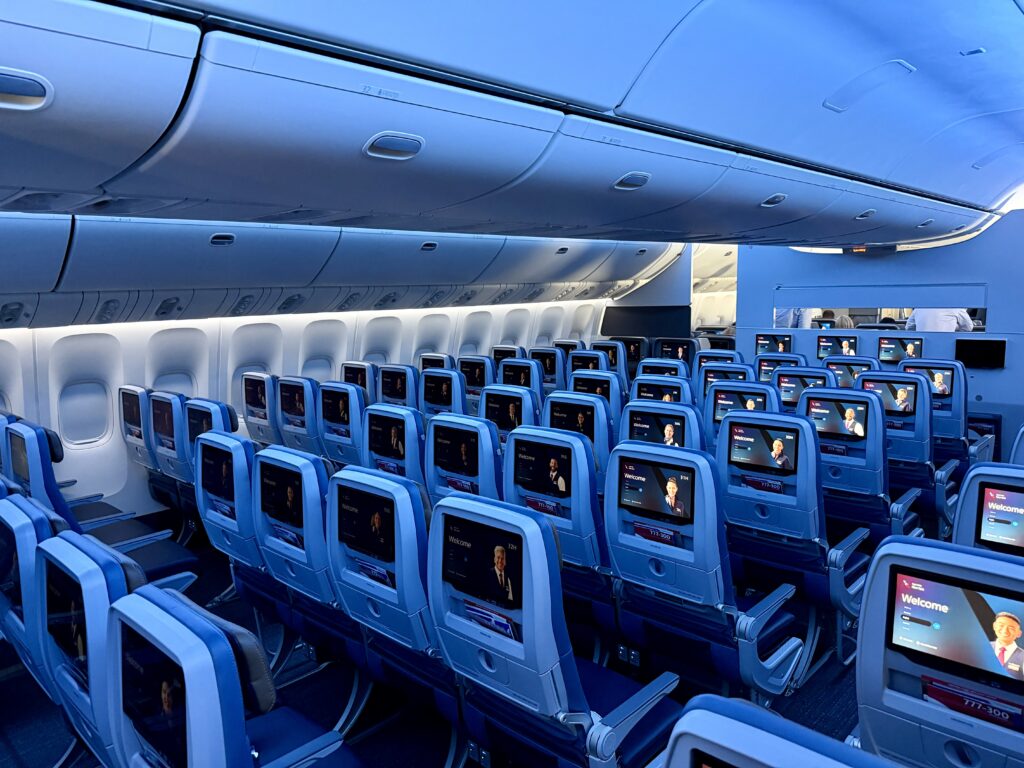
The premium cabins stretch almost to the end of the wing.
That might be the most effective way to understand just how different this configuration is. The 777-300ER can hold an enormous number of seats. American has chosen to devote a remarkable amount of that real estate to the front of the plane.
Retrofitting a 777 Isn’t the Same as Building a New One
Some things didn’t change.
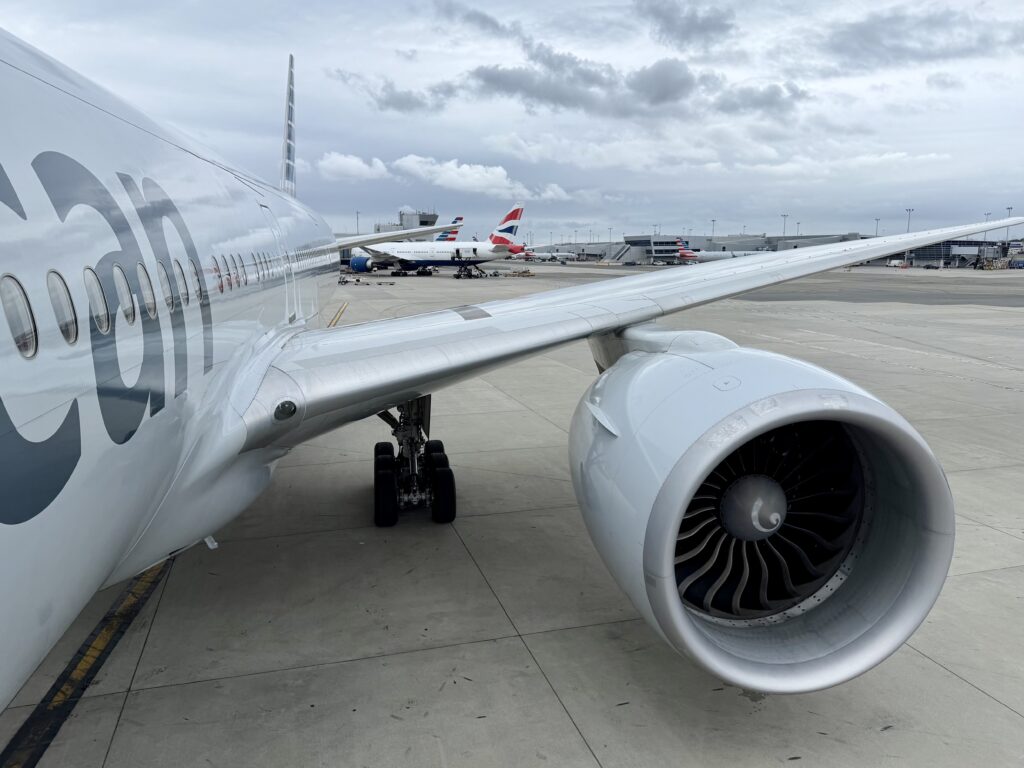
The overhead bins, for example, look just like they did before. So does the view through the well-traveled windows. And when the engines spool up for takeoff, this is still very much the same 777 that has been flying for American for years.
The challenge was putting a substantially different passenger experience inside it.
From a design perspective, Girardoni said there weren’t any particular challenges with bringing Flagship Suite to the 777 that stood out during the project. American was also working with a familiar product, using the same Flagship Suite seat already flying aboard its 787-9P.
But there are still operational tradeoffs.
One flight attendant aboard Wednesday’s flight mentioned that the new layout leaves crews with somewhat less room to maneuver in parts of the galley, particularly when passengers are trying to squeeze around carts. It could make things a little trickier, although she said that adapting to different aircraft and working conditions is part of the job.
Passengers give up a little space elsewhere, too. The new configuration has fewer lavatories than the 777-300ER it replaces.
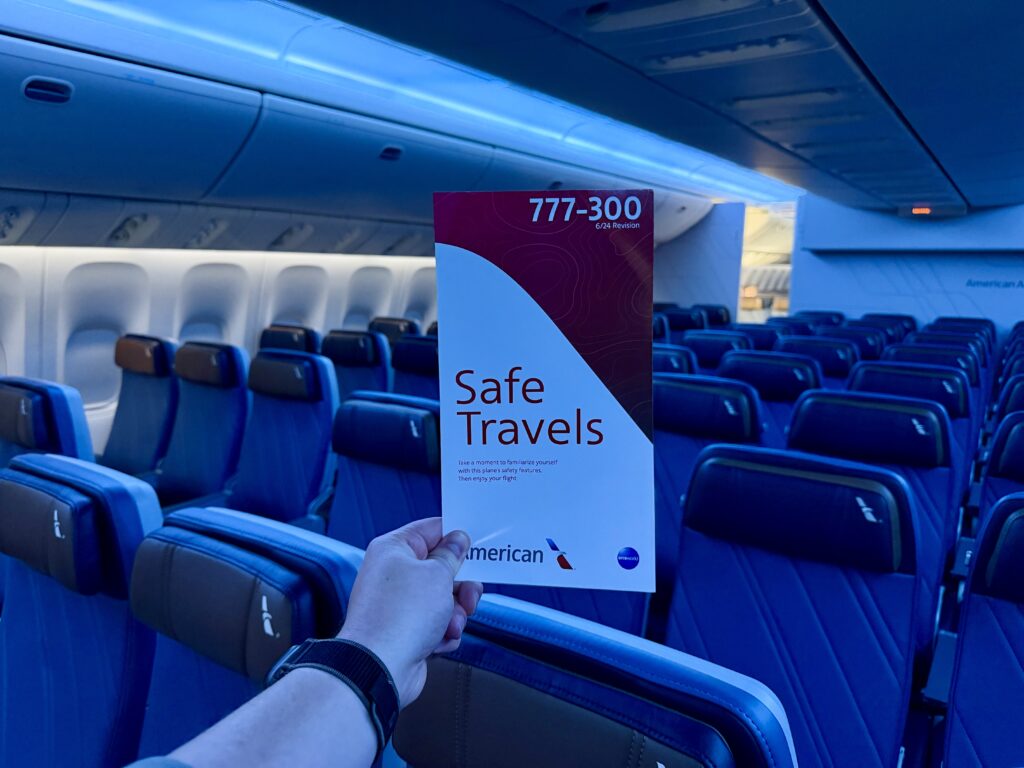
American expects to complete the remaining 777-300ER retrofits by the middle of 2027.
The aircraft will also get free high-speed Wi-Fi for AAdvantage members, sponsored by AT&T. That’s a meaningful upgrade for airplanes expected to spend much of their lives on long international flights.
The first retrofitted 777 already has it.
A Look at Where American Wants to Go
American describes the new 777 as more than a refurbishment.
Pieper called the aircraft an embodiment of the airline’s ambitions as American works toward what he described as becoming a premier global airline.
That’s a lofty goal.
But the 777 offers a tangible look at what American thinks getting there requires.
It’s eliminating its eight-seat international first-class cabin while dramatically expanding business class. It’s adding privacy doors, better technology, more thoughtful storage, and a much more contemporary interior. And it’s making similar investments across new aircraft, existing widebodies, lounges, Wi-Fi, Flagship airport check-in, and other parts of the travel experience.
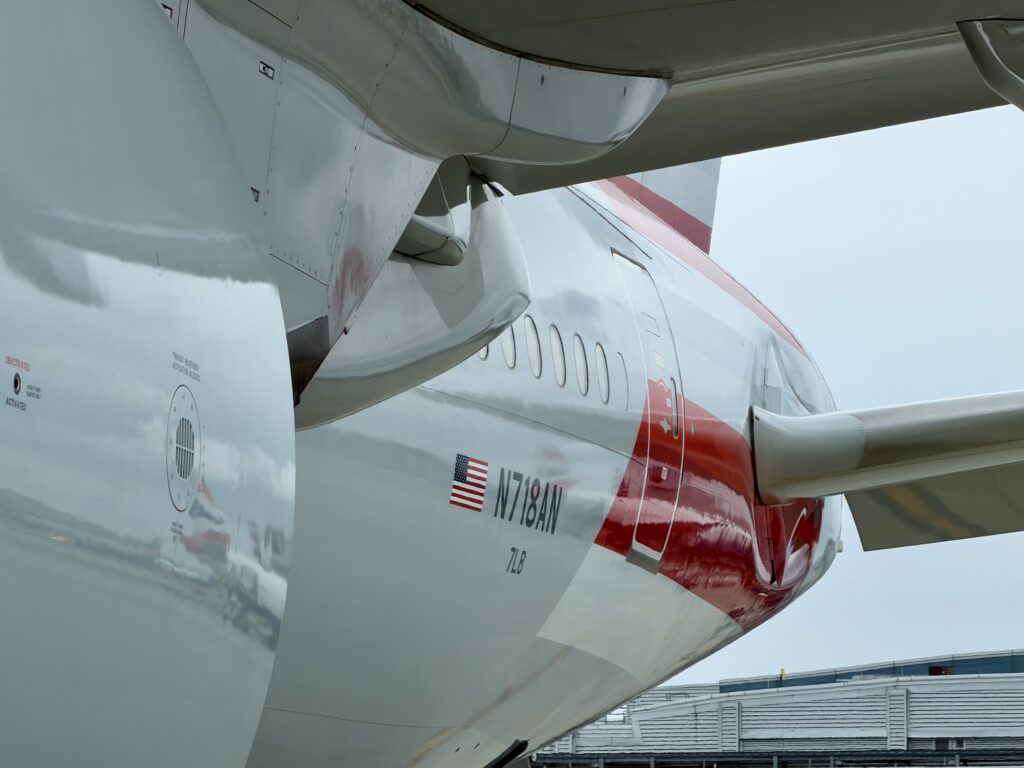
The first retrofitted 777-300ER begins commercial service between New York (JFK) and Buenos Aires (EZE) on September 2.
It won’t be a novelty flying around the network for a year or two. American expects this airplane, and eventually the others like it, to spend roughly another decade flying to some of its most important destinations around the world.
The first one shows just how much American thinks it can get out of an airplane it already owns. And now it has 19 more to rebuild.
Leave a Reply