American, Delta, and United are all adding new transatlantic flights next year. A look at the schedules and current pricing turned up three worth knowing about this week, including a trip to Portugal from just 21,000 miles.
But Philadelphia doesn’t have to be the starting point to get that price.
POINTSYEAH
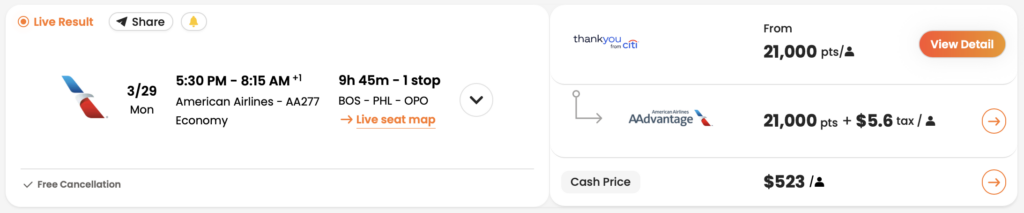
On March 29, for example, American is selling an itinerary from Boston (BOS) to Porto for 21,000 AAdvantage miles plus $5.60 in economy. The trip connects in Philadelphia before continuing on American’s new nonstop to Portugal.
Change the date to April 4, and the same 21,000-mile price is available out of Los Angeles (LAX).
It’s already bookable with MileagePlus miles, too.
POINTSYEAH
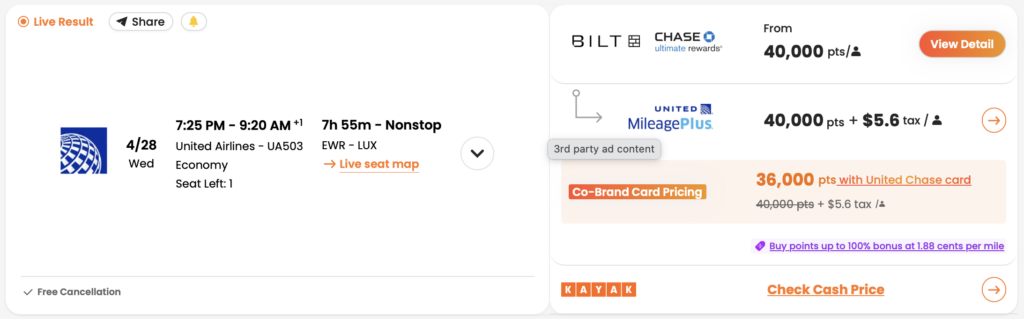
On April 28, the nonstop costs 40,000 United miles plus $5.60 in economy. Eligible United cardholders can book the same flight for 36,000 miles plus $5.60.
Luxembourg probably isn’t the first airport that comes to mind for a trip to Europe. But its location is part of the appeal. The country borders France, Germany, and Belgium, putting the new nonstop within easy reach of several places that might otherwise require a connection anyway.
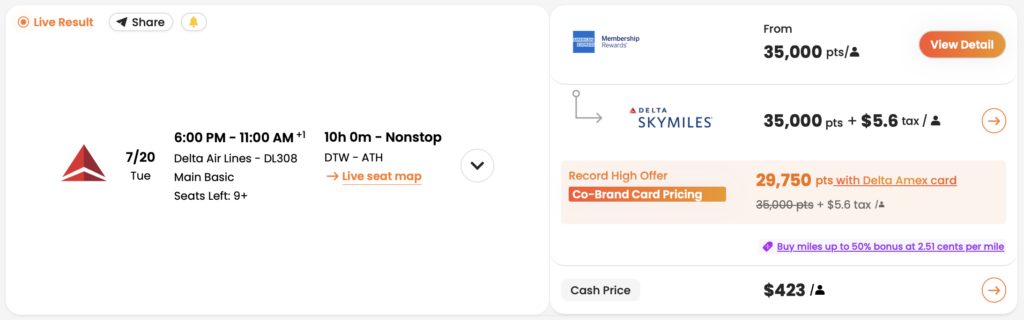
On July 20, Main Basic starts at 35,000 SkyMiles plus $6 one way. Eligible Delta cardholders get a 15% discount through TakeOff 15, dropping the price to 29,700 miles plus $6.
There is a tradeoff for taking the cheaper option.
Main Basic charges a fee to cancel or change the ticket, doesn’t include advance seat selection, and charges for the first checked bag. Main Classic on the same flight costs 45,800 miles, or 38,900 miles with the cardholder discount, and offers more flexibility, advance seat selection, and a free checked bag.
That’s a difference of 9,200 miles for cardholders. On a trip being booked nearly 10 months ahead, paying more miles for the extra flexibility could make sense.
Search for Your Own Trip
These prices are snapshots of a moment in time and can move up or down. Changing the dates, departure airport, or cabin can also produce very different results.
That’s particularly useful with new routes. United’s Luxembourg flight starts in Newark, while American’s new Porto nonstop starts in Philadelphia. But as the Boston and Los Angeles examples show, itineraries don’t necessarily start there.
{{ search-widget mode=”flight” }}
Search these routes on other dates, try another departure airport, or see what else is available for a trip to Europe.
Delta is adding three new routes to Europe in 2027, with new nonstop flights to Athens, Venice, and Paris.
The airline announced Thursday, September 25, that it will begin flying from Detroit (DTW) to Athens (ATH) and Boston (BOS) to Venice (VCE) next summer. Those flights will join a previously announced route from Austin (AUS) to Paris (CDG), which begins in March.
Delta is also stretching several seasonal Europe routes farther into the spring and fall, giving some destinations a longer window than the usual summer schedule.
Delta Adds New Flights to Athens, Venice, and Paris
Delta will begin flying from Detroit to Athens three times weekly on June 8, 2027. Flights will operate through October 28 aboard an Airbus A330-200.
It will be the first nonstop flight between Detroit and Athens, making Detroit Delta’s fourth U.S. gateway to the Greek capital.
Boston gets a new route of its own beginning May 7. Delta will fly four times weekly to Venice through October 29 using an Airbus A330-300.
That gives Boston another nonstop option to Italy, where Delta has been steadily adding service over the past few years. The airline will also increase its Boston-Milan route to daily service in 2027.
Farther south, Delta will begin daily flights between Austin and Paris on March 27, 2027, giving Austin its first nonstop connection to the French capital. The route will use an Airbus A330-900neo.
All three routes will offer Delta One business class and Delta Premium Select premium economy in addition to economy.
The additions are part of a broader period of international growth for Delta. The airline is also preparing to launch its first flights to Riyadh (RUH) on October 23, 2026, adding Saudi Arabia to its route map.
Delta Is Lengthening the Europe Season
The new routes aren’t the only change coming to Delta’s Europe schedule.
Several seasonal flights will start earlier in 2027, while others will stick around longer.
Flights from Minneapolis-St. Paul and Detroit to Rome will begin in early March, for example, while Seattle-Rome will start in April. Delta is also bringing back several routes earlier in the year, including New York-JFK to Catania, Porto, Prague, and Copenhagen.
Boston and Seattle flights to Barcelona and Atlanta-Edinburgh will return earlier as well.
Some routes are also getting more service. Detroit-Rome and New York-Copenhagen will operate daily when they return, while Cincinnati-Paris will continue three times weekly from January through March.
That makes Delta’s transatlantic network a little less dependent on the traditional summer rush.
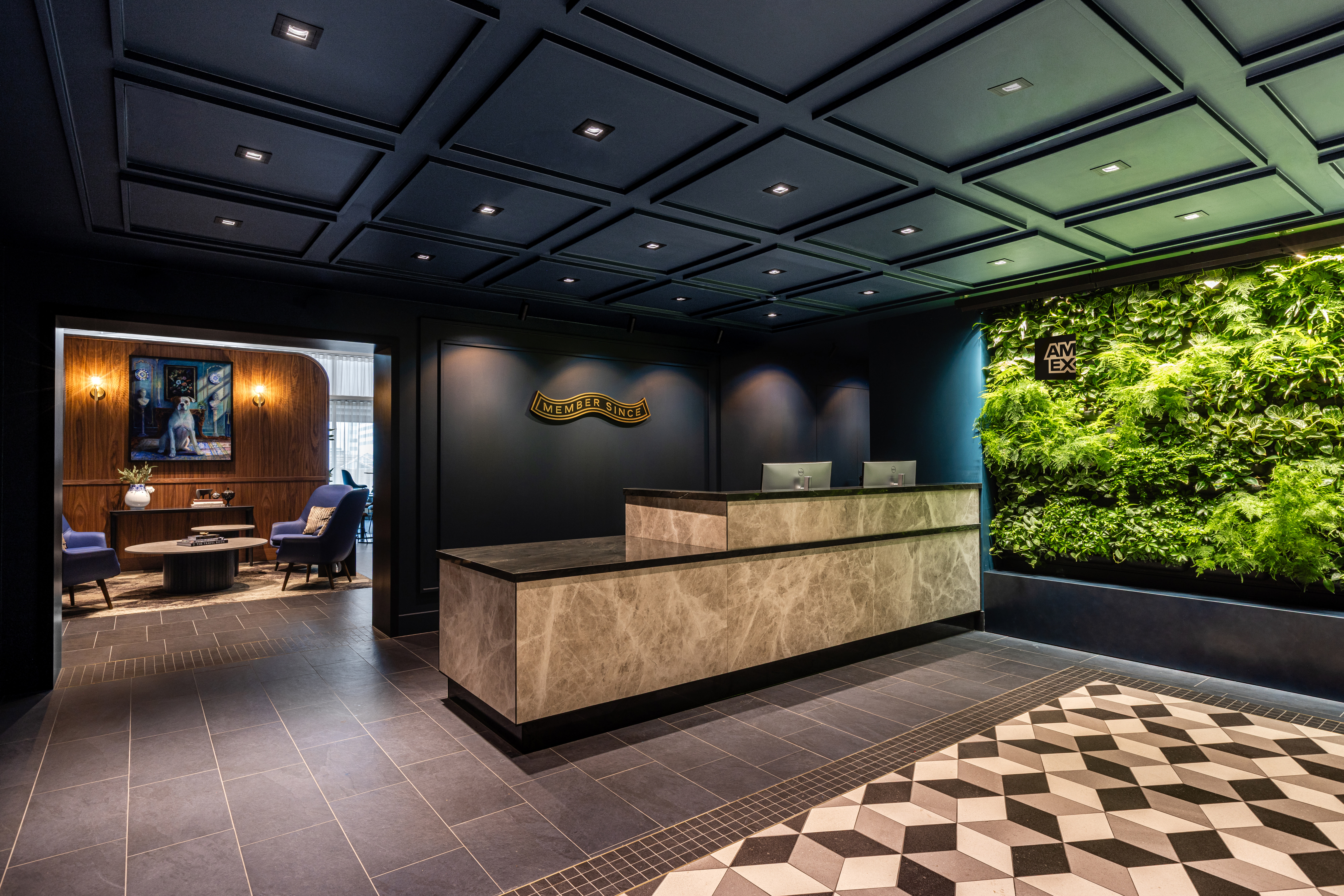
American Express has spent more than a decade building one of the largest credit card airport lounge networks in the world.
The first Centurion Lounge opened in 2013. Since then, the network has expanded across the United States and into airports from London to Tokyo, with more locations on the way.
Unlike airline lounges, access isn’t tied to flying a particular airline or sitting in a premium cabin. It comes primarily through a handful of premium American Express cards.
Here’s where to find Centurion Lounges, who can get in, and what to know before your visit.
Where Can You Find American Express Centurion Lounges?
American Express operates Centurion Lounges across the United States and at several international airports.
The network is still growing, with additional Centurion Lounges already announced.
Airport
Location
Expected
Newark (EWR)
Terminal A
2026
Boston (BOS)
Terminal C
2029
Sidecar by the Centurion Lounge
American Express is also experimenting with a smaller lounge concept called Sidecar by The Centurion Lounge.
Sidecar is designed for shorter visits, with drinks and light bites rather than the broader dining and amenity experience found at a full Centurion Lounge. Visits are limited to 90 minutes before departure.
The first Sidecar opened at Las Vegas (LAS) in 2025, and another is planned for Charlotte (CLT) in 2027.
Who Can Access a Centurion Lounge?
You can’t purchase a Centurion Lounge membership or simply pay for a day pass.
Instead, complimentary access comes primarily through eligible American Express cards, including:
Delta SkyMiles® Reserve Business cardmembers (when flying Delta)
Guest access depends on which card you use.
Platinum Card and Business Platinum Card members generally pay $50 per adult guest and $30 for children ages 2 through 17. Cardmembers who make $75,000 or more in eligible purchases during a calendar year can unlock complimentary access for up to two guests at eligible Centurion Lounge locations.
You’ll also need a same-day boarding pass. Access is generally limited to within three hours of your scheduled departure. If you’re connecting, you can enter up to five hours before your next flight.
What Can You Expect Inside a Centurion Lounge?
Centurion Lounges share many of the same basics, but American Express doesn’t make every location identical.
Food, drinks, artwork, and design often incorporate elements of the city or region surrounding the airport. Some locations take that further with amenities you won’t find elsewhere in the network.
At New York (JFK), there’s a speakeasy called 1850. Seattle (SEA) has a full-service coffee bar inspired by the city’s coffee culture. At Tokyo Haneda (HND), chefs prepare nigiri from an open kitchen.
The rest will feel familiar if you’ve spent time in airport lounges. Expect complimentary food and drinks, Wi-Fi, power outlets, and places to work or relax. Depending on the location, you may also find showers, family rooms, outdoor spaces, or other amenities.
A Few Things to Know Before You Go
A few rules are worth checking before heading to a Centurion Lounge:
Bring a government-issued photo ID. You may be asked to show it at check-in.
Your boarding pass must be for a same-day departing flight.
Entry is subject to capacity, and popular lounges can have a wait during busy periods.
Amenities vary considerably between locations.
International locations can have different access and guest policies, so check the rules for the specific lounge you’re visiting.
Because lounge access policies can change, confirm the latest rules with American Express before traveling if Centurion Lounge access is important to your plans.
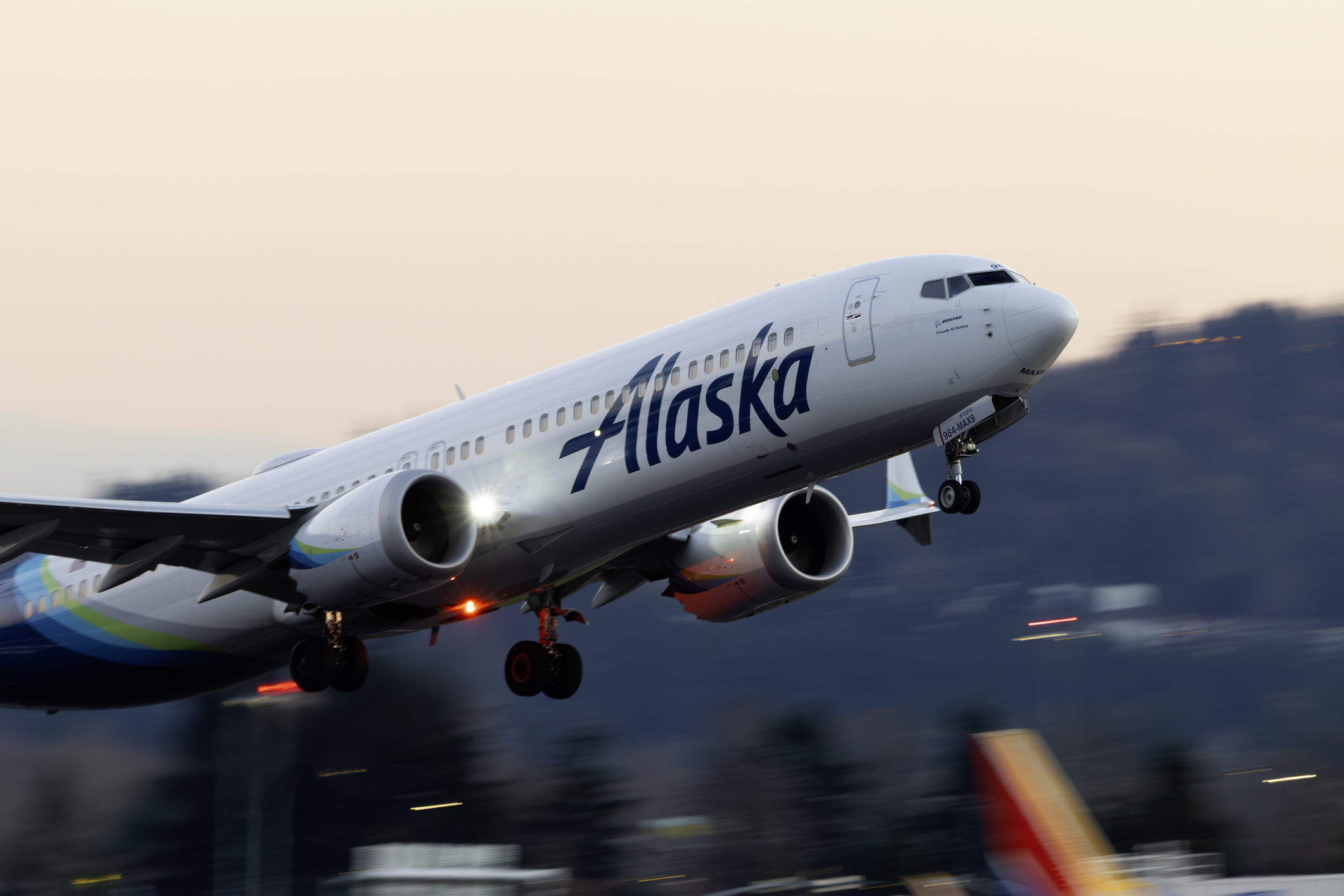
Alaska Airlines is planning a sizable expansion at Paine Field, giving the Seattle area’s secondary airport considerably more service over the next year.
The expansion includes one new destination, San Jose, along with more flights or larger aircraft on several existing routes.
Alaska plans to begin twice-daily flights between Paine Field and San Jose on April 14, 2027, operated by Horizon Air with Embraer E175 aircraft.
Los Angeles will also increase to twice-daily service, with both flights moving to larger Boeing 737 aircraft. Portland grows to two flights per day, while Alaska is adding seats to San Diego and San Francisco.
Paine Field Is Becoming a Bigger Part of Alaska’s Seattle Network
None of the individual route changes is especially dramatic. Taken together, though, a 50% increase in seats is meaningful for an airport that offers an alternative to Seattle-Tacoma International Airport (SEA).
Paine Field sits roughly 25 miles north of downtown Seattle in Everett, making it considerably closer for parts of northern Seattle and communities north of the city. Its small passenger terminal also offers a very different experience from Alaska’s much larger operation at SeaTac.
The expansion doesn’t turn Paine Field into another major hub. Most of Alaska’s Seattle-area flying will continue to operate from SEA.
But by summer 2027, PAE will offer substantially more Alaska capacity to several major West Coast destinations. For anyone living north of Seattle, that makes checking both airports before booking a trip a little more important.
Flying between Sydney and New York is about to get a little more direct, even if it won’t get much shorter.
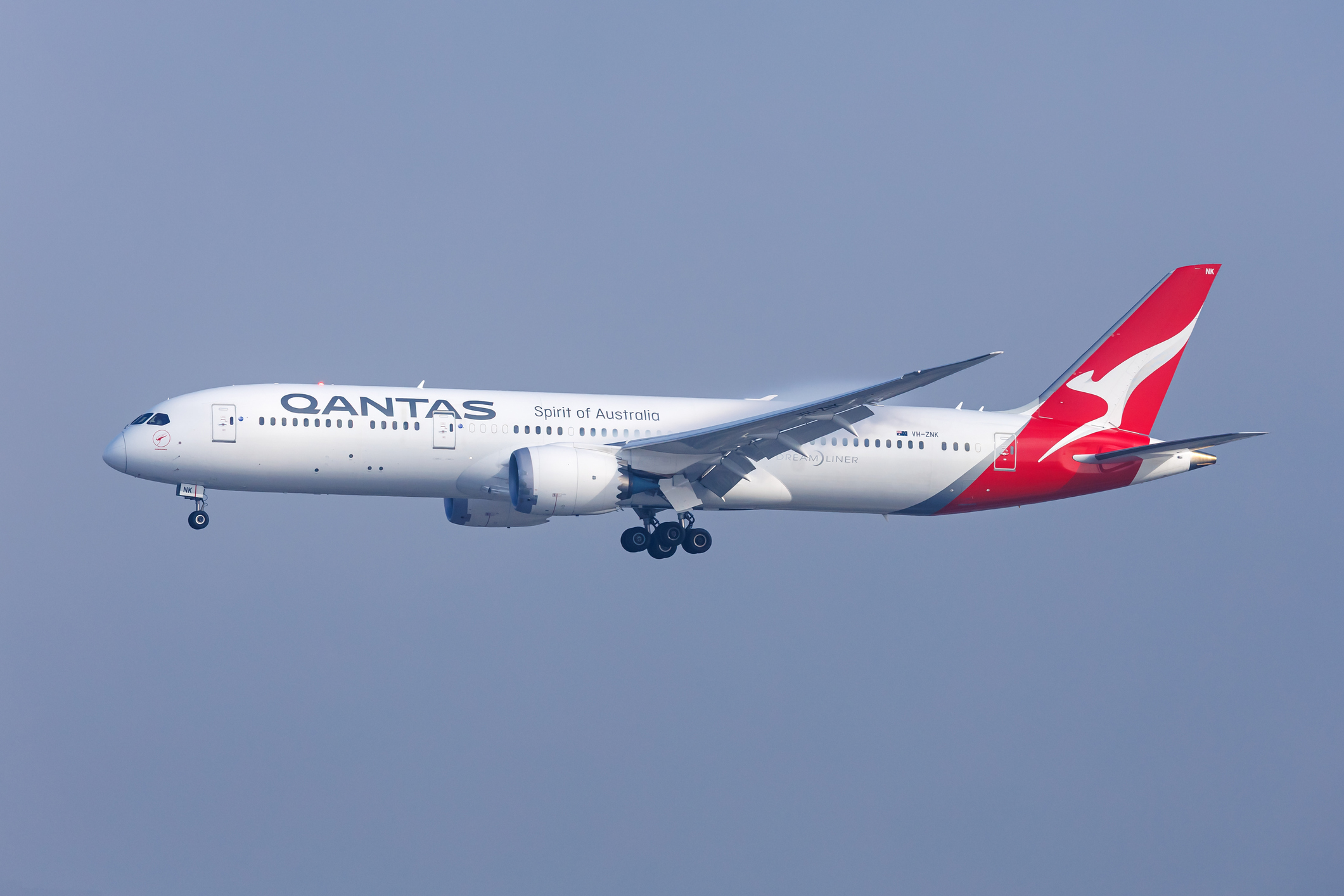
Qantas announced September 22 that it will launch nonstop flights between the two cities in mid-2028 as part of its long-planned Project Sunrise. The roughly 18-hour flight will be the first nonstop commercial service between Australia and New York.
Tickets are expected to go on sale in August 2027.
Qantas already flies between Sydney and New York, but the current route stops in Auckland. Removing that stop is expected to cut more than three hours from the total trip.
Qantas Is Building a Plane for Some Very Long Flights
The New York route will use Qantas’ specially configured Airbus A350-1000ULR, with ULR standing for Ultra Long Range. The aircraft will first enter commercial service on nonstop Sydney to London flights in October 2027.
Those flights will spend roughly 20 hours in the air, giving a sense of what Qantas is building these aircraft to do. The airline says the A350-1000ULR can fly for up to 22 hours nonstop.
Qantas is configuring its 12 Project Sunrise aircraft with just 238 seats across first class, business class, premium economy, and economy. The planes will also have an additional 20,000-liter fuel tank to make these ultra-long flights possible.
There’s even a dedicated Wellbeing Zone where passengers can stretch, grab a drink or snack, and follow guided movements on large screens. Spending the better part of a day on an airplane makes that sound a little less gimmicky.
The first aircraft is expected to arrive in April 2027.
New York will be the second confirmed Project Sunrise route after London. Qantas hasn’t released the Sydney to New York schedule or said how frequently it will operate.
There’s also no word yet on what tickets will cost or how many seats might eventually be bookable with Qantas points or through partners such as American Airlines.
Those details are a ways off. But beginning in 2028, getting from Sydney to New York should no longer require landing somewhere in between.
Eighteen hours in a middle seat, on the other hand, is one problem Project Sunrise can’t solve.
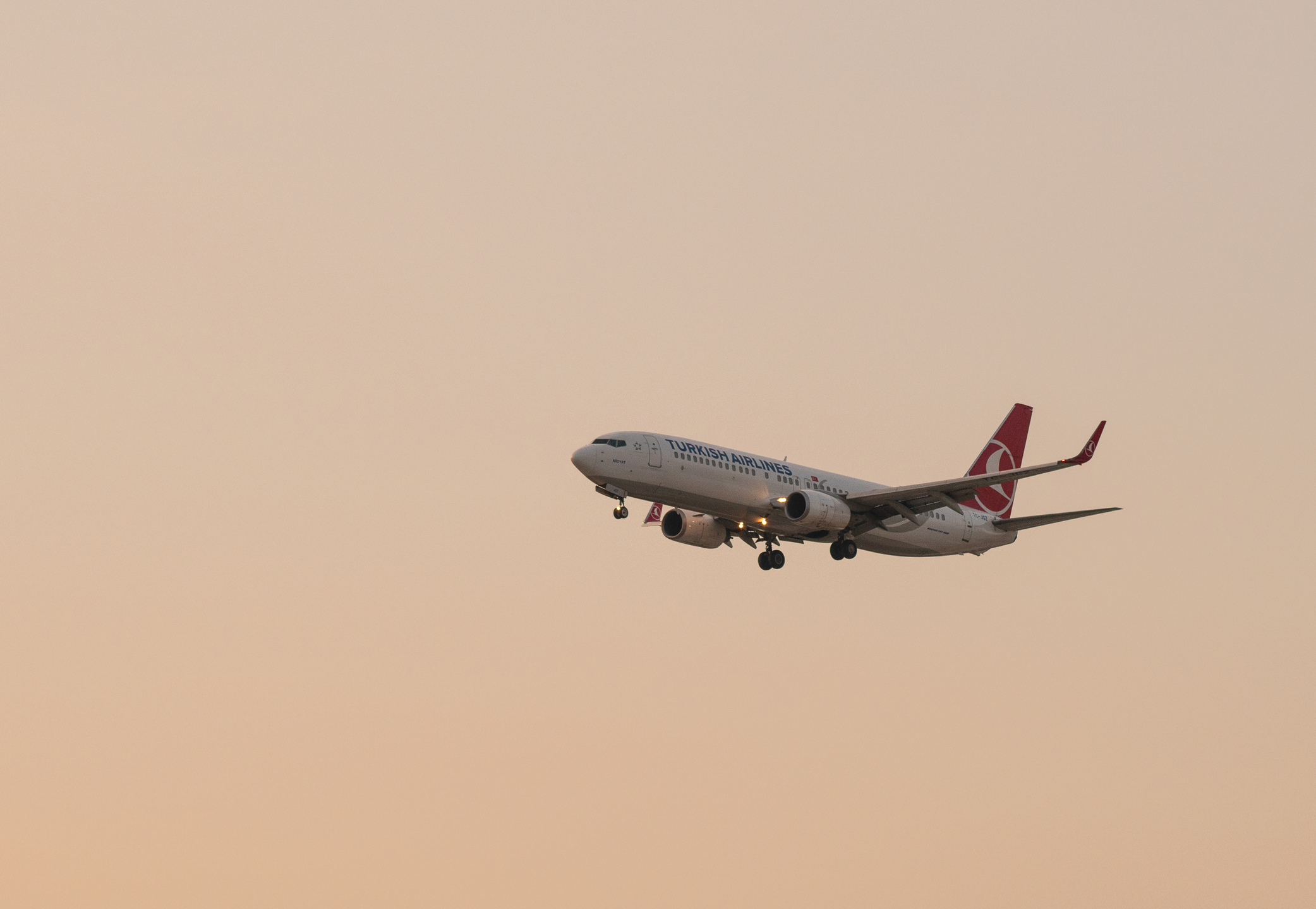
Turkish Airlines is moving ahead with plans to add a lot more airplanes.
The airline finalized an order Wednesday for 100 Boeing 737-8 aircraft, with options for another 50 737 MAX jets. Turkish can also substitute some of those planes for the larger 737-10.
For passengers, the useful part isn’t necessarily the aircraft itself. It’s what Turkish could do with a fleet that continues to get much bigger.
More planes give the airline room to add flights, destinations, and seats over time. Turkish hasn’t said where these particular aircraft will fly, and some could replace older planes rather than represent entirely new capacity.
But this order is part of a much larger growth plan.
Turkish Airlines Is Building Toward More Than 800 Aircraft
The 787 order includes 35 787-9s and 15 of the larger 787-10, which Turkish plans to use to support long-haul growth. Boeing has said the 787 and 737 MAX deals together will double Turkish Airlines’ Boeing fleet.
Turkish has an even bigger target beyond Boeing. The airline wants its overall fleet to exceed 800 aircraft by 2033 while sustaining average annual growth of 6%.
The 737 MAX aircraft are intended for shorter routes, while the additional Dreamliners give Turkish more room to grow long-haul flying. That combination matters at Istanbul, where shorter flights from across the region feed Turkish’s much larger international network.
None of that guarantees more seats on a particular route or the introduction of new ones. But Turkish is planning for a substantially larger fleet, and more aircraft give it more room to add capacity.
Amtrak is Bilt’s first rail transfer partner and its 26th travel partner overall. And the partnership could be particularly useful in situations where taking the train can make more sense than flying.
Bilt Points transfer in increments of 1,000. Members who have earned Bilt status can transfer as few as 1,000 points at a time, while members with entry-level Blue status (which everyone receives when joining Bilt) need to transfer at least 2,000.
Amtrak tickets can start at 400 Guest Rewards points, or 100 points when combining points and cash. Points can also be used for lounge passes starting at 1,500 points and one-class upgrade coupons starting at 2,500 points.
The important number to check before transferring is how many Amtrak points a particular trip requires. Since Bilt Points become half as many Amtrak points, a ticket costing 2,500 Amtrak points would require transferring 5,000 Bilt Points.
Bilt Continues to Expand Beyond Traditional Travel Rewards
Amtrak also fits into something broader happening at Bilt.
Airline and hotel transfers are still a big part of the program, but Bilt has increasingly added ways to use points outside the usual airline-hotel playbook. Points can go toward fitness classes, student loan payments, and other expenses tied more closely to everyday life.
Train travel fits neatly into that expansion. It’s transportation, but for plenty of people, especially along the Northeast Corridor, it’s also part of life in a way that an airline transfer partner might not be.
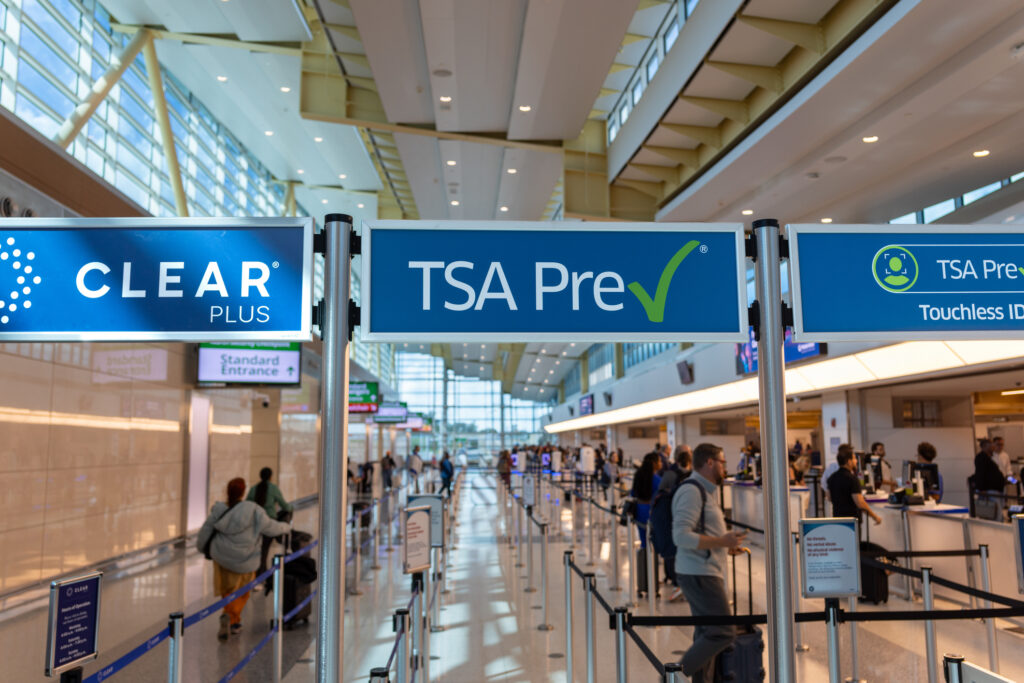
I had some time to kill at the Philadelphia airport recently and started noticing the lines.
The regular TSA security line was long. PreCheck had a few people waiting. The separate Touchless ID lane had absolutely nobody at all.
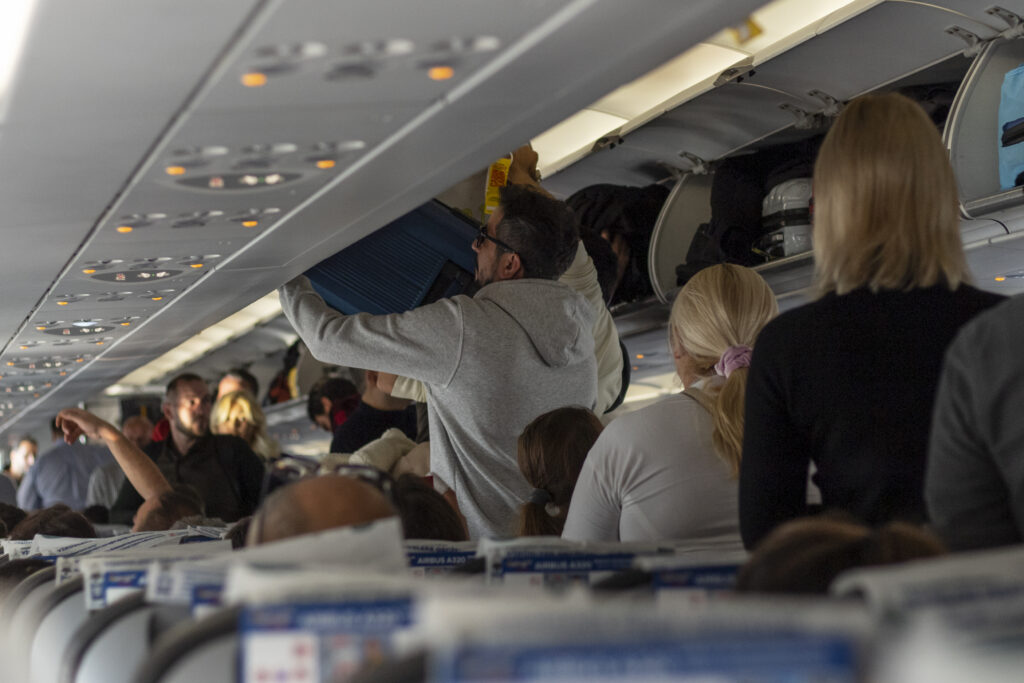
A couple of minutes after collecting my belongings from security, I watched a separate American Airlines flight board. Plenty of passengers were still waiting when Groups 7 and 8 were called, followed by Group 9.
Joining AAdvantage (American’s free loyalty program) would have put some of them in Group 6 and possibly saved them from gate-checking their bags.
Neither observation was particularly groundbreaking. But they got me thinking about the small things that can make a trip easier without buying a better seat or having airline status.
Some take a few minutes to set up. Others are just useful habits to have when something goes wrong.
Here are five that can make a difference.
Join the Airline’s Loyalty Program
There doesn’t need to be much loyalty involved in joining a loyalty program.
American is a good example. AAdvantage members board in Group 6. Nonmembers flying in Main Cabin board in Groups 7 or 8, while basic economy passengers without another form of priority board in Group 9.
Signing up is free.
Moving up a boarding group or two isn’t going to transform a trip, but it can mean getting on the plane before overhead bin space starts disappearing. And it’s an easy benefit to get even if you only fly American more than once or twice a year.
AAdvantage members get access to free onboard Wi-Fi, too.
SERHIL IVASHCHUK / ISTOCK
Having an account also keeps reservations in one place, saves information such as a Known Traveler Number (KTN), and makes sure miles from a flight don’t disappear into nowhere.
Not every airline gives members an earlier boarding group just for signing up, so this isn’t a reason to open a dozen loyalty accounts tonight. But when booking a flight, it’s worth seeing what joining the airline’s program gets beyond miles.
Sometimes there’s a useful perk hiding behind a free signup.
The difference between the security lines at Philadelphia was hard to miss.
TSA PreCheck doesn’t guarantee a short wait. I’ve certainly stood in some long PreCheck lines. But it does offer dedicated lanes at participating airports and a less cumbersome screening process, like leaving shoes on and laptops in bags.
New enrollment currently starts as low as $76.75, depending on the provider. Renewals can start at $58.75, depending on the method.
Global Entry is another option, particularly for international trips. It costs $120, includes TSA PreCheck benefits, and adds expedited processing when returning to the U.S.
Before paying for either, check the credit cards already in the wallet. Plenty of travel cards (typically ones with annual fees) reimburse the application fee for TSA PreCheck or Global Entry. Enroll, charge the fee to an eligible card, and the reimbursement typically comes back as a statement credit.
GREGGORY DISALVO / ISTOCK
PreCheck can also unlock an even easier option at some airports.
TSA PreCheck Touchless ID uses facial comparison technology for identity verification and has dedicated lanes. I’ve increasingly found those lines shorter than PreCheck itself. At PHL that day, nobody was waiting.
Eligible PreCheck members with a valid passport can opt in through participating airlines. With an airline, that means adding a Known Traveler Number and passport information to the profile, then opting in either there or during check-in. A Touchless ID indicator on the boarding pass shows when it’s ready to use.
American, Alaska, Delta, Hawaiian, Southwest, and United currently participate.
Touchless ID isn’t everywhere yet. But after doing the work to get PreCheck, it’s worth checking whether there’s an even shorter line available.
Download the Airline App Before Something Goes Wrong
Airline apps aren’t particularly exciting when everything is running on time.
They’re considerably more useful when a flight isn’t.
Most handle the basics, including boarding passes, gate changes, delay notifications, and bag tracking. But they’re more helpful during a disruption.
When a flight gets canceled, the instinct is often to head straight for a customer-service desk or call the airline, only to hear that “higher than normal call volume” message. Everyone else is doing the same thing.
Depending on the airline, the app may already offer rebooking options while the line at the airport is still growing. Meal or hotel vouchers may show up there, too.
That doesn’t mean an app can fix every problem. Sometimes an agent really is necessary. But it’s much easier to find out with the app already downloaded, logged in, and connected to the reservation.
A flight cancellation is a bad time to discover the password doesn’t work.
Know What Else Is Flying That Day
When I really need to be somewhere, I like to know what comes after my flight.
That doesn’t require memorizing the day’s schedule. A quick look can answer the important questions. Is there another nonstop that afternoon? Does another airline fly the route? Would a connection still get there in time?
That information becomes much more useful when the original flight starts slipping.
Instead of starting from scratch after a cancellation, there’s already some idea of what to ask for or look at next. If there’s a 3 p.m. flight that still gets there before dinner, that’s worth knowing before joining the line at the airport.
The same applies to trips booked with points. A quick PointsYeah search can show other award options around the same time or day, including flights available through different loyalty programs.
{{ search-widget mode=”flight-hotel” }}
Availability can disappear quickly during a disruption, so none of this guarantees a seat. The point is knowing where to look before everyone else on the flight starts looking, too.
Keep Some Points and Miles Around for When Things Go Sideways
Some of my most useful points redemptions are the ones I never end up using.
I needed to get to Boston recently, and my JetBlue flight kept getting delayed. At some point, another delay could have meant not getting there when I needed to.
American had another flight leaving later that day, and there was award availability. So I booked it with AAdvantage miles.
I didn’t particularly want to take that flight. It was there in case JetBlue never went anywhere.
The cancellation terms on the American award gave me enough flexibility to hold onto the backup while I waited to see what happened. JetBlue eventually got moving, so I canceled the American flight and got the miles back.
SHUNYU FAN / ISTOCK
This is something to be careful with, though. Cancellation rules vary, it’s always worth checking the terms before booking something that may need to be canceled fairly close to departure.
But it’s a good example of why having some miles available can be useful beyond planning the next vacation.
The same goes for hotels. A cancellation, missed connection, or bad weather can unexpectedly create the need for a room near an airport, sometimes at an ugly last-minute price. Hotel points can cover the night instead. Transferable points can be even more useful because they provide options across several airline and hotel programs.
There doesn’t need to be a giant balance sitting around indefinitely. But using every point down to zero can leave fewer options when a trip goes sideways.
Points are usually the fun part of planning a trip. Sometimes they’re just a very useful Plan B.
None of these will prevent a delay, guarantee an empty security line, or make boarding particularly glamorous.
But that’s what struck me at PHL. Some people were waiting in a long security line while another had nobody in it. Others were boarding later than they needed to because they hadn’t joined a free airline program.
Flying comes with plenty of hassles that can’t be avoided. It makes sense to skip the ones that can.
Sometimes the flight you want doesn’t leave from your home airport.
Maybe there’s no award availability from where you live, but plenty from an airport a short flight away. Or maybe starting somewhere else gets you a nonstop flight or costs fewer points.
A positioning flight is a separate flight booked to get to the airport where the trip actually begins.
For example, say someone lives in Raleigh (RDU) and finds a business-class award to Europe from Washington Dulles (IAD). They could book a separate flight to Washington, then begin the international itinerary from there.
That first flight is the positioning flight.
Why Book a Positioning Flight?
Positioning gives you more airports to work with when searching for flights.
Award availability can vary considerably depending on where a trip starts. A flight that isn’t available from a home airport might be available from another city, sometimes for fewer points or with a better itinerary.
And positioning doesn’t always require another flight. If another airport is within driving distance, driving works too. In some places, a train might be an option.
The idea is the same: getting to the airport where the itinerary you want begins.
What to Know Before Booking a Positioning Flight
The biggest thing to remember is that positioning flights are usually booked separately from the main itinerary.
That means making the connection is your responsibility. If the positioning flight is delayed and the next flight is missed, the airline operating the main itinerary generally isn’t obligated to rebook it.
A few things can make positioning less risky:
Leave plenty of time. For an important international flight, arriving the night before may make sense.
Be careful with checked bags. Bags may need to be collected and checked again before the next flight.
Consider the entire cost. Factor in the positioning flight, hotel, transportation, parking, and other expenses before deciding whether the better award is worth it.
Have a backup plan. Know what other options exist if the positioning flight is delayed or canceled.
Are Positioning Flights Worth It?
Sometimes.
If getting to another airport requires a short flight or drive and opens up a much better itinerary, positioning can be worth the extra step.
Other times, the additional cost and risk outweigh whatever the alternative itinerary saves.
But knowing to search from other airports can open up options that aren’t obvious when looking only from home. Just leave enough room between separate itineraries that a good award doesn’t turn into a missed flight.
Southwest Airlines has changed considerably over the past year and a half, from assigned seating and extra-legroom seats to bag fees. But the airline isn’t finished reshaping the guest experience.
Starlink Is Coming to Hundreds of Southwest Planes
Southwest recently began installing Starlink, and the rollout is moving quickly.
Doxey said the airline expects around 300 aircraft to have Starlink installed by the end of this year, with installations continuing into 2027.
That means the faster Wi-Fi should become much easier to find on Southwest flights over the next few months. There will still be some luck involved, though, as plenty of planes will continue offering Southwest’s existing Wi-Fi until they get Starlink.
The airline has already said it plans to start with 11 lounges, and Doxey indicated there could eventually be more. But perhaps more interesting is how far along some of those first locations already are.
Construction has started at some locations, Doxey said, while designs and mock-ups are already taking shape. He suggested that early construction work contributed to the lounge plans becoming something of a “worst-kept secret” before Southwest announced them.
He also hinted that the finished product may not look quite like what some people expect from Southwest.
“I think some people are going to be a little surprised, actually, when they say, ‘Oh, this is the Southwest lounge,’” he said.
Southwest still hasn’t revealed all 11 locations. Doxey didn’t name any additional airports, but said the choices should look “very logical” when looking at a map of Southwest’s network.
A More Premium Southwest Credit Card Is Coming
The lounges also give Southwest something new to offer current and future credit card holders.
Doxey was unusually direct about why Southwest wants one. He called the absence of a top-tier premium card a “hole” in the airline’s current credit card lineup.
For now, details such as the annual fee, other benefits, and launch date are still up in the air. But with lounge construction already underway, both pieces are getting closer.
The Boeing 737 MAX 7 Could Finally Arrive Next Year
Southwest also expects another long-awaited change to its fleet.
The FAA certified the Boeing 737 MAX 7 in August after years of delays. This finally cleared the smaller MAX variant for commercial service.
Southwest already has 27 MAX 7s that were built before certification and have been sitting in storage. Doxey said Boeing is now working to bring those aircraft up to the final approved specifications.
Southwest expects some of those planes to begin arriving around the end of this year before entering passenger service in early 2027.
International Long-Haul Flying Is Still on the Table
One much bigger potential change is less certain.
Southwest executives have repeatedly floated the possibility of eventually flying farther internationally. Doxey confirmed that the airline is still considering it, although no decision has been made.
“We haven’t decided what we’re doing with that particular item,” Doxey said. “But what we have said is that we’re absolutely considering whether that should be part of the offering that we have.”
There are still some big questions to answer, including where Southwest might fly and what aircraft it would use. For now, long-haul flying is something Southwest is considering rather than a firm plan.
But it’s another example of just how different Southwest could look a few years from now. Assigned seating and bag fees are already changing the airline people know today. Add lounges, a higher-end credit card, better Wi-Fi, and perhaps longer international flights, and Southwest starts to look different in ways that go well beyond how boarding works.