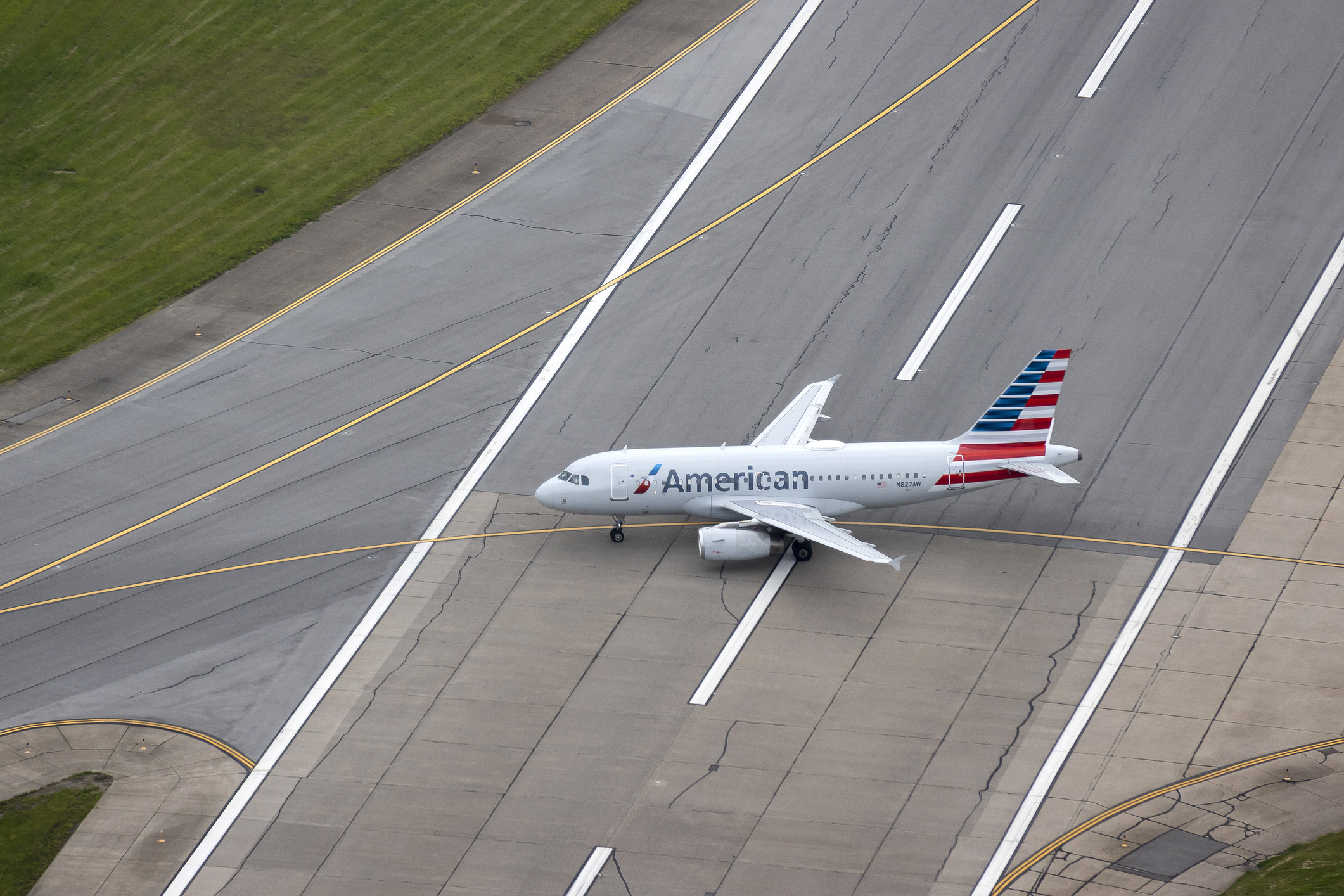
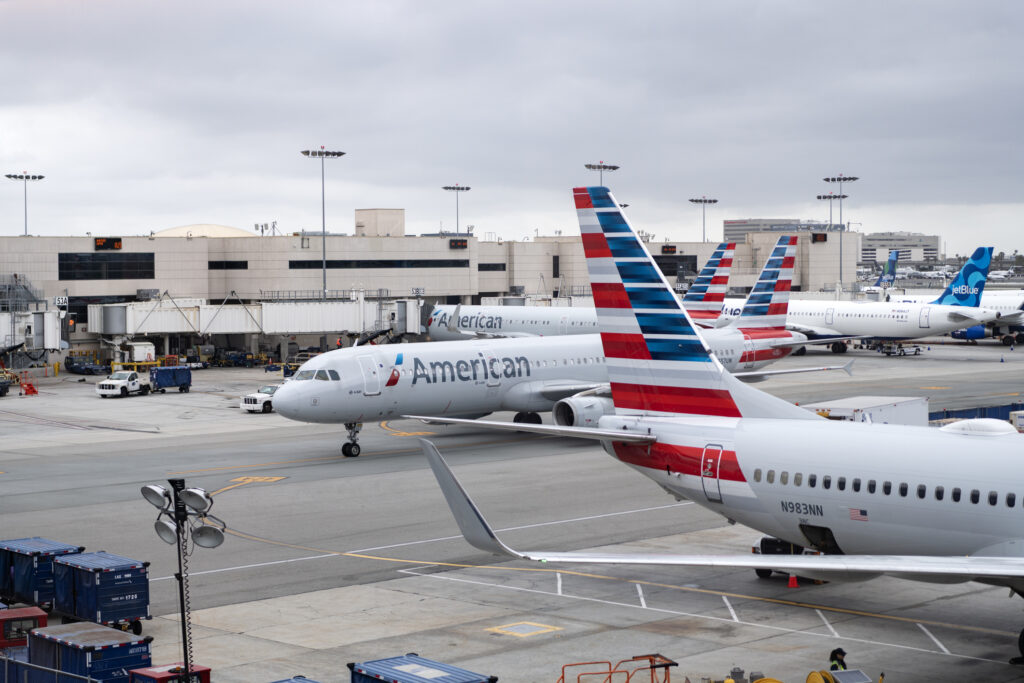
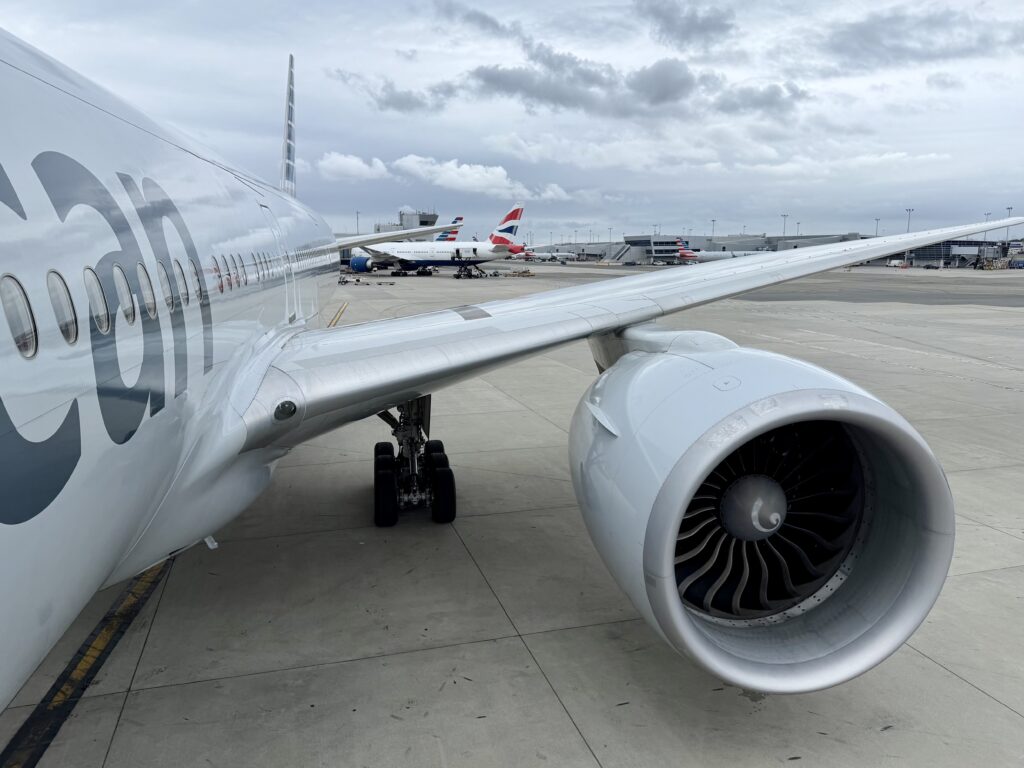
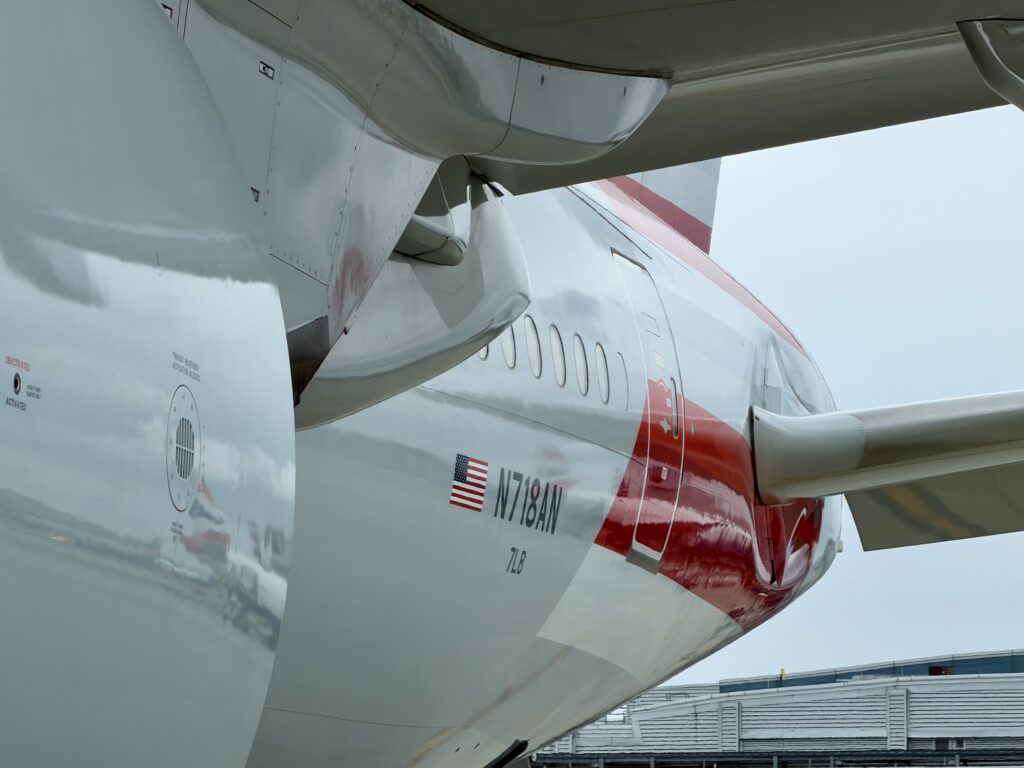
American Airlines CEO Robert Isom and CFO Devon May sat down with investors this week at Morgan Stanley’s annual Laguna Conference. The majority of the conversation centered on revenue, fuel prices, and profitability, but there were also several updates that could affect the experience of flying American over the next few years.
Here’s what stood out.
American’s Premium Push Is Still Just Getting Started
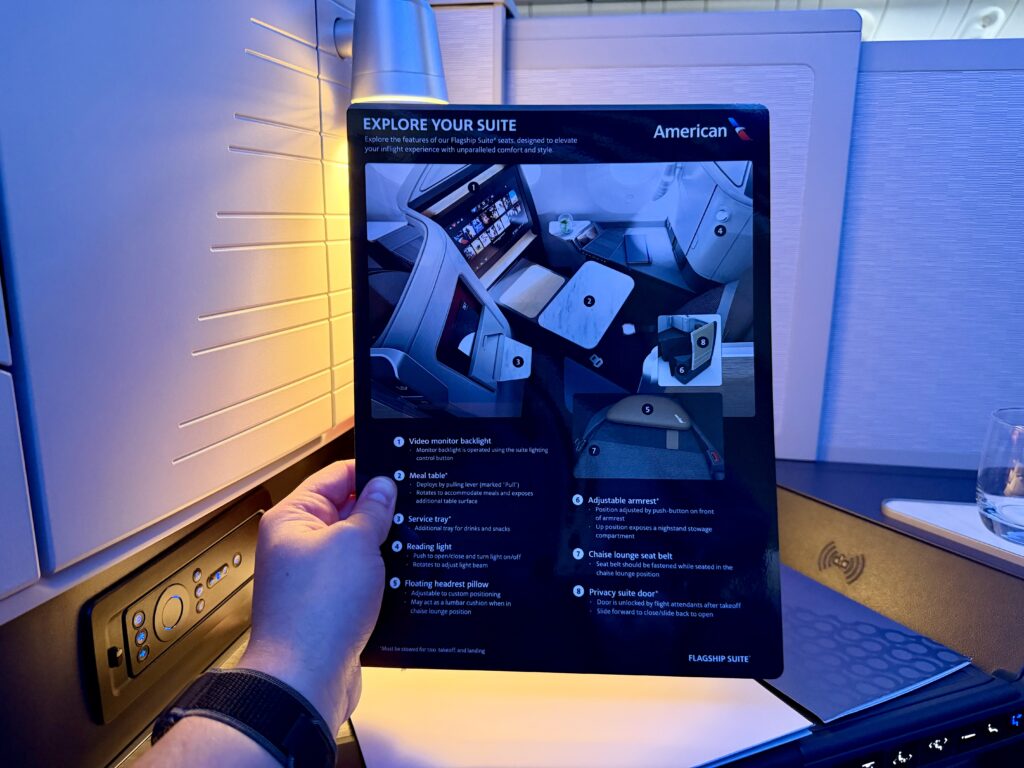
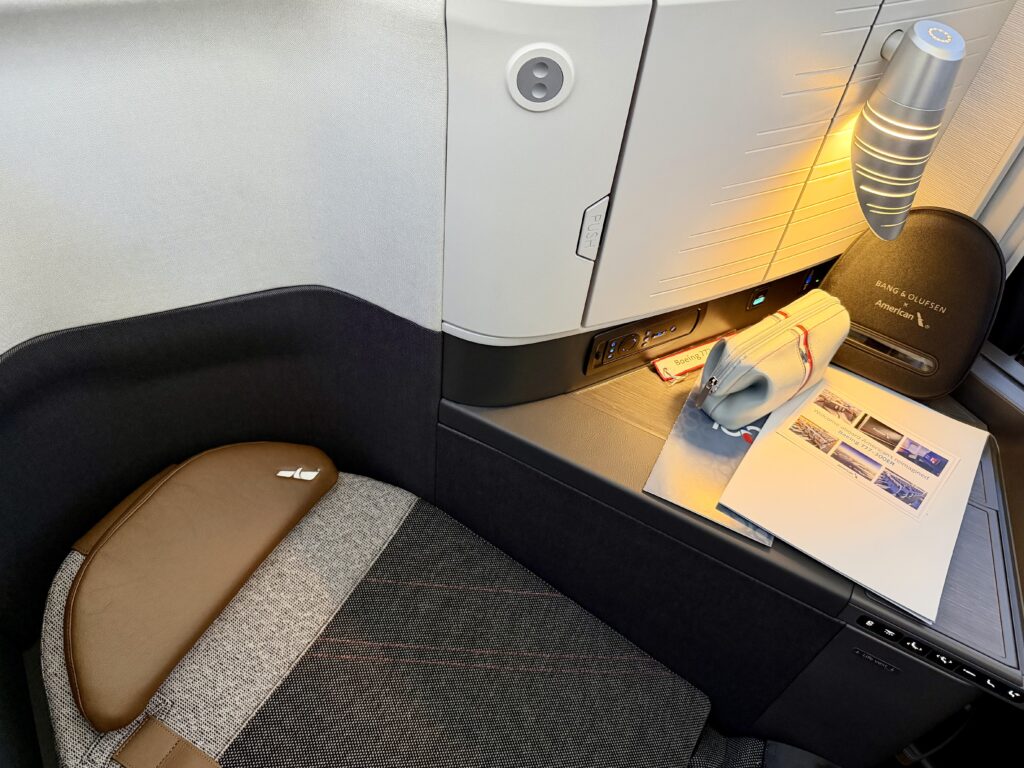
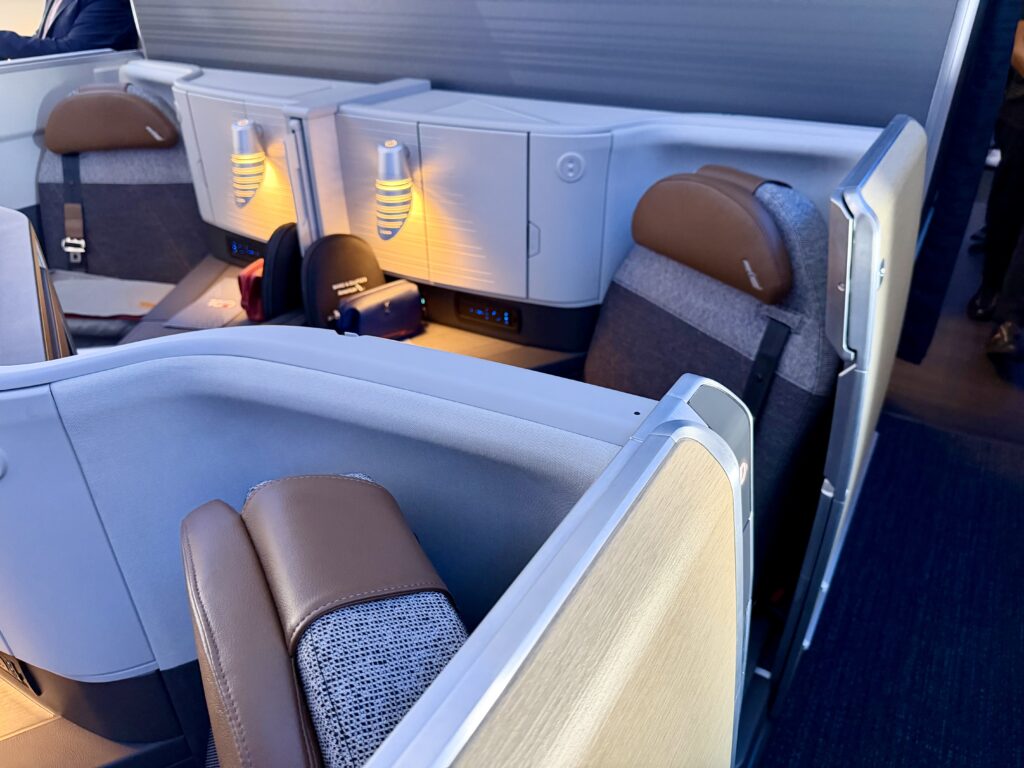
American has spent the last several years pushing its product upmarket, with upgraded lounges, more premium seats, and the launch of its new Flagship Suite.
There’s a pretty simple reason why.
Isom said just 30% of American’s seats now account for 50% of the airline’s revenue. And despite all the attention American has placed on premium cabins recently, the airline still considers itself relatively early in that transition.
By the end of the decade, American expects its number of premium seats to grow by roughly 50%.
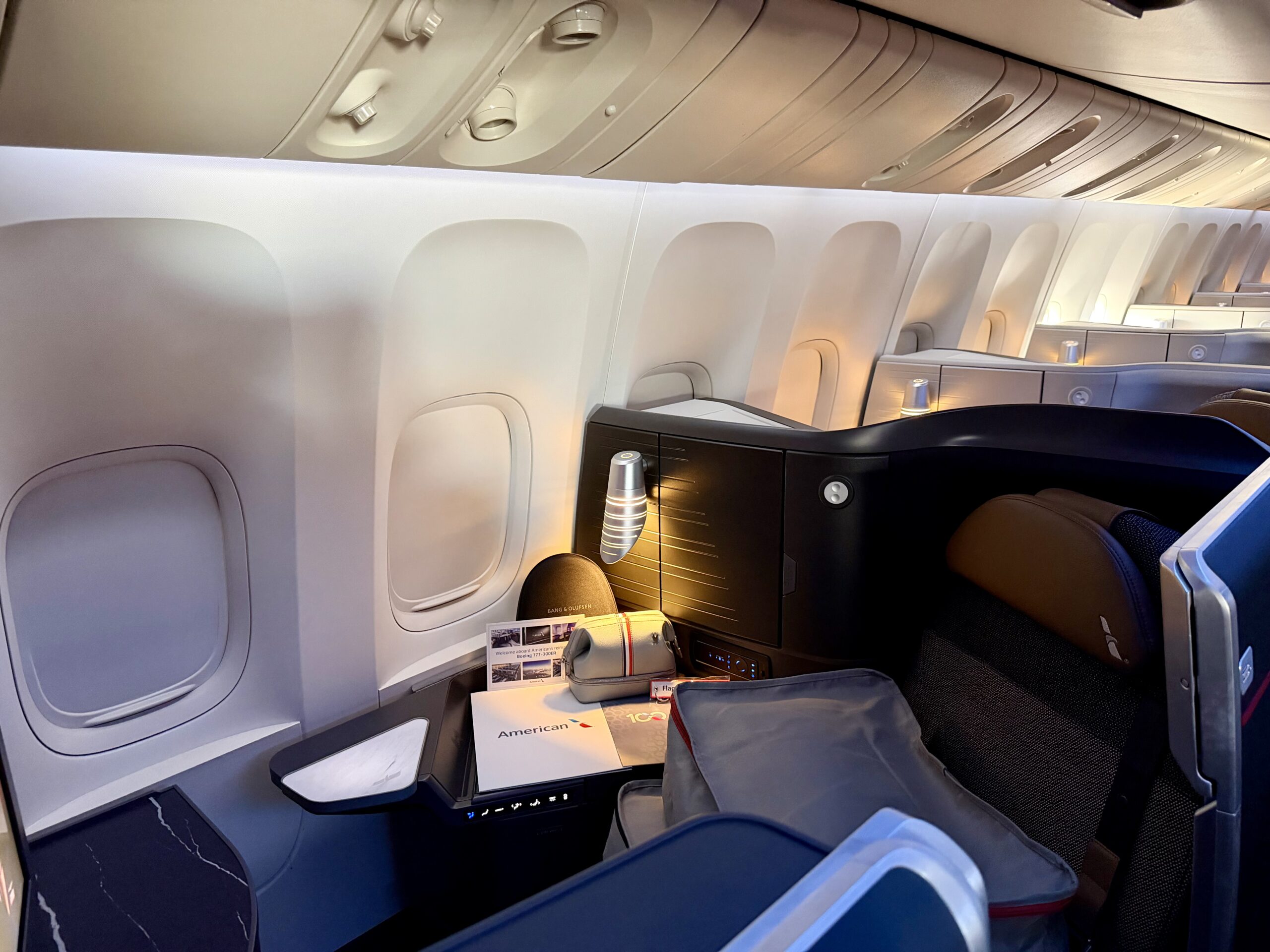
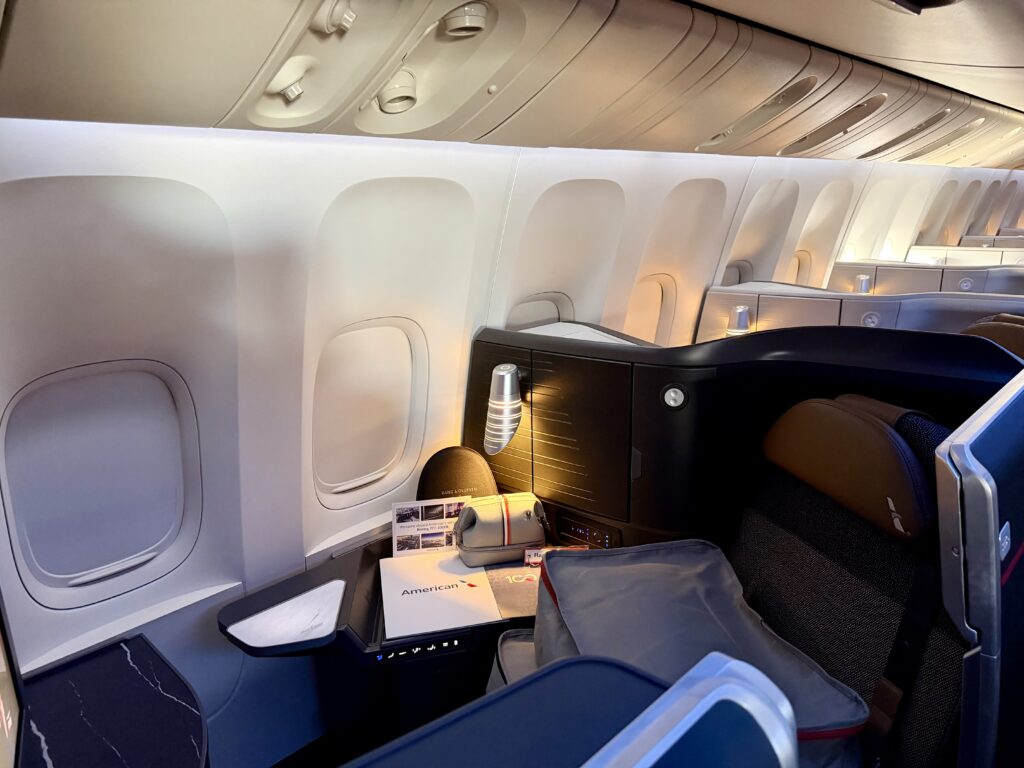
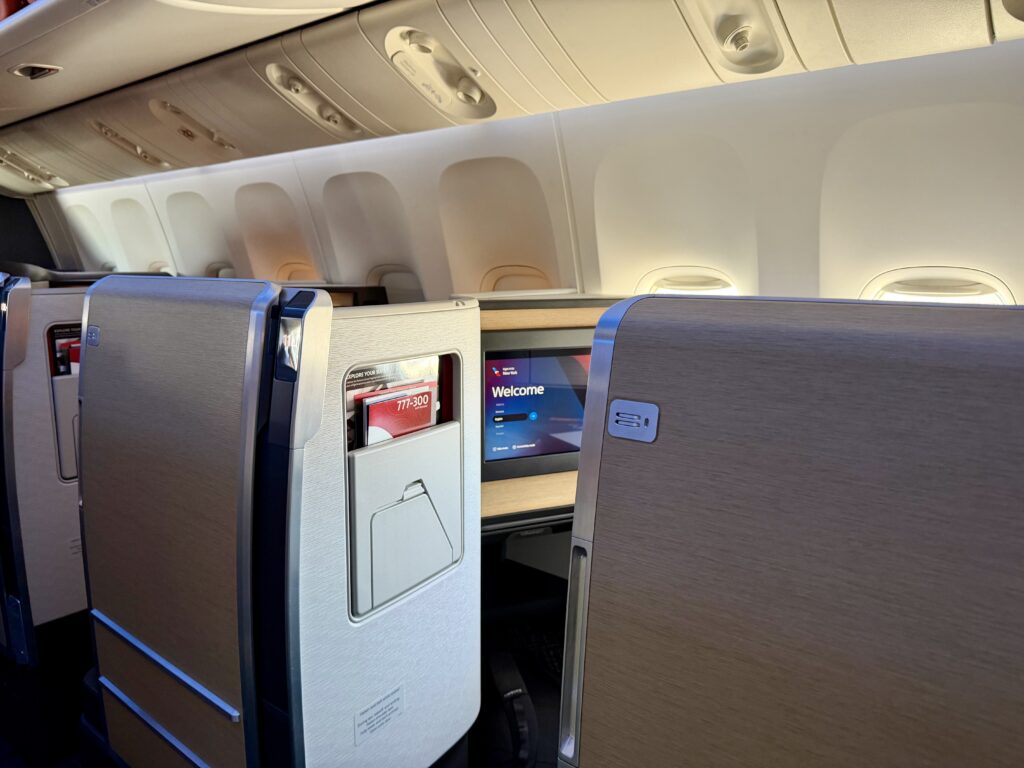
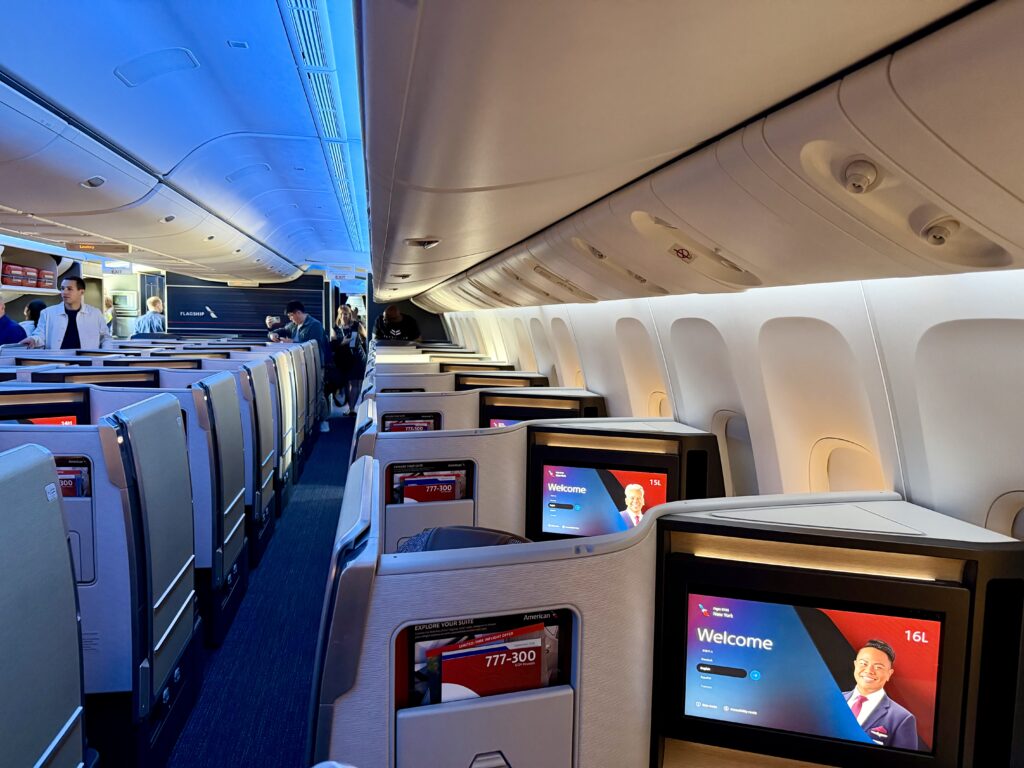
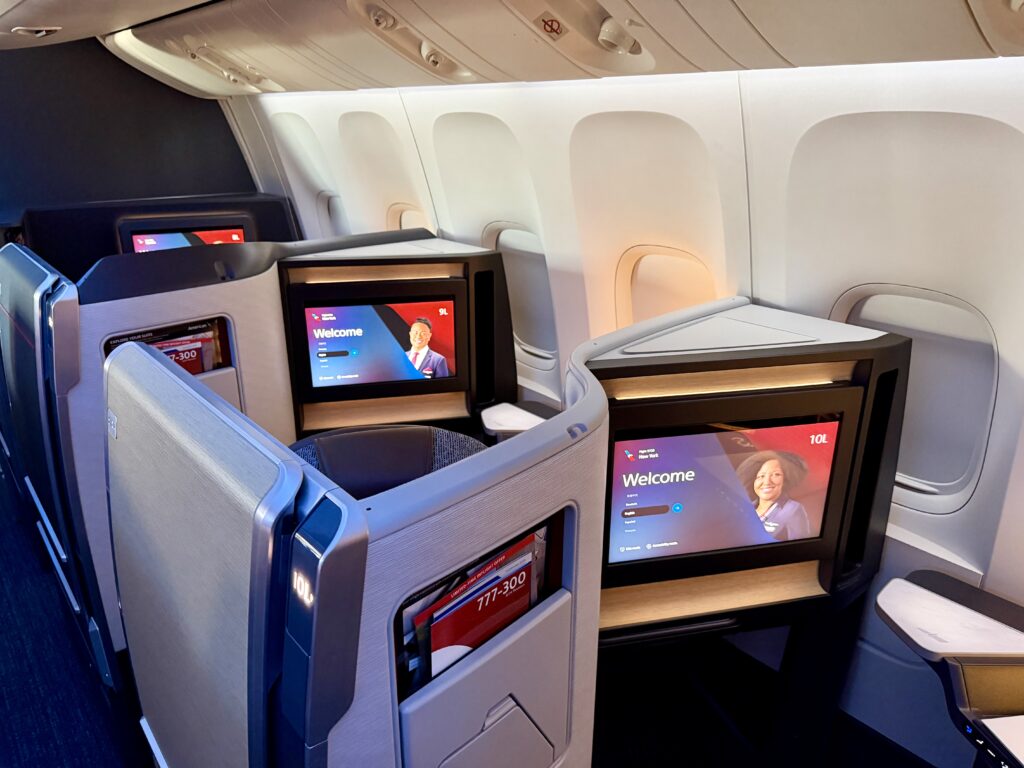
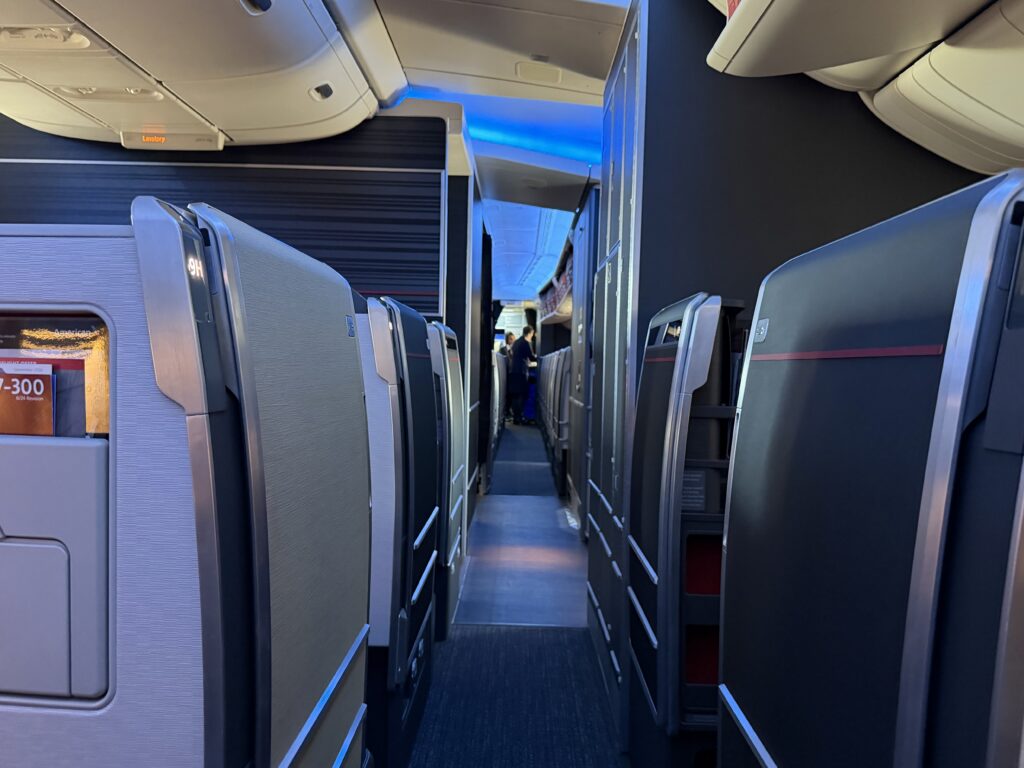
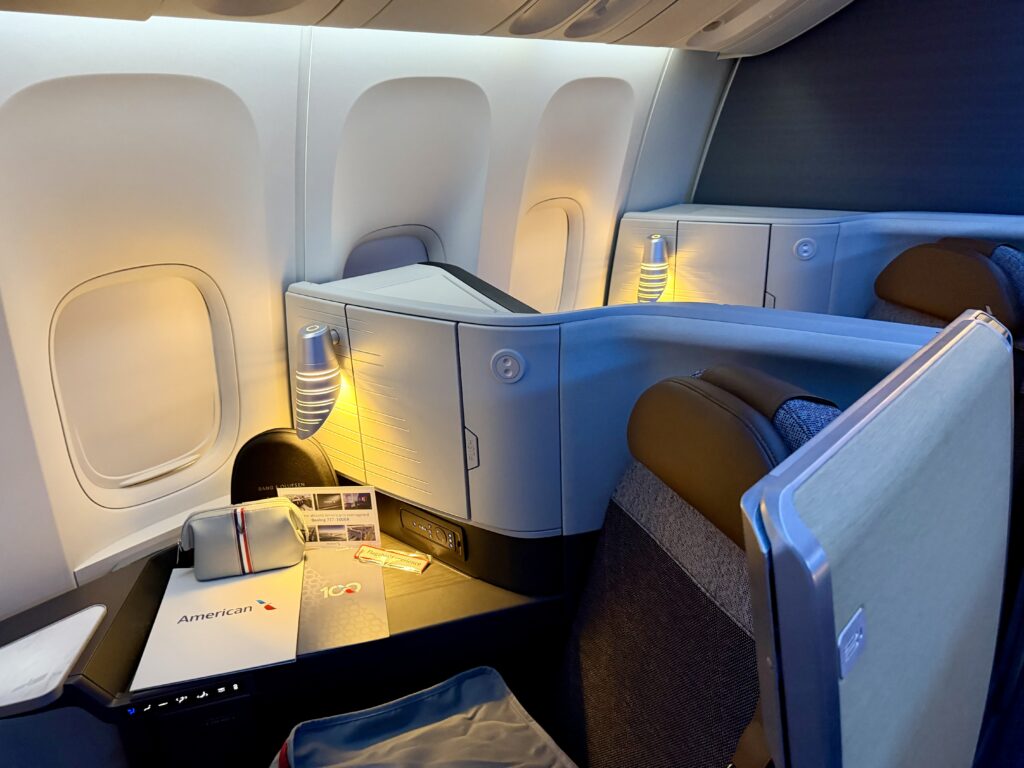
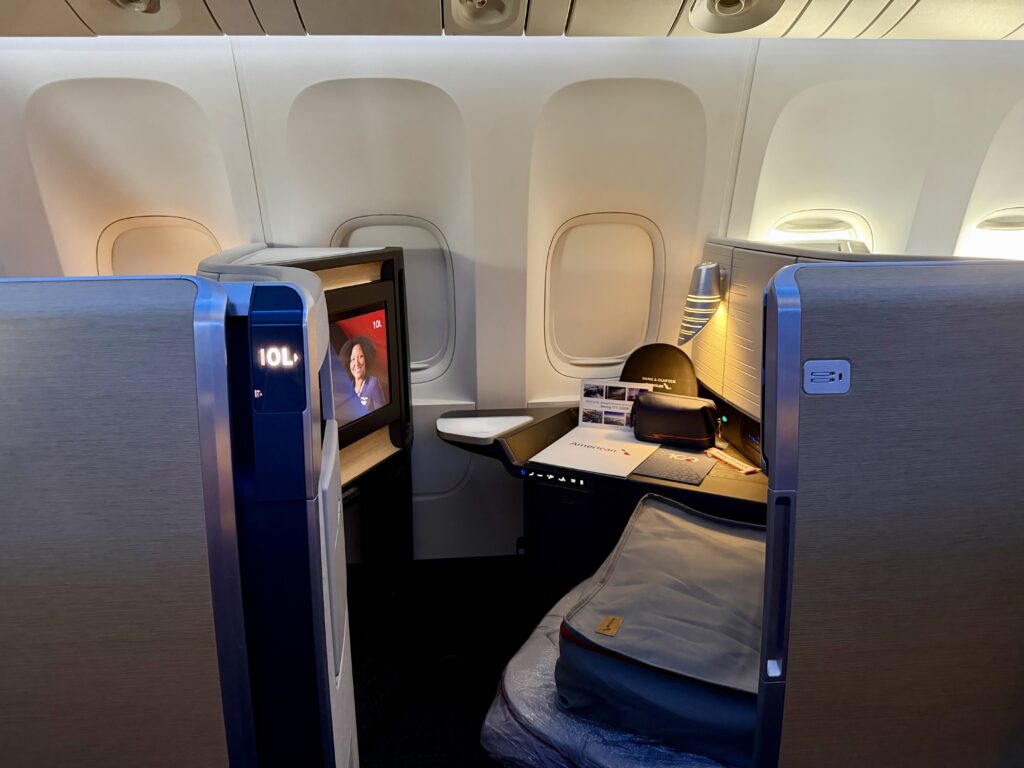
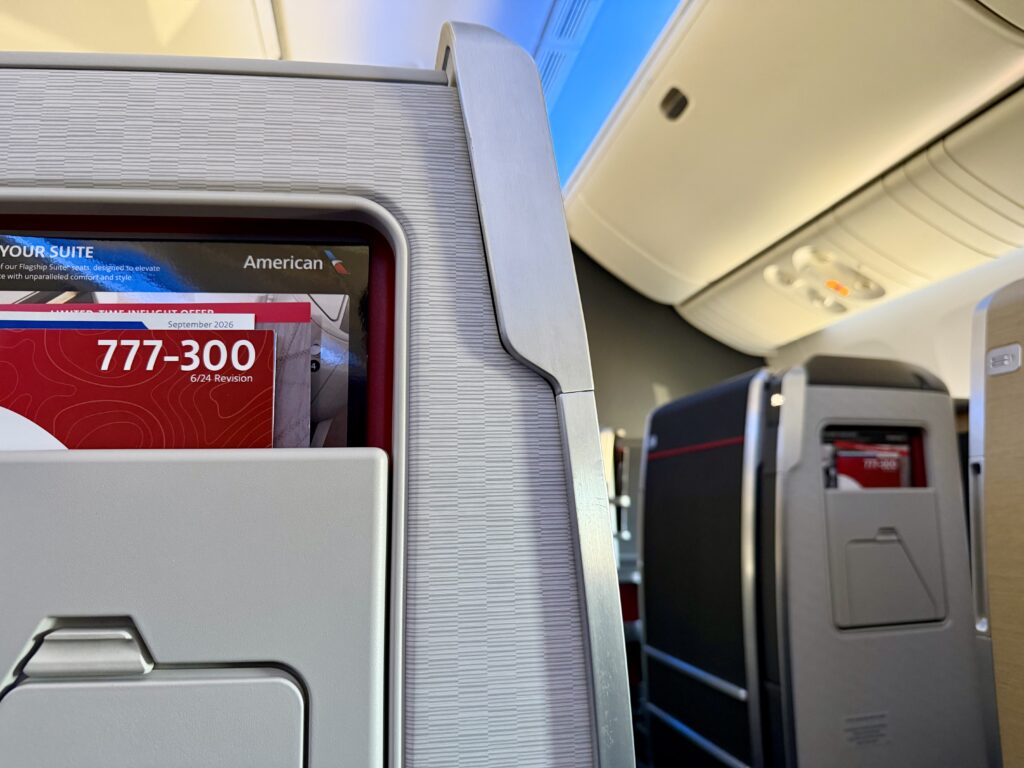
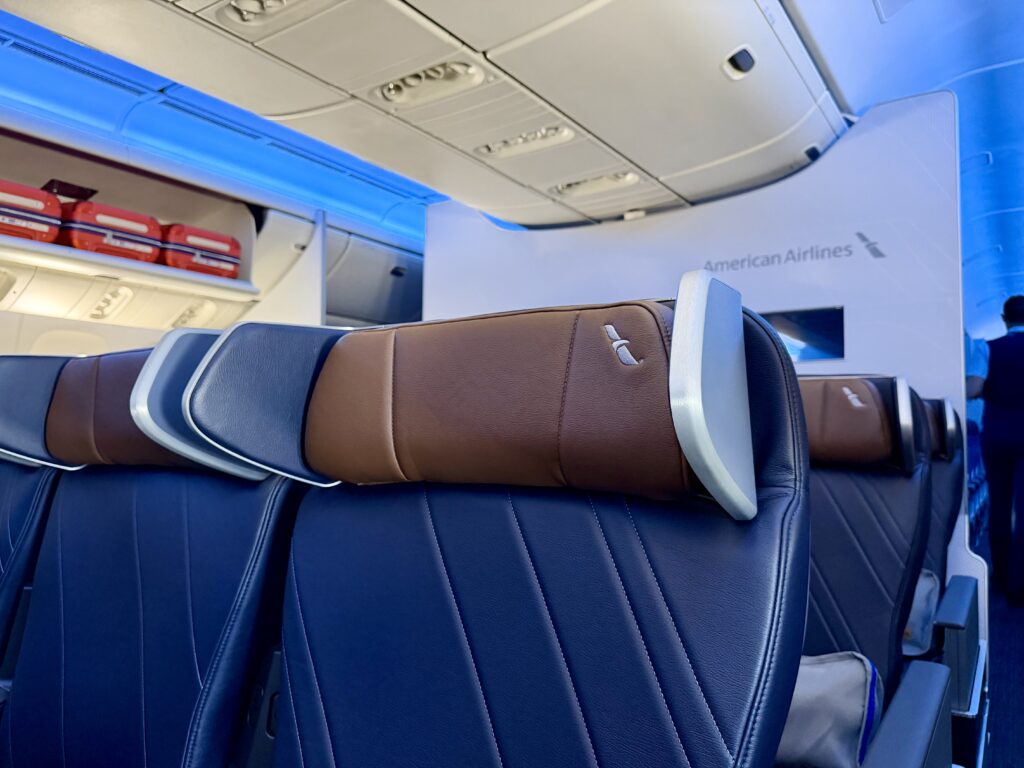
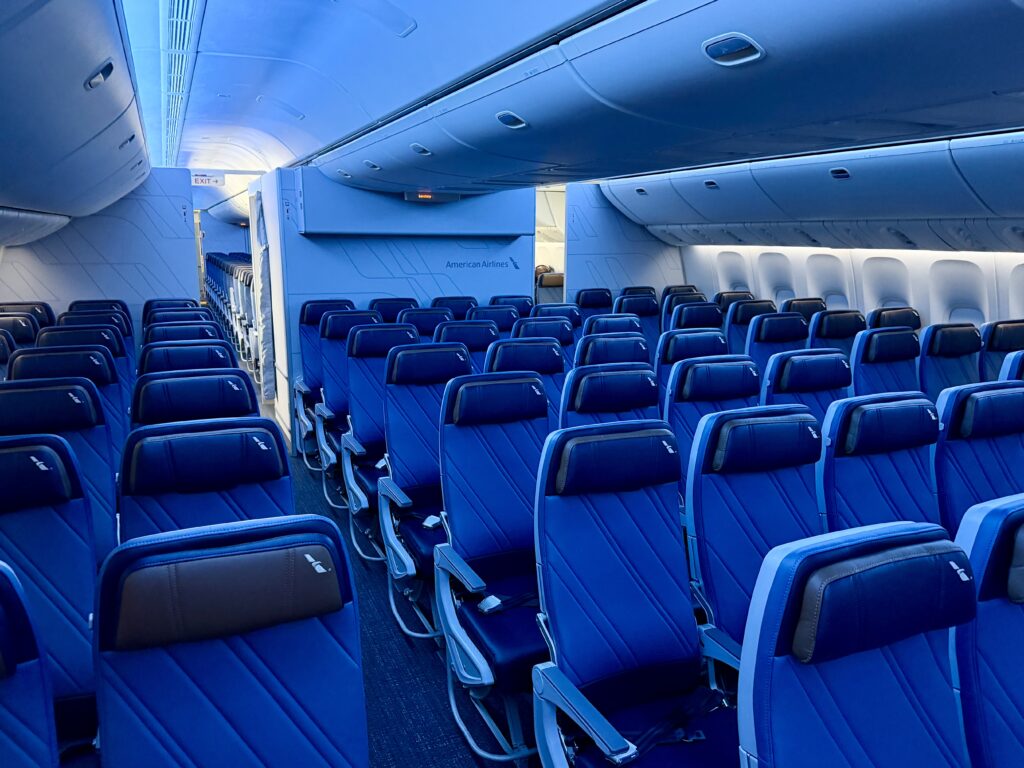
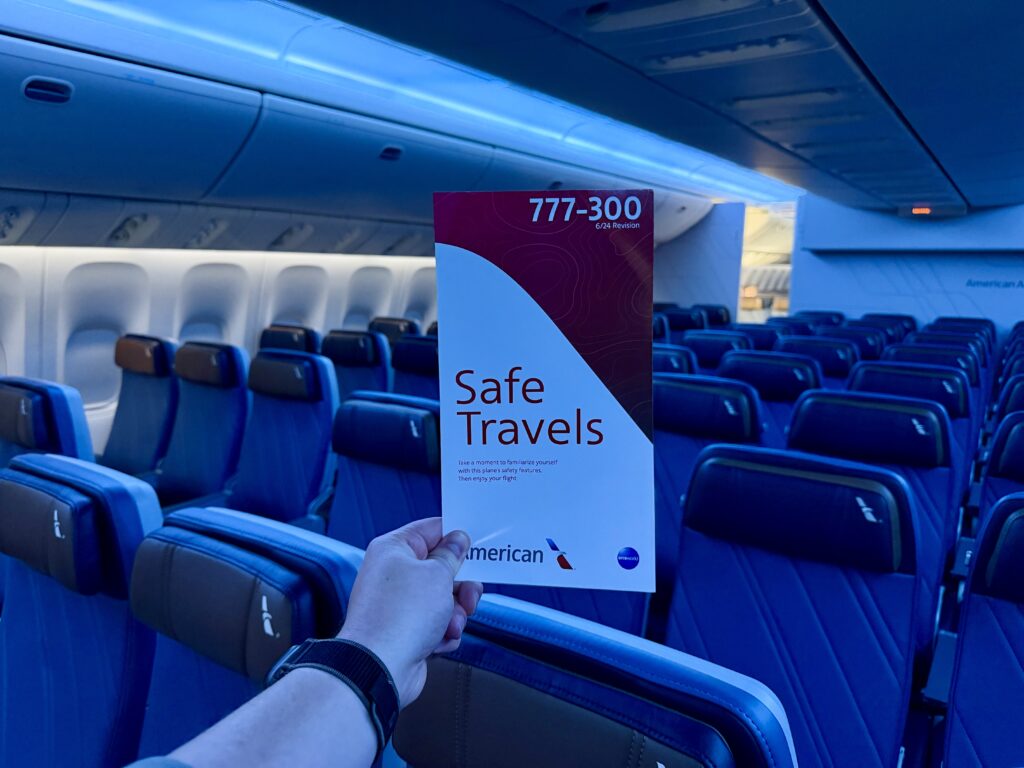
Some of that growth is already underway. American’s first retrofitted Boeing 777-300ER entered service with a larger Flagship Suite cabin, while Isom said work on the airline’s 777-200ERs will be “moving before you know it.” Airbus A319 and A320 reconfigurations are also beginning to roll out.
The result should be considerably more premium seating across American’s fleet over the next several years, on both its domestic and international jets.
American also appears to be preparing for one of its biggest periods of lounge investment in years.
Isom said customers will see “more new lounge openings at American over the next couple of years than we’ve done in decades.”
Several lounge projects are already underway, but the comment suggests there’s plenty more happening behind the scenes.
That’s worth watching as American puts more emphasis on the experience before a flight, not just the seat onboard.
Free Wi-Fi Is Also Growing AAdvantage
American’s rollout of free Wi-Fi isn’t just about making the flight better.
Isom said AAdvantage enrollments are running at record levels, with much of that growth driven by free Wi-Fi. An AAdvantage membership is required to use the service.
More members also gives American a larger pool of customers for other parts of AAdvantage, particularly its credit card partnership with Citi.
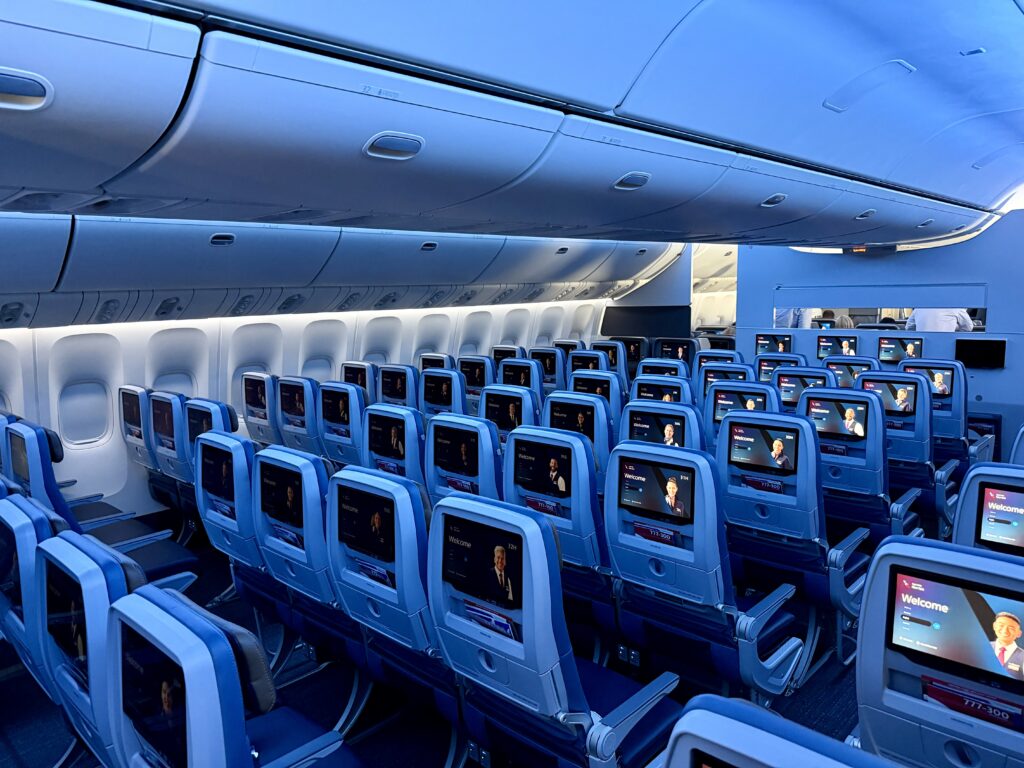
The onboard upgrades still have some distance to go. Isom said a “significant chunk” of American’s fleet will have high-speed Starlink Wi-Fi as the airline moves through 2027. Seatback entertainment will take several years to spread across the fleet.
Some Flights Could Be Trimmed
There was one less exciting update.
Higher fuel prices are causing American to reconsider some of its planned flying. May said the airline will make adjustments to its December schedule and now expects to grow somewhat less in 2027 than it anticipated several months ago.
That doesn’t necessarily mean widespread route cuts. American still sees room to grow its network over the longer term.
But schedules could get a little thinner in the near term as American adjusts to higher fuel costs.
In the aggregate, the comments point to an American that will look different over the next several years. More premium seats and lounges are coming, Wi-Fi and seatback entertainment are spreading across the fleet, and some of that investment is already starting to show up. The immediate question is how much higher fuel prices slow the airline’s plans to grow the network around it.
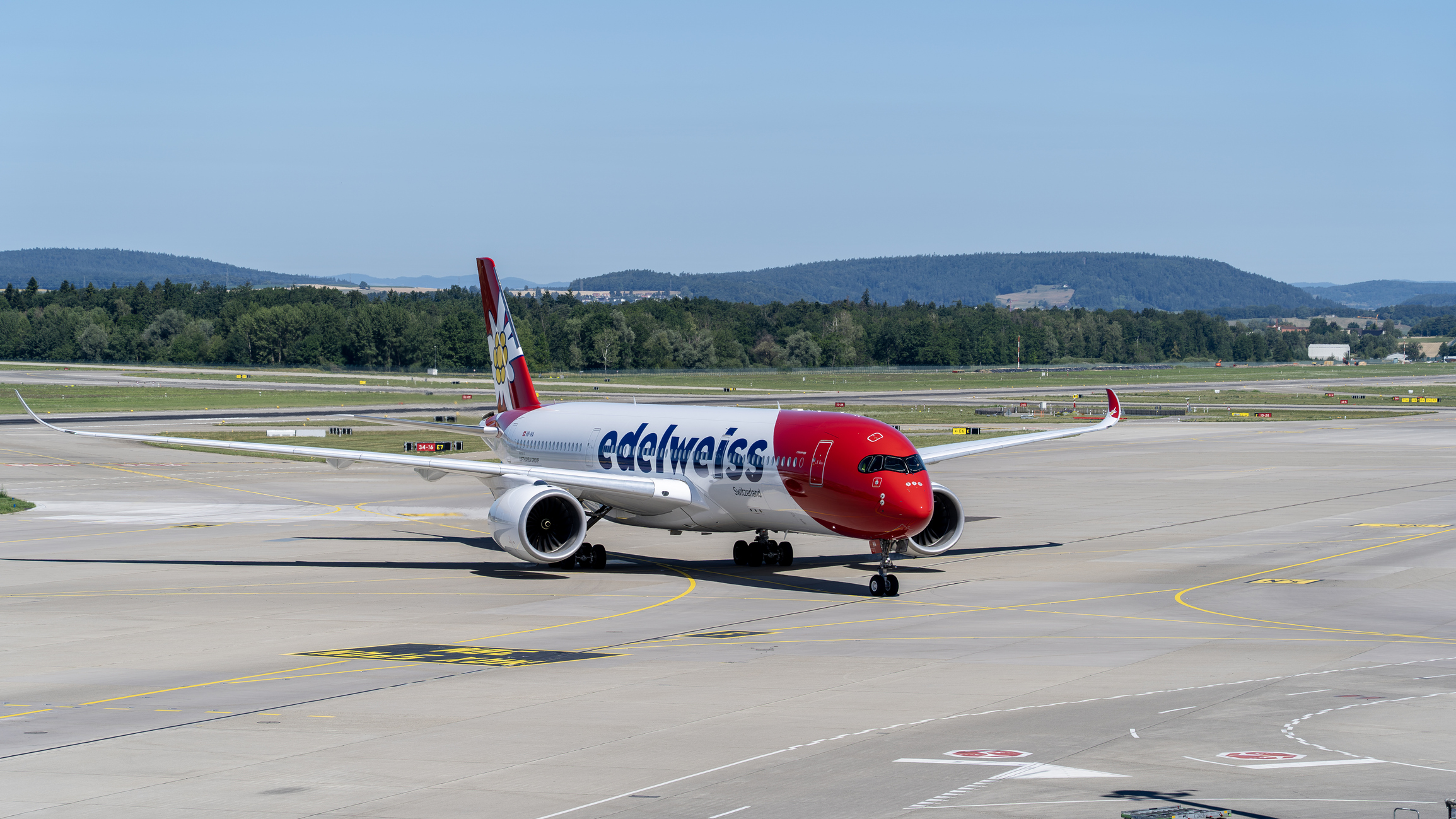
Edelweiss is getting a new business class. And for an airline built largely around taking people on vacation, it’s fairly simple.
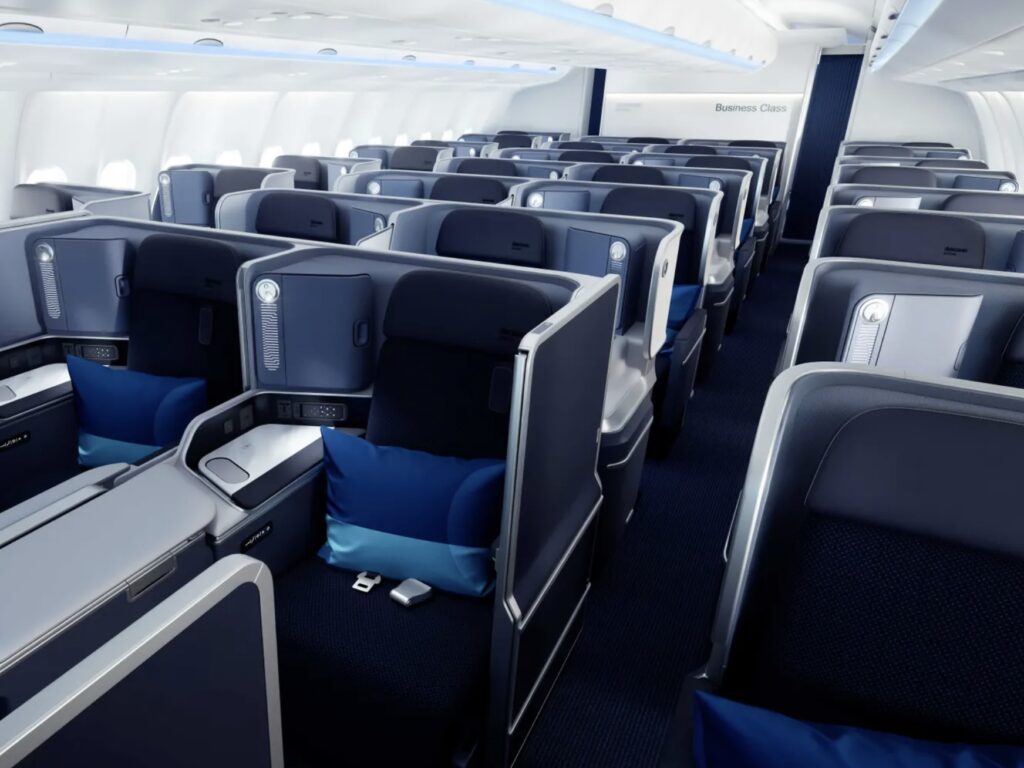
The Swiss leisure airline unveiled the new cabins for its Airbus A350 fleet on Wednesday, September 16. There’s a standard business class seat, plus a small number of larger suites at the front. The first aircraft gets the new cabin in December, with the rest following by summer 2027.
That’s not particularly notable on its own. But Edelweiss is part of Lufthansa Group and serves as the leisure counterpart to SWISS. Discover Airlines plays the same role alongside Lufthansa and unveiled a similarly straightforward business class earlier this year.
Meanwhile, Lufthansa and SWISS have spent years developing Allegris and SWISS Senses (the respective terms for their new cabins), with five different business class seats offering different amounts of privacy, space, and bed length.
Yet somehow, Lufthansa Group’s leisure airlines have ended up with business class that’s much less confusing. And depending on what matters in a seat, the standard product might be more appealing, too.
Edelweiss Doesn’t Make the Seat Complicated
Edelweiss’s new A350 cabin is a massive upgrade from what the airline offers today.
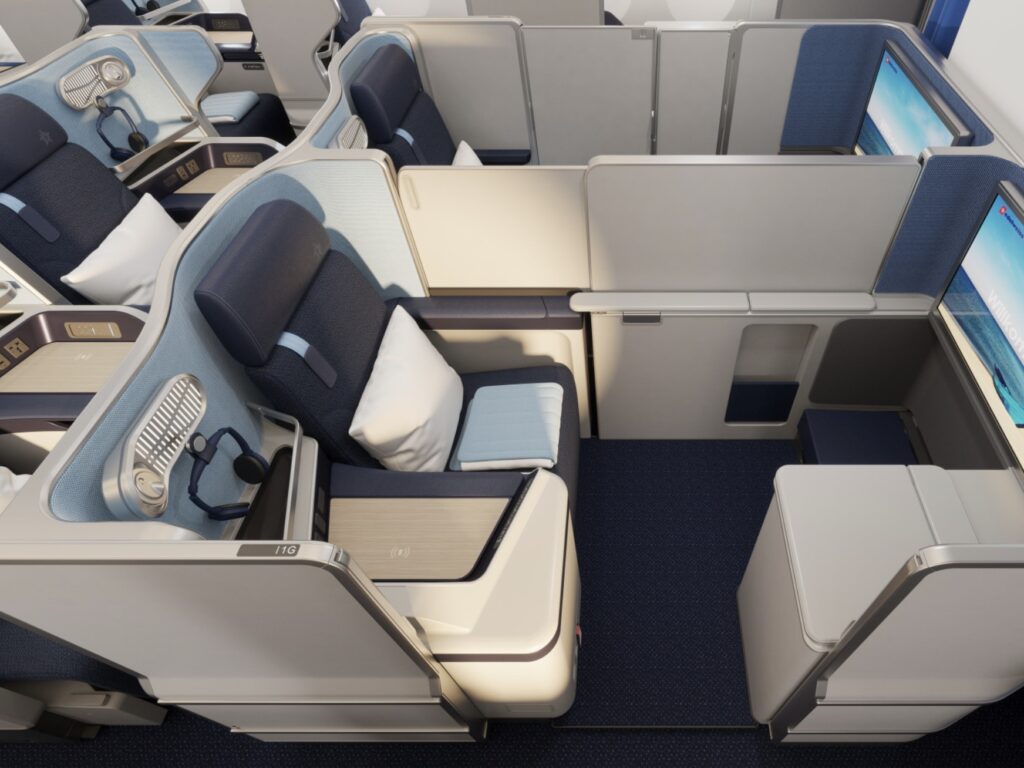
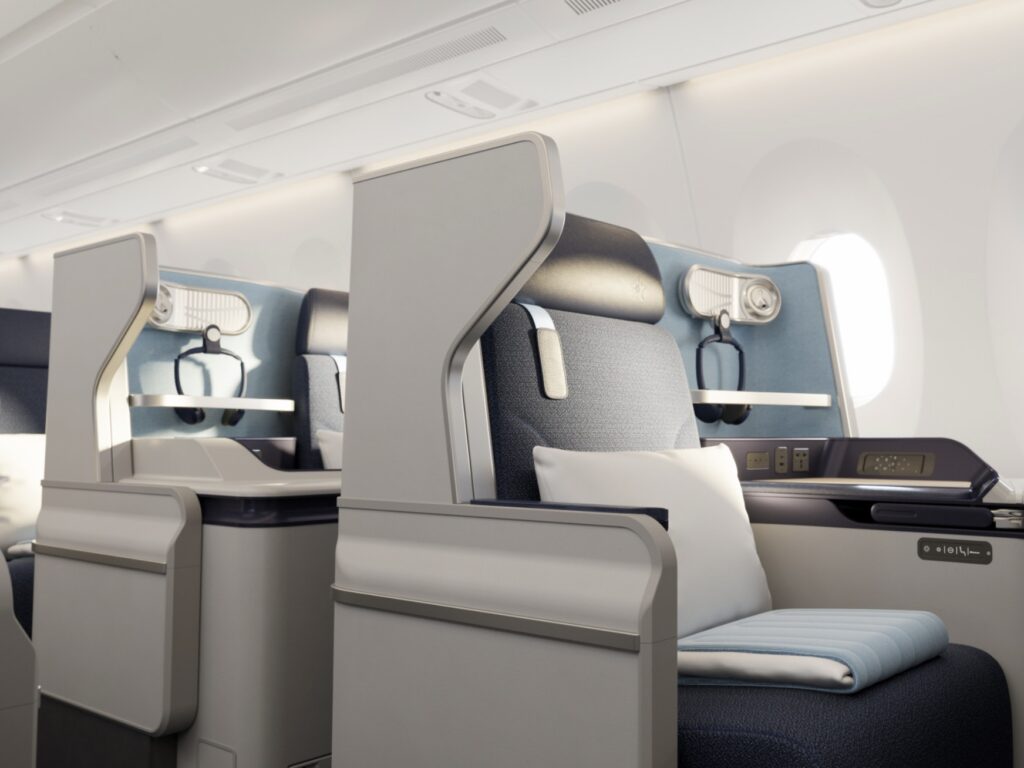
Every business class seat will have direct aisle access, convert into a fully flat bed, and have a substantial shell separating it from the aisle. Roughly half are arranged as pairs for two people flying together.
EDELWEISS
The front-row Business Suites add roughly 4-foot-high closing doors, 32-inch screens, more storage and space around the feet, plus a mattress topper. That’s about as complicated as the cabin gets.
The pricing structure is also straight and to the point. Edelweiss’s fare conditions say advance seat selection is free in business class, with the Business Suite specifically listed as the exception that costs extra.
EDELWEISS
Discover Keeps the Choices Limited, Too
Discover Airlines announced its new Ocean Blue cabins in January. Its first retrofitted Airbus A330 is scheduled to enter service in April 2027.
Its business class follows much the same formula. Standard lie-flat seats have direct aisle access and substantial privacy shells. The cabin has just two front-row Business Class Suites, which add roughly 4-foot-high doors, 32-inch screens, and additional space and storage.
DISCOVER
Standard business class seat selection is included with most Discover business fares, although its cheapest Business Light fare can charge for advance selection. Discover hasn’t published what selecting one of the future suites will cost.
The details differ slightly, but both leisure airlines arrive at roughly the same place. The standard seat already delivers the basics expected from a modern business class, while a small number of suites offer a little something extra.
Lufthansa and SWISS, on the other hand, have gone in a very different direction.
Lufthansa and SWISS Turn One Cabin Into Five Choices
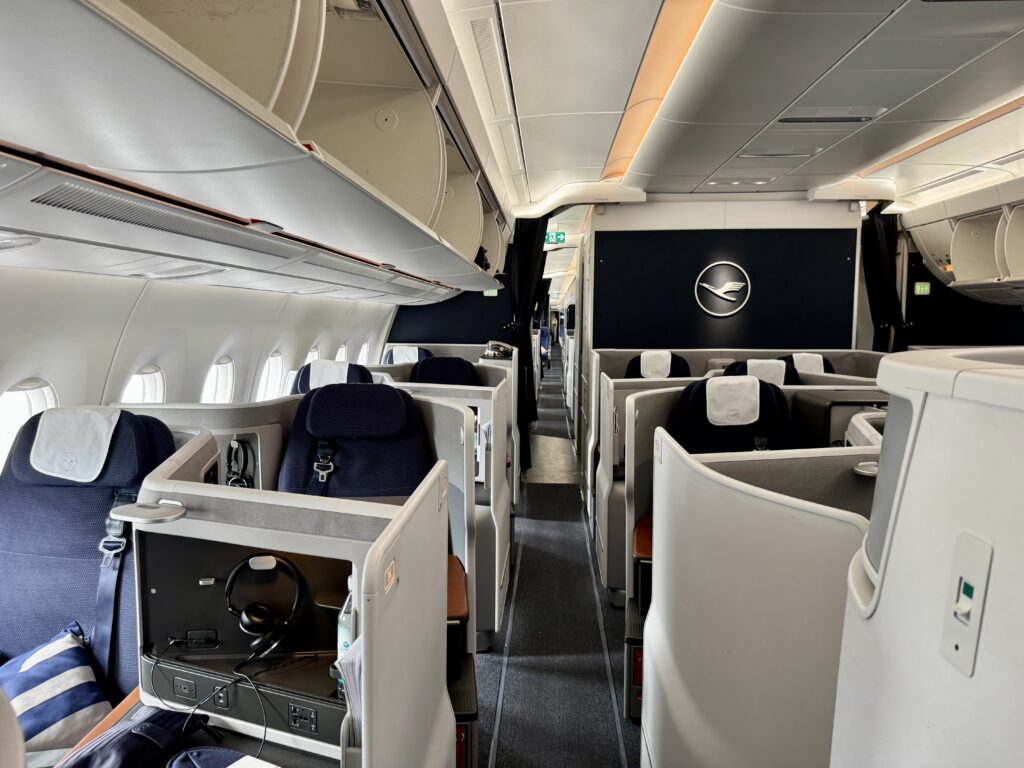
Lufthansa’s Allegris has five business class seat types. There’s the Classic Seat, Privacy Seat, Extra Space Seat, Extra Long Bed Seat, and Business Suite.
The idea behind that is personalization. A longer bed, more room, more privacy, or a suite can be selected depending on what matters most. But that also means buying a business class ticket isn’t necessarily the end of the purchasing decision.
TYLER GLATT / POINTS INSIDER
On my last Lufthansa Allegris award (that happened to be booked with Aeroplan points), the Classic Seat was the only option available without an additional charge. Lufthansa wanted 210 Canadian dollars, or about $153 at the time, for a Privacy Seat or Extra Long Bed Seat. The Extra Space Seat cost about $185.
The Business Suite was about $545 just to select the seat.
And those fees are per person. For two or more people flying together, choosing something other than the Classic Seat can very quickly become a significant additional expense.
Those prices were specific to that flight, but they illustrate the tradeoff. The free Classic Seat is also the least private option, with considerably more exposure to the aisle. SWISS has a similarly exposed Classic Seat in its Senses cabin.
That’s where Edelweiss and Discover start to look a lot more appealing. Their standard seats already have substantial shells wrapping around them. More privacy isn’t something reserved for another category of business class seat.
There’s an aesthetic argument, too. Edelweiss and Discover arguably look more cohesive, with essentially one design language running through business class. Allegris and SWISS Senses mix several visibly different seats because each is meant to do something different.
Put the four cabins next to each other without airline names attached, and it might be difficult to pick out which belong to the leisure airlines.
Somehow, the Leisure Airlines Are Simpler
That doesn’t make Edelweiss or Discover categorically better.
Lufthansa and SWISS offer more choice, and their best business class seats can provide more space and privacy. Both also offer international first class, something Edelweiss and Discover don’t have.
But business class is where the contrast within Lufthansa Group becomes hard to miss.
Edelweiss and Discover are rolling out attractive cabins with suites, direct aisle access, free Starlink, and relatively simple seat choices. Lufthansa and SWISS have turned the business class seat itself into a menu, where more privacy, room, or bed length can mean paying again after the ticket is booked.
It’s an odd state of affairs. Leisure airlines cater heavily to vacation trips, exactly where it would be easy to imagine more aggressive upselling.
Instead, Edelweiss and Discover may have landed on something the group’s full-service carriers haven’t. Business class that looks premium without requiring much explanation or another round of nickel-and-diming.
American Express is expanding its partnership with airport lounge operator Aspire in Canada. A new co-branded lounge is now open in Calgary and another is coming to Montréal.
The Aspire Amex Lounge at Calgary International Airport (YYC) opened September 16 in the domestic departures area. Another location will open in Montréal-Trudeau International Airport’s (YUL) transborder area by early 2027, serving passengers departing for the U.S.
The expansion follows the first Aspire Amex Lounge, which opened in Montréal’s domestic departures area in September 2025. Amex says that location has recorded more than 50,000 cardmember visits since opening.
Once the new Montréal location opens, the Aspire Amex network in Canada will include three lounges across two airports.
These Lounges Aren’t Just for Canadian Amex Cardmembers
These aren’t Centurion Lounges. They’re Aspire lounges operated by Swissport, with Amex partnering with Aspire to provide additional benefits for eligible cardmembers.
But access isn’t limited to Canadian Amex cards. Aspire lounges also participate in Priority Pass, which is a benefit of several U.S. credit cards, including The Platinum Card® from American Express.
U.S. Platinum Card members need to enroll in Priority Pass before using the benefit. Access requires a Priority Pass membership card and same-day boarding pass.
Eligible Amex cardmembers receive priority lounge and waitlist access at Aspire Amex Lounges. The lounges also offer a mix of buffet options and tableside ordering.
The upcoming Montréal location could be especially useful for U.S.-bound passengers. It will sit in the airport’s transborder area, while the existing Aspire Amex Lounge serves domestic departures.
With Calgary now open and a second Montréal location coming, the partnership is expanding from one lounge last year to three across two Canadian airports.
American Express is bringing a Centurion Lounge to continental Europe for the first time.
The 33rd Centurion Lounge opens Thursday, September 17, at Amsterdam Airport Schiphol (AMS). It’s in the airport’s non-Schengen zone between Concourses E and F. And the entryway is just up the stairs near the Lounge No. 50 sign.
At nearly 6,000 square feet, Amsterdam is far from the largest Centurion Lounge in the issuer’s network. But after walking through the space ahead of its opening, it doesn’t feel quite as small as that number suggests.
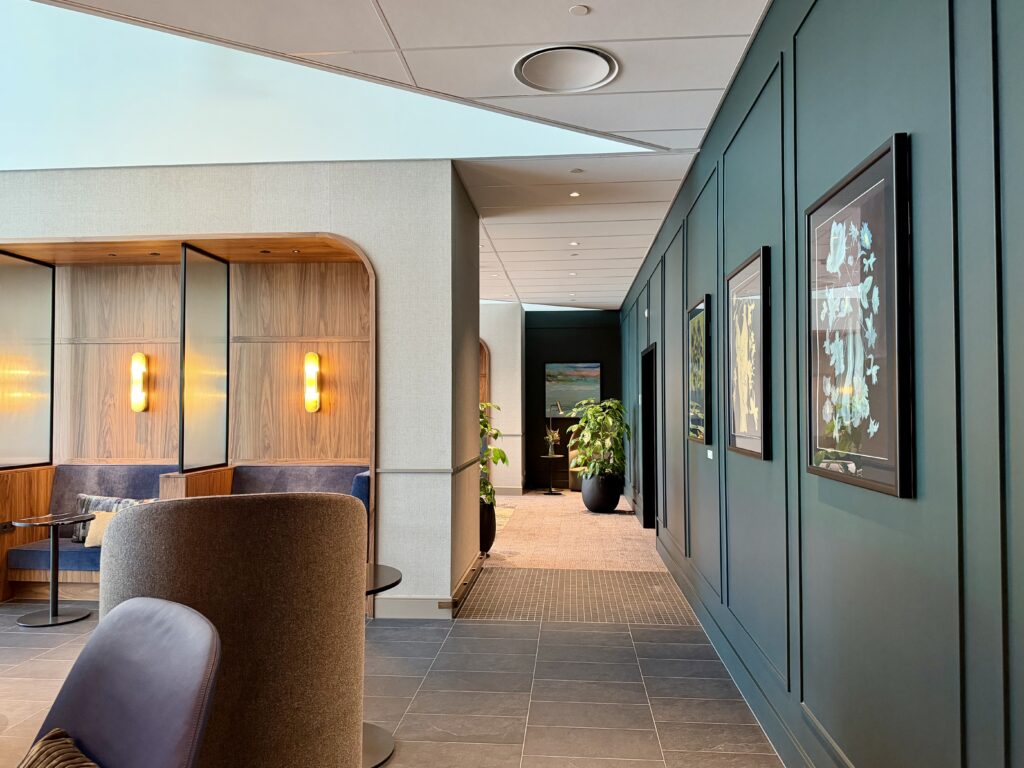
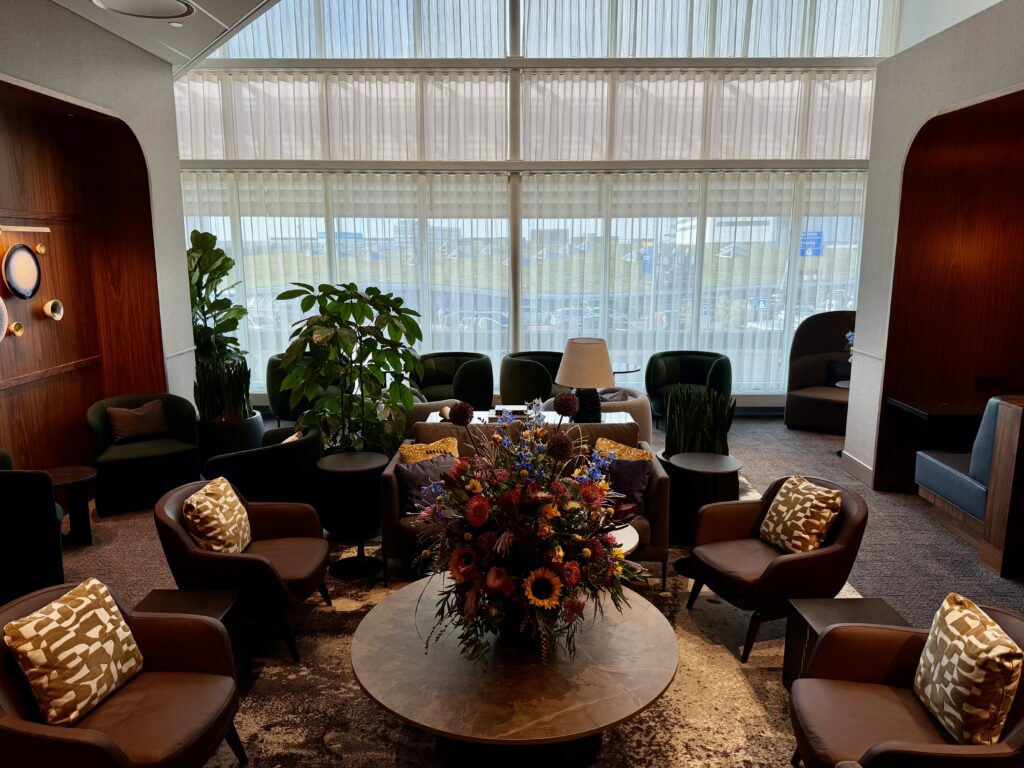
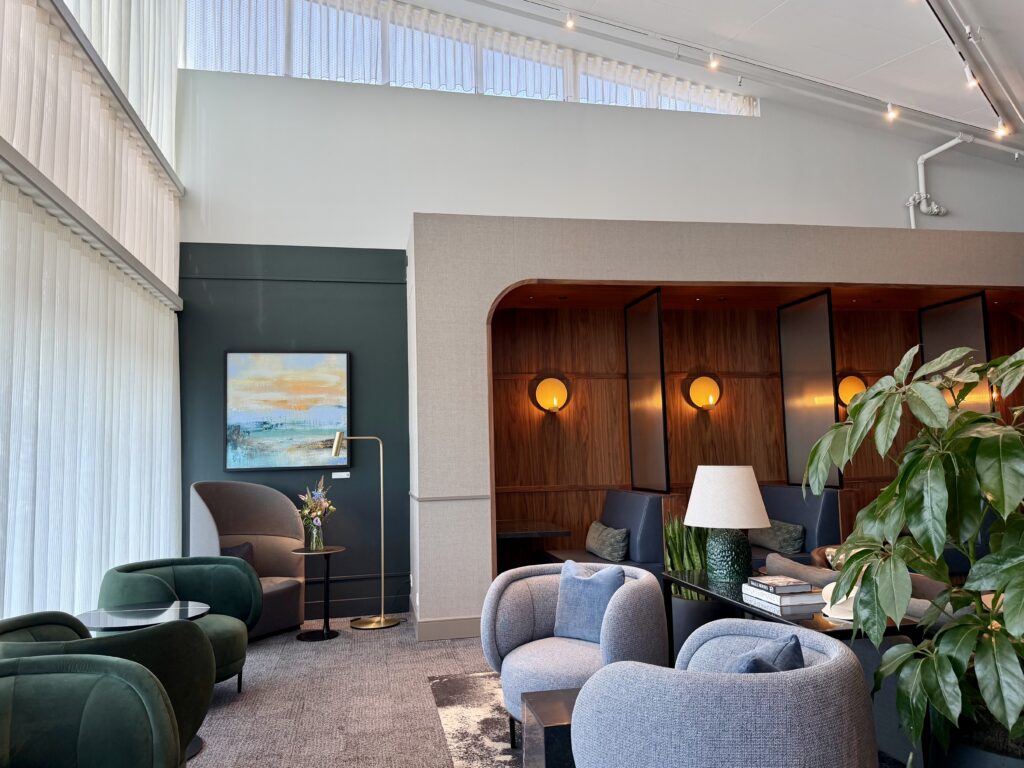
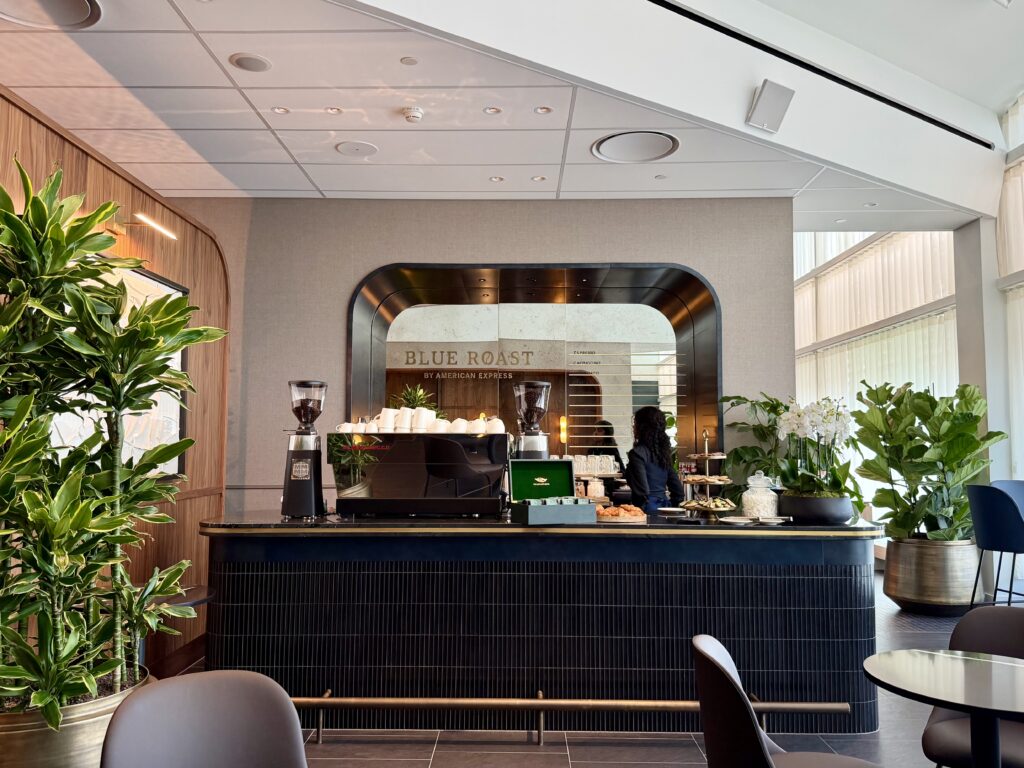
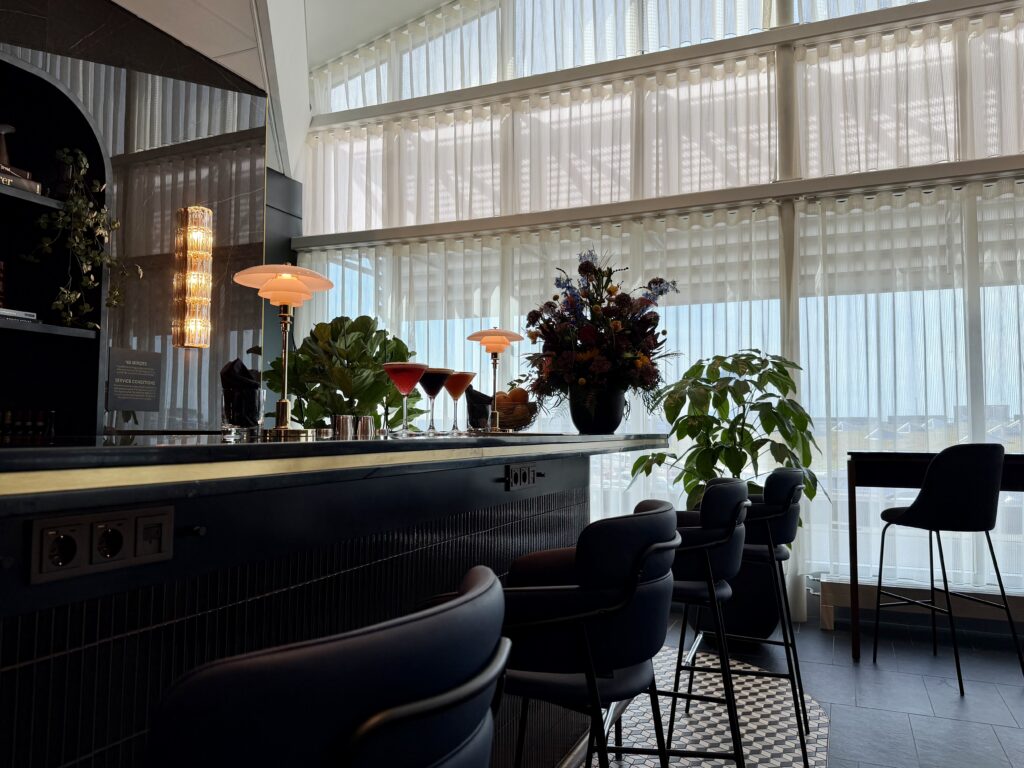
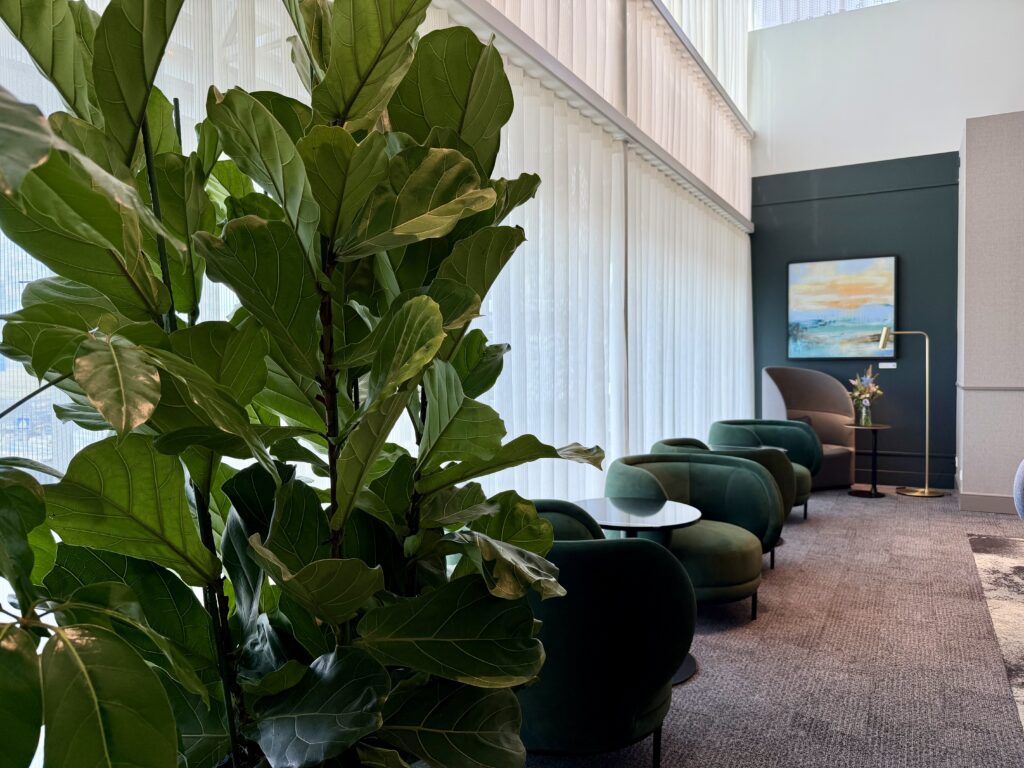
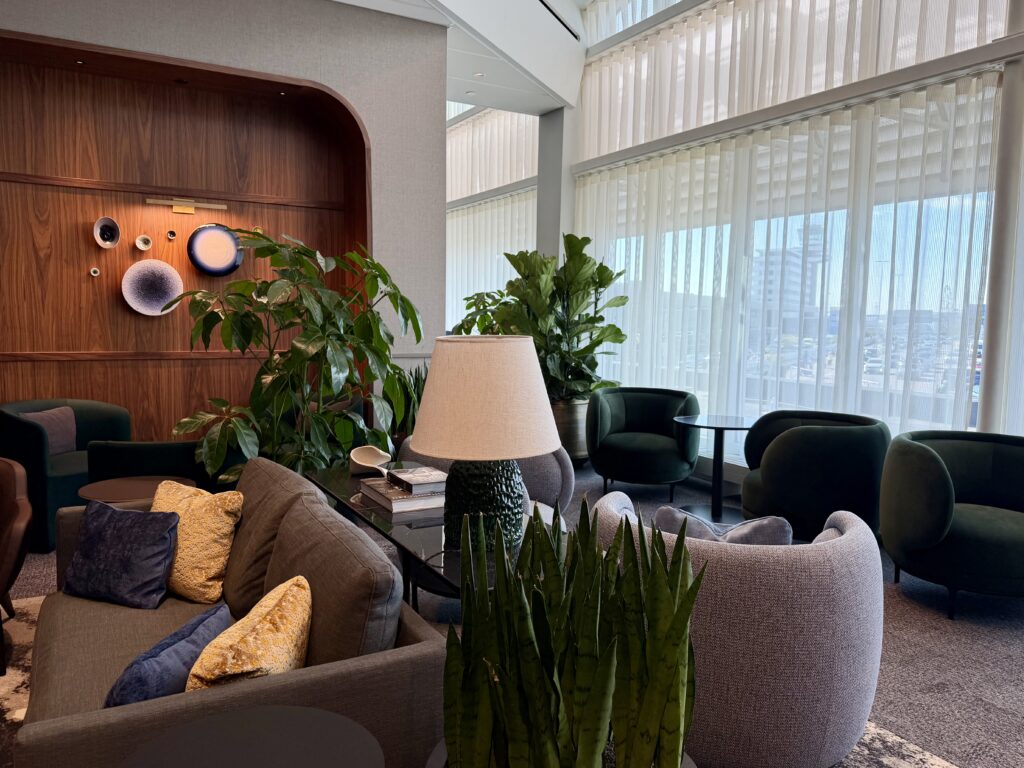
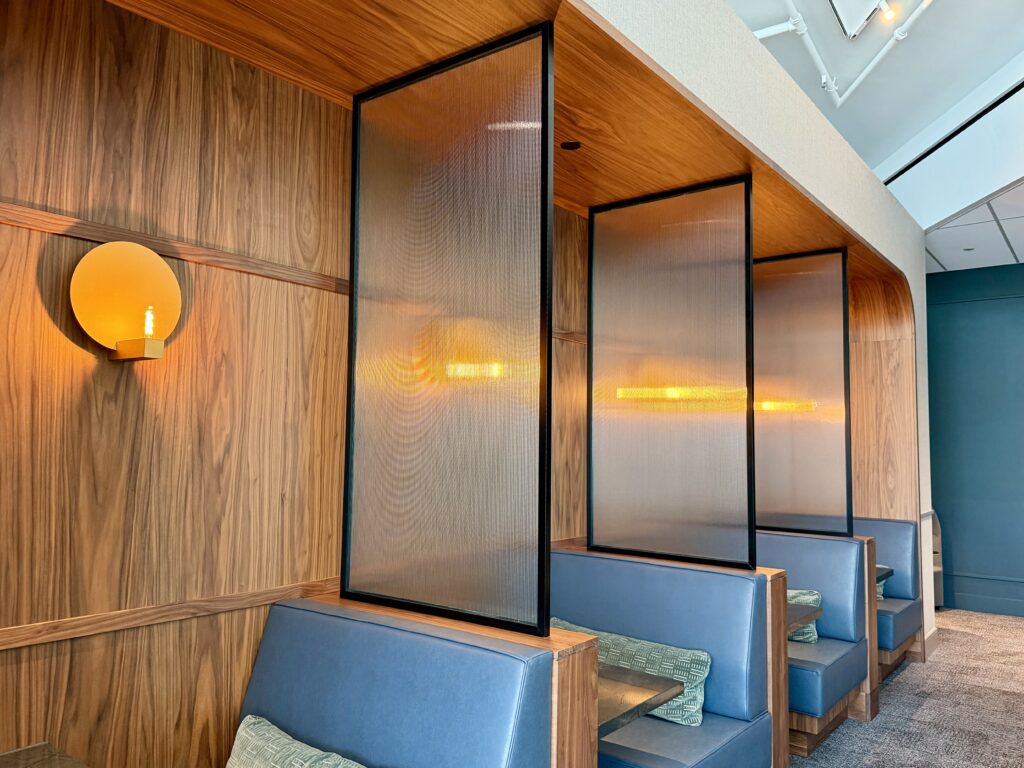
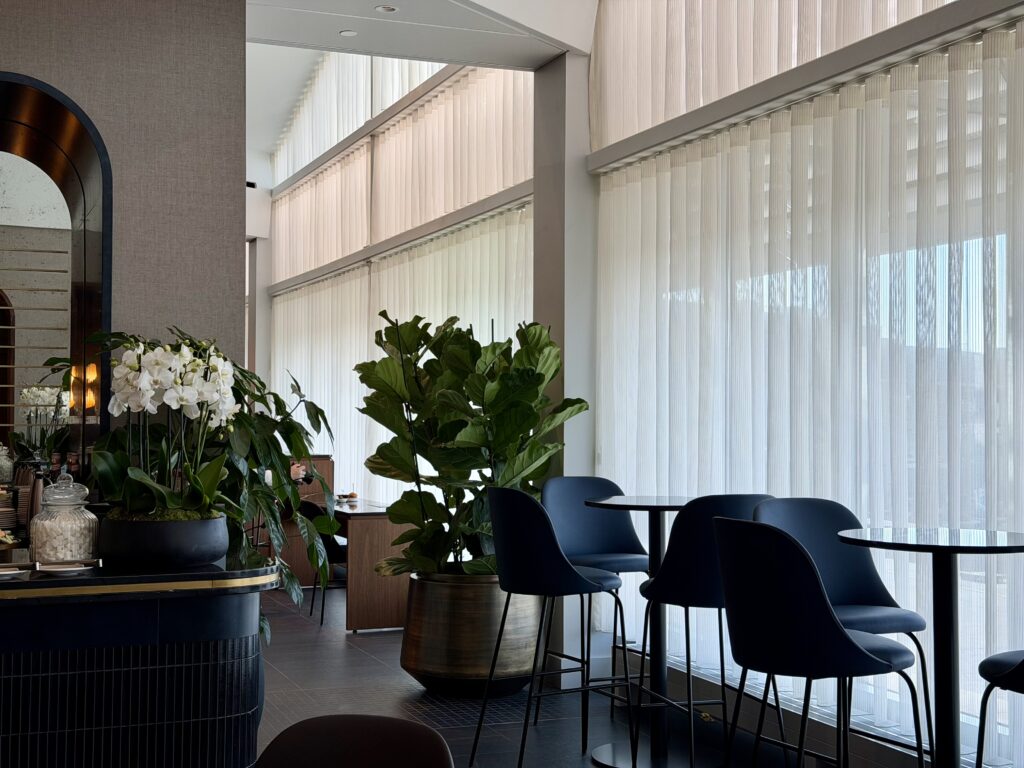
Tall ceilings and floor-to-ceiling windows bring plenty of natural light into the lounge, while the layout breaks the space into several distinct areas. There’s a dedicated coffee bar, dining area, full-service bar, and different types of seating across the lounge.
TYLER GLATT / POINTS INSIDER
Amex also packed quite a bit of the Netherlands into the space.
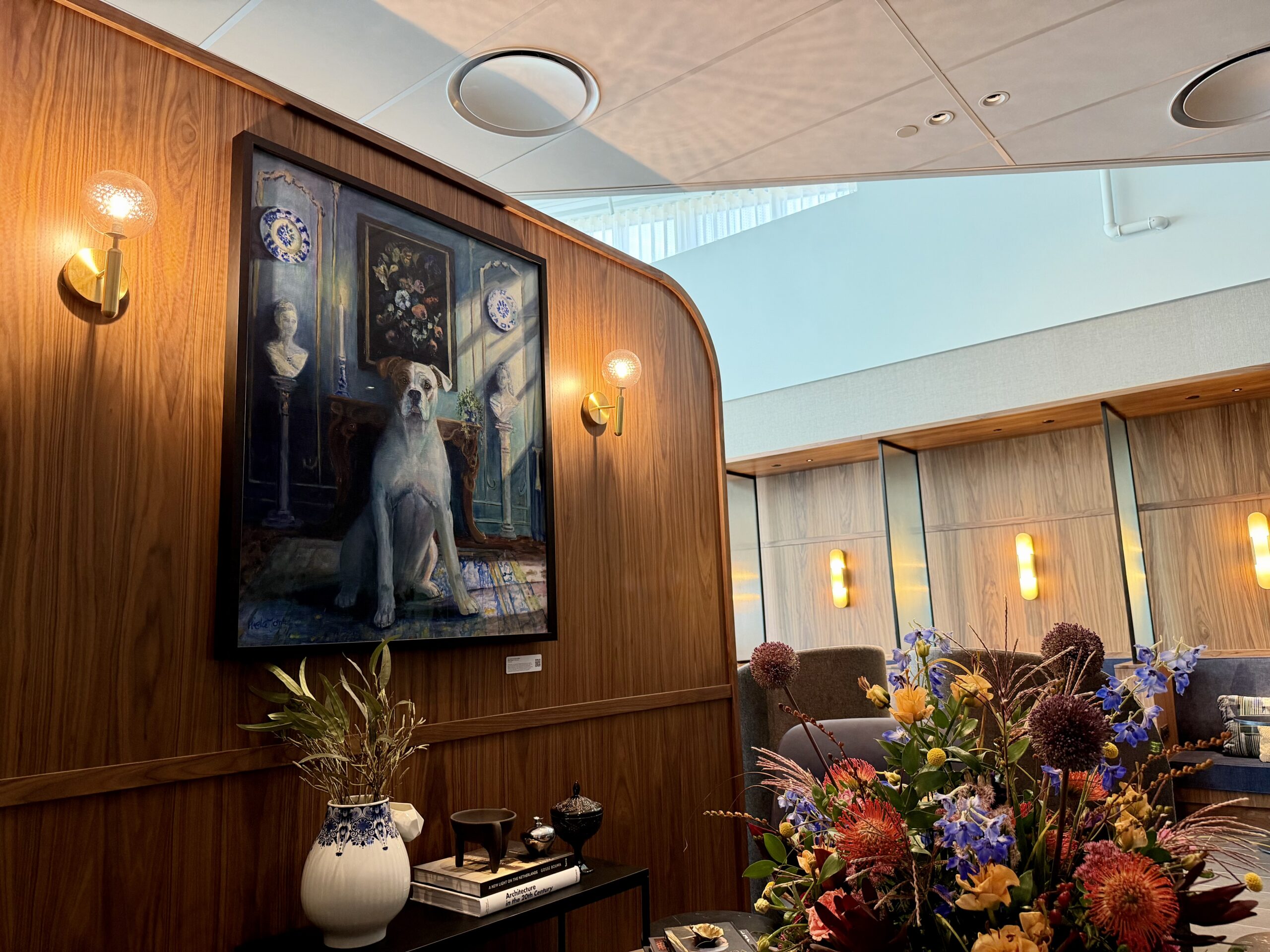
There are deep greens and blues inspired by Amsterdam’s canals, Dutch florals, locally sourced coffee and tea, work from local artists, and a Delft-style version of Amex’s bulldog mascot.
The goal, according to Vince Carbone, Amex’s director of global lounge design strategy, was to make the lounge distinctly Amsterdam without making the references too “on the nose.”
That’s a pretty good description of what Amex built. It still looks and feels like a Centurion Lounge, but the Amsterdam influence is impossible to miss.
Bringing Amsterdam Into a Centurion Lounge
No two Centurion Lounges are designed to be exactly alike, and much of what distinguishes Amsterdam comes down to the details.
The local references start near the entrance. A painting featuring Sir Charles Frosty Blue (Amex’s mascot, not Dutch royalty) incorporates Delftware and Dutch florals. Work from local artists lines the walls, while flowers and other references to the Dutch landscape decorate tables and shelves.
TYLER GLATT / POINTS INSIDER
Color plays an even bigger role.
Deep greens and blues run throughout the space, inspired in large part by Amsterdam’s maze of waterways. Color blocking (which, I learned, is the practice of using distinct areas of color to define a space) also helps separate one part of the lounge from another without making each area feel disconnected.
The ceiling is another integral part of the space, although it isn’t entirely an Amex creation. The lounge was built out of former office space, and the tall, angular ceilings were already there.
Amex incorporated that existing architecture into the design. The triangular forms overhead add dimension, while the ceiling height and floor-to-ceiling windows help make the relatively compact lounge feel a lot more open.
And perhaps a little more upscale.
TYLER GLATT / POINTS INSIDER
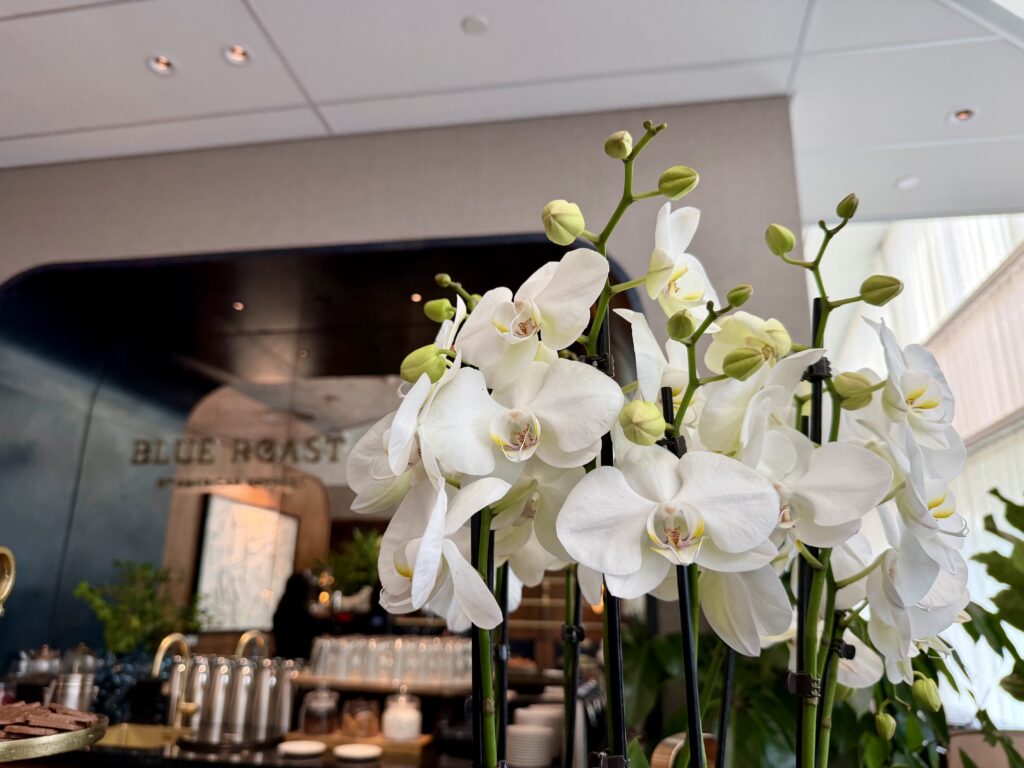
Moving through the space takes you from general seating to the Blue Roast Coffee Bar, dining area, and eventually the main bar. Additional seating runs along the perimeter beside the windows.
Then there are details that are easier to miss.
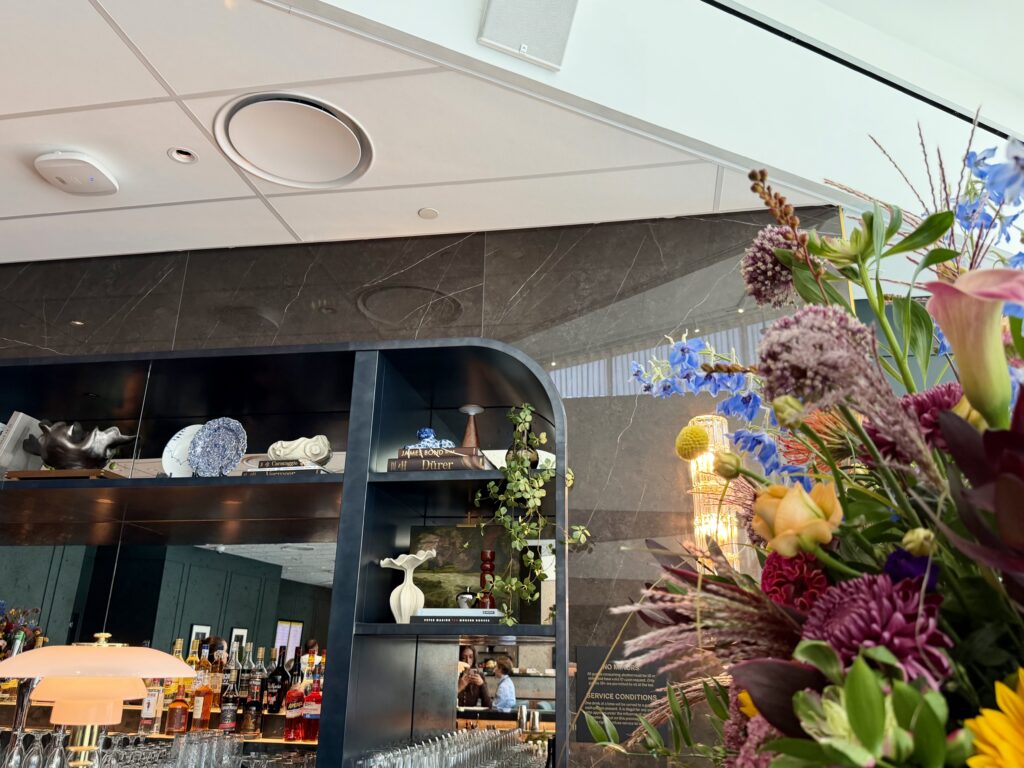
For instance, Amex has made a habit of hiding a bulldog statue in its Centurion Lounges. Amsterdam’s version sits above the bar, rendered appropriately in Delft style.
TYLER GLATT / POINTS INSIDER
Coffee Is Getting More Attention
One of the most prominent parts of the lounge isn’t the traditional Centurion bar.
It’s the coffee bar.
Amsterdam is the fourth Centurion Lounge to feature Amex’s Blue Roast Coffee Bar, following Seattle, New York-JFK, and Salt Lake City. The branding carries over, but the coffee and tea are sourced locally and brewed fresh by a barista behind the counter.
TYLER GLATT / POINTS INSIDER
There’s also another reason Amex is putting more emphasis on coffee.
The Global Lounge team said it’s seeing customers drink less alcohol and show more interest in coffee and nonalcoholic beverages. That’s beginning to influence what Amex prioritizes inside its lounges.
The full-service bar isn’t going anywhere, and Amsterdam has one of those, too. But Blue Roast gets its own dedicated space rather than feeling like an extension of the dining area.
TYLER GLATT / POINTS INSIDER
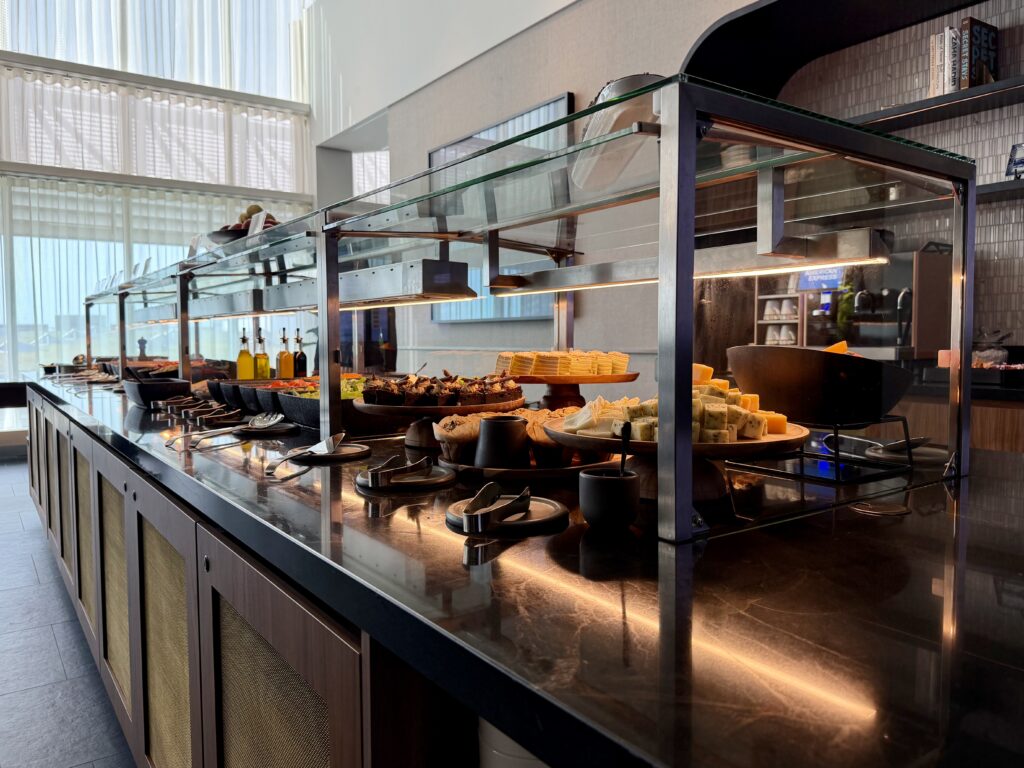
Food is another important part of the Centurion Lounge experience. Amex even went so far as to call it a main draw.
The Amsterdam menu mixes global and European flavors with Dutch staples, like bitterballen. Amex also mentioned herring and eel as examples of regional European dishes that will be served, although it wasn’t clear when or how often those will appear once the lounge opens.
Some dishes are expected to rotate roughly every three weeks, while other staples will stay.
Like the design itself, the food gives Amex another way to make the lounge feel connected to Amsterdam without changing the basic Centurion Lounge formula.
TYLER GLATT / POINTS INSIDER
Making the Most of 6,000 Square Feet
The Amsterdam lounge is noticeably smaller than some of the newer Centurion Lounges Amex has opened in the U.S.
There’s a fairly simple reason for that. Airport real estate doesn’t grow on trees. And Amex’s team isn’t shy about saying that lounge development often comes down to what space an airport can make available.
TYLER GLATT / POINTS INSIDER
At Schiphol, space is particularly hard to come by.
The existing architecture ended up working in Amex’s favor. Instead of one large seating area, the lounge progresses through smaller spaces for seating, coffee, dining, and the main bar. Combined with the tall ceilings and natural light, the layout keeps the footprint from feeling compressed.
Patrick McGinley, Amex’s director and design and construction program manager for Centurion Lounges, said the finished product turned out better than he originally expected.
TYLER GLATT / POINTS INSIDER
Amex worked closely with Schiphol and Dutch partners to get the lounge built, and indicated that it expects to stay in touch with the airport if opportunities for additional space come along later.
There’s nothing more concrete than that for now. But even ahead of the official opening, Amex isn’t ready to close the loop on what the lounge could eventually become.
Why Amsterdam Makes Sense for Amex
The opening is also another step in taking a Centurion Lounge network that has historically been concentrated in the U.S. farther abroad.
Members of Amex’s Global Lounge team pointed to growth in the company’s international business and demand for lounges in more parts of the world.
Schiphol is important both for people beginning trips in the Netherlands and for those passing through one of Europe’s biggest connecting hubs. Amex expects the lounge to draw a mix of U.S. and international Platinum Card Members, without a necessarily particular tilt toward either group.
TYLER GLATT / POINTS INSIDER
There’s also a notable network effect from the U.S.
Several major U.S. gateways with nonstop service to Amsterdam already have Centurion Lounges. Platinum Card Members have access to a much broader collection of lounges around the world through the American Express Global Lounge Collection, but Amsterdam extends Amex’s own Centurion brand farther along those trips.
Someone leaving a U.S. gateway with a Centurion Lounge, such as Atlanta or New York-JFK, can now see that same Centurion logo again while passing through Schiphol, just as they can in London, Tokyo, and elsewhere.
And at 33 locations, the network is pretty substantial in its own right. The Centurion Lounge footprint rivals or even exceeds the proprietary lounge networks of some airlines.
But that doesn’t mean Amex is about to start opening lounges across Europe or the rest of the world at the same pace it has in the U.S.
TYLER GLATT / POINTS INSIDER
The Global Lounge team was pretty careful on that point. International growth has made additional markets attractive, and there’s demand to put lounges in more places. Over the long term, some additional balance between the domestic and international network makes sense, but Amex isn’t looking to swing too far in either direction.
Expansion isn’t the only focus, either. Lounges in Boston, Newark, and a Sidecar location in Charlotte are on the way, but Amex is also reinvesting in existing locations. Dallas Fort Worth, one of the older outposts in the Centurion network, is getting a revamped and larger lounge as part of that effort.
That mix of new locations and updates to existing ones is shaping the network as it grows. And Amsterdam just happens to be the newest piece and the first in continental Europe.
TYLER GLATT / POINTS INSIDER
But for all the significance Amex places on the opening, the lounge itself isn’t trying particularly hard to make a statement about it. It’s still recognizably a Centurion Lounge. The Amsterdam part comes through in the colors, artwork, coffee, food, and little details scattered around the space.
It’s distinctly Amsterdam, without being too on the nose.
Air France is getting a much bigger home at New York-JFK.
The airline announced September 15 that it will move its JFK flights into the airport’s New Terminal One starting next year. Along with the move, Air France plans to open a new lounge spanning more than 2,700 square meters, or roughly 29,000 square feet.
It will be the largest lounge in Air France’s international network, with more than 400 seats spread across two levels.
Air France already operates a lounge in JFK’s existing Terminal 1, so this isn’t a new addition as much as a major upgrade. The current lounge includes dining, showers, a Clarins treatment area, and dedicated services for La Première passengers.
The new space will take that considerably further.
What to Expect From Air France’s New JFK Lounge
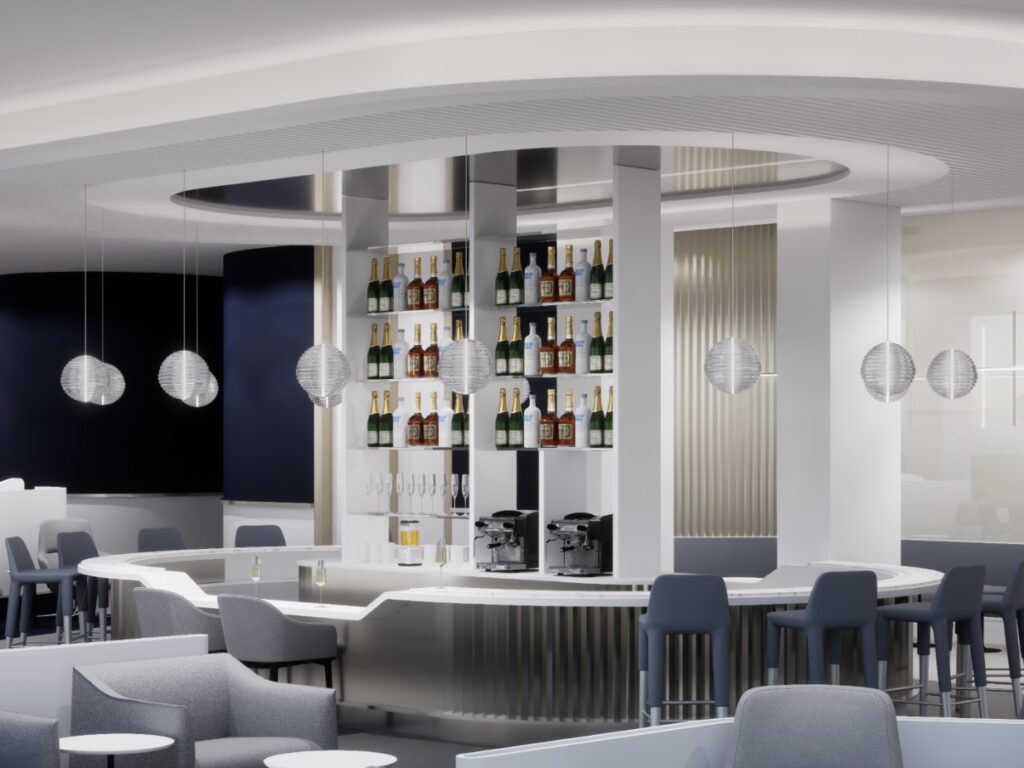
Air France hasn’t revealed every detail of the lounge yet. So far, the airline has released a rendering of the bar along with some early details about what will be inside.
The two-level lounge will include multiple dining areas focused on French cuisine, a bar serving French wines and Champagne, and dedicated spaces for working, relaxing, and beauty treatments.
AIR FRANCE
There will also be an exclusive area for Flying Blue Ultimate members.
La Première passengers will get a separate space of their own, including a dedicated dining experience created for the airline’s first class customers. Air France says the lounge will be part of a more personalized La Première airport experience extending from arrival at New Terminal One through boarding.
Who Will Have Access to the New Lounge?
The lounge will be open to Air France La Première and eligible business class passengers, although Business Light fares won’t include access.
SkyTeam Elite Plus members will also be eligible, along with qualifying passengers flying KLM and other SkyTeam partner airlines.
And Air France has plenty of passengers to accommodate at JFK. During the summer season, the airline operates up to six daily flights between JFK and Paris Charles de Gaulle (CDG), in addition to three flights operated by transatlantic joint-venture partner Delta Air Lines.
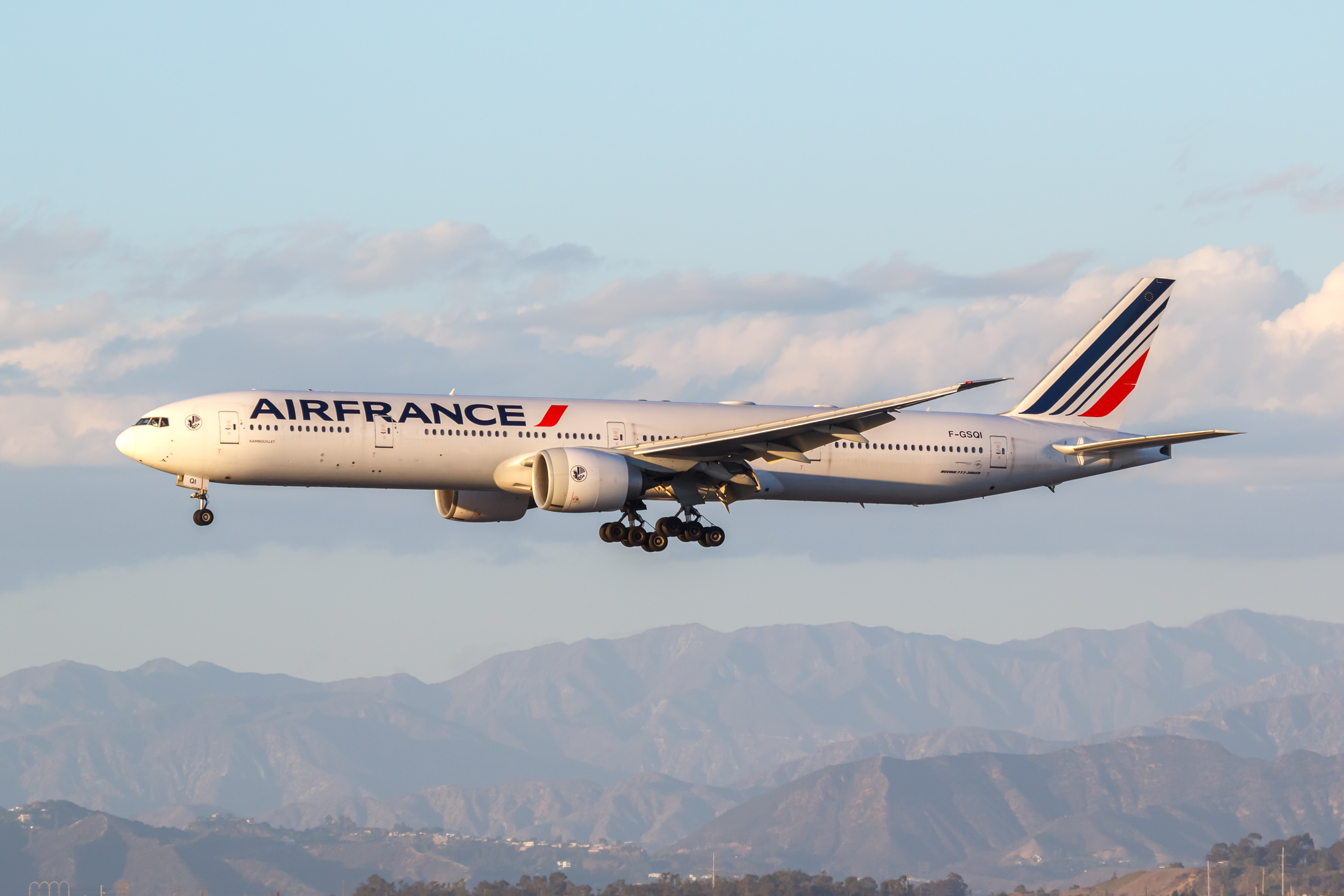
Four of those daily Air France flights are operated by Boeing 777-300ERs equipped with the airline’s new La Première cabin.
Air France Is Moving Into JFK’s New Terminal One
The lounge is part of a much larger change underway at JFK.
New Terminal One is being built as part of the airport’s $19 billion redevelopment and will eventually replace the existing Terminal 1. Air France plans to move all of its JFK operations there beginning next year.
For Air France passengers, that also means the existing lounge’s days are numbered. Its replacement will be substantially larger and built around the airline’s latest premium products, including La Première.
There’s still plenty Air France hasn’t shown, including what most of the lounge will actually look like. But at nearly 29,000 square feet and with room for more than 400 guests, the new space will be a major step up from Air France’s current JFK lounge.
American Airlines has made no secret of its interest in premium customers of late.
New planes are arriving with private business class suites, existing ones are being reconfigured with more seats up front, and the airline is investing in lounges and other parts of the experience meant to convince people to spend more when they fly.
Which makes the slow disappearance of the Airbus A321T a curious thing to watch.
For more than a decade, American has flown a small number of these unusually configured planes primarily between New York and Los Angeles and San Francisco. There are only 102 seats onboard, and 30 of them turn into beds, an almost absurd amount of space to devote to premium passengers on a narrowbody flying within the United States.
Now they’re disappearing.
TYLER GLATT / POINTS INSIDER
American’s new Airbus A321XLR is taking over more transcontinental flying, and individual A321Ts are already being pulled out to be reconfigured with much more conventional interiors. Earlier this week, yet another flew to El Salvador to begin that process.
The following day, I was sitting in business class on another A321T headed across the country to Los Angeles.
It was a good place to consider what American is replacing, and what it isn’t.
The A321T Was Never Meant to Be Normal
When American introduced the A321T in late 2013, the airline was fighting hard for premium customers flying between New York and California.
Its answer was an airplane built around them.
At the front were 10 first-class seats, each with direct aisle access and enough room to turn into a bed. Behind them were 20 more lie-flat seats in business class. Even economy was unusual, with 36 extra-legroom seats and only 36 standard ones.
It was an extravagant use of an A321, but that was the point.
TYLER GLATT / POINTS INSIDER
American wasn’t alone in lavishing attention on these routes. United and Delta had their own premium transcontinental products, and JetBlue would bring Mint into the fight. But American’s solution was particularly unusual. Nearly a third of the people onboard could go to sleep in a bed.
The result was a narrowbody that felt almost deliberately underfilled.
More than a decade later, American still wants those premium customers. But the airplane built specifically for them is another matter.
But sitting a few rows behind it made the focus on first class seem a little incomplete.
American changed its complimentary elite upgrade policy on August 25. On domestic routes with a distinct premium economy cabin, complimentary upgrades from Main Cabin now stop at premium economy rather than jumping directly to business class. More broadly, complimentary upgrades move passengers forward by one cabin.
The A321T doesn’t have premium economy. It has Main Cabin, business class, and first class, which meant my complimentary upgrade from economy could move me one cabin forward into business, but not into first.
That landed me in what may have been the more interesting cabin all along.
TYLER GLATT / POINTS INSIDER
The A321T has 20 lie-flat business class seats behind first. They gave American a sizable second cabin full of beds without requiring everyone who wanted to lie flat across the country to buy the most expensive ticket on the plane.
By 2026 standards, the seats themselves aren’t particularly cutting-edge. They’re arranged 2-2, so half the cabin lacks direct aisle access, and years of flying back and forth across the country are beginning to show.
Mine certainly had some character.
TYLER GLATT / POINTS INSIDER
A gate agent let me know before boarding that something at the seat wasn’t working correctly, though it was never entirely clear whether she meant the entertainment screen, its remote, or something else. One of the armrests had also developed a considerable amount of bounce.
Once we left New York, though, I put the seat into its lounge position and settled in. Later, it went completely flat.
There are newer and more private ways to cross the country now. But lying there, the thing that stood out about the A321T wasn’t really the seat. It was how many lie-flat seats American had been willing to install.
TYLER GLATT / POINTS INSIDER
Thirty Beds on an Airplane With 102 Seats
That’s what makes the A321T difficult to replace, even with something newer.
American’s A321XLR has plenty going for it. There are 20 Flagship Suites with direct aisle access and privacy doors, plus 12 premium economy seats. The airplane can also fly international routes that were never part of the A321T’s job.
And it carries 155 people.
The comparison says more about the A321T than it does the XLR. For all the attention paid to its first-class cabin, what really made this airplane unusual was the amount of room American was willing to devote to relatively few passengers.
That has practical consequences as these planes disappear. There will be fewer lie-flat seats on each flight. That doesn’t mean awards will suddenly cost more or upgrades will become impossible. There are too many other factors at play. But for anyone accustomed to using miles or status to get into one, there will simply be fewer places to land.
American says Flagship First will stop being sold on transcontinental routes as more XLRs enter the fleet. And unlike a traditional retirement, the A321Ts themselves aren’t necessarily going anywhere. They’re being reconfigured and returned to American’s fleet as much more ordinary A321s.
That’s perhaps the strangest part of watching them disappear. The airplanes will still be around. What made them special won’t be.
American still wants the premium customers the A321T was built to attract. It just doesn’t need an airplane quite this extravagant to get them anymore.
SWISS is about to have a third Airbus A350 in its fleet.
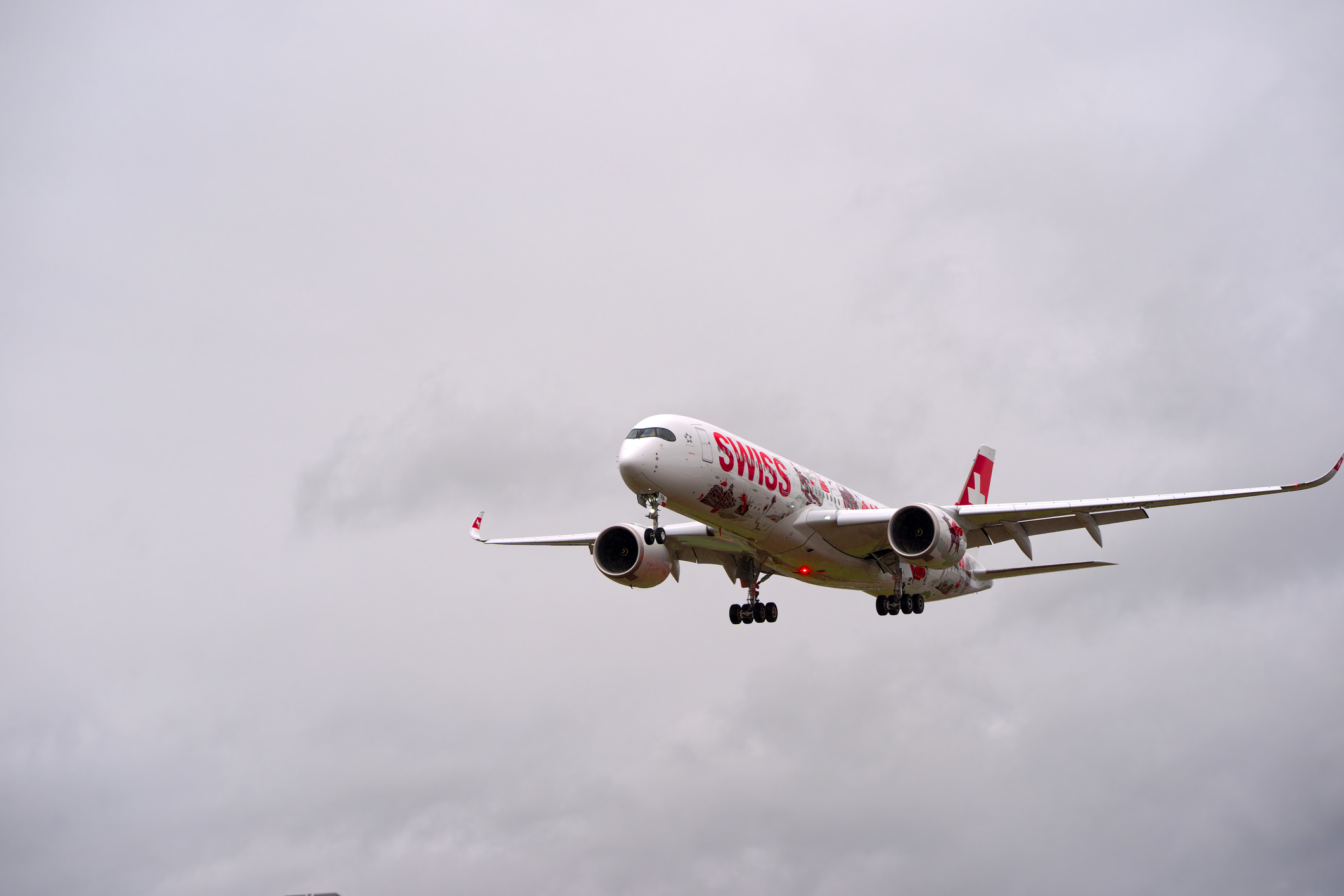
The airline announced that it expects its newest A350-900 to arrive in Zurich on Saturday, September 12, following a delivery flight from Airbus in Toulouse. The aircraft, registered HB-IFC and named Zug, is scheduled to land around 9:30 a.m. local time.
Three airplanes isn’t a huge fleet. But SWISS only has 10 A350s on order, which means 30% of them will have arrived once Zug touches down in Zurich.
SWISS is also bringing its newest cabins to some older aircraft through retrofits. The difference with the A350 is that each one arrives from the factory with the entire new SWISS Senses interior already installed.
SWISS Is Slowly Getting More of Its New Cabins
SWISS introduced the A350 in 2025 with its new SWISS Senses cabins from front to back.
There are just 243 seats onboard, starting with four first-class suites and 45 business class seats. Another 38 seats are in premium economy, followed by 156 in economy.
Every delivery puts another full set of SWISS’s newest seats into service as the airline gradually replaces some of its older long-haul aircraft. And with only 10 A350s planned, the arrival of a third is a meaningful step in what is still a relatively small fleet.
I’ve seen the new interior firsthand. SWISS showed off its first A350 before it entered service last year, and the cabins are a considerable departure from what can still be found across much of the airline’s long-haul fleet.
The changes aren’t limited to the airplane. SWISS is also updating its experience in Zurich, with two new lounges coming to Dock B in 2027. The roughly 28,000-square-foot project will include separate Business and Senator lounges.
The third A350 will get a small welcome before it reaches the airport. SWISS says the aircraft is expected to circle over Zug, the city whose name it carries, before making its final approach into Zurich.
Another A350 Becomes Bookable With Points
There’s also a practical reason to keep an eye on aircraft deliveries.
SWISS award seats can be booked through several Star Alliance loyalty programs, including United MileagePlus, Air Canada Aeroplan, and Avianca LifeMiles. That means Miles & More isn’t the only option for booking a SWISS flight with points or miles.
Each new A350 therefore puts another aircraft with SWISS’s newest first, business, premium economy, and economy cabins into the mix when searching for an award with points and miles.
Seven A350s are still to come. But with the third arriving Saturday, SWISS is getting closer to the point where its newest long-haul cabins aren’t quite as difficult to find.
Avianca is giving its long-haul business class an overhaul.
The airline announced a series of upgrades to INSIGNIA by Avianca on September 9. New dining, amenities, and other onboard improvements are all part of the refresh.
Then, starting in 2027, Avianca plans to introduce an entirely new business class cabin to its Boeing 787s with suites offering more privacy.
The new seats are the headline, but they’re only part of what Avianca is upgrading.
New Business Class Suites Are Coming in 2027
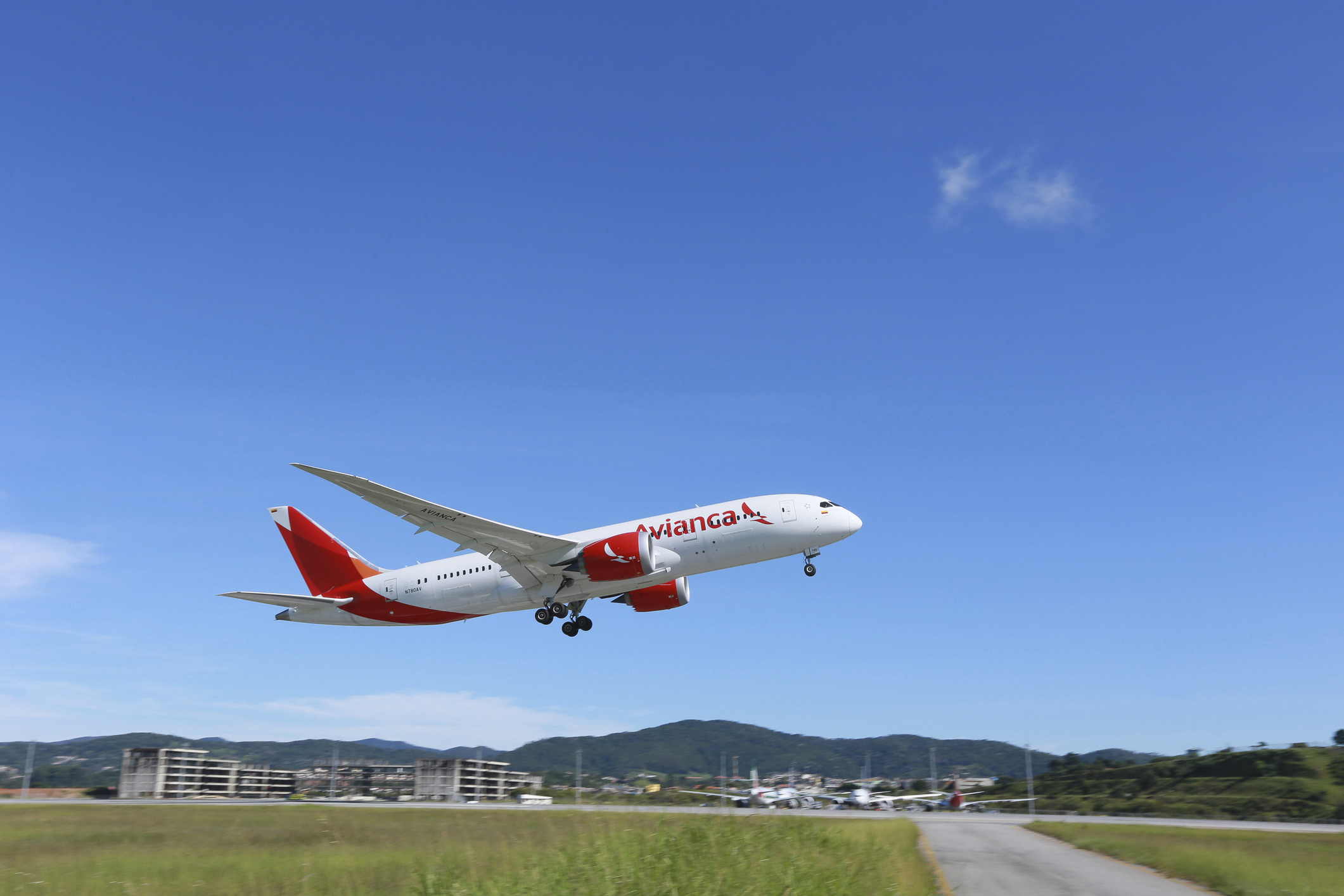
Avianca says its new business class cabin will begin rolling out aboard Boeing 787s in 2027.
And based on the first images, this isn’t just a new cover on the same old seat. The new cabin will feature individual pods with much more privacy around each passenger, bringing Avianca closer to the enclosed, personal spaces that have become common in newer international business class cabins.
That’s a meaningful change on the flights where Avianca offers INSIGNIA. Its 787s fly to New York and across the Atlantic to Europe, where a good business class seat can turn an overnight flight into a place to eat, work, and, most importantly, get some sleep.
Avianca hasn’t shared many details yet, but we do know the first suites are scheduled to arrive next year.
AVIANCA
The Rest of Business Class Is Changing, Too
A new seat is nice, but there’s quite a bit more to a long-haul business class experience than the few square feet around it.
That’s where many of Avianca’s more immediate changes come in.
The airline is adding new noise-canceling headphones, pajamas and slippers, along with redesigned amenity kits. Meals are changing, too, with new menus from chefs Álvaro Clavijo and Rafael Buitrago that lean into Latin American flavors.
Those details aren’t nearly as flashy as a new suite, but they matter on a long flight. A lie-flat seat might be the biggest reason to book business class, but food, bedding, headphones, and service are what fill the other eight or nine hours onboard.
AVIANCA
Avianca is also putting more attention on service. More than 850 flight attendants have completed a business class training program focused on hospitality and etiquette.
So while the suites won’t start arriving until 2027, the experience around them is already getting some attention.
Avianca Wants to Be More Premium
These changes also say something about where Avianca is headed.
Avianca has spent the past several years adopting a much more stripped-down economy model on many of its flights. At the front of the cabin, though, it’s now putting more distance between the basic experience and what customers willing to pay more can get.
Avianca now offers Business Class Américas throughout its network within the Americas. It’s a much simpler product than INSIGNIA, typically using economy-style seats with the middle seat blocked rather than the beds found on the 787. That’s not nearly as exciting as a private suite, but it fits the same broader push to create a more distinct experience at the front of the plane.
The airline is also expanding onboard entertainment, gradually adding Wi-Fi, and renovating lounges, including its International Gold Lounge in San Salvador.
LifeMiles Could Make the New Suites Particularly Interesting
There’s another reason Avianca’s new 787 cabin matters.
LifeMiles are fairly easy to earn thanks to several transferable points programs, and they can be redeemed for Avianca flights. That means the new suites should eventually be bookable with miles rather than a four-figure business class fare.
How many miles they’ll cost and how easy they’ll be to book are questions for 2027.
For now, Avianca is improving the meals, amenities, and service surrounding its long-haul business class seats. Next year, the seats themselves start changing, too.
Thanksgiving, Christmas, ski season, and that point in winter when somewhere warm starts sounding really good all have a way of feeling far away until suddenly they’re not.
Now’s a good time to see what the options look like.
That doesn’t mean there’s a magic deadline for booking. A flight that costs a ton of miles today could cost less next week. It could also cost more, and sometimes a great option pops up at the last minute. Award prices change, and there’s no reliable way to predict exactly when the best price will appear.
But waiting isn’t the only option.
Depending on the airline and the type of award, it may be possible to book a flight that works now and change it later if something better comes along. And if nothing looks good today, there are ways to keep an eye on the trip without searching for the same flights over and over.
Here’s where to start.
Start With the Trips You Know You’re Taking
Thanksgiving with the family is a very different trip from a January ski weekend or escaping somewhere warm in February.
For a holiday, wedding, or another event already on the calendar, start by looking at the options now. Someone who needs to fly the Wednesday before Thanksgiving and return Sunday has much less flexibility than someone who wants to spend a few days on a beach sometime this winter.
Look at both the cash price and the number of points or miles required. That gives you a baseline, even if you’re not ready to book right this minute.
More flexible trips open up more possibilities. A ski trip might work over several weekends. A warm-weather getaway might work in January or February. Try moving the dates, checking nearby airports, or looking at another weekend.
PointsYeah makes it easy to scope out your options without starting a new search every time.
{{ search-widget mode=”flight-hotel” }}
And if the destination isn’t set either, let what’s available offer some inspiration.
PointsYeah’s Daydream Explorer shows destinations that can be booked with points from a selected airport. Instead of searching for one place at a time, it can answer questions like, “Where could I go for a long weekend in January to escape the cold?” or “Where can I fly with my points for a ski trip this winter?”
Finding a flight that works doesn’t necessarily mean the search has to end.
Some airline loyalty programs allow award tickets to be changed or canceled without a fee. That can make it possible to book a workable option now while keeping an eye out for something cheaper or more convenient.
American Airlines is a good example. AAdvantage doesn’t charge change fees on award tickets, although changing to a more expensive award means paying the difference. American also allows eligible awards to be canceled before departure with the miles reinstated at no charge.
Say a Christmas trip costs 25,000 miles today. A few weeks later, the same flight becomes available for 18,000 miles.
The trip stays the same, but 7,000 miles go back into the account.
PHOTOSVIT / ISTOCK
But this is something to check before booking, because every loyalty program has its own rules.
Delta, for example, treats Basic award tickets differently. Basic awards originating in the U.S. or Canada aren’t refundable after the 24-hour risk-free cancellation period, and changing or canceling one comes with a fee assessed in miles.
Other programs have their own policies, and certain bookings can have additional restrictions.
That flexibility can be especially useful for winter trips that aren’t completely settled. Maybe the ski weekend depends on snow conditions, or a warm-weather getaway could move by a few days. If that’s part of the plan, check the rules before booking rather than assuming an award can be changed later.
Don’t Like the Price? Track It
Sometimes there isn’t anything worth booking yet.
Maybe the Christmas flight costs far more miles than expected. Maybe there’s nothing available for the ski weekend. Or maybe the only flight to somewhere warm leaves at 5 a.m. and connects twice.
Waiting can make sense in those situations. But it doesn’t have to mean running the same search every few days.
A PointsYeah Points Price Alert can track a trip and send an alert if the points price changes or something new becomes available.
There’s no guarantee a better option will appear, but the alert can do the checking in the background.
Keep an eye on the cash fare, too. If an award still costs more miles than expected but the cash ticket drops to a comfortable price, paying cash may make more sense.
Points and miles are another way to pay for a trip. They don’t have to be used every time.
DORADALTON / ISTOCK
Check the Hotel Before You Book the Flight
A great flight deal can become a much less appealing trip once the hotel search begins.
That’s especially important for fall and winter trips. College football games, parents’ weekends, Christmas markets, holiday events, ski season, and long weekends can make hotel rooms unusually expensive on certain dates.
A cheap flight to a ski destination, for example, isn’t nearly as exciting if every hotel nearby costs $700 a night.
Before booking a discretionary trip, check the hotel rates alongside the flights.
The hotel might change which weekend makes the most sense. It can also change where points are most useful.
For example, a reasonably priced cash flight paired with an expensive ski resort might be a good opportunity to save the airline miles and use hotel points instead. If hotel rooms at a warm-weather destination are inexpensive but flights are costly, the opposite might make more sense.
There’s no need to pay for every part of a trip the same way. Points can cover the parts where they’re most useful, and cash can cover the rest.
A Thanksgiving trip, Christmas vacation, ski weekend, and February escape don’t need to be planned the same way.
Some trips come with dates that can’t move. Others might have an entire season to work with.
Start with the trips already on the calendar and check both points and cash prices. For a more flexible getaway, see what happens when the dates or destination change. And before booking an award that might need to move, find out what the change and cancellation rules allow.
If nothing works yet, that’s useful information, too. Set an alert and keep looking without having to start from scratch every few days.
There’s no way to know today whether the best fall or winter award will appear tomorrow, next month, or a few days before departure. But knowing what the options look like now leaves plenty of time to decide whether to book, wait, or change the trip entirely.
There’s a lot of business class on American Airlines’ newly retrofitted Boeing 777-300ER.
Seventy suites, to be exact.
Ahead of a special charter flight from Dallas Fort Worth (DFW) to New York (JFK) on Wednesday, American’s Chief Commercial Officer Nat Pieper described it as a “sea of business class” that seems to go on and on.
He’s not wrong.
TYLER GLATT / POINTS INSIDER
The Flagship Suite cabin stretches through a huge chunk of one of the largest passenger aircraft in American’s fleet. Add 44 Premium Economy seats, and the airline’s newly retrofitted 777-300ER has 114 seats across its two premium cabins.
TYLER GLATT / POINTS INSIDER
American didn’t start the project with 114 as some magic number.
Pieper told Points Insider that the configuration was driven in part by the physical geography of the 777 itself.
Door locations, galleys, and other fixed parts of an existing airplane helped determine where cabins could begin and end, alongside American’s desire to meet the market’s insatiable appetite for premium travel.
The result just happens to be the most premium-heavy aircraft American has ever flown.
TYLER GLATT / POINTS INSIDER
And after spending a few hours aboard the first one, it’s also an airplane that feels remarkably different from the 777 American has been flying for more than a decade.
Today, the fleet regularly crosses oceans and borders on flights to cities including London, Tokyo, São Paulo, Buenos Aires, and Sydney.
TYLER GLATT / POINTS INSIDER
American isn’t ready to move on from them.
Instead, it’s investing heavily in all 20 aircraft with the expectation that they’ll remain in the fleet for roughly another decade, if not longer.
Pieper said someone walking onto the first completed aircraft wouldn’t be able to tell that it didn’t just come off the factory floor. It’ll even have that new-car smell, he added, though perhaps the smell of an expensive new car given the amount American has invested in the project.
That sounded like the sort of thing an airline executive is supposed to say about a newly refurbished airplane. But after walking onboard, it wasn’t much of a stretch.
TYLER GLATT / POINTS INSIDER
The first impression is just how open everything feels.
The 777 is already a big airplane, but the new interior really emphasizes that size. Gone are many of the lighter surfaces of the previous cabin. They’ve been replaced by darker dividers, different shades of gray, wood finishes, and restrained red and white accents.
TYLER GLATT / POINTS INSIDER
Lighting helps.
Raphael Girardoni, American’s managing director of customer experience product and design, told Points Insider that lighting was an important part of the design and something he’s personally passionate about.
It’s noticeable throughout the Flagship Suite cabin.
Small sconces and accent lighting illuminate the individual suites. One of the more thoughtful touches is the way the light from the sconce plays off the design surrounding a storage cubby beside the seat.
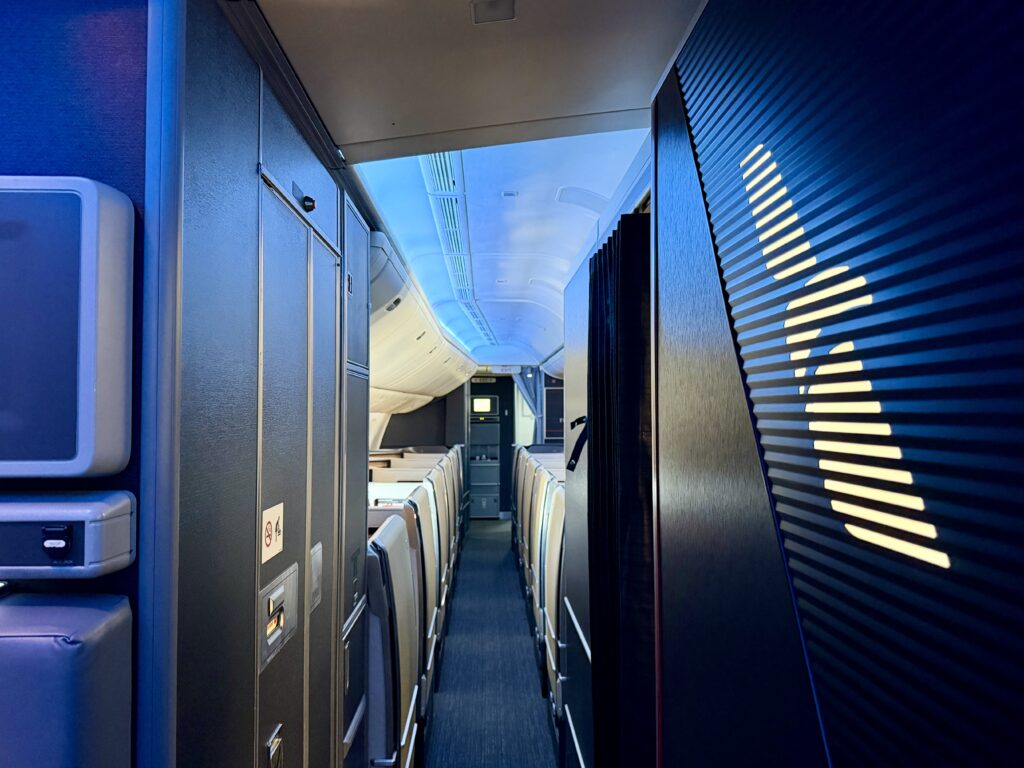
Even the cabin dividers look more considered, with darker finishes and not-so-subtle Flagship branding.
TYLER GLATT / POINTS INSIDER
Seventy Flagship Suites Upgrade the 777
Of course, the biggest upgrade is the seats up front.
American is removing the eight Flagship First seats and 52 business-class seats found on its previous 777-300ER configuration. In their place are 70 Flagship Suites, including eight larger seats that the airline calls Flagship Suite Preferred.
TYLER GLATT / POINTS INSIDER
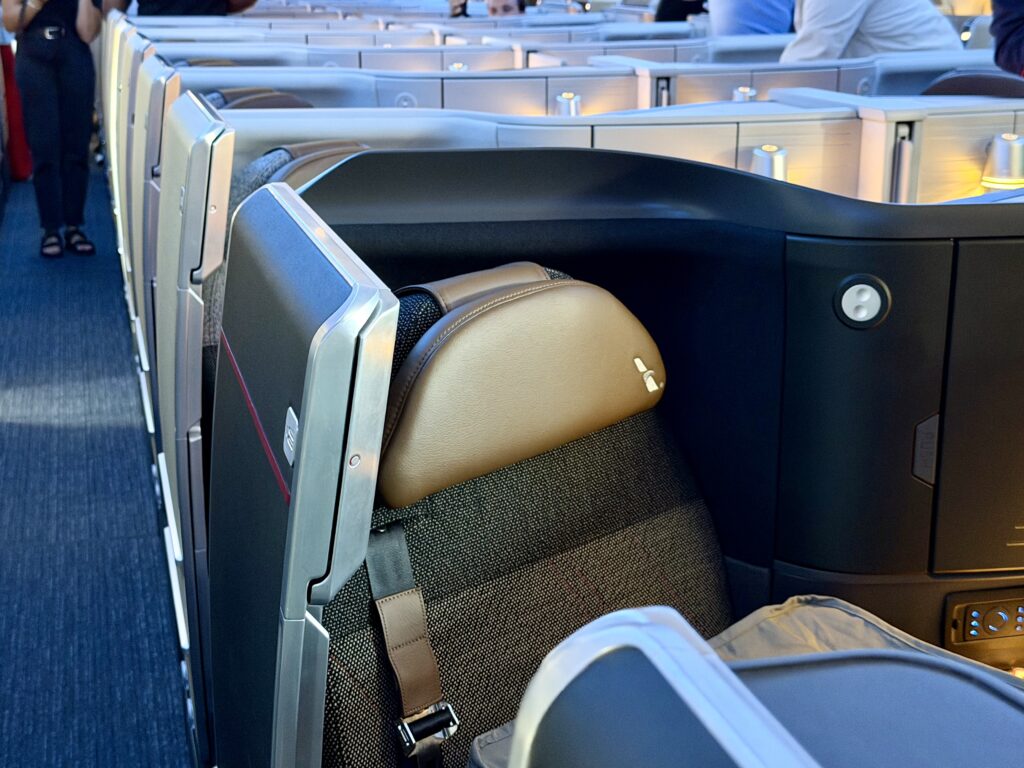
They’re the same seats American introduced on its also-premium-heavy Boeing 787-9P last year, outfitted with sliding privacy doors and direct aisle access.
TYLER GLATT / POINTS INSIDER
The sheer number of them really is a sight to behold. But what stands out most is how little of that enormous cabin is visible once you’re seated.
Even with the suite door open, I couldn’t see another passenger from my seat beyond the occasional top of someone’s head. Movable dividers between adjoining seats add yet another layer of privacy, too.
TYLER GLATT / POINTS INSIDER
There are also plenty of small touches that become more useful the longer a flight gets.
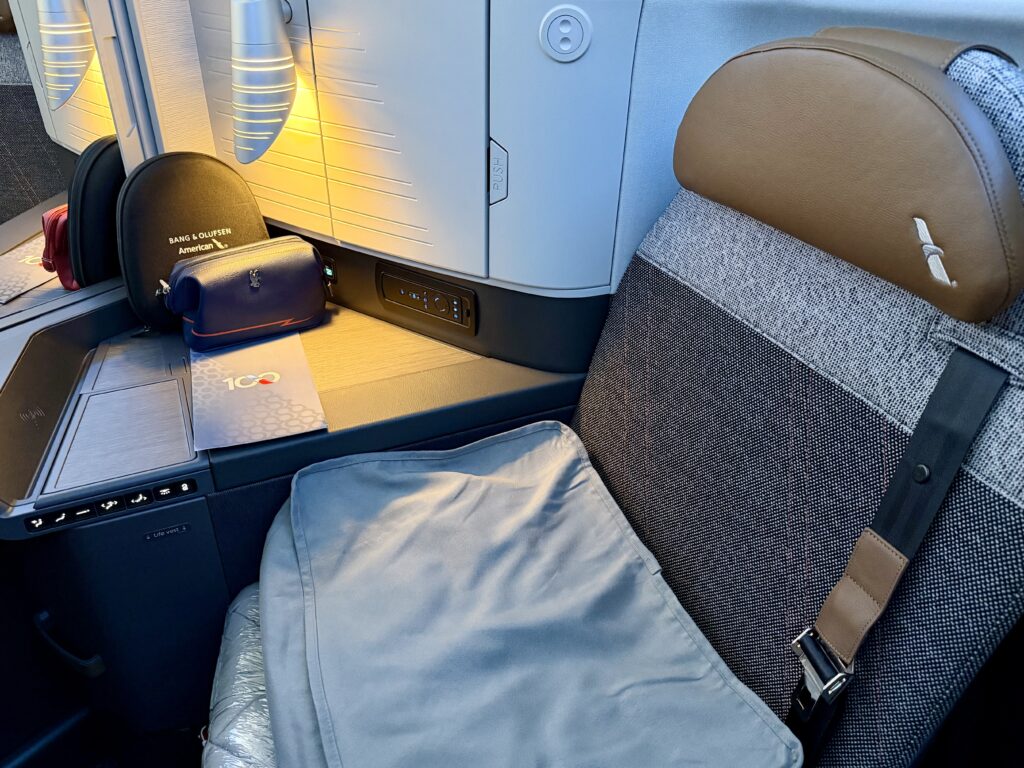
There’s wireless charging, a drink ledge, a small compartment well suited for a wallet or watch, and various other nooks for keeping things nearby rather than throwing everything into one larger storage bin.
The tray table is enormous. It slides out from beside the seat before rotating into place, leaving plenty of room for a laptop, meal, or whatever else ends up accumulating during a long flight.
The entertainment screen is similarly large and highly responsive, but doesn’t feel oversized for the space.
TYLER GLATT / POINTS INSIDER
And yes, American kept the individual air nozzles.
That’s a win.
Can American Fill 70 Business-Class Seats?
Putting 70 business-class seats on a single airplane naturally raises another question: Can American consistently fill them?
Pieper doesn’t appear particularly worried.
He said American is comfortable with the configuration and has more tools at its disposal than selling every seat outright at its initial price. Upgrade offers give the airline another way to fill otherwise empty premium seats as departure approaches.
TYLER GLATT / POINTS INSIDER
And then there are Systemwide Upgrades, one of the perks available to some of American’s most loyal customers. Those could come in handy on this kind of plane, too.
With 70 Flagship Suites to work with, there are simply more seats that could potentially clear as upgrades.
That flexibility matters when these airplanes will be flying some of American’s biggest long-haul markets for years to come.
It also helps explain the underlying strategy.
TYLER GLATT / POINTS INSIDER
Airlines have spent the past several years adding premium seats as demand for higher-end travel has soared. American is doing the same with its new 787-9Ps and Airbus A321XLRs, and the 777-300ER retrofit takes that strategy to another level.
The airline didn’t necessarily set out to hit a particular percentage of premium seats on the 777. But the combination of the aircraft’s physical layout and American’s push toward a more premium experience led it to a configuration with a whole lot of them.
Economy Feels Surprisingly Small
Walk far enough through the Flagship Suite cabin and eventually the airplane starts looking more familiar.
There are 44 Premium Economy seats, followed by Main Cabin Extra and standard economy.
TYLER GLATT / POINTS INSIDER
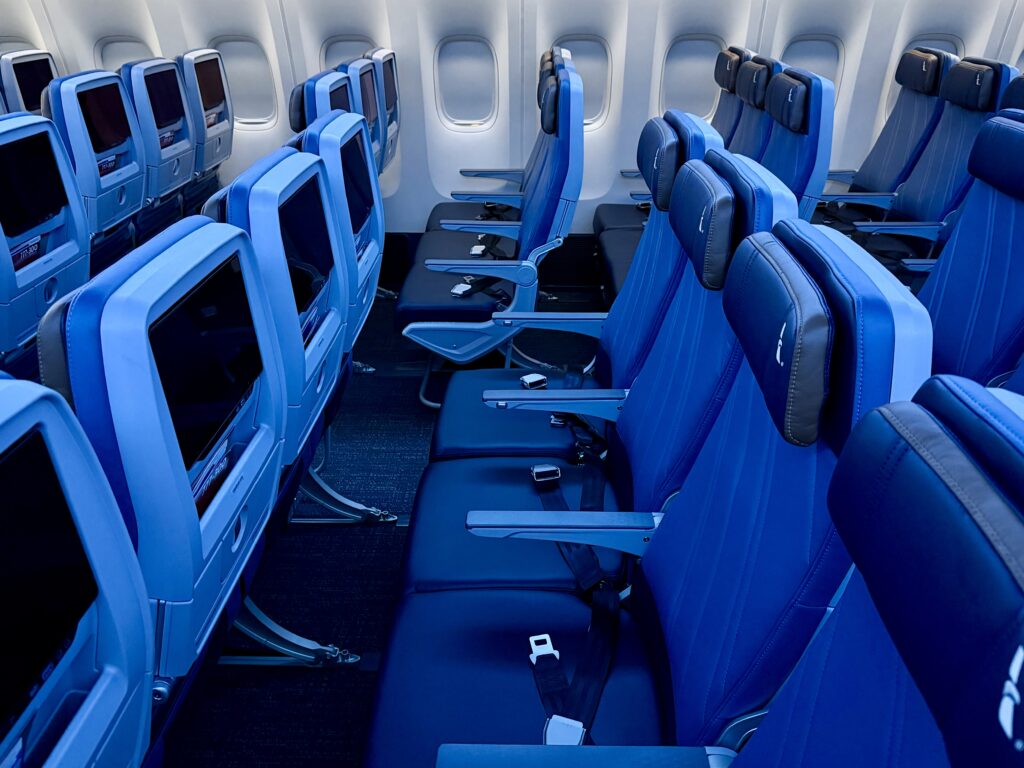
Economy itself isn’t revolutionary. But the cabin has a new lease on life.
Browns and blues replaced some of the older finishes. There are new entertainment screens, in-seat power, and the other updates expected from a modern widebody interior.
A short charter flight isn’t enough to say much about how those seats will feel after 10 or 15 hours.
TYLER GLATT / POINTS INSIDER
What’s more notable, though, is how little economy there seems to be.
For an airplane as large as a 777-300ER, the two economy sections feel surprisingly small. That’s not because American has done anything unusual within them. It’s because the majority of the airplane’s real estate comes before them.
TYLER GLATT / POINTS INSIDER
The premium cabins stretch almost to the end of the wing.
That might be the most effective way to understand just how different this configuration is. The 777-300ER can hold an enormous number of seats. American has chosen to devote a remarkable amount of that real estate to the front of the plane.
Retrofitting a 777 Isn’t the Same as Building a New One
Some things didn’t change.
The overhead bins, for example, look just like they did before. So does the view through the well-traveled windows. And when the engines spool up for takeoff, this is still very much the same 777 that has been flying for American for years.
The challenge was putting a substantially different passenger experience inside it.
TYLER GLATT / POINTS INSIDER
From a design perspective, Girardoni said there weren’t any particular challenges with bringing Flagship Suite to the 777 that stood out during the project. American was also working with a familiar product, using the same Flagship Suite seat already flying aboard its 787-9P.
But there are still operational tradeoffs.
One flight attendant aboard Wednesday’s flight mentioned that the new layout leaves crews with somewhat less room to maneuver in parts of the galley, particularly when passengers are trying to squeeze around carts. It could make things a little trickier, although she said that adapting to different aircraft and working conditions is part of the job.
Passengers give up a little space elsewhere, too. The new configuration has fewer lavatories than the 777-300ER it replaces.
TYLER GLATT / POINTS INSIDER
American expects to complete the remaining 777-300ER retrofits by the middle of 2027.
The aircraft will also get free high-speed Wi-Fi for AAdvantage members, sponsored by AT&T. That’s a meaningful upgrade for airplanes expected to spend much of their lives on long international flights.
The first retrofitted 777 already has it.
A Look at Where American Wants to Go
American describes the new 777 as more than a refurbishment.
Pieper called the aircraft an embodiment of the airline’s ambitions as American works toward what he described as becoming a premier global airline.
TYLER GLATT / POINTS INSIDER
That’s a lofty goal.
But the 777 offers a tangible look at what American thinks getting there requires.
It’s eliminating its eight-seat international first-class cabin while dramatically expanding business class. It’s adding privacy doors, better technology, more thoughtful storage, and a much more contemporary interior. And it’s making similar investments across new aircraft, existing widebodies, lounges, Wi-Fi, Flagship airport check-in, and other parts of the travel experience.
TYLER GLATT / POINTS INSIDER
The first retrofitted 777-300ER begins commercial service between New York (JFK) and Buenos Aires (EZE) on September 2.
It won’t be a novelty flying around the network for a year or two. American expects this airplane, and eventually the others like it, to spend roughly another decade flying to some of its most important destinations around the world.
The first one shows just how much American thinks it can get out of an airplane it already owns. And now it has 19 more to rebuild.