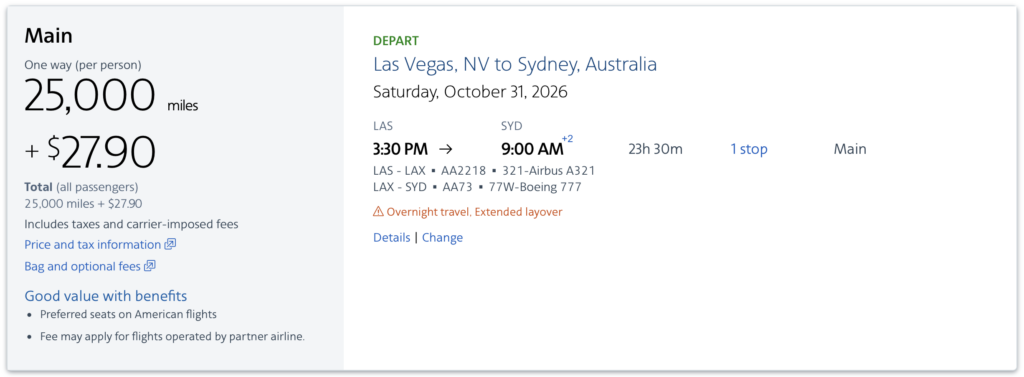
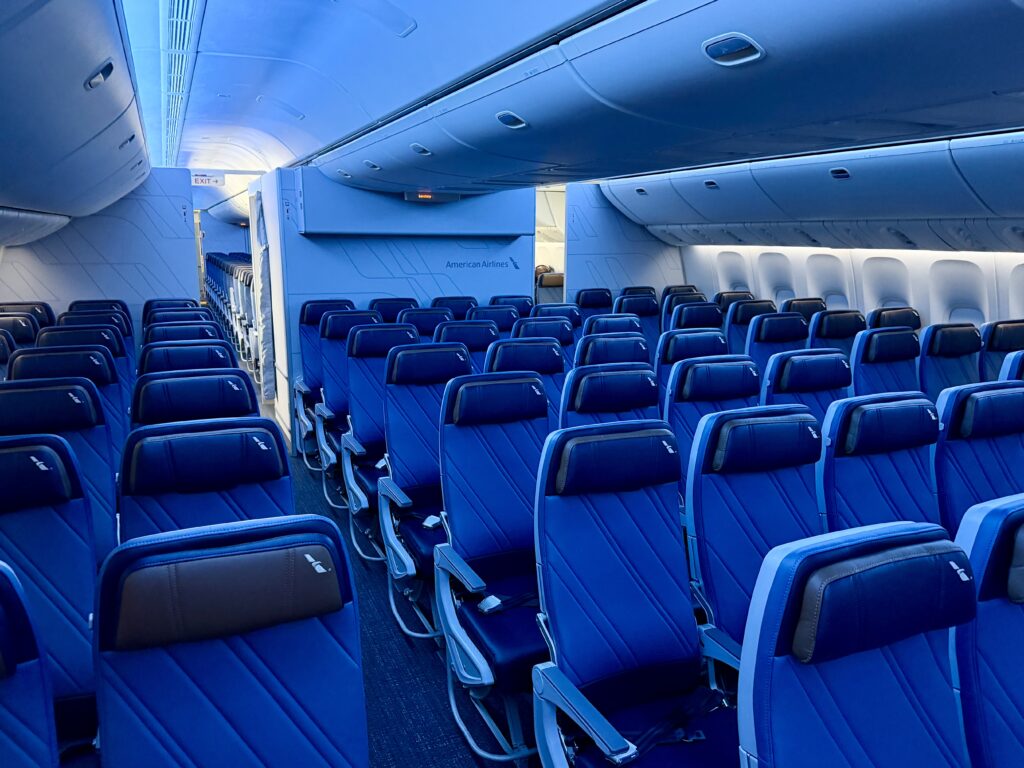
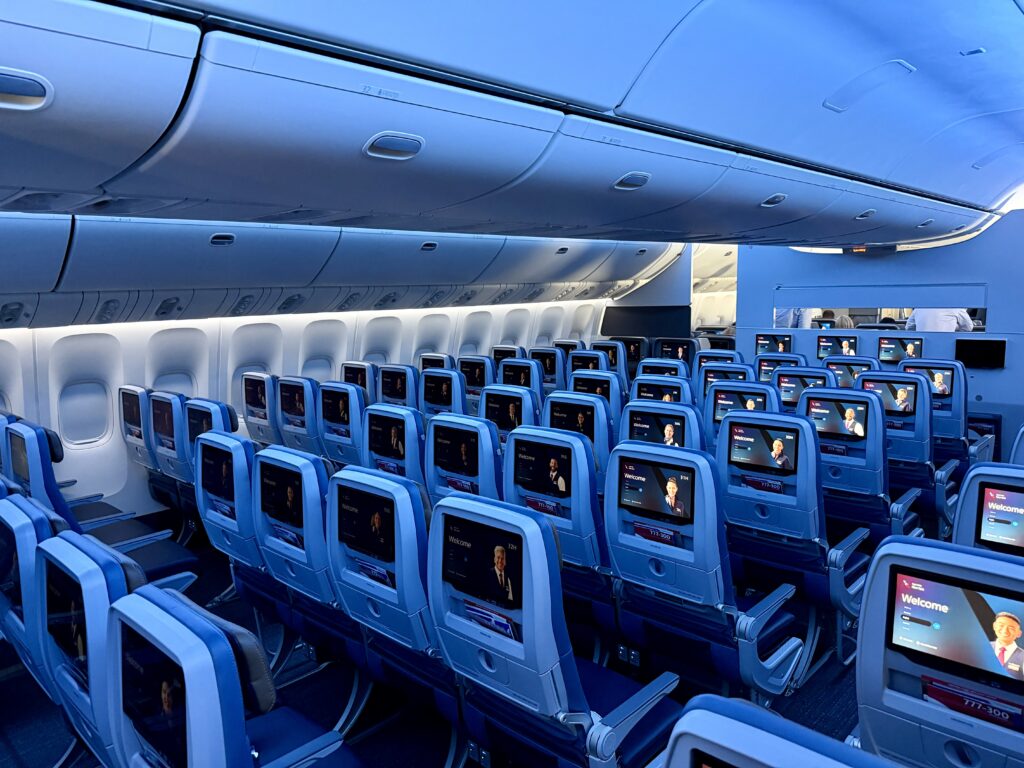
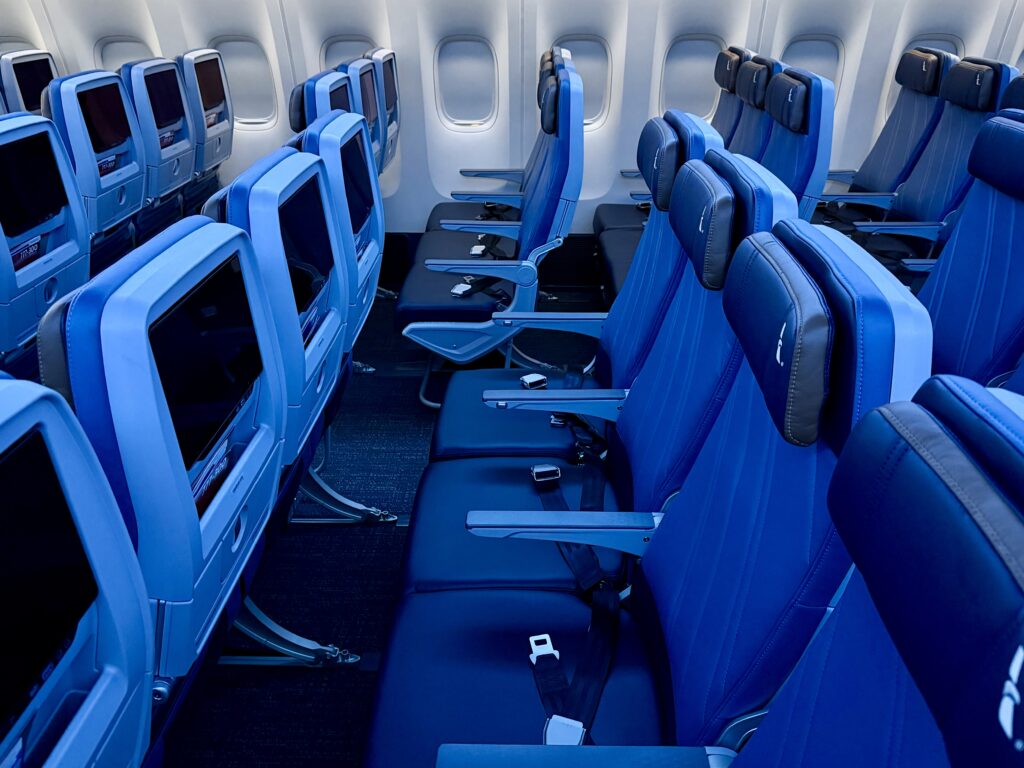
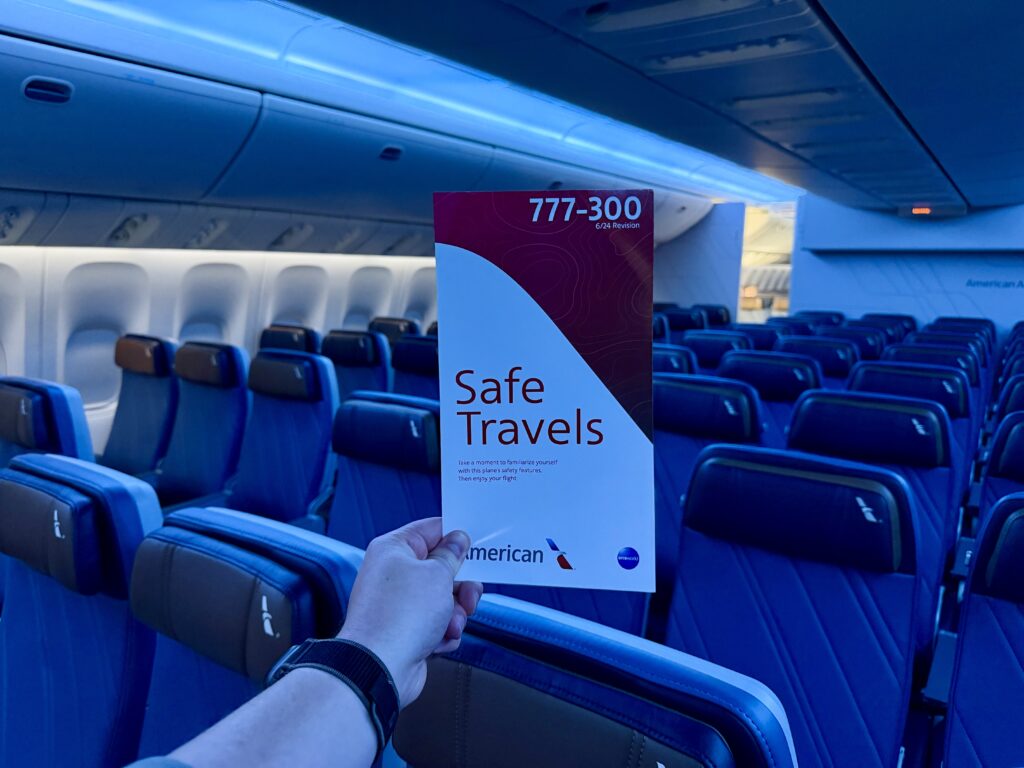
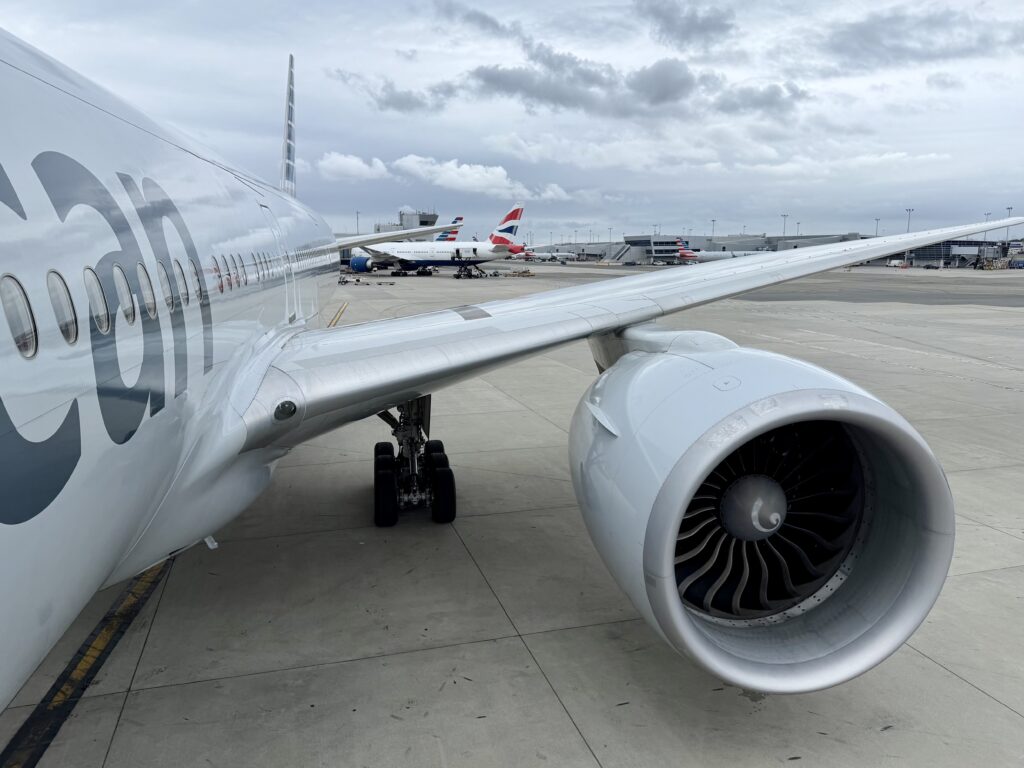
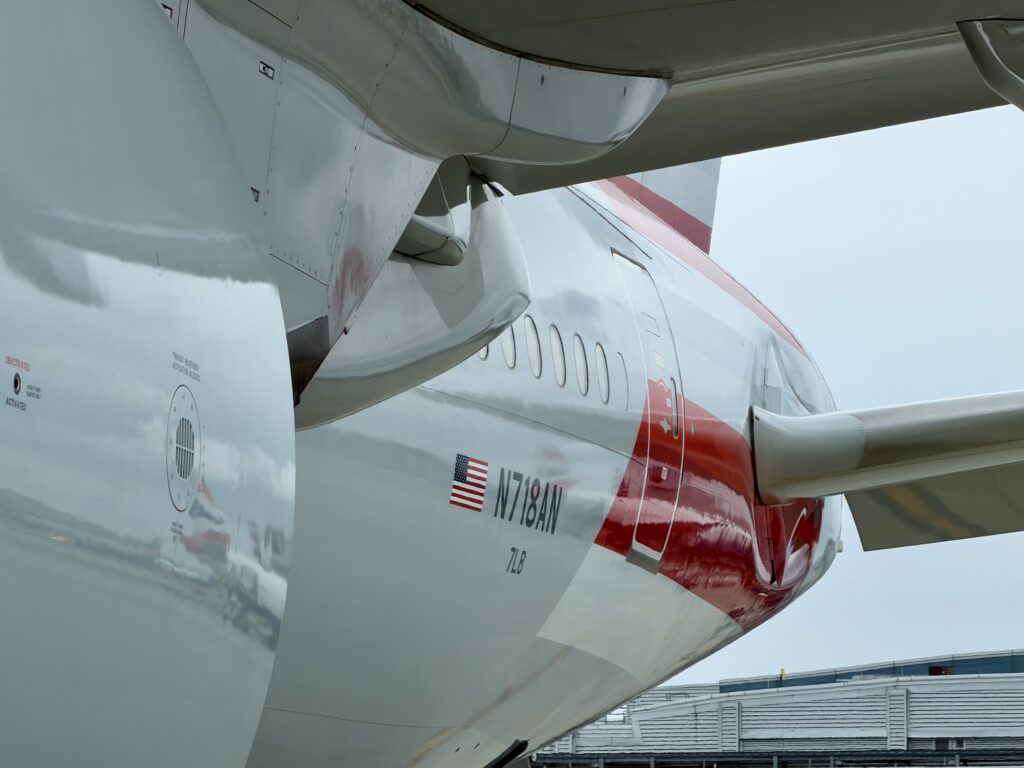
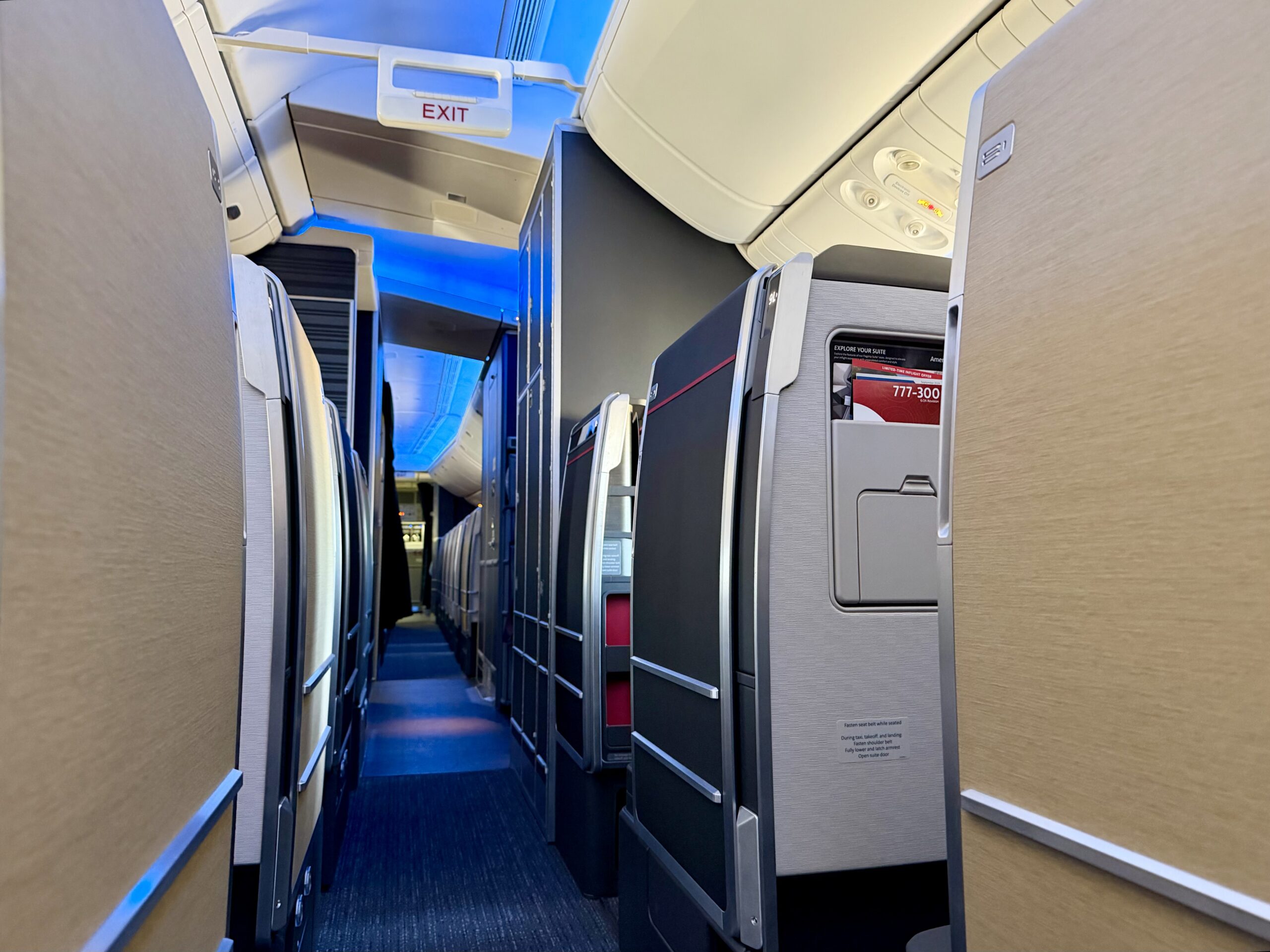
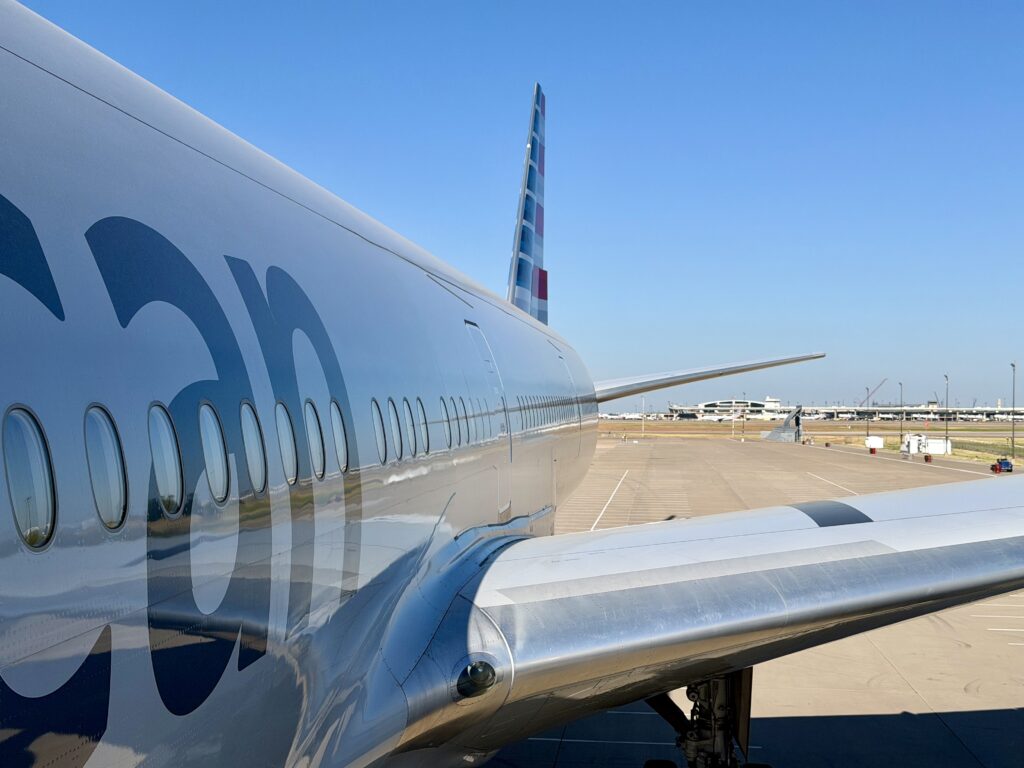
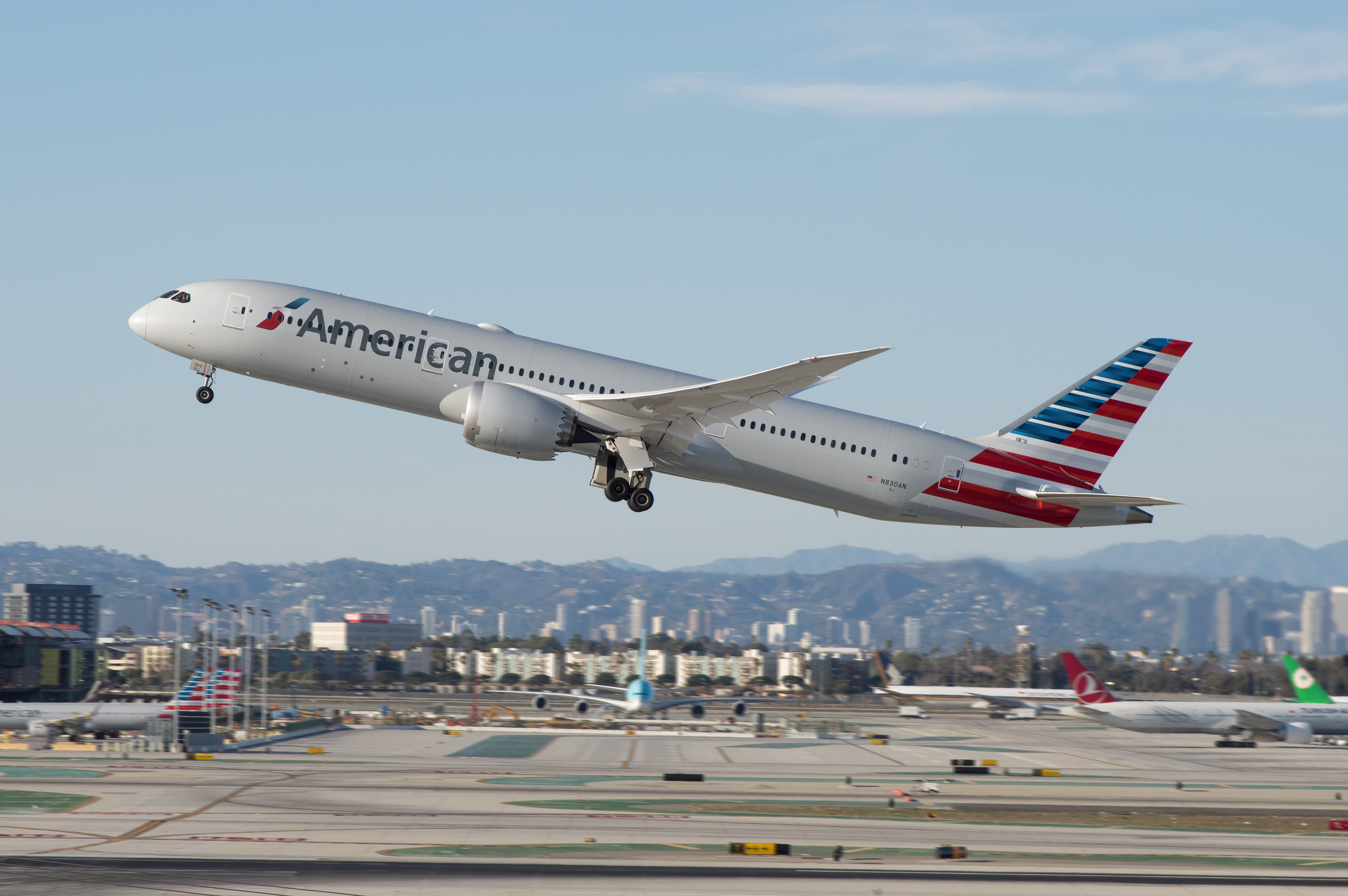
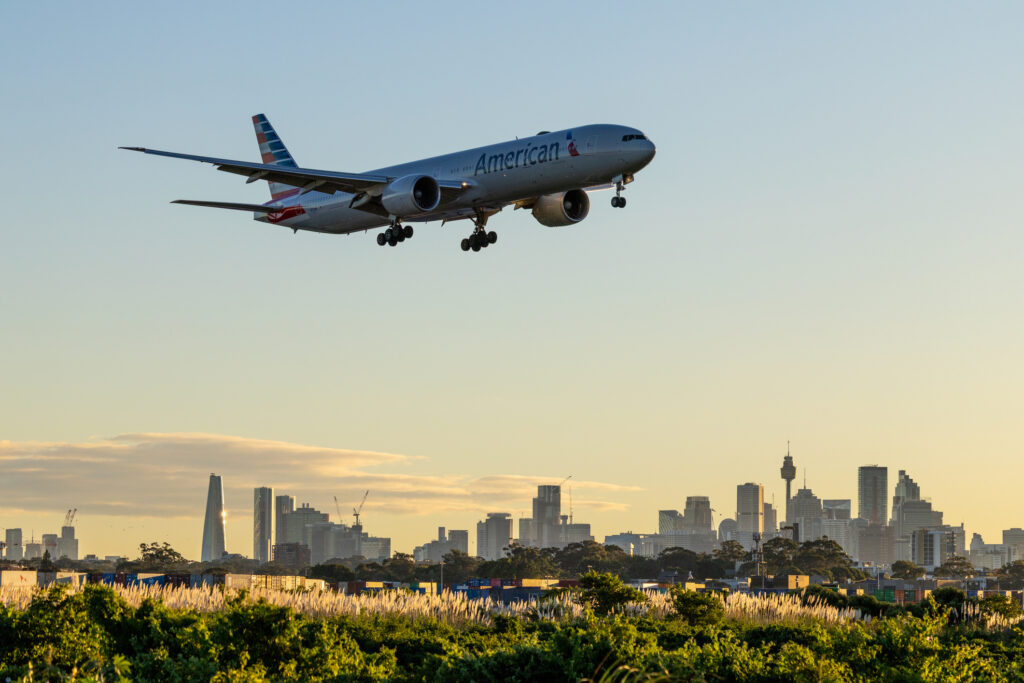
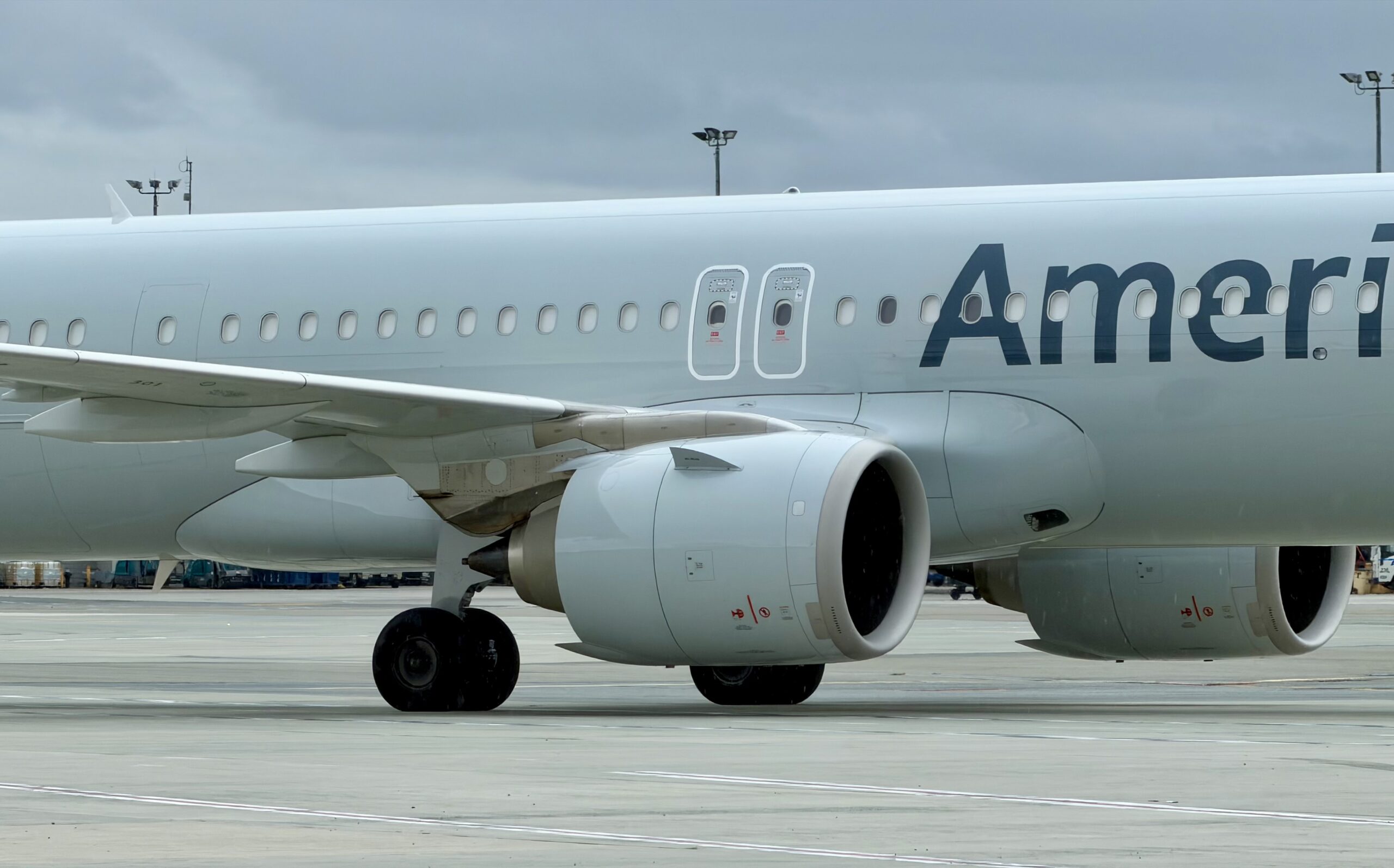
Australia isn’t exactly a quick trip from the U.S., but American Airlines is offering a cheaper way to get there for anyone with some flexibility this fall.
For a limited time, American is offering one-way economy award tickets to Sydney (SYD) for as few as 25,000 AAdvantage miles. That’s 10,000 miles less than the 35,000-mile starting price on American’s award chart.
There’s one big catch, though: both booking and travel need to happen by October 31, 2026.
That leaves just over a month to make the trip happen.
What to Know Before Booking
The offer covers Main Cabin awards between the contiguous 48 states and Sydney. These tickets start at 25,000 AAdvantage miles one way, plus applicable taxes and fees.
American says availability is limited, and the mileage price can change depending on the flight and date.
There’s another important restriction. The discounted awards must be on flights marketed and operated by American Airlines or American Eagle. Codeshare flights aren’t eligible, so don’t expect the 25,000-mile price on a Qantas-operated flight just because it appears on AA.com.
The offer can’t be applied to an existing reservation, either.
That gives this deal a pretty narrow window:
Book by 11:59 p.m. CT on October 31, 2026.
Complete travel by October 31, 2026.
Fly in Main Cabin.
Travel between the contiguous U.S. and Sydney.
Stick to American-operated flights.
AA.COM
A Long Flight, but a Lower Mileage Price
There’s no getting around the obvious part. Australia is a long way to fly in economy. American’s nonstop from Los Angeles to Sydney spends roughly 15 hours in the air.
At 25,000 AAdvantage miles one way, though, the savings are pretty meaningful. A round trip at the lowest price would cost 50,000 miles, although finding that rate in both directions from a home airport isn’t guaranteed.
It’s worth searching from American’s major gateways, too. If the deal doesn’t appear from a home airport, a positioning flight could open up more options.
But the bigger limitation here isn’t the long flight. It’s the calendar. Anyone who can make Australia work before the end of October has a lower mileage price available for a limited time.
American Airlines CEO Robert Isom and CFO Devon May sat down with investors this week at Morgan Stanley’s annual Laguna Conference. The majority of the conversation centered on revenue, fuel prices, and profitability, but there were also several updates that could affect the experience of flying American over the next few years.
Here’s what stood out.
American’s Premium Push Is Still Just Getting Started
American has spent the last several years pushing its product upmarket, with upgraded lounges, more premium seats, and the launch of its new Flagship Suite.
There’s a pretty simple reason why.
Isom said just 30% of American’s seats now account for 50% of the airline’s revenue. And despite all the attention American has placed on premium cabins recently, the airline still considers itself relatively early in that transition.
By the end of the decade, American expects its number of premium seats to grow by roughly 50%.
Some of that growth is already underway. American’s first retrofitted Boeing 777-300ER entered service with a larger Flagship Suite cabin, while Isom said work on the airline’s 777-200ERs will be “moving before you know it.” Airbus A319 and A320 reconfigurations are also beginning to roll out.
The result should be considerably more premium seating across American’s fleet over the next several years, on both its domestic and international jets.
American also appears to be preparing for one of its biggest periods of lounge investment in years.
Isom said customers will see “more new lounge openings at American over the next couple of years than we’ve done in decades.”
Several lounge projects are already underway, but the comment suggests there’s plenty more happening behind the scenes.
That’s worth watching as American puts more emphasis on the experience before a flight, not just the seat onboard.
Free Wi-Fi Is Also Growing AAdvantage
American’s rollout of free Wi-Fi isn’t just about making the flight better.
Isom said AAdvantage enrollments are running at record levels, with much of that growth driven by free Wi-Fi. An AAdvantage membership is required to use the service.
More members also gives American a larger pool of customers for other parts of AAdvantage, particularly its credit card partnership with Citi.
The onboard upgrades still have some distance to go. Isom said a “significant chunk” of American’s fleet will have high-speed Starlink Wi-Fi as the airline moves through 2027. Seatback entertainment will take several years to spread across the fleet.
Some Flights Could Be Trimmed
There was one less exciting update.
Higher fuel prices are causing American to reconsider some of its planned flying. May said the airline will make adjustments to its December schedule and now expects to grow somewhat less in 2027 than it anticipated several months ago.
That doesn’t necessarily mean widespread route cuts. American still sees room to grow its network over the longer term.
But schedules could get a little thinner in the near term as American adjusts to higher fuel costs.
In the aggregate, the comments point to an American that will look different over the next several years. More premium seats and lounges are coming, Wi-Fi and seatback entertainment are spreading across the fleet, and some of that investment is already starting to show up. The immediate question is how much higher fuel prices slow the airline’s plans to grow the network around it.
American Airlines has made no secret of its interest in premium customers of late.
New planes are arriving with private business class suites, existing ones are being reconfigured with more seats up front, and the airline is investing in lounges and other parts of the experience meant to convince people to spend more when they fly.
Which makes the slow disappearance of the Airbus A321T a curious thing to watch.
For more than a decade, American has flown a small number of these unusually configured planes primarily between New York and Los Angeles and San Francisco. There are only 102 seats onboard, and 30 of them turn into beds, an almost absurd amount of space to devote to premium passengers on a narrowbody flying within the United States.
Now they’re disappearing.
TYLER GLATT / POINTS INSIDER
American’s new Airbus A321XLR is taking over more transcontinental flying, and individual A321Ts are already being pulled out to be reconfigured with much more conventional interiors. Earlier this week, yet another flew to El Salvador to begin that process.
The following day, I was sitting in business class on another A321T headed across the country to Los Angeles.
It was a good place to consider what American is replacing, and what it isn’t.
The A321T Was Never Meant to Be Normal
When American introduced the A321T in late 2013, the airline was fighting hard for premium customers flying between New York and California.
Its answer was an airplane built around them.
At the front were 10 first-class seats, each with direct aisle access and enough room to turn into a bed. Behind them were 20 more lie-flat seats in business class. Even economy was unusual, with 36 extra-legroom seats and only 36 standard ones.
It was an extravagant use of an A321, but that was the point.
TYLER GLATT / POINTS INSIDER
American wasn’t alone in lavishing attention on these routes. United and Delta had their own premium transcontinental products, and JetBlue would bring Mint into the fight. But American’s solution was particularly unusual. Nearly a third of the people onboard could go to sleep in a bed.
The result was a narrowbody that felt almost deliberately underfilled.
More than a decade later, American still wants those premium customers. But the airplane built specifically for them is another matter.
But sitting a few rows behind it made the focus on first class seem a little incomplete.
American changed its complimentary elite upgrade policy on August 25. On domestic routes with a distinct premium economy cabin, complimentary upgrades from Main Cabin now stop at premium economy rather than jumping directly to business class. More broadly, complimentary upgrades move passengers forward by one cabin.
The A321T doesn’t have premium economy. It has Main Cabin, business class, and first class, which meant my complimentary upgrade from economy could move me one cabin forward into business, but not into first.
That landed me in what may have been the more interesting cabin all along.
TYLER GLATT / POINTS INSIDER
The A321T has 20 lie-flat business class seats behind first. They gave American a sizable second cabin full of beds without requiring everyone who wanted to lie flat across the country to buy the most expensive ticket on the plane.
By 2026 standards, the seats themselves aren’t particularly cutting-edge. They’re arranged 2-2, so half the cabin lacks direct aisle access, and years of flying back and forth across the country are beginning to show.
Mine certainly had some character.
TYLER GLATT / POINTS INSIDER
A gate agent let me know before boarding that something at the seat wasn’t working correctly, though it was never entirely clear whether she meant the entertainment screen, its remote, or something else. One of the armrests had also developed a considerable amount of bounce.
Once we left New York, though, I put the seat into its lounge position and settled in. Later, it went completely flat.
There are newer and more private ways to cross the country now. But lying there, the thing that stood out about the A321T wasn’t really the seat. It was how many lie-flat seats American had been willing to install.
TYLER GLATT / POINTS INSIDER
Thirty Beds on an Airplane With 102 Seats
That’s what makes the A321T difficult to replace, even with something newer.
American’s A321XLR has plenty going for it. There are 20 Flagship Suites with direct aisle access and privacy doors, plus 12 premium economy seats. The airplane can also fly international routes that were never part of the A321T’s job.
And it carries 155 people.
The comparison says more about the A321T than it does the XLR. For all the attention paid to its first-class cabin, what really made this airplane unusual was the amount of room American was willing to devote to relatively few passengers.
That has practical consequences as these planes disappear. There will be fewer lie-flat seats on each flight. That doesn’t mean awards will suddenly cost more or upgrades will become impossible. There are too many other factors at play. But for anyone accustomed to using miles or status to get into one, there will simply be fewer places to land.
American says Flagship First will stop being sold on transcontinental routes as more XLRs enter the fleet. And unlike a traditional retirement, the A321Ts themselves aren’t necessarily going anywhere. They’re being reconfigured and returned to American’s fleet as much more ordinary A321s.
That’s perhaps the strangest part of watching them disappear. The airplanes will still be around. What made them special won’t be.
American still wants the premium customers the A321T was built to attract. It just doesn’t need an airplane quite this extravagant to get them anymore.
The partnership had already been watered down considerably in 2025, when American and Hyatt eliminated reciprocal bonus earning on flights and hotel stays in favor of rewards tied to each program’s elite status qualification system.
Now, those benefits are going away, too.
For the moment, little is changing. Members can continue earning and redeeming eligible benefits through the current earning year, with parts of the relationship stretching into early 2027.
American and Hyatt Are Going Their Separate Ways
American and Hyatt have worked together since 2019. Initially, eligible elite members could earn bonus AAdvantage miles on Hyatt stays or bonus World of Hyatt points on American flights after linking their accounts.
That arrangement changed in 2025. Rather than earning bonus points or miles whenever they stayed or flew, members began unlocking benefits in the other program through AAdvantage Loyalty Point Rewards and World of Hyatt Milestone Rewards.
Those are the benefits now headed for the exit.
American and Hyatt issued nearly identical statements Wednesday, saying the decision came “after careful consideration.”
“We have mutually decided to not continue our enhanced relationship.”
The initial announcement didn’t offer much more explanation than that. But an American spokesperson provided Points Insider with some additional context, confirming that what it described as the “exclusive loyalty partnership” with Hyatt expires in November and won’t be renewed.
American said it’s focused on partnerships that provide AAdvantage members with “global scale and premium experiences” while also building relationships that are beneficial to customers and the airline’s financial outlook.
The reference to exclusivity is what sticks out.
Air Canada and Hyatt recently announced a new enhanced partnership between Aeroplan and World of Hyatt, giving members opportunities to earn rewards and access status benefits across the two programs.
We specifically asked American whether Hyatt’s new Aeroplan partnership played a role in the decision not to renew its exclusive relationship. The airline didn’t address that question.
KAMERAWORLD / ISTOCK
Current Benefits Aren’t Disappearing Immediately
Members who already leverage the American and Hyatt partnership have some time before the biggest changes take effect.
AAdvantage members who link their American and Hyatt accounts by November 15, 2026, can continue earning World of Hyatt awards through AAdvantage Loyalty Point Rewards through February 28, 2027.
World of Hyatt members who link their accounts by November 15 can continue earning AAdvantage awards through Milestone Rewards through December 31, 2026.
Benefits already earned won’t suddenly disappear, either. Both companies say members will receive the usual amount of time to select an award after earning it.
One American and Hyatt Benefit Is Sticking Around
Not everything is going away.
AAdvantage members will still be able to earn 500 AAdvantage miles on eligible Hyatt stays after the broader relationship ends. Members can choose to earn the miles instead of World of Hyatt points by providing their AAdvantage number at check-in.
It’s a much narrower tie-up than what American and Hyatt once offered, but the two programs aren’t severing ties completely.
JHVEPHOTO / ISTOCK
Why End the Partnership Now?
That’s still the big unanswered question.
American’s response offers a glimpse at what the airline wants from its loyalty partnerships, including global scale, premium experiences, and relationships that make financial sense. But it doesn’t explain why the Hyatt relationship no longer fits that strategy.
The timing of Hyatt’s new Aeroplan partnership, coupled with American’s description of its Hyatt agreement as exclusive, makes the question particularly interesting.
For now, though, there’s no confirmation that the two developments are connected.
And the practical impact won’t be immediate. Members have several more months to earn benefits before the relationship winds down, and the option to earn AAdvantage miles instead of Hyatt points will remain.
But the broader partnership has been shrinking for some time. It lost reciprocal earning in 2025, will lose its remaining cross-program milestone benefits over the coming months, and its exclusive contract expires in November.
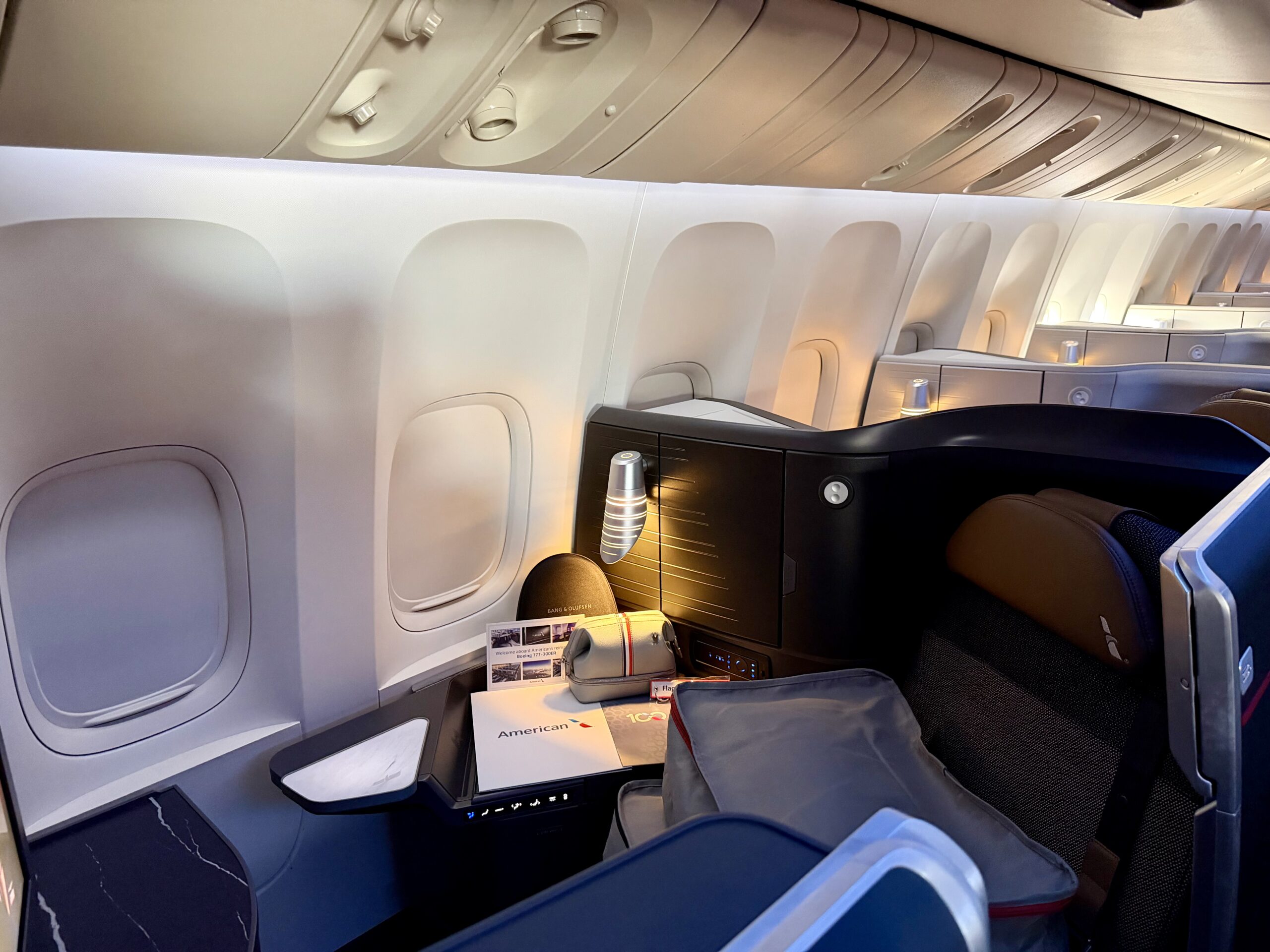
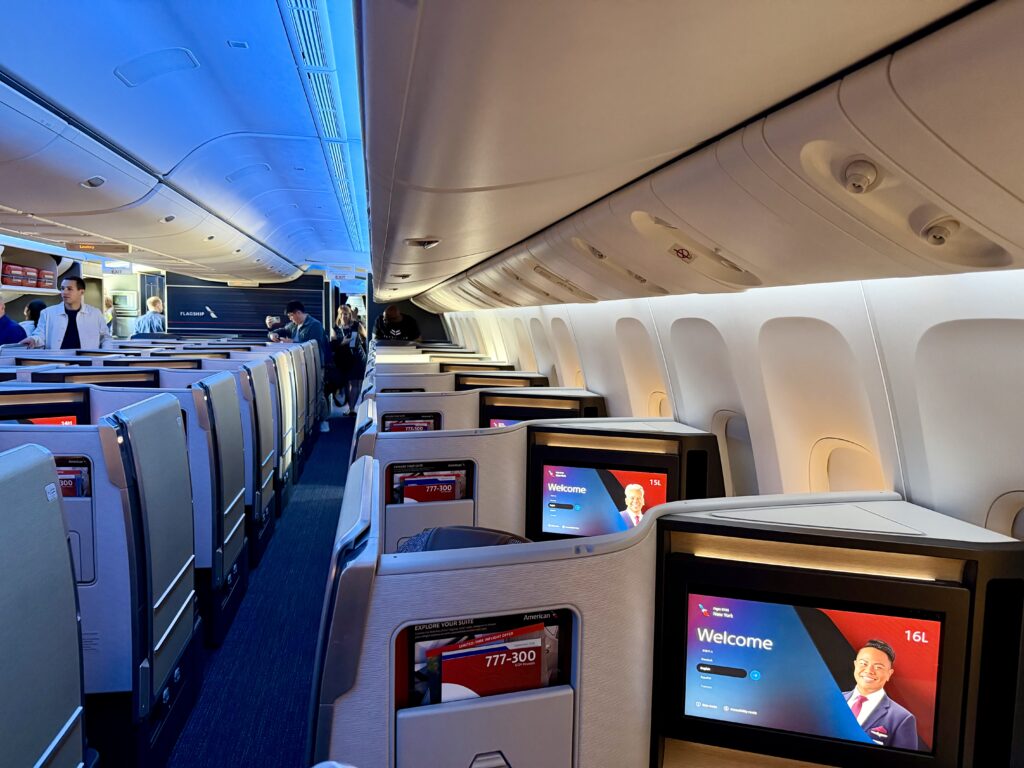
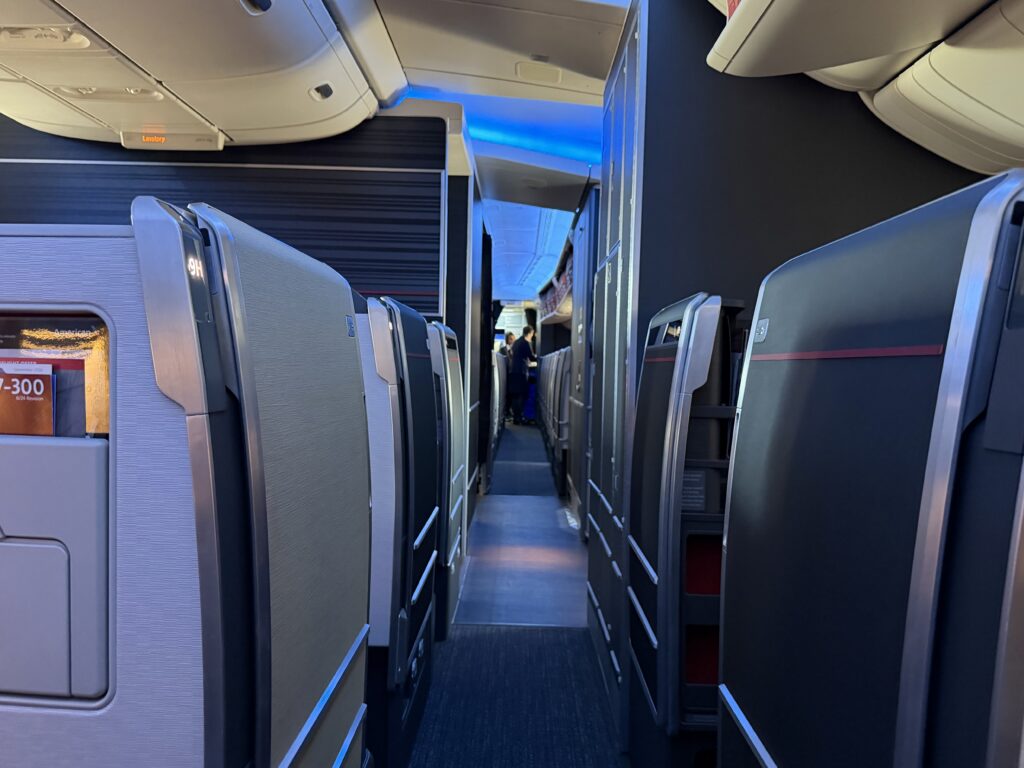
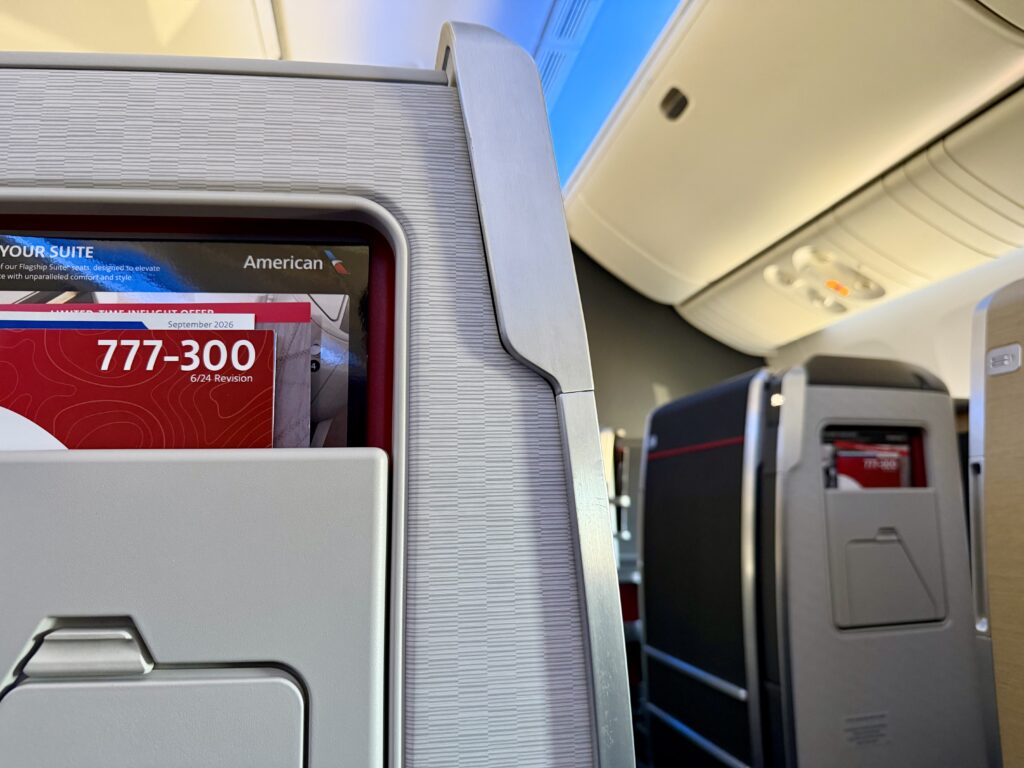
There’s a lot of business class on American Airlines’ newly retrofitted Boeing 777-300ER.
Seventy suites, to be exact.
Ahead of a special charter flight from Dallas Fort Worth (DFW) to New York (JFK) on Wednesday, American’s Chief Commercial Officer Nat Pieper described it as a “sea of business class” that seems to go on and on.
He’s not wrong.
TYLER GLATT / POINTS INSIDER
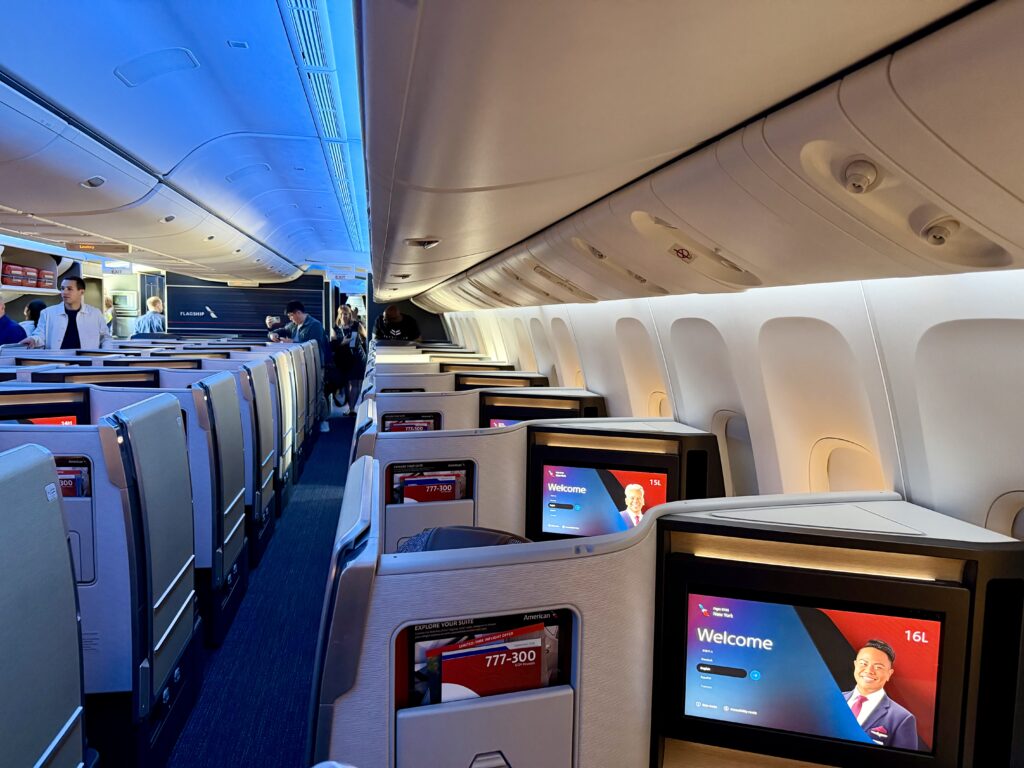
The Flagship Suite cabin stretches through a huge chunk of one of the largest passenger aircraft in American’s fleet. Add 44 Premium Economy seats, and the airline’s newly retrofitted 777-300ER has 114 seats across its two premium cabins.
TYLER GLATT / POINTS INSIDER
American didn’t start the project with 114 as some magic number.
Pieper told Points Insider that the configuration was driven in part by the physical geography of the 777 itself.
Door locations, galleys, and other fixed parts of an existing airplane helped determine where cabins could begin and end, alongside American’s desire to meet the market’s insatiable appetite for premium travel.
The result just happens to be the most premium-heavy aircraft American has ever flown.
TYLER GLATT / POINTS INSIDER
And after spending a few hours aboard the first one, it’s also an airplane that feels remarkably different from the 777 American has been flying for more than a decade.
Today, the fleet regularly crosses oceans and borders on flights to cities including London, Tokyo, São Paulo, Buenos Aires, and Sydney.
TYLER GLATT / POINTS INSIDER
American isn’t ready to move on from them.
Instead, it’s investing heavily in all 20 aircraft with the expectation that they’ll remain in the fleet for roughly another decade, if not longer.
Pieper said someone walking onto the first completed aircraft wouldn’t be able to tell that it didn’t just come off the factory floor. It’ll even have that new-car smell, he added, though perhaps the smell of an expensive new car given the amount American has invested in the project.
That sounded like the sort of thing an airline executive is supposed to say about a newly refurbished airplane. But after walking onboard, it wasn’t much of a stretch.
TYLER GLATT / POINTS INSIDER
The first impression is just how open everything feels.
The 777 is already a big airplane, but the new interior really emphasizes that size. Gone are many of the lighter surfaces of the previous cabin. They’ve been replaced by darker dividers, different shades of gray, wood finishes, and restrained red and white accents.
TYLER GLATT / POINTS INSIDER
Lighting helps.
Raphael Girardoni, American’s managing director of customer experience product and design, told Points Insider that lighting was an important part of the design and something he’s personally passionate about.
It’s noticeable throughout the Flagship Suite cabin.
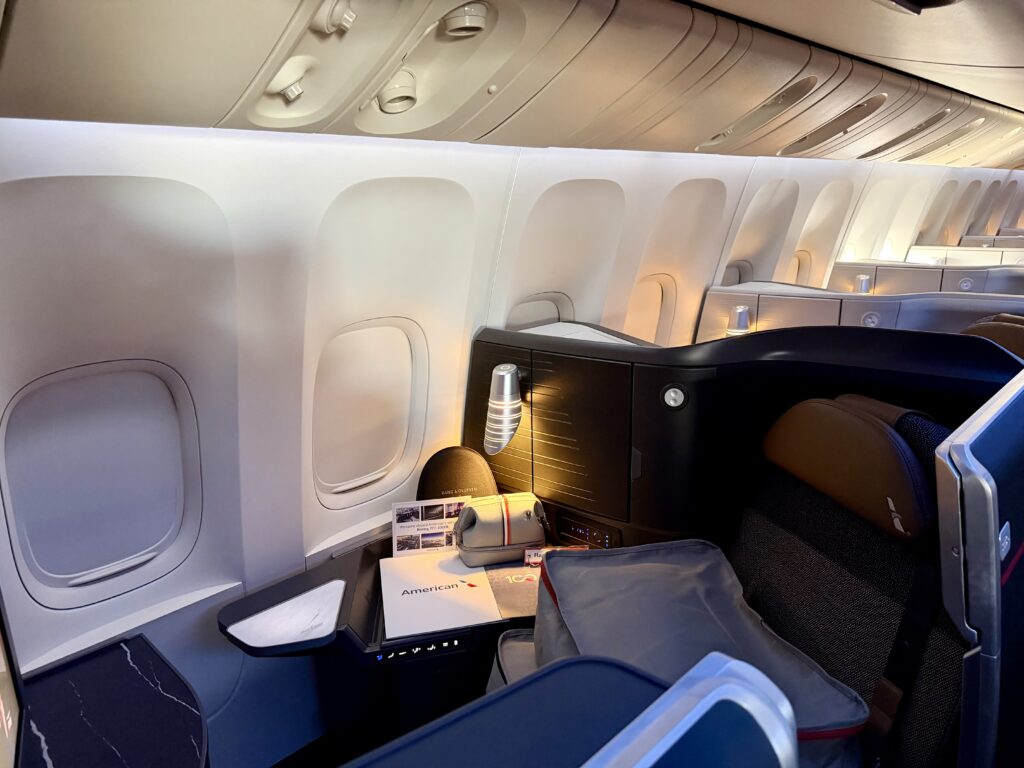
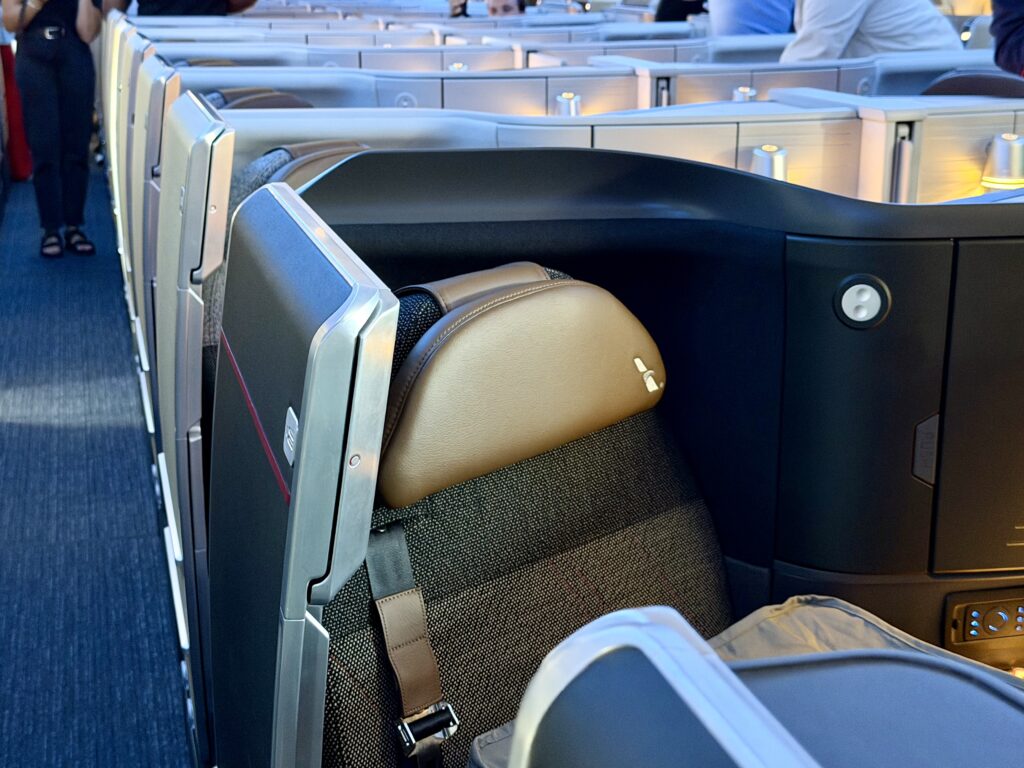
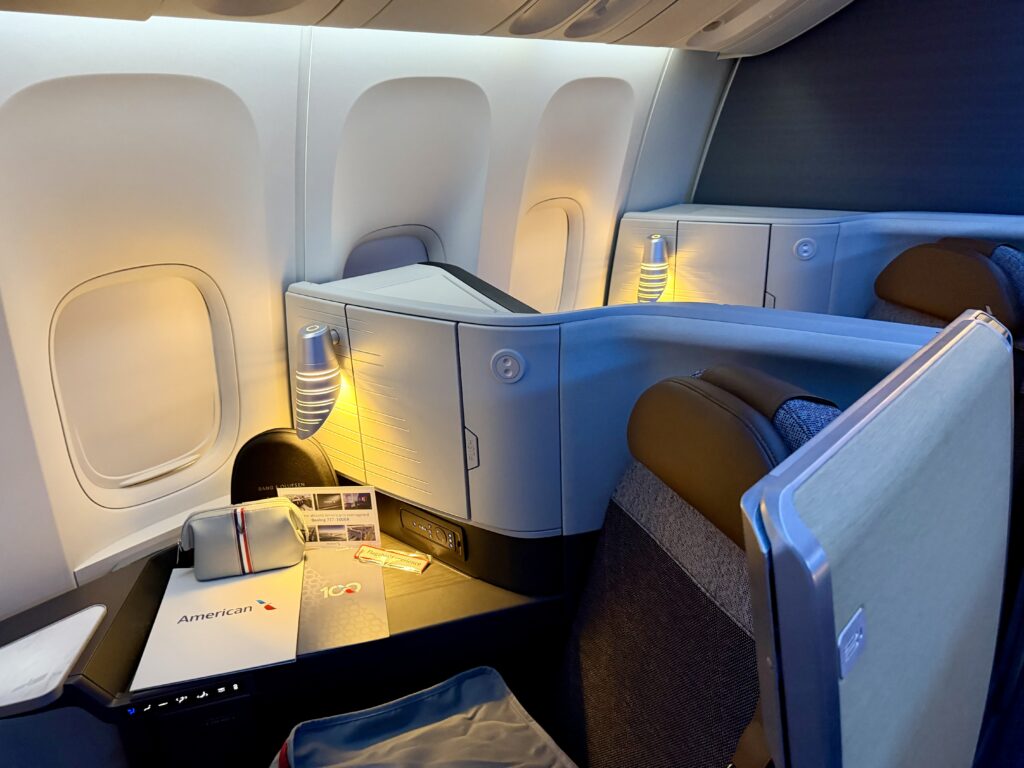
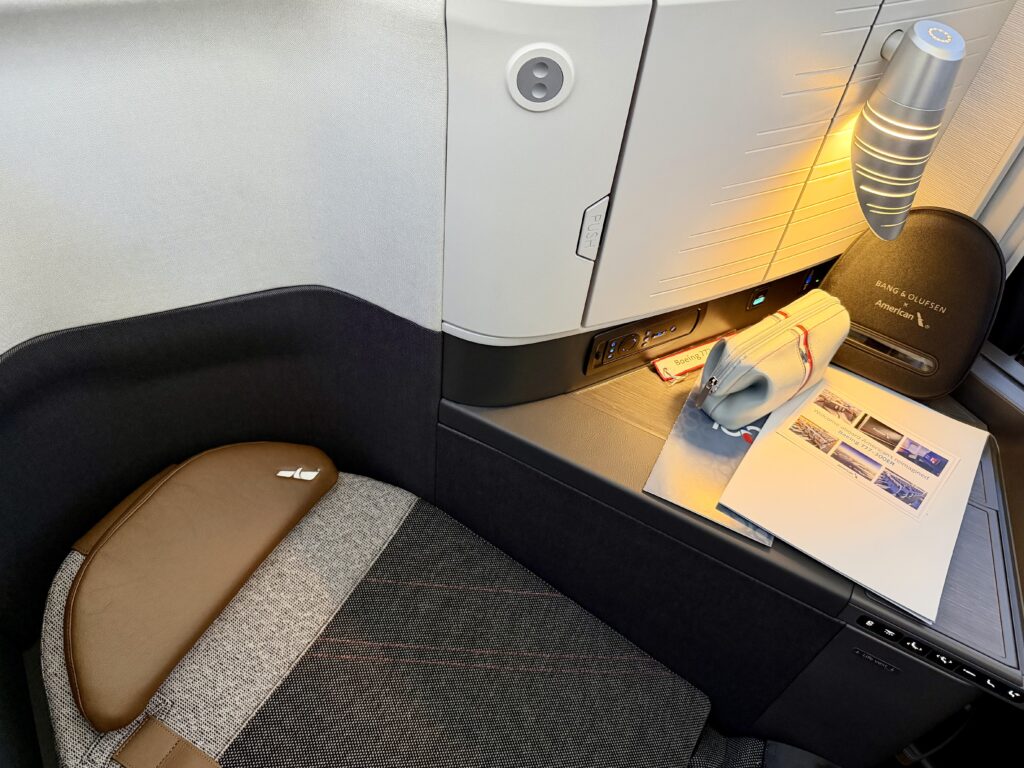
Small sconces and accent lighting illuminate the individual suites. One of the more thoughtful touches is the way the light from the sconce plays off the design surrounding a storage cubby beside the seat.
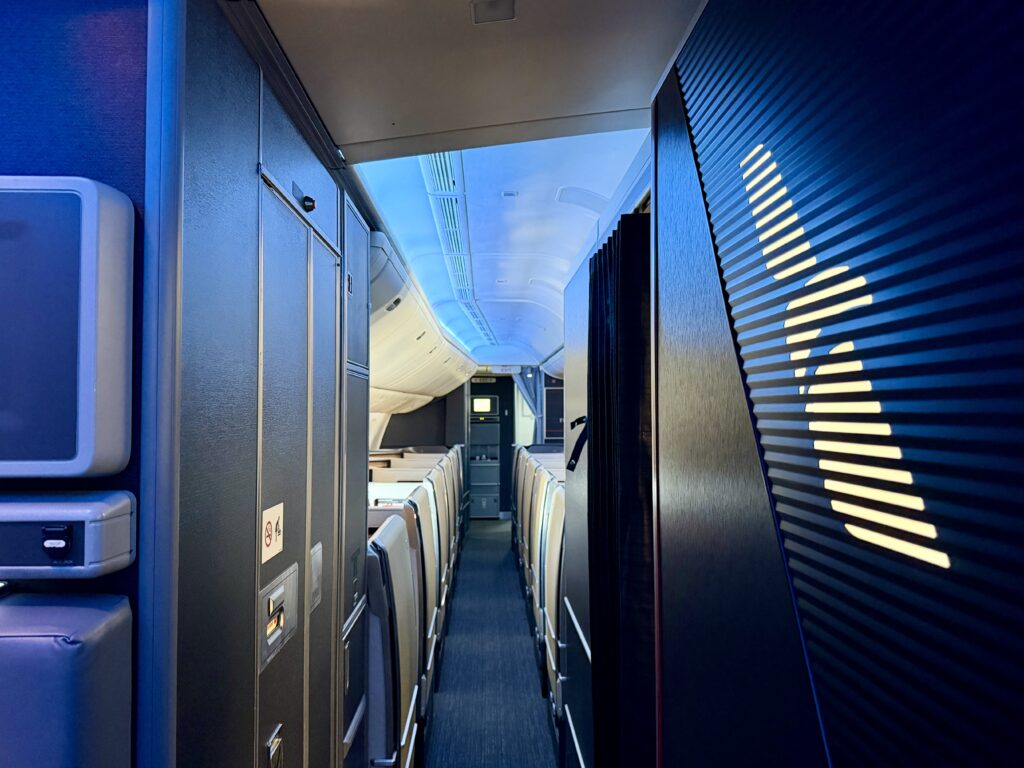
Even the cabin dividers look more considered, with darker finishes and not-so-subtle Flagship branding.
TYLER GLATT / POINTS INSIDER
Seventy Flagship Suites Upgrade the 777
Of course, the biggest upgrade is the seats up front.
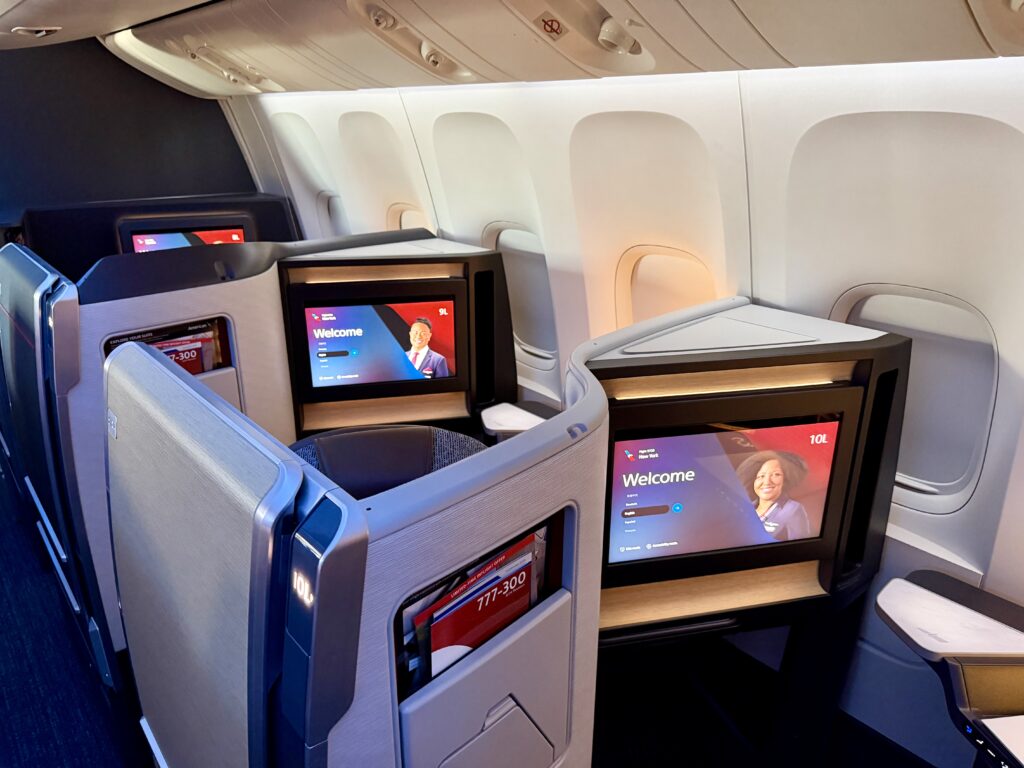
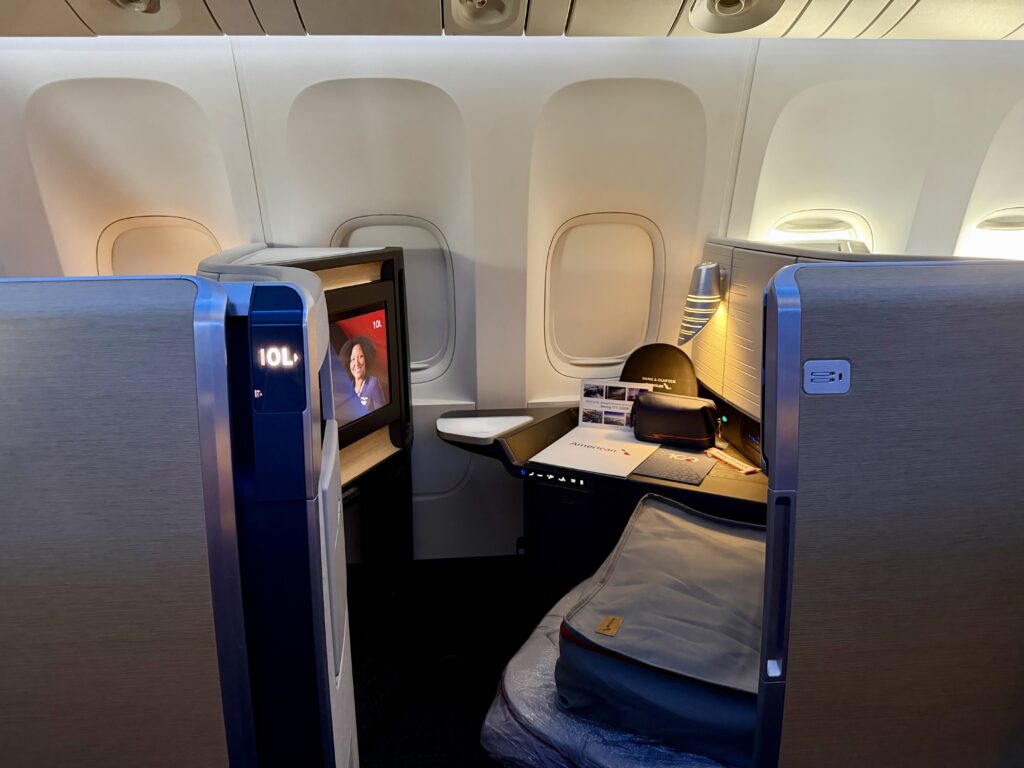
American is removing the eight Flagship First seats and 52 business-class seats found on its previous 777-300ER configuration. In their place are 70 Flagship Suites, including eight larger seats that the airline calls Flagship Suite Preferred.
TYLER GLATT / POINTS INSIDER
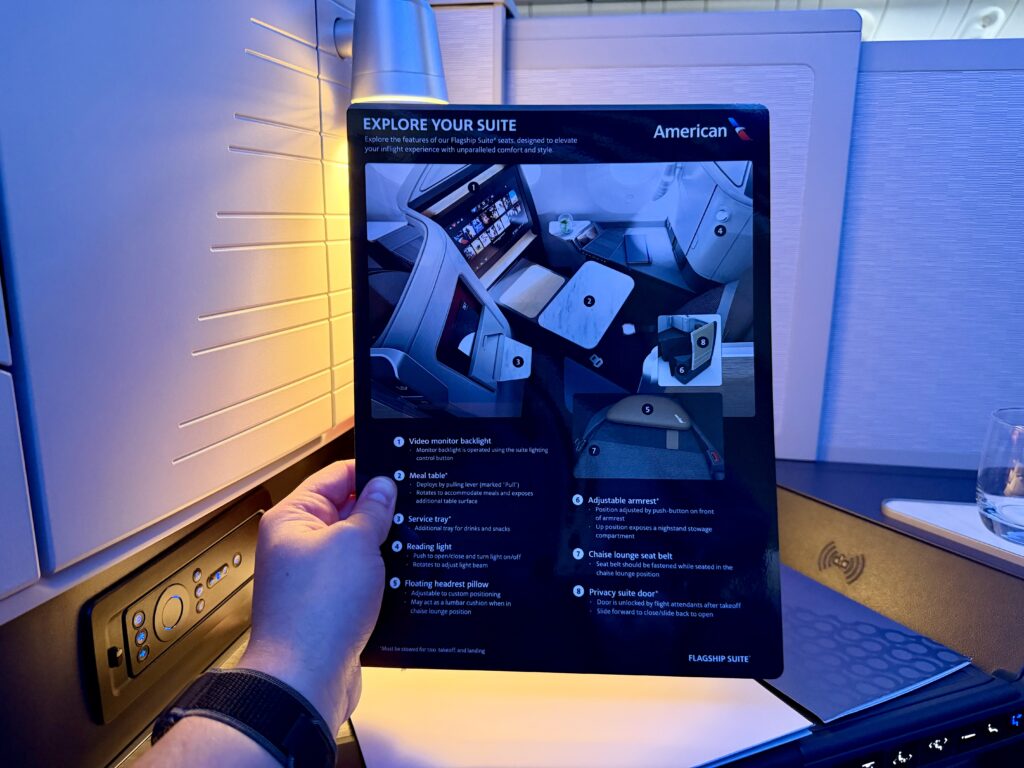
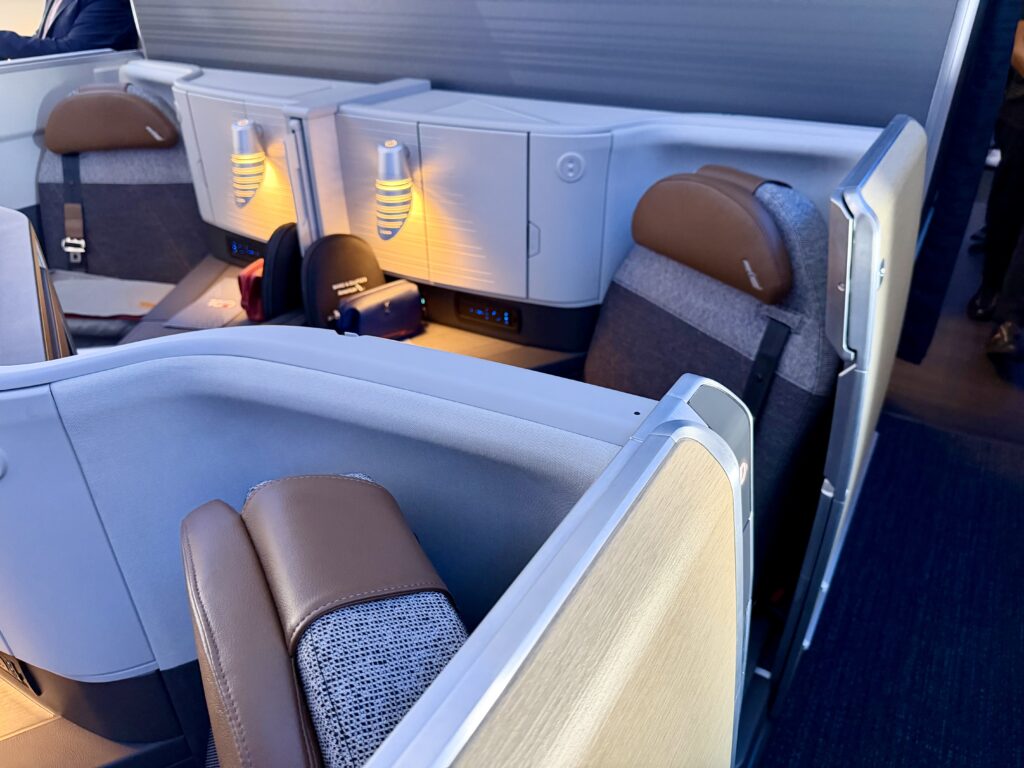
They’re the same seats American introduced on its also-premium-heavy Boeing 787-9P last year, outfitted with sliding privacy doors and direct aisle access.
TYLER GLATT / POINTS INSIDER
The sheer number of them really is a sight to behold. But what stands out most is how little of that enormous cabin is visible once you’re seated.
Even with the suite door open, I couldn’t see another passenger from my seat beyond the occasional top of someone’s head. Movable dividers between adjoining seats add yet another layer of privacy, too.
TYLER GLATT / POINTS INSIDER
There are also plenty of small touches that become more useful the longer a flight gets.
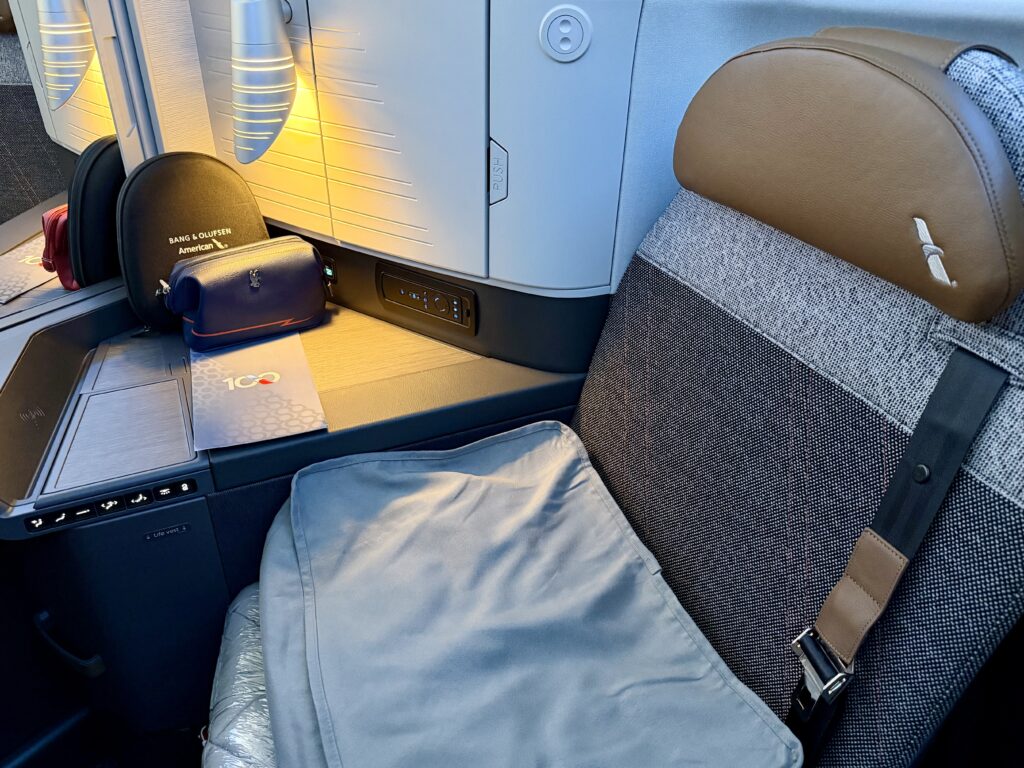
There’s wireless charging, a drink ledge, a small compartment well suited for a wallet or watch, and various other nooks for keeping things nearby rather than throwing everything into one larger storage bin.
The tray table is enormous. It slides out from beside the seat before rotating into place, leaving plenty of room for a laptop, meal, or whatever else ends up accumulating during a long flight.
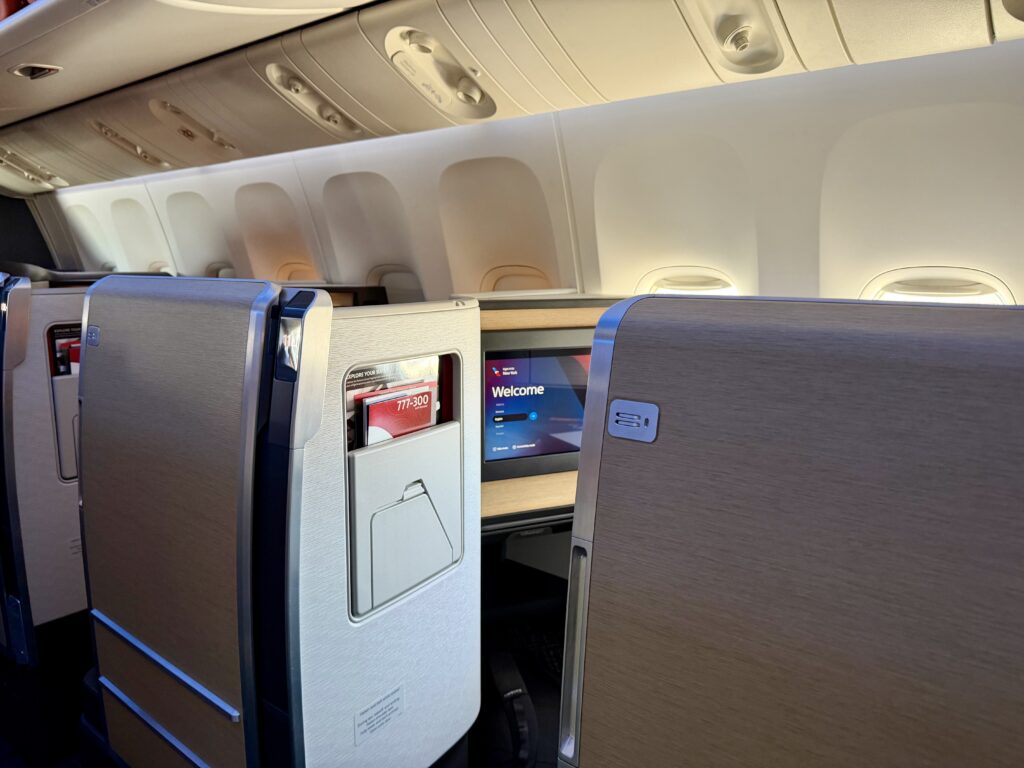
The entertainment screen is similarly large and highly responsive, but doesn’t feel oversized for the space.
TYLER GLATT / POINTS INSIDER
And yes, American kept the individual air nozzles.
That’s a win.
Can American Fill 70 Business-Class Seats?
Putting 70 business-class seats on a single airplane naturally raises another question: Can American consistently fill them?
Pieper doesn’t appear particularly worried.
He said American is comfortable with the configuration and has more tools at its disposal than selling every seat outright at its initial price. Upgrade offers give the airline another way to fill otherwise empty premium seats as departure approaches.
TYLER GLATT / POINTS INSIDER
And then there are Systemwide Upgrades, one of the perks available to some of American’s most loyal customers. Those could come in handy on this kind of plane, too.
With 70 Flagship Suites to work with, there are simply more seats that could potentially clear as upgrades.
That flexibility matters when these airplanes will be flying some of American’s biggest long-haul markets for years to come.
It also helps explain the underlying strategy.
TYLER GLATT / POINTS INSIDER
Airlines have spent the past several years adding premium seats as demand for higher-end travel has soared. American is doing the same with its new 787-9Ps and Airbus A321XLRs, and the 777-300ER retrofit takes that strategy to another level.
The airline didn’t necessarily set out to hit a particular percentage of premium seats on the 777. But the combination of the aircraft’s physical layout and American’s push toward a more premium experience led it to a configuration with a whole lot of them.
Economy Feels Surprisingly Small
Walk far enough through the Flagship Suite cabin and eventually the airplane starts looking more familiar.
There are 44 Premium Economy seats, followed by Main Cabin Extra and standard economy.
TYLER GLATT / POINTS INSIDER
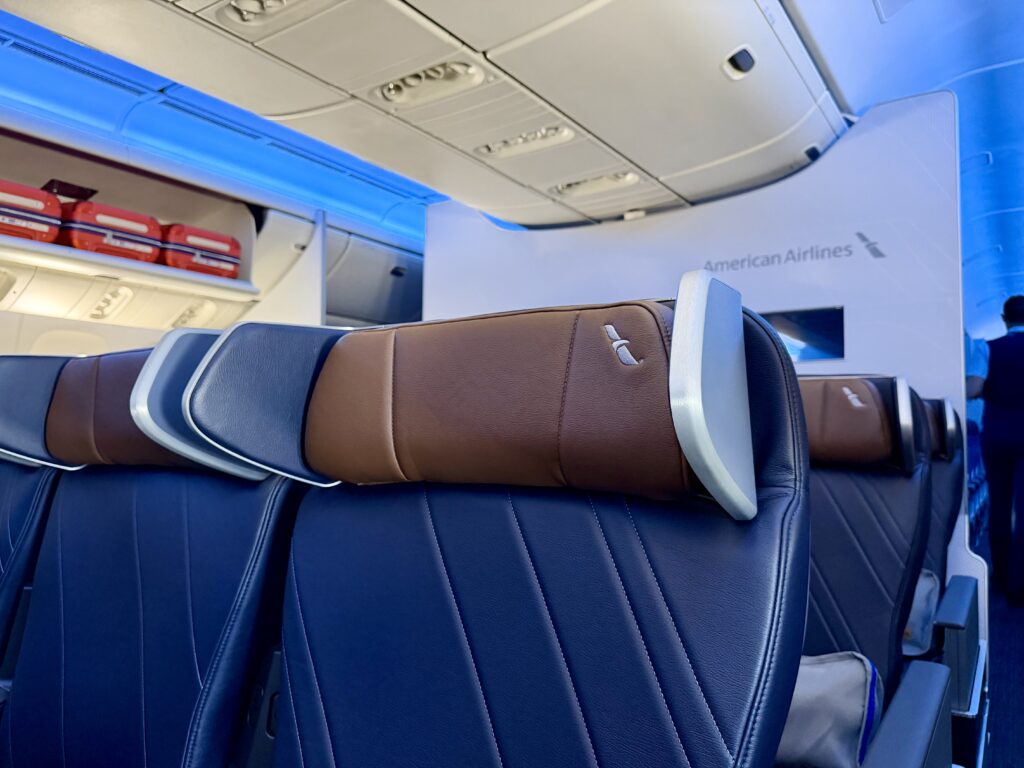
Economy itself isn’t revolutionary. But the cabin has a new lease on life.
Browns and blues replaced some of the older finishes. There are new entertainment screens, in-seat power, and the other updates expected from a modern widebody interior.
A short charter flight isn’t enough to say much about how those seats will feel after 10 or 15 hours.
TYLER GLATT / POINTS INSIDER
What’s more notable, though, is how little economy there seems to be.
For an airplane as large as a 777-300ER, the two economy sections feel surprisingly small. That’s not because American has done anything unusual within them. It’s because the majority of the airplane’s real estate comes before them.
TYLER GLATT / POINTS INSIDER
The premium cabins stretch almost to the end of the wing.
That might be the most effective way to understand just how different this configuration is. The 777-300ER can hold an enormous number of seats. American has chosen to devote a remarkable amount of that real estate to the front of the plane.
Retrofitting a 777 Isn’t the Same as Building a New One
Some things didn’t change.
The overhead bins, for example, look just like they did before. So does the view through the well-traveled windows. And when the engines spool up for takeoff, this is still very much the same 777 that has been flying for American for years.
The challenge was putting a substantially different passenger experience inside it.
TYLER GLATT / POINTS INSIDER
From a design perspective, Girardoni said there weren’t any particular challenges with bringing Flagship Suite to the 777 that stood out during the project. American was also working with a familiar product, using the same Flagship Suite seat already flying aboard its 787-9P.
But there are still operational tradeoffs.
One flight attendant aboard Wednesday’s flight mentioned that the new layout leaves crews with somewhat less room to maneuver in parts of the galley, particularly when passengers are trying to squeeze around carts. It could make things a little trickier, although she said that adapting to different aircraft and working conditions is part of the job.
Passengers give up a little space elsewhere, too. The new configuration has fewer lavatories than the 777-300ER it replaces.
TYLER GLATT / POINTS INSIDER
American expects to complete the remaining 777-300ER retrofits by the middle of 2027.
The aircraft will also get free high-speed Wi-Fi for AAdvantage members, sponsored by AT&T. That’s a meaningful upgrade for airplanes expected to spend much of their lives on long international flights.
The first retrofitted 777 already has it.
A Look at Where American Wants to Go
American describes the new 777 as more than a refurbishment.
Pieper called the aircraft an embodiment of the airline’s ambitions as American works toward what he described as becoming a premier global airline.
TYLER GLATT / POINTS INSIDER
That’s a lofty goal.
But the 777 offers a tangible look at what American thinks getting there requires.
It’s eliminating its eight-seat international first-class cabin while dramatically expanding business class. It’s adding privacy doors, better technology, more thoughtful storage, and a much more contemporary interior. And it’s making similar investments across new aircraft, existing widebodies, lounges, Wi-Fi, Flagship airport check-in, and other parts of the travel experience.
TYLER GLATT / POINTS INSIDER
The first retrofitted 777-300ER begins commercial service between New York (JFK) and Buenos Aires (EZE) on September 2.
It won’t be a novelty flying around the network for a year or two. American expects this airplane, and eventually the others like it, to spend roughly another decade flying to some of its most important destinations around the world.
The first one shows just how much American thinks it can get out of an airplane it already owns. And now it has 19 more to rebuild.
American Airlines has been preparing to say goodbye to Flagship First for years. Until now, we just didn’t know when the airline would make it official.
On September 2, American announced that Flagship First will no longer be available for purchase on its Boeing 777-300ERs for travel beginning November 19, 2026. The airline will then stop selling Flagship First on its premium transcontinental routes for travel beginning March 28, 2027.
That will bring an end to American’s dedicated first-class cabin and leave the newer Flagship Suite as the airline’s top premium product.
It’ll also mark the end of an era for U.S. airlines.
American is the last U.S. carrier to offer a true international first-class cabin, something Delta and United abandoned years ago in favor of increasingly elaborate business-class products.
Flagship First Is Disappearing From the 777-300ER
American currently offers Flagship First on two aircraft: the Boeing 777-300ER used on long-haul international routes and the Airbus A321T used primarily on premium transcontinental routes from New York (JFK) and Boston (BOS) to the West Coast.
The airline has been working toward eliminating both versions for some time.
TYLER GLATT / POINTS INSIDER
American’s 20 Boeing 777-300ERs are being retrofitted with new interiors that replace the eight-seat Flagship First cabin with a much larger business-class cabin. The work is expected to be completed by mid 2027.
The new configuration has 70 Flagship Suite seats with privacy doors, 44 Premium Economy seats, 30 Main Cabin Extra seats, and 186 standard Main Cabin seats.
The first retrofitted 777-300ER enters commercial service on September 2 between New York (JFK) and Buenos Aires (EZE) as flight AA953.
American says Flagship First will no longer be available for purchase on the 777-300ER for travel beginning November 19.
Transcontinental First Class Gets a Few More Months
Flagship First will hang around a little longer on American’s transcontinental routes.
The Airbus A321T has an unusual three-cabin configuration with Flagship First, Flagship Business, and economy. But that premium-heavy configuration is also on its way out.
American is reconfiguring the A321Ts with a more standard layout as Airbus A321XLRs take over premium transcontinental flying.
The XLR still has a premium layout, but there’s no separate first-class cabin. Instead, it has 20 Flagship Suite seats, followed by 12 Premium Economy seats and 123 seats in Main Cabin.
But the XLR’s Flagship Suite isn’t identical to the version found on American’s new Boeing 787-9P (the P stands for premium) and retrofitted 777-300ER. The XLR requires a different seat design because of its narrower cabin.
As more XLRs enter the fleet, American says Flagship First will no longer be sold on transcontinental routes for travel beginning March 28, 2027.
That means Flagship First will disappear in two stages: first from international flying this November, then from the transcontinental network next March.
Flagship Suite Becomes American’s Top Seat
American revealed plans years ago that would ultimately eliminate Flagship First as it introduced its new Flagship Suite.
What’s new is that the airline has finally put dates on the transition that’s already well underway.
TYLER GLATT / POINTS INSIDER
Once Flagship First disappears, Flagship Suite will officially take over as American’s top long-haul product.
In many ways, the change makes sense. The differences between first and business class have been shrinking for years. Today’s best business-class seats offer privacy doors, direct aisle access, better bedding, and many of the features that once helped set international first class apart.
But that doesn’t mean there won’t be some nostalgia for Flagship First. American is the last U.S. airline to offer a true international first-class cabin, and its retirement will bring that era to an end.
So for anyone hoping to experience Flagship First one last time, or for the first time, the clock is now officially ticking.
Plans change. And so does award pricing, for that matter.
If you’ve booked a flight with American Airlines AAdvantage miles, you don’t necessarily need to call to change it. Most award trips can be changed online, whether you need a different flight or happen to stumble across a cheaper option after booking.
There are no change fees, although you’ll pay any increase in miles or taxes. And if the new award happens to cost less, you’ll get the difference back.
Here’s how it works.
How to Change an American Airlines Award Flight Online
Changing an American Airlines award flight online is quick and easy.
American will ask which flight you want to change. Select the applicable flight and confirm that you want to make a change.
On the next screen, you can change any of three things:
Origin
Destination
Date
You don’t have to change all three. If you just want to look for another flight on the same route and date, leave the existing information in place and continue.
AA.COM
American will search for new options much like it would if you were booking a new award ticket. The difference is that it knows what you’ve already paid.
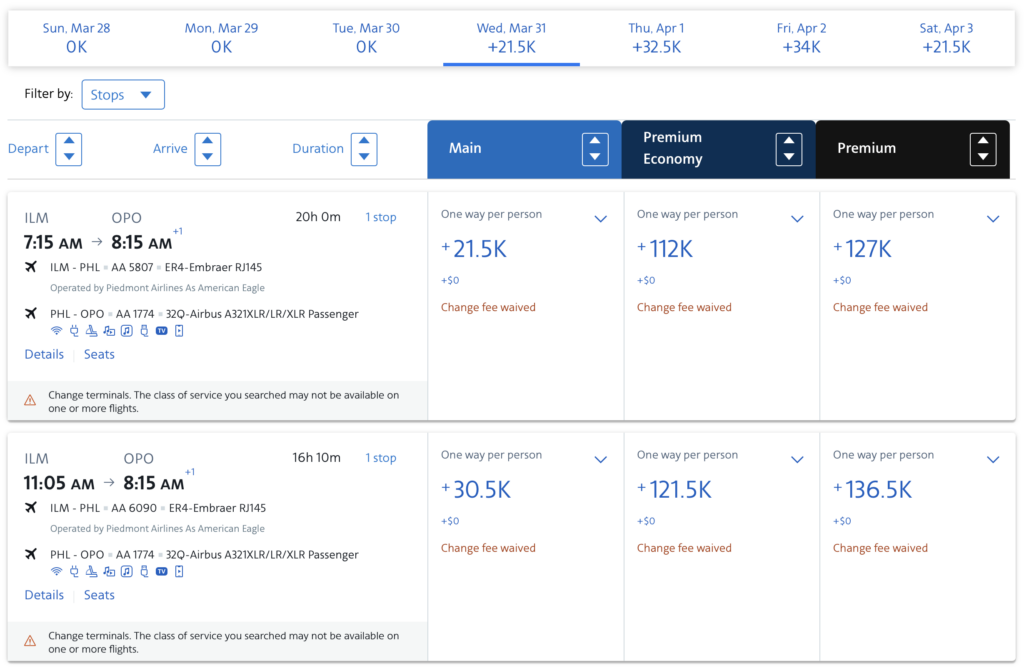
At the top of the results, you’ll see your previous trip value, previous tax value, and available AAdvantage miles. The results below show how much more each new itinerary would cost compared with your existing award.
For example, this trip from Wilmington (ILM) to Porto (OPO) was originally booked for 21,000 AAdvantage miles plus $5.60.
AA.COM
Changing the departure to March 31 would cost another 21,500 miles, while March 28, 29, and 30 show some itineraries with no additional miles required.
Once you’ve found the itinerary you want, select the fare and continue to the confirmation screen. You’ll see any additional miles and taxes due before completing the change. If the new award costs less, you’ll get miles back instead.
The process in the American Airlines app is nearly identical.
What Happens to Your Miles When You Change an Award?
There’s a little more happening behind the scenes than the change screen suggests.
American says it reinstates the miles from the original trip to the AAdvantage account they came from. It then deducts the miles required for the replacement award from that same account, even when the new award costs the same amount.
American also says to allow up to 72 hours for a mileage reinstatement to process. Your AAdvantage balance will update once the reinstatement is complete.
Taxes are settled as part of the change as well. If the new itinerary requires additional taxes, you’ll pay the difference. If you’re owed a refund, American sends it back to the credit card used for the original booking.
After the change is complete, American sends a confirmation email with the new itinerary and ticket number.
SCM JEANS / ISTOCK
Changing Can Be Easier Than Canceling and Rebooking
The online change option is also worth knowing about when you find something better after booking.
American dynamically prices awards on its own flights, so the mileage price can change as the cash fares fluctuate. Most partner awards work differently, although American uses variable pricing for awards on a small number of partners.
If the price drops, you don’t necessarily need to cancel the original award and start over. An online change keeps you within the existing reservation and shows what the new option costs compared with what you’ve already paid. If the replacement costs fewer miles, you’ll get the difference back.
You can do the same thing if a different flight, date, origin, or destination becomes a better option.
American describes online changes as available for “eligible” trips, so you won’t necessarily see the option on every reservation.
American directs travelers to its reservations center for certain awards, including trips that have already started and some itineraries involving partner airlines. Trips affected by circumstances outside your control may also require assistance.
But if your reservation is eligible, you’ll see “Change trip” on the reservation page. From there, you can see what the alternatives cost before confirming anything.
So before canceling an award or calling American, check the reservation online. The change you want to make may only take a few minutes.
American Airlines is adding seven international routes in 2027, and its Airbus A321XLR will be flying several of them.
Four of the routes announced Thursday will use the long-range narrowbody. That includes brand-new service to Vienna and Porto, along with new flights from New York (JFK) to Amsterdam and Nice.
The A321XLR has been flying for American for less than a year, starting with transcontinental flights before heading across the Atlantic to Edinburgh. Those early routes offered a small preview of what American had planned for the jet.
But its 2027 schedule is giving us a much better idea of what’s ahead.
American’s New International Routes for 2027
American’s expansion includes three destinations joining or returning to its network, plus several new routes to cities it already serves from other gateways.
Some were announced earlier this year, while others are new as of Thursday.
Route
Starts
Aircraft
Chicago (ORD) → Tokyo Narita (NRT)
March 19
Boeing 787-9
New York (JFK) → Amsterdam (AMS)
March 28
Airbus A321XLR
Philadelphia (PHL) → Porto (OPO)
March 28
Airbus A321XLR
New York (JFK) → Nice (NCE)
May 6
Airbus A321XLR
Philadelphia (PHL) → Vienna (VIE)
May 6
Airbus A321XLR
Charlotte (CLT) → Barcelona (BCN)
May 27
Boeing 777-200ER
Philadelphia (PHL) → Reykjavik (KEF)
May 27
Airbus A321neo
Vienna and Porto will be entirely new destinations for American. Reykjavik returns to the airline’s network for the first time since 2019.
Elsewhere, American is bringing back Charlotte to Barcelona and adding new service from New York to Amsterdam and Nice. The Chicago to Tokyo Narita route was previously announced in July but is still included in American’s seven-route expansion for 2027.
There are a few other schedule changes coming next year. American will add a fourth daily flight between New York and London Heathrow (LHR), while seasonal Charlotte to Paris (CDG) and Miami to Milan (MXP) service will extend into early January 2028.
Tickets were supposed to go on sale Monday, August 31, but went on sale a day early.
Four of the seven routes will be flown by an aircraft that carries just 155 passengers.
That’s considerably fewer seats than you’ll find on the Boeing 787s and 777s that do much of American’s long-haul flying. But the A321XLR can still cross the Atlantic. It’s outfitted with 20 Flagship Suite business class seats, 12 Premium Economy seats, and 123 seats in economy.
For American, that means having a smaller aircraft it can send on long international routes without giving up business class or Premium Economy.
The 2027 schedule shows how American can put that flexibility to work. The XLR can open new destinations like Vienna and Porto or add another U.S. gateway to cities already on the map, as American is doing with Amsterdam and Nice.
There are plenty more XLRs coming, too. American has dozens still on order. That could mean more niche European routes or flights to new destinations in South America.
For passengers, there is one very big tradeoff. More long-haul XLR routes also mean more opportunities to spend a transatlantic flight on a single-aisle aircraft.
Whether that matters probably depends on where you’re sitting.