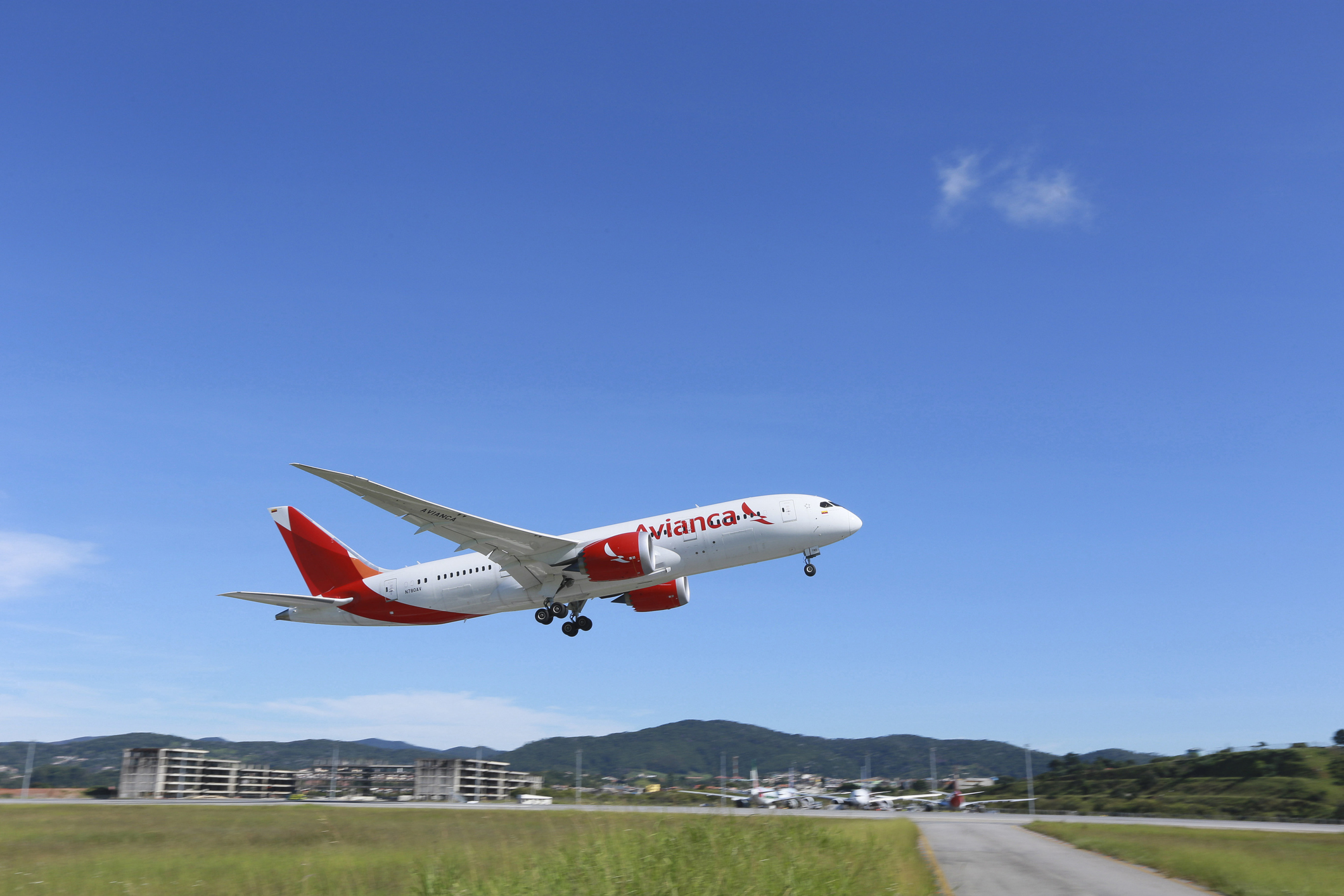
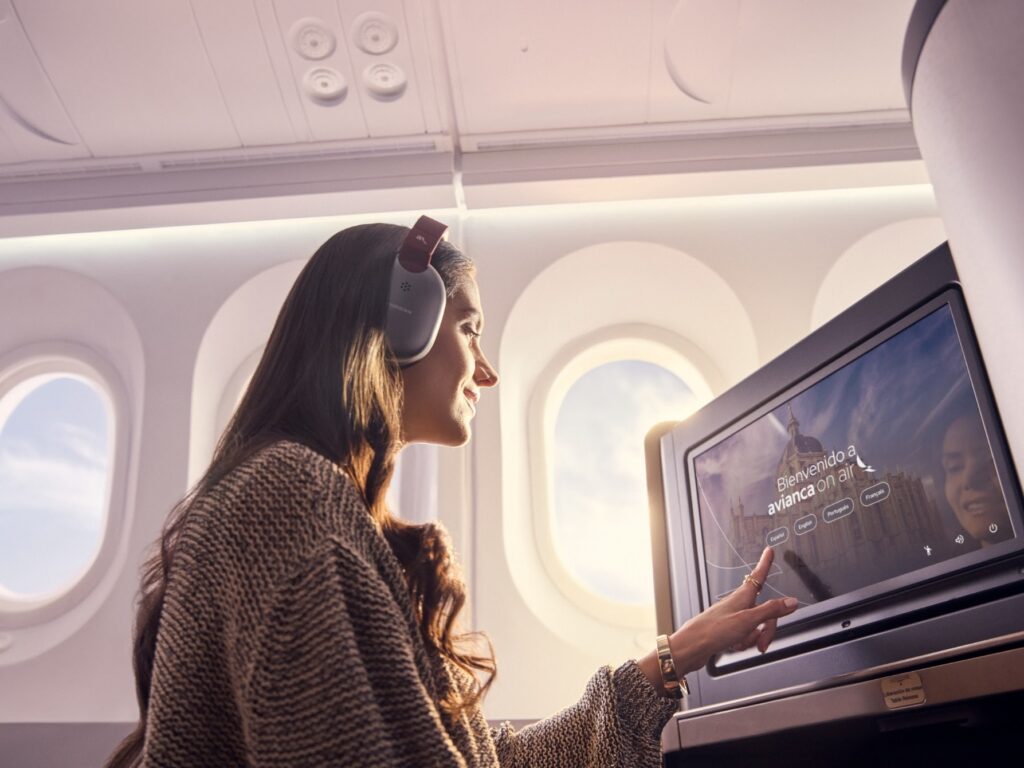
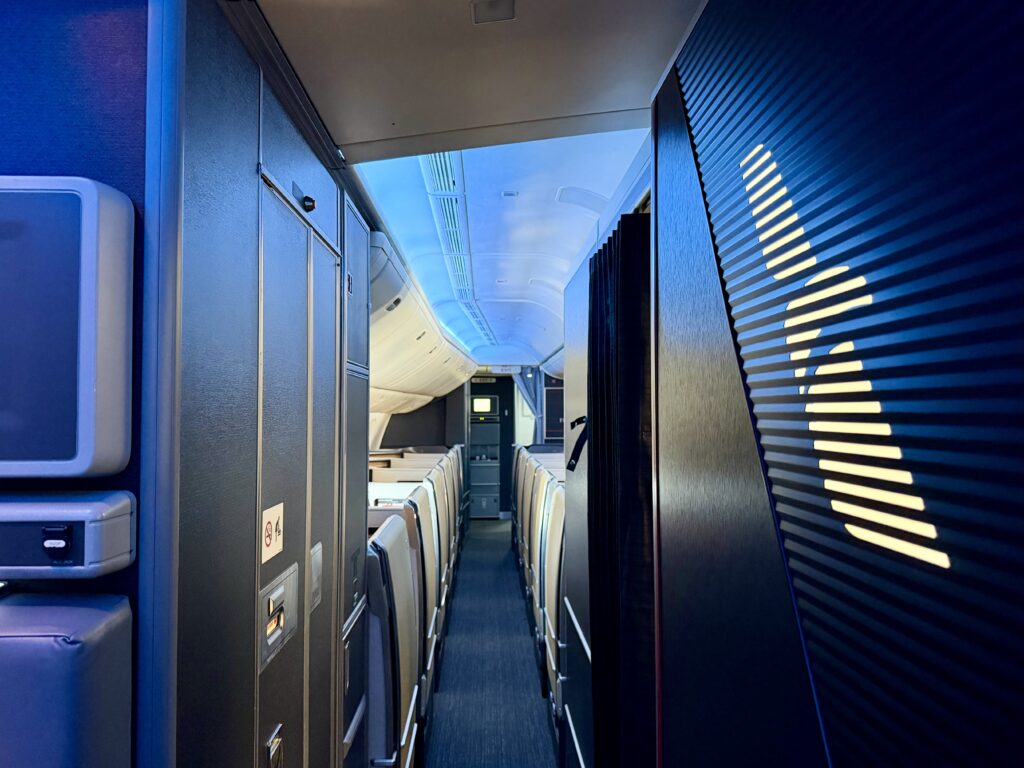
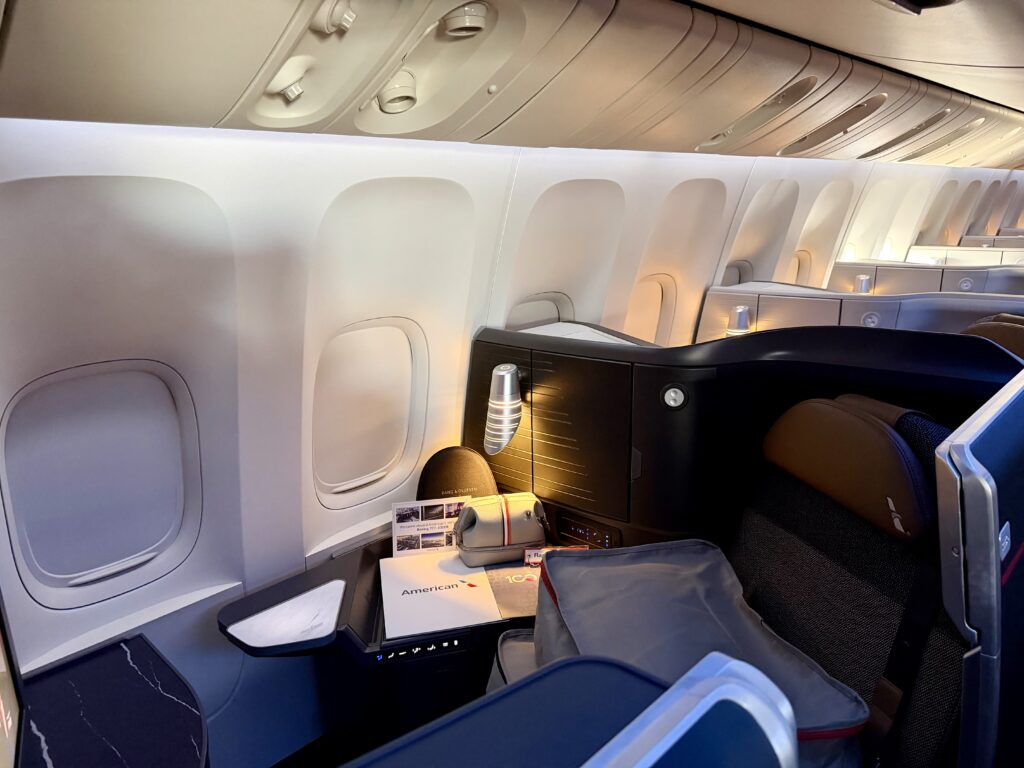
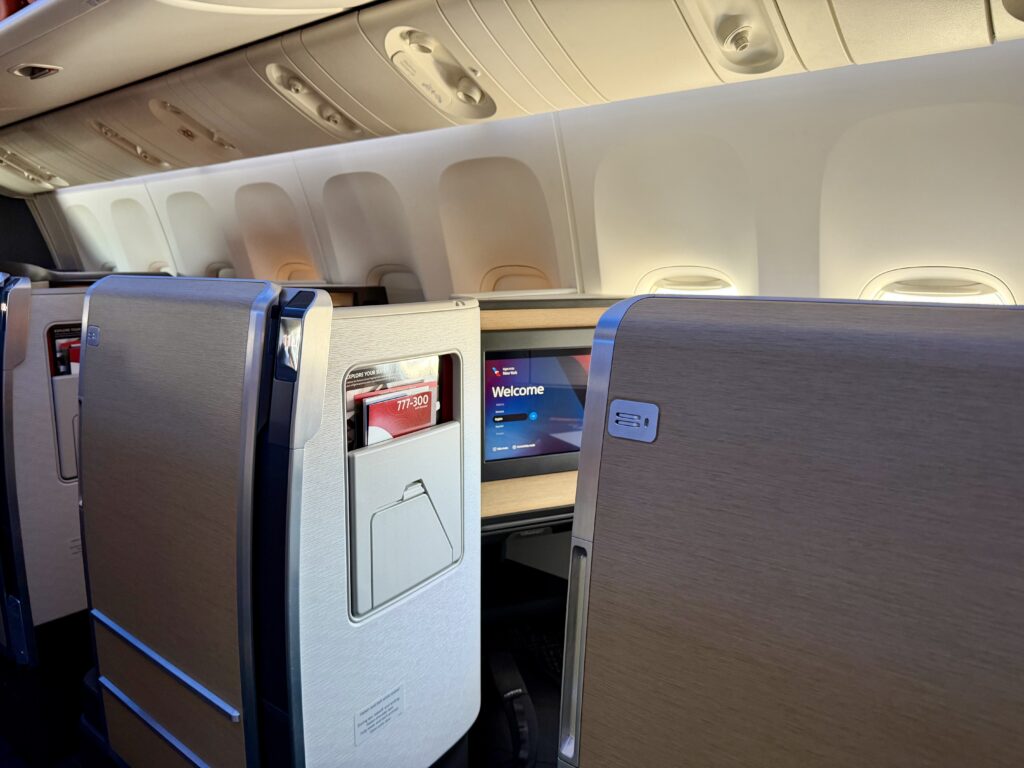
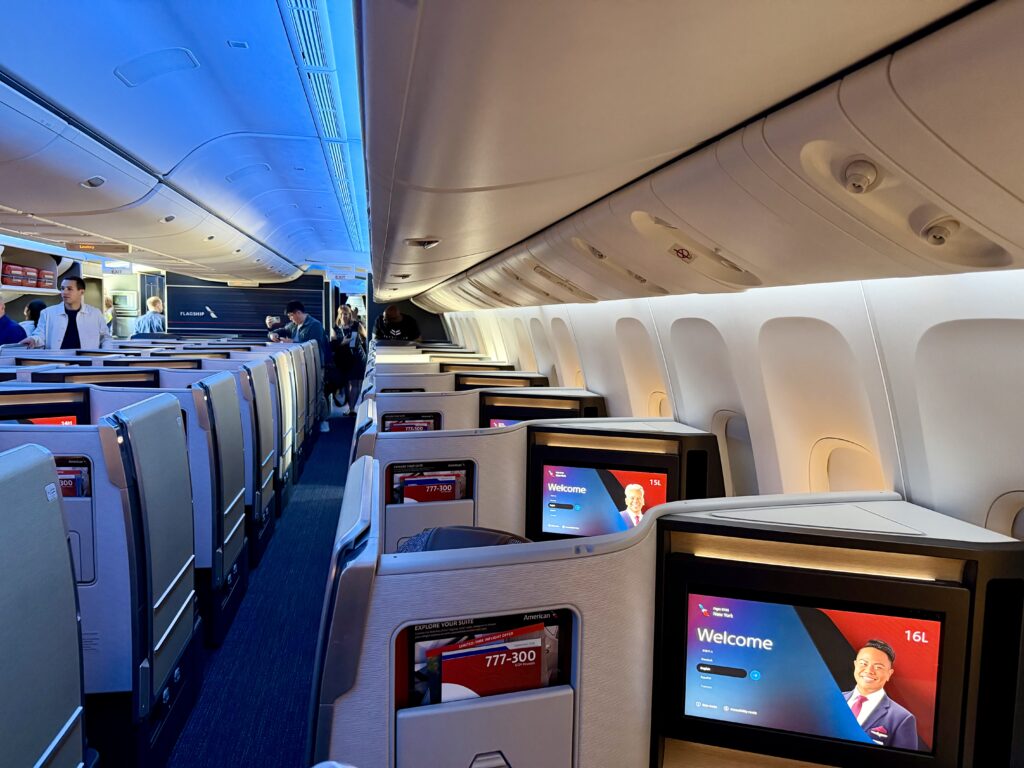
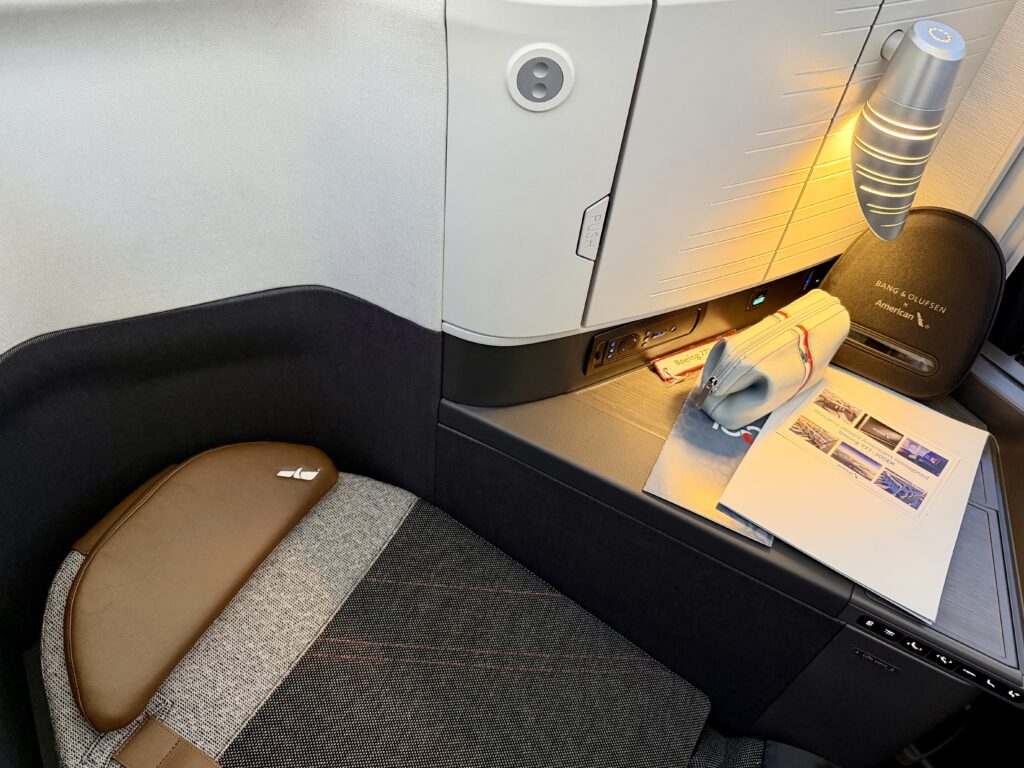
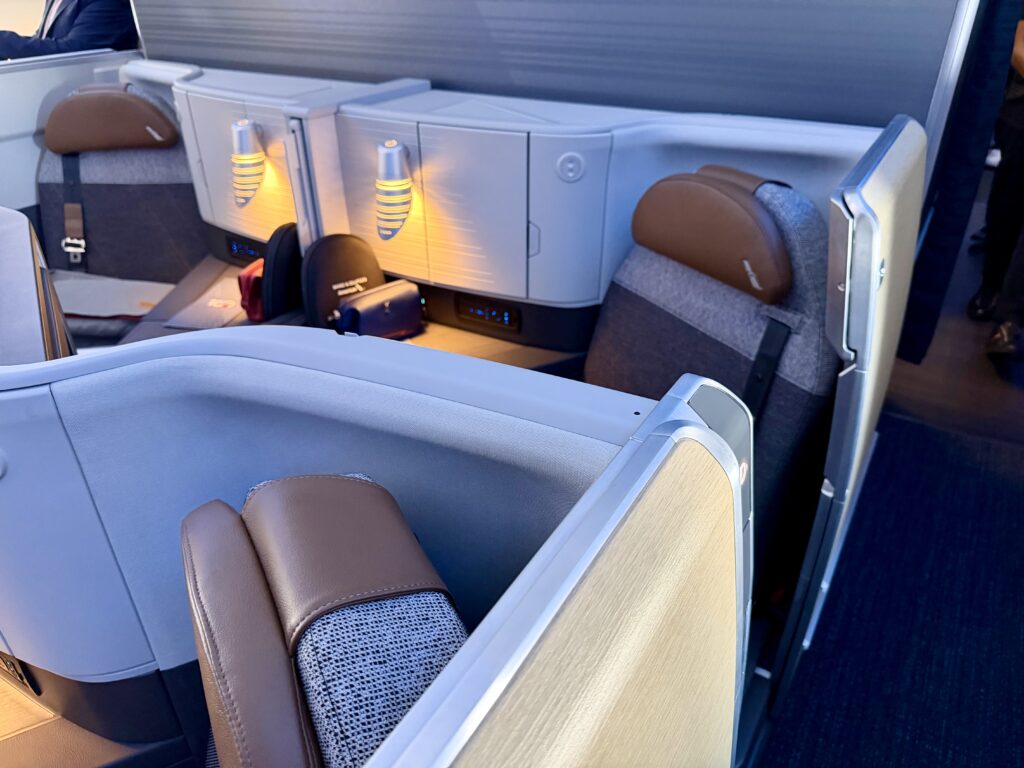
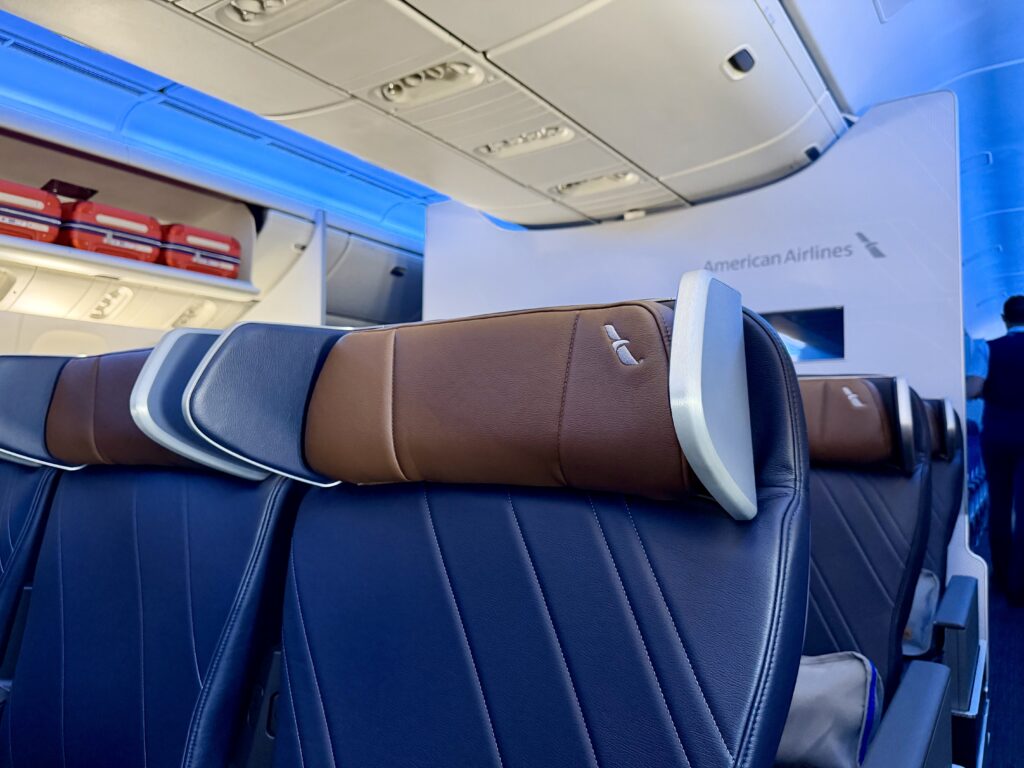
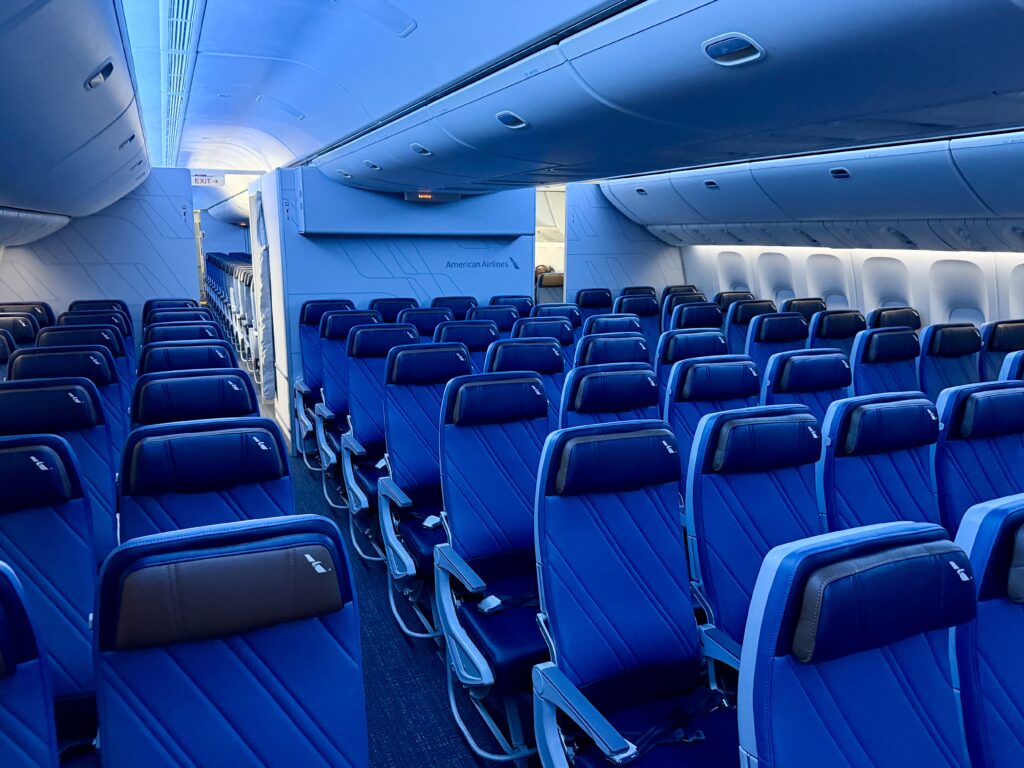
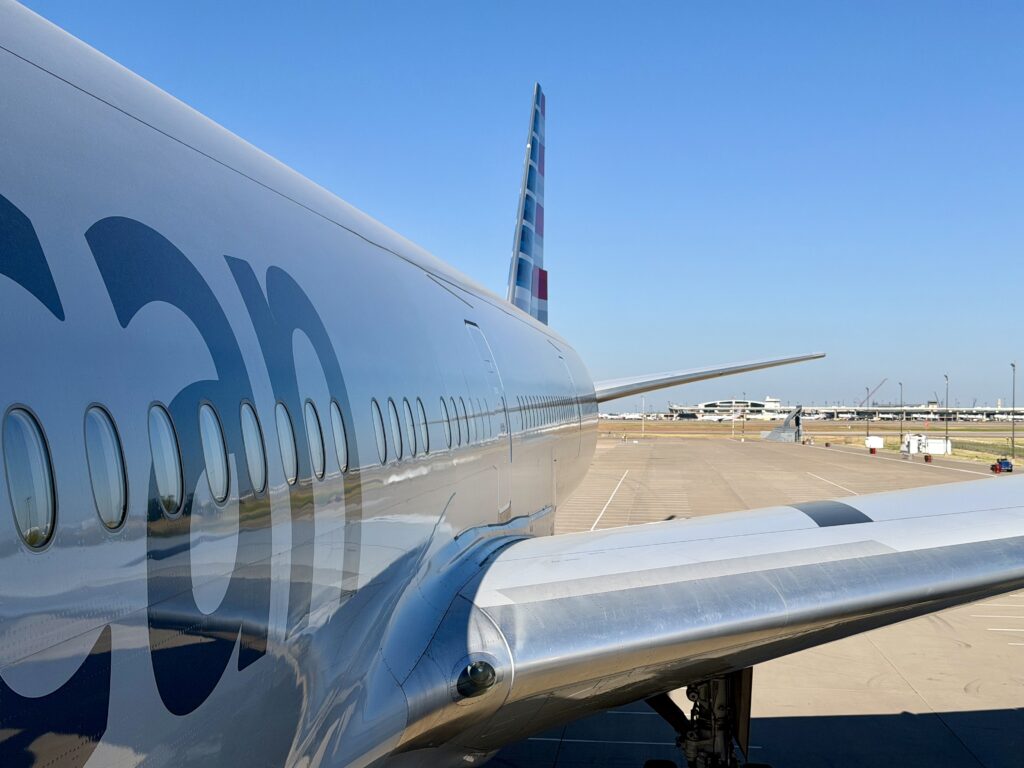
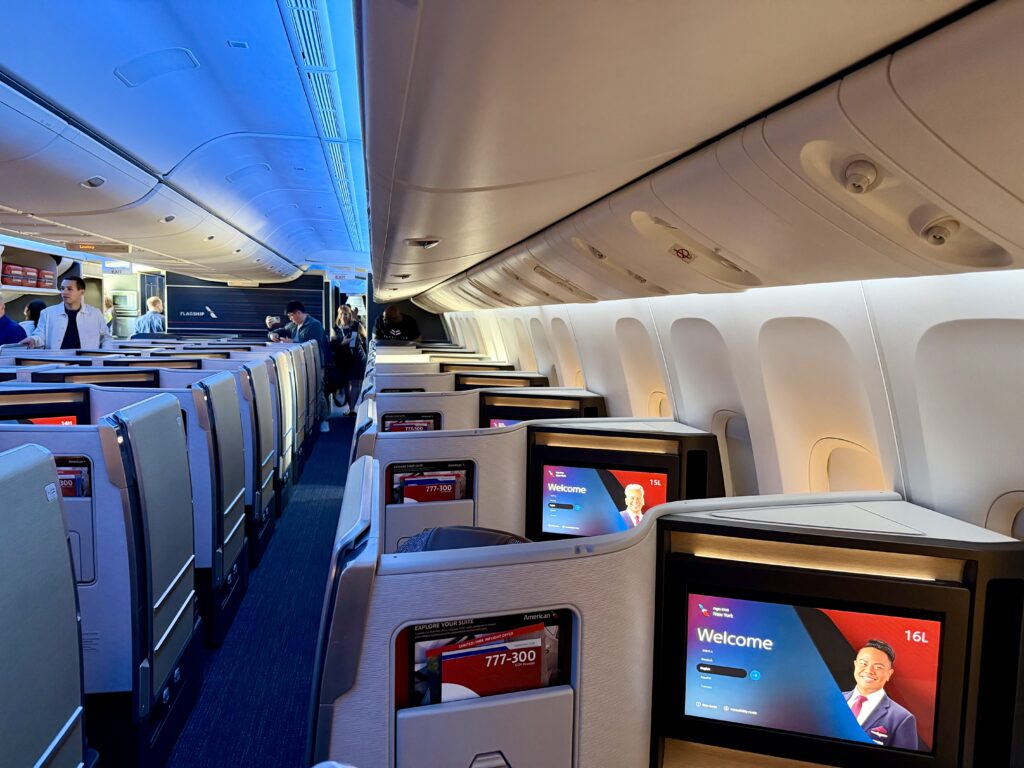
Avianca is giving its long-haul business class an overhaul.
The airline announced a series of upgrades to INSIGNIA by Avianca on September 9. New dining, amenities, and other onboard improvements are all part of the refresh.
Then, starting in 2027, Avianca plans to introduce an entirely new business class cabin to its Boeing 787s with suites offering more privacy.
The new seats are the headline, but they’re only part of what Avianca is upgrading.
New Business Class Suites Are Coming in 2027
Avianca says its new business class cabin will begin rolling out aboard Boeing 787s in 2027.
And based on the first images, this isn’t just a new cover on the same old seat. The new cabin will feature individual pods with much more privacy around each passenger, bringing Avianca closer to the enclosed, personal spaces that have become common in newer international business class cabins.
That’s a meaningful change on the flights where Avianca offers INSIGNIA. Its 787s fly to New York and across the Atlantic to Europe, where a good business class seat can turn an overnight flight into a place to eat, work, and, most importantly, get some sleep.
Avianca hasn’t shared many details yet, but we do know the first suites are scheduled to arrive next year.
AVIANCA
The Rest of Business Class Is Changing, Too
A new seat is nice, but there’s quite a bit more to a long-haul business class experience than the few square feet around it.
That’s where many of Avianca’s more immediate changes come in.
The airline is adding new noise-canceling headphones, pajamas and slippers, along with redesigned amenity kits. Meals are changing, too, with new menus from chefs Álvaro Clavijo and Rafael Buitrago that lean into Latin American flavors.
Those details aren’t nearly as flashy as a new suite, but they matter on a long flight. A lie-flat seat might be the biggest reason to book business class, but food, bedding, headphones, and service are what fill the other eight or nine hours onboard.
AVIANCA
Avianca is also putting more attention on service. More than 850 flight attendants have completed a business class training program focused on hospitality and etiquette.
So while the suites won’t start arriving until 2027, the experience around them is already getting some attention.
Avianca Wants to Be More Premium
These changes also say something about where Avianca is headed.
Avianca has spent the past several years adopting a much more stripped-down economy model on many of its flights. At the front of the cabin, though, it’s now putting more distance between the basic experience and what customers willing to pay more can get.
Avianca now offers Business Class Américas throughout its network within the Americas. It’s a much simpler product than INSIGNIA, typically using economy-style seats with the middle seat blocked rather than the beds found on the 787. That’s not nearly as exciting as a private suite, but it fits the same broader push to create a more distinct experience at the front of the plane.
The airline is also expanding onboard entertainment, gradually adding Wi-Fi, and renovating lounges, including its International Gold Lounge in San Salvador.
LifeMiles Could Make the New Suites Particularly Interesting
There’s another reason Avianca’s new 787 cabin matters.
LifeMiles are fairly easy to earn thanks to several transferable points programs, and they can be redeemed for Avianca flights. That means the new suites should eventually be bookable with miles rather than a four-figure business class fare.
How many miles they’ll cost and how easy they’ll be to book are questions for 2027.
For now, Avianca is improving the meals, amenities, and service surrounding its long-haul business class seats. Next year, the seats themselves start changing, too.
Thanksgiving, Christmas, ski season, and that point in winter when somewhere warm starts sounding really good all have a way of feeling far away until suddenly they’re not.
Now’s a good time to see what the options look like.
That doesn’t mean there’s a magic deadline for booking. A flight that costs a ton of miles today could cost less next week. It could also cost more, and sometimes a great option pops up at the last minute. Award prices change, and there’s no reliable way to predict exactly when the best price will appear.
But waiting isn’t the only option.
Depending on the airline and the type of award, it may be possible to book a flight that works now and change it later if something better comes along. And if nothing looks good today, there are ways to keep an eye on the trip without searching for the same flights over and over.
Here’s where to start.
Start With the Trips You Know You’re Taking
Thanksgiving with the family is a very different trip from a January ski weekend or escaping somewhere warm in February.
For a holiday, wedding, or another event already on the calendar, start by looking at the options now. Someone who needs to fly the Wednesday before Thanksgiving and return Sunday has much less flexibility than someone who wants to spend a few days on a beach sometime this winter.
Look at both the cash price and the number of points or miles required. That gives you a baseline, even if you’re not ready to book right this minute.
More flexible trips open up more possibilities. A ski trip might work over several weekends. A warm-weather getaway might work in January or February. Try moving the dates, checking nearby airports, or looking at another weekend.
PointsYeah makes it easy to scope out your options without starting a new search every time.
{{ search-widget mode=”flight-hotel” }}
And if the destination isn’t set either, let what’s available offer some inspiration.
PointsYeah’s Daydream Explorer shows destinations that can be booked with points from a selected airport. Instead of searching for one place at a time, it can answer questions like, “Where could I go for a long weekend in January to escape the cold?” or “Where can I fly with my points for a ski trip this winter?”
Finding a flight that works doesn’t necessarily mean the search has to end.
Some airline loyalty programs allow award tickets to be changed or canceled without a fee. That can make it possible to book a workable option now while keeping an eye out for something cheaper or more convenient.
American Airlines is a good example. AAdvantage doesn’t charge change fees on award tickets, although changing to a more expensive award means paying the difference. American also allows eligible awards to be canceled before departure with the miles reinstated at no charge.
Say a Christmas trip costs 25,000 miles today. A few weeks later, the same flight becomes available for 18,000 miles.
The trip stays the same, but 7,000 miles go back into the account.
PHOTOSVIT / ISTOCK
But this is something to check before booking, because every loyalty program has its own rules.
Delta, for example, treats Basic award tickets differently. Basic awards originating in the U.S. or Canada aren’t refundable after the 24-hour risk-free cancellation period, and changing or canceling one comes with a fee assessed in miles.
Other programs have their own policies, and certain bookings can have additional restrictions.
That flexibility can be especially useful for winter trips that aren’t completely settled. Maybe the ski weekend depends on snow conditions, or a warm-weather getaway could move by a few days. If that’s part of the plan, check the rules before booking rather than assuming an award can be changed later.
Don’t Like the Price? Track It
Sometimes there isn’t anything worth booking yet.
Maybe the Christmas flight costs far more miles than expected. Maybe there’s nothing available for the ski weekend. Or maybe the only flight to somewhere warm leaves at 5 a.m. and connects twice.
Waiting can make sense in those situations. But it doesn’t have to mean running the same search every few days.
A PointsYeah Points Price Alert can track a trip and send an alert if the points price changes or something new becomes available.
There’s no guarantee a better option will appear, but the alert can do the checking in the background.
Keep an eye on the cash fare, too. If an award still costs more miles than expected but the cash ticket drops to a comfortable price, paying cash may make more sense.
Points and miles are another way to pay for a trip. They don’t have to be used every time.
DORADALTON / ISTOCK
Check the Hotel Before You Book the Flight
A great flight deal can become a much less appealing trip once the hotel search begins.
That’s especially important for fall and winter trips. College football games, parents’ weekends, Christmas markets, holiday events, ski season, and long weekends can make hotel rooms unusually expensive on certain dates.
A cheap flight to a ski destination, for example, isn’t nearly as exciting if every hotel nearby costs $700 a night.
Before booking a discretionary trip, check the hotel rates alongside the flights.
The hotel might change which weekend makes the most sense. It can also change where points are most useful.
For example, a reasonably priced cash flight paired with an expensive ski resort might be a good opportunity to save the airline miles and use hotel points instead. If hotel rooms at a warm-weather destination are inexpensive but flights are costly, the opposite might make more sense.
There’s no need to pay for every part of a trip the same way. Points can cover the parts where they’re most useful, and cash can cover the rest.
A Thanksgiving trip, Christmas vacation, ski weekend, and February escape don’t need to be planned the same way.
Some trips come with dates that can’t move. Others might have an entire season to work with.
Start with the trips already on the calendar and check both points and cash prices. For a more flexible getaway, see what happens when the dates or destination change. And before booking an award that might need to move, find out what the change and cancellation rules allow.
If nothing works yet, that’s useful information, too. Set an alert and keep looking without having to start from scratch every few days.
There’s no way to know today whether the best fall or winter award will appear tomorrow, next month, or a few days before departure. But knowing what the options look like now leaves plenty of time to decide whether to book, wait, or change the trip entirely.
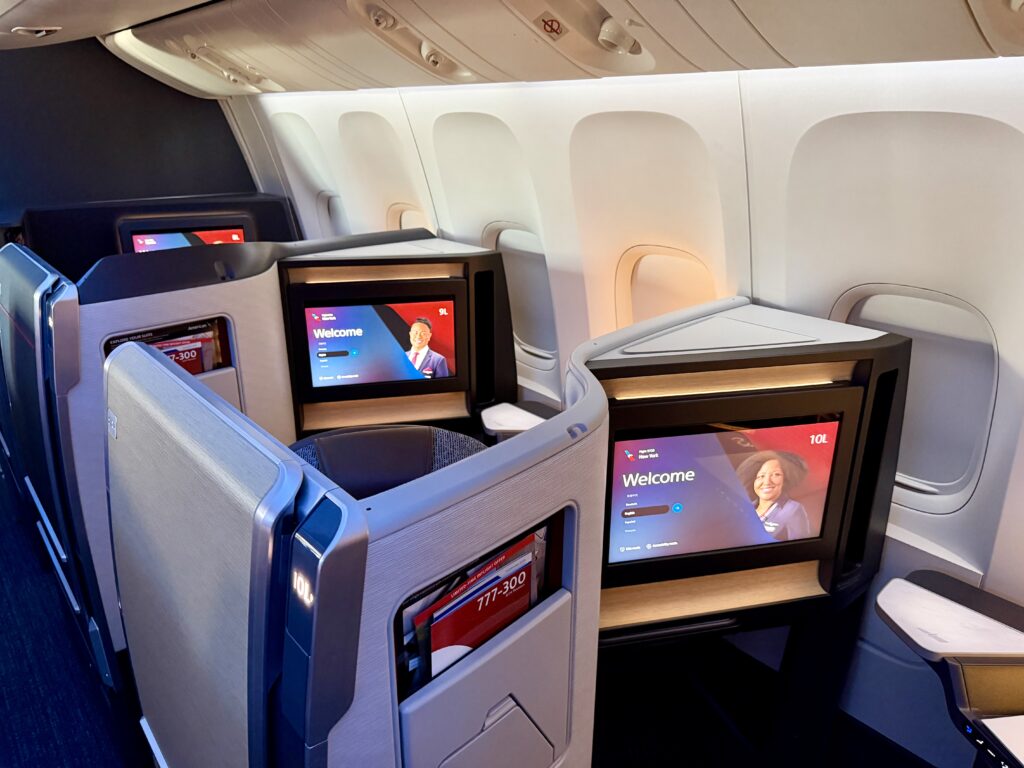
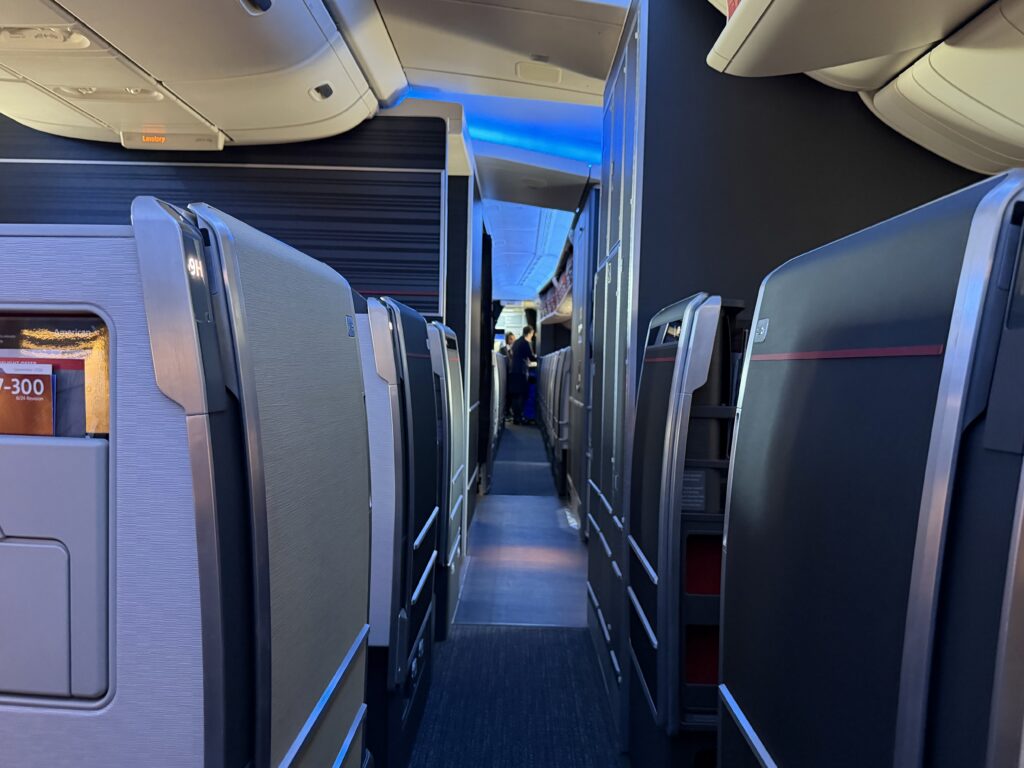
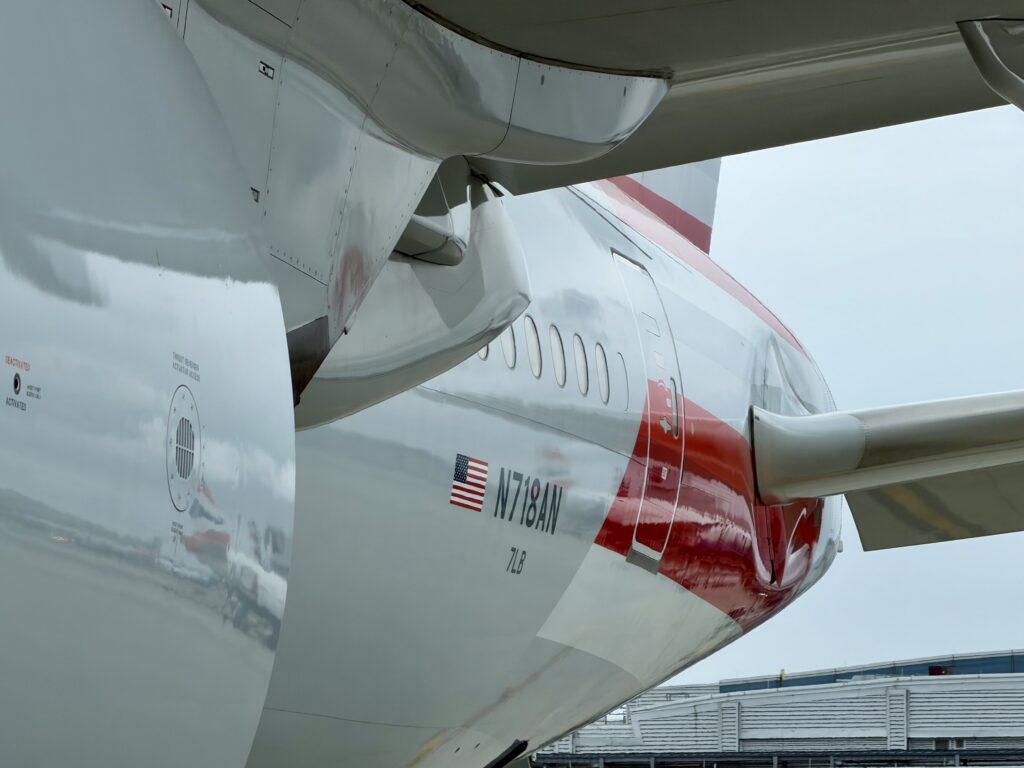
There’s a lot of business class on American Airlines’ newly retrofitted Boeing 777-300ER.
Seventy suites, to be exact.
Ahead of a special charter flight from Dallas Fort Worth (DFW) to New York (JFK) on Wednesday, American’s Chief Commercial Officer Nat Pieper described it as a “sea of business class” that seems to go on and on.
He’s not wrong.
TYLER GLATT / POINTS INSIDER
The Flagship Suite cabin stretches through a huge chunk of one of the largest passenger aircraft in American’s fleet. Add 44 Premium Economy seats, and the airline’s newly retrofitted 777-300ER has 114 seats across its two premium cabins.
TYLER GLATT / POINTS INSIDER
American didn’t start the project with 114 as some magic number.
Pieper told Points Insider that the configuration was driven in part by the physical geography of the 777 itself.
Door locations, galleys, and other fixed parts of an existing airplane helped determine where cabins could begin and end, alongside American’s desire to meet the market’s insatiable appetite for premium travel.
The result just happens to be the most premium-heavy aircraft American has ever flown.
TYLER GLATT / POINTS INSIDER
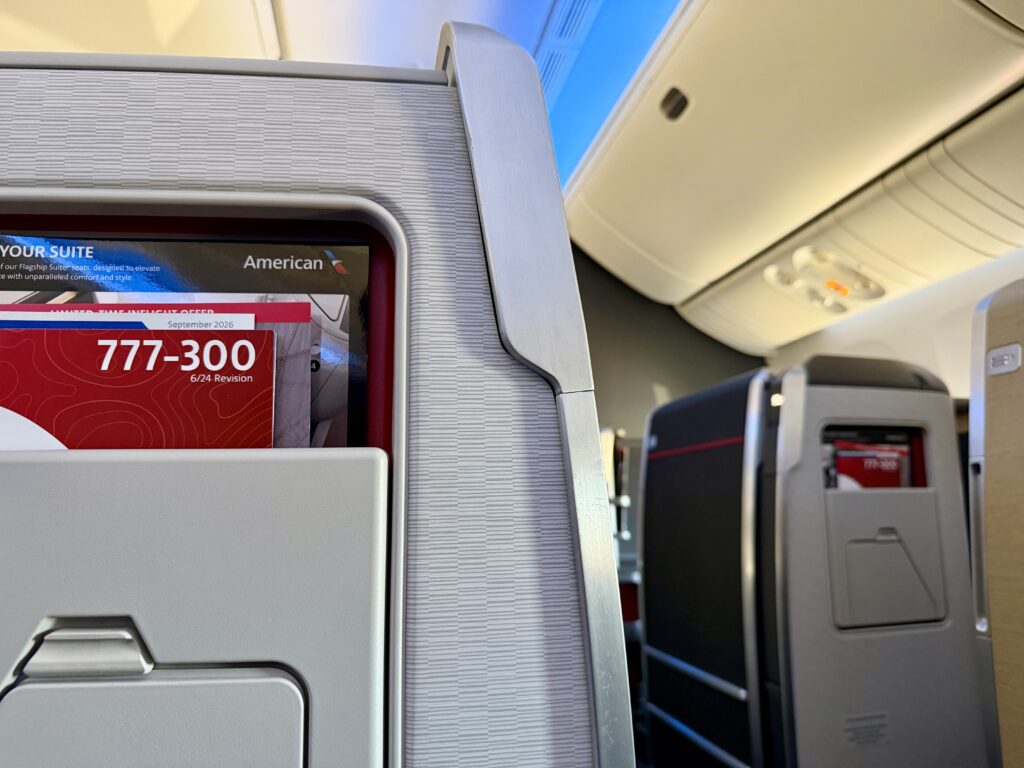
And after spending a few hours aboard the first one, it’s also an airplane that feels remarkably different from the 777 American has been flying for more than a decade.
Today, the fleet regularly crosses oceans and borders on flights to cities including London, Tokyo, São Paulo, Buenos Aires, and Sydney.
TYLER GLATT / POINTS INSIDER
American isn’t ready to move on from them.
Instead, it’s investing heavily in all 20 aircraft with the expectation that they’ll remain in the fleet for roughly another decade, if not longer.
Pieper said someone walking onto the first completed aircraft wouldn’t be able to tell that it didn’t just come off the factory floor. It’ll even have that new-car smell, he added, though perhaps the smell of an expensive new car given the amount American has invested in the project.
That sounded like the sort of thing an airline executive is supposed to say about a newly refurbished airplane. But after walking onboard, it wasn’t much of a stretch.
TYLER GLATT / POINTS INSIDER
The first impression is just how open everything feels.
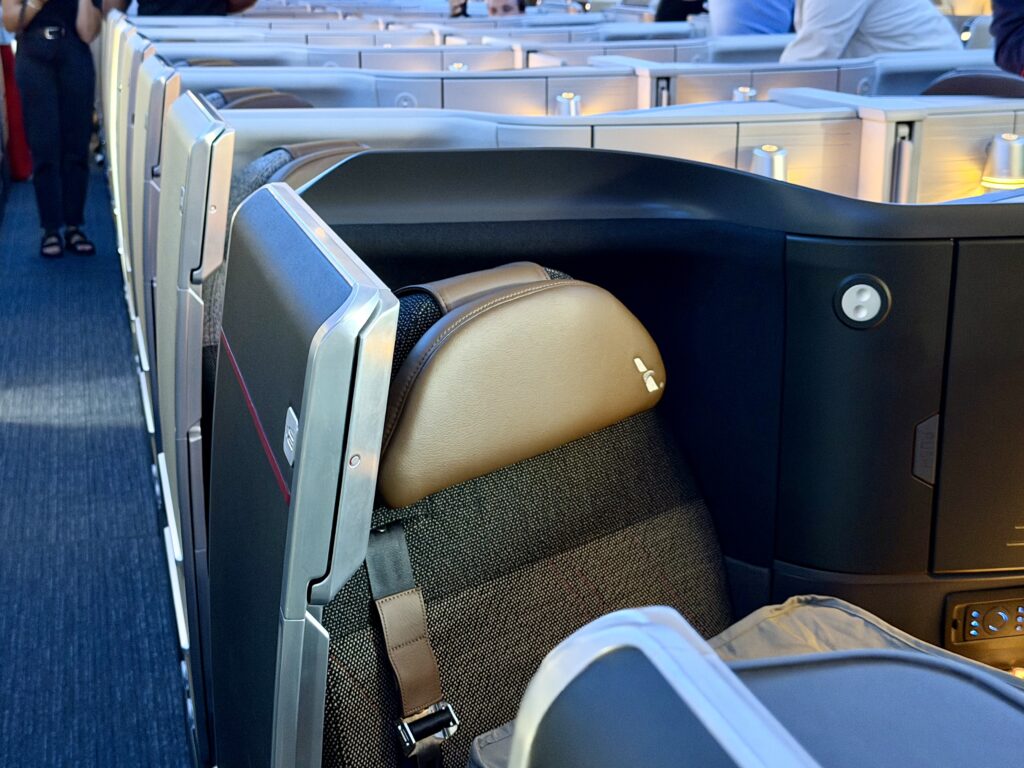
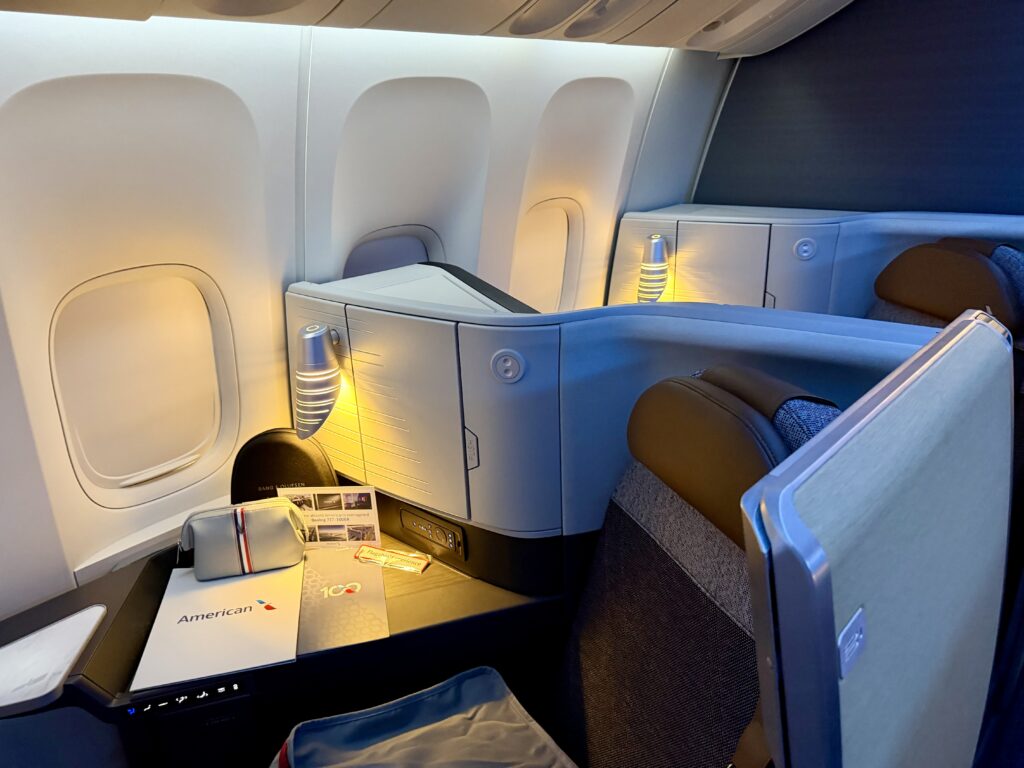
The 777 is already a big airplane, but the new interior really emphasizes that size. Gone are many of the lighter surfaces of the previous cabin. They’ve been replaced by darker dividers, different shades of gray, wood finishes, and restrained red and white accents.
TYLER GLATT / POINTS INSIDER
Lighting helps.
Raphael Girardoni, American’s managing director of customer experience product and design, told Points Insider that lighting was an important part of the design and something he’s personally passionate about.
It’s noticeable throughout the Flagship Suite cabin.
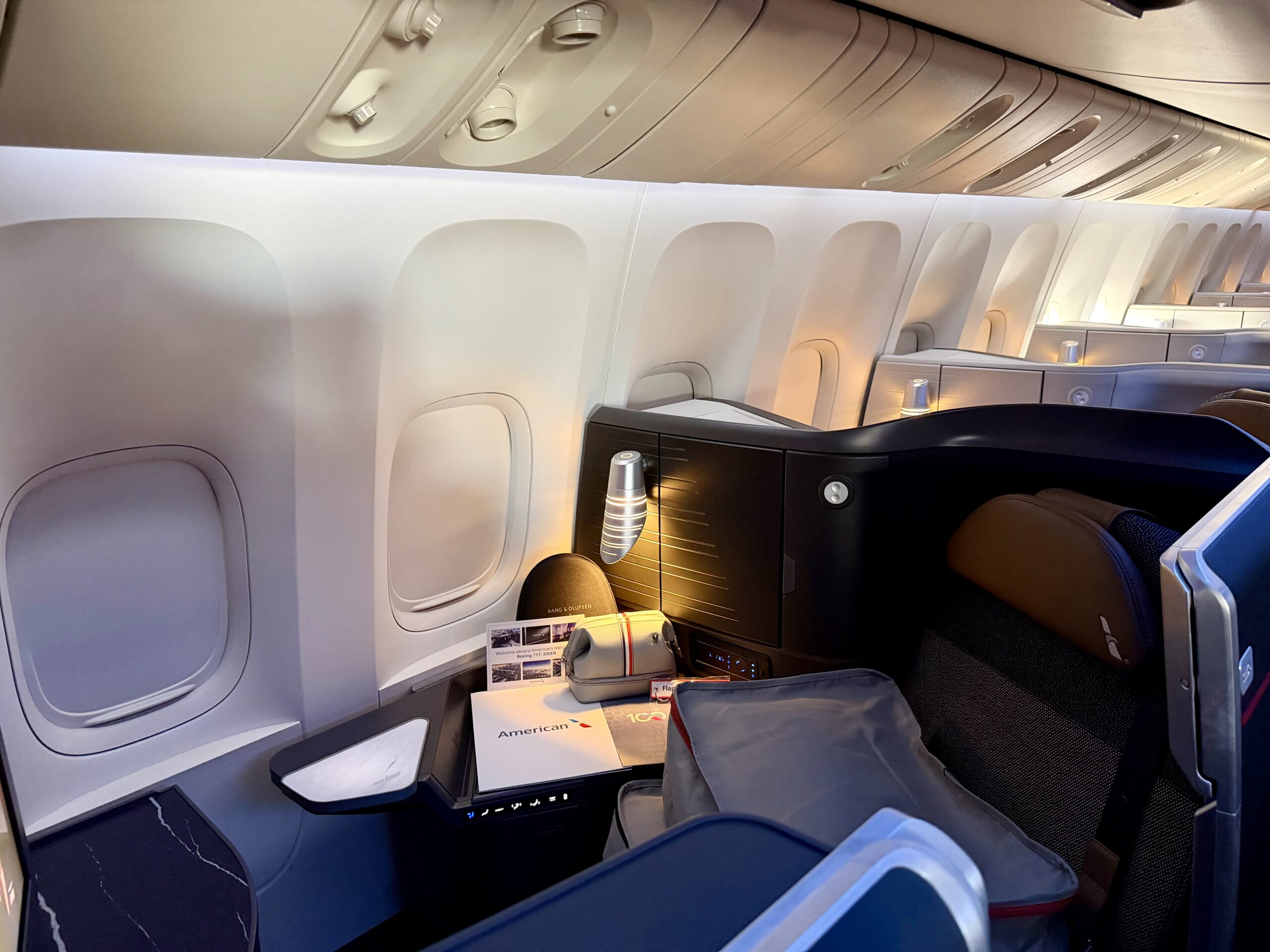
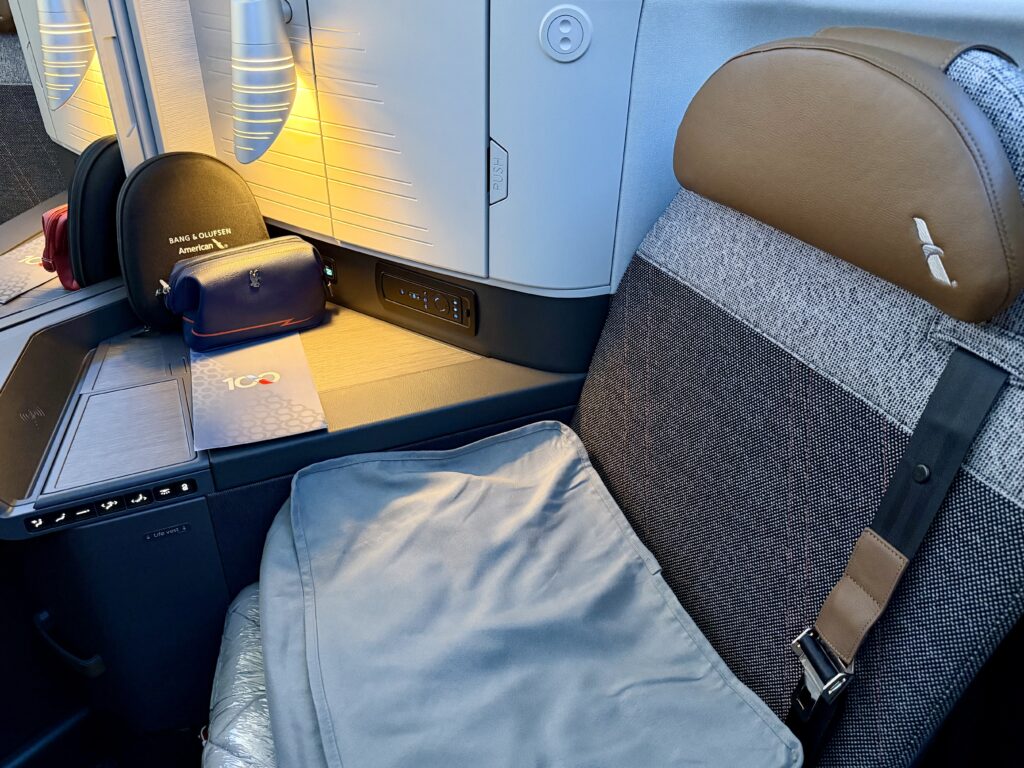
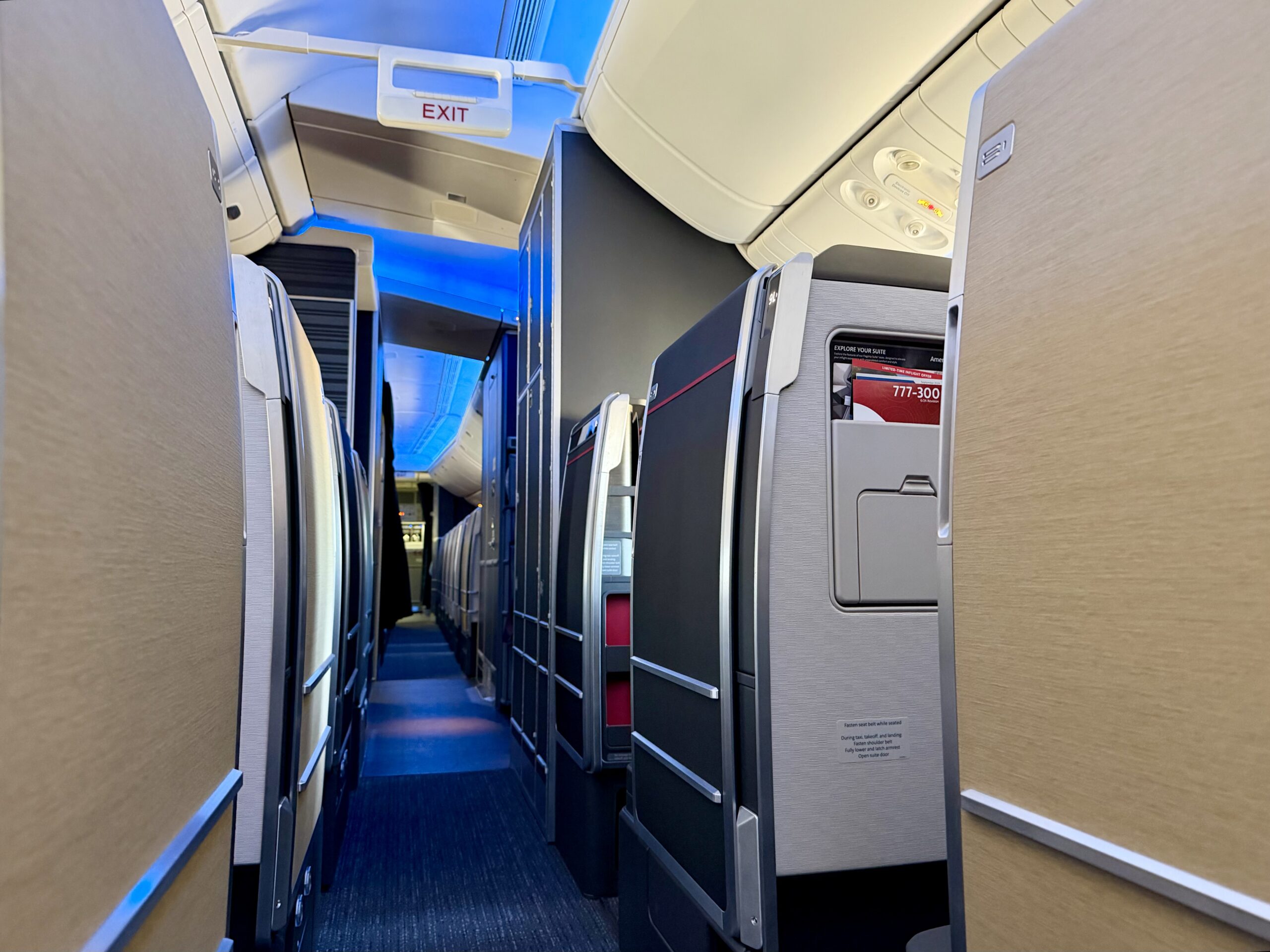
Small sconces and accent lighting illuminate the individual suites. One of the more thoughtful touches is the way the light from the sconce plays off the design surrounding a storage cubby beside the seat.
Even the cabin dividers look more considered, with darker finishes and not-so-subtle Flagship branding.
TYLER GLATT / POINTS INSIDER
Seventy Flagship Suites Upgrade the 777
Of course, the biggest upgrade is the seats up front.
American is removing the eight Flagship First seats and 52 business-class seats found on its previous 777-300ER configuration. In their place are 70 Flagship Suites, including eight larger seats that the airline calls Flagship Suite Preferred.
TYLER GLATT / POINTS INSIDER
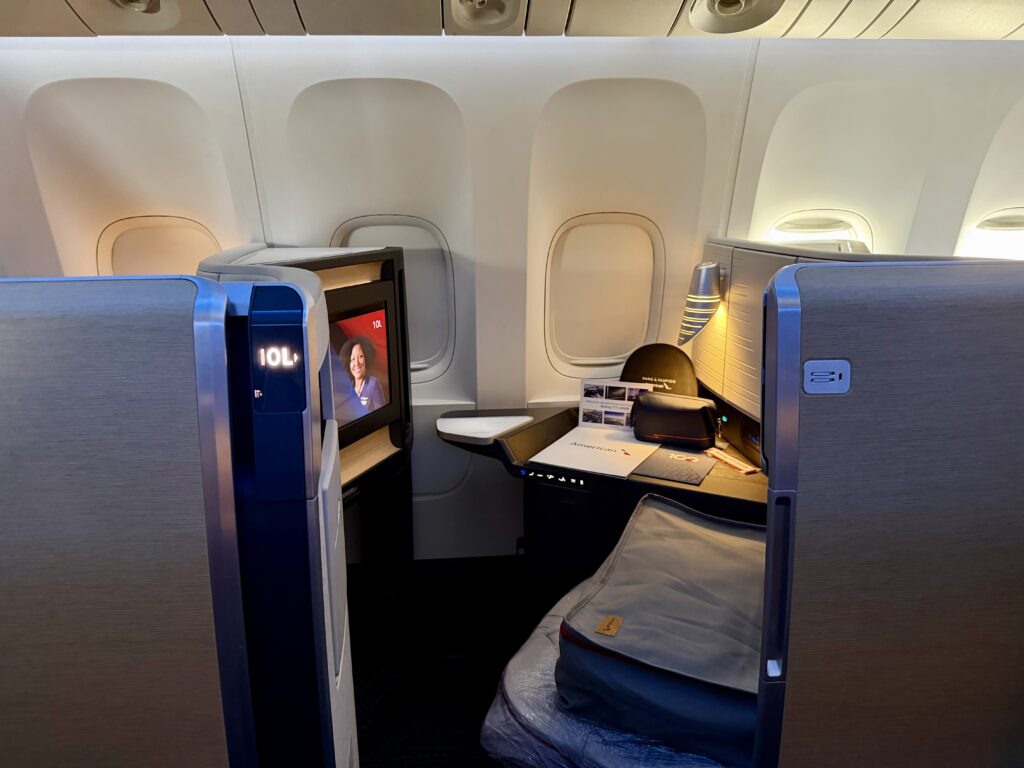
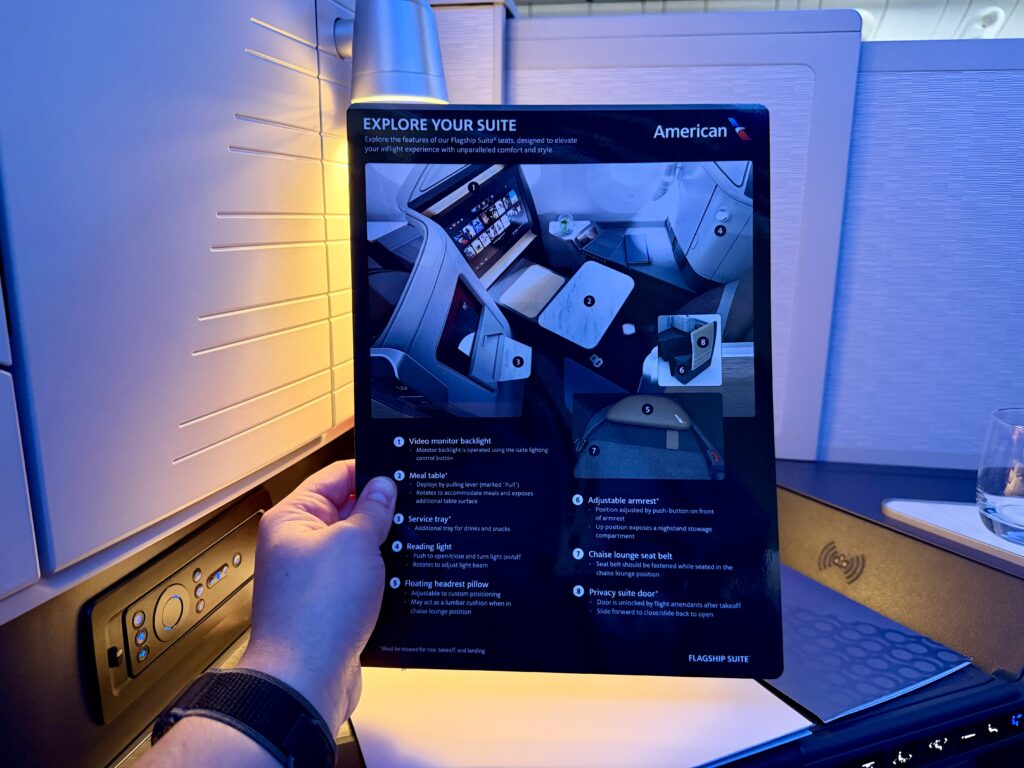
They’re the same seats American introduced on its also-premium-heavy Boeing 787-9P last year, outfitted with sliding privacy doors and direct aisle access.
TYLER GLATT / POINTS INSIDER
The sheer number of them really is a sight to behold. But what stands out most is how little of that enormous cabin is visible once you’re seated.
Even with the suite door open, I couldn’t see another passenger from my seat beyond the occasional top of someone’s head. Movable dividers between adjoining seats add yet another layer of privacy, too.
TYLER GLATT / POINTS INSIDER
There are also plenty of small touches that become more useful the longer a flight gets.
There’s wireless charging, a drink ledge, a small compartment well suited for a wallet or watch, and various other nooks for keeping things nearby rather than throwing everything into one larger storage bin.
The tray table is enormous. It slides out from beside the seat before rotating into place, leaving plenty of room for a laptop, meal, or whatever else ends up accumulating during a long flight.
The entertainment screen is similarly large and highly responsive, but doesn’t feel oversized for the space.
TYLER GLATT / POINTS INSIDER
And yes, American kept the individual air nozzles.
That’s a win.
Can American Fill 70 Business-Class Seats?
Putting 70 business-class seats on a single airplane naturally raises another question: Can American consistently fill them?
Pieper doesn’t appear particularly worried.
He said American is comfortable with the configuration and has more tools at its disposal than selling every seat outright at its initial price. Upgrade offers give the airline another way to fill otherwise empty premium seats as departure approaches.
TYLER GLATT / POINTS INSIDER
And then there are Systemwide Upgrades, one of the perks available to some of American’s most loyal customers. Those could come in handy on this kind of plane, too.
With 70 Flagship Suites to work with, there are simply more seats that could potentially clear as upgrades.
That flexibility matters when these airplanes will be flying some of American’s biggest long-haul markets for years to come.
It also helps explain the underlying strategy.
TYLER GLATT / POINTS INSIDER
Airlines have spent the past several years adding premium seats as demand for higher-end travel has soared. American is doing the same with its new 787-9Ps and Airbus A321XLRs, and the 777-300ER retrofit takes that strategy to another level.
The airline didn’t necessarily set out to hit a particular percentage of premium seats on the 777. But the combination of the aircraft’s physical layout and American’s push toward a more premium experience led it to a configuration with a whole lot of them.
Economy Feels Surprisingly Small
Walk far enough through the Flagship Suite cabin and eventually the airplane starts looking more familiar.
There are 44 Premium Economy seats, followed by Main Cabin Extra and standard economy.
TYLER GLATT / POINTS INSIDER
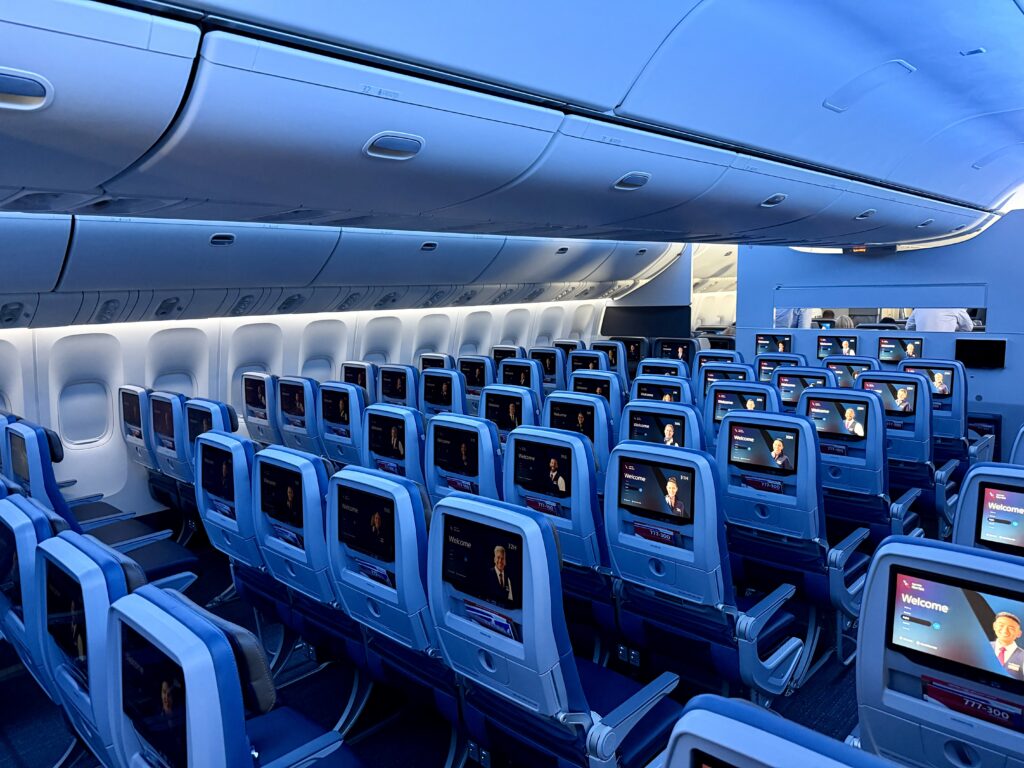
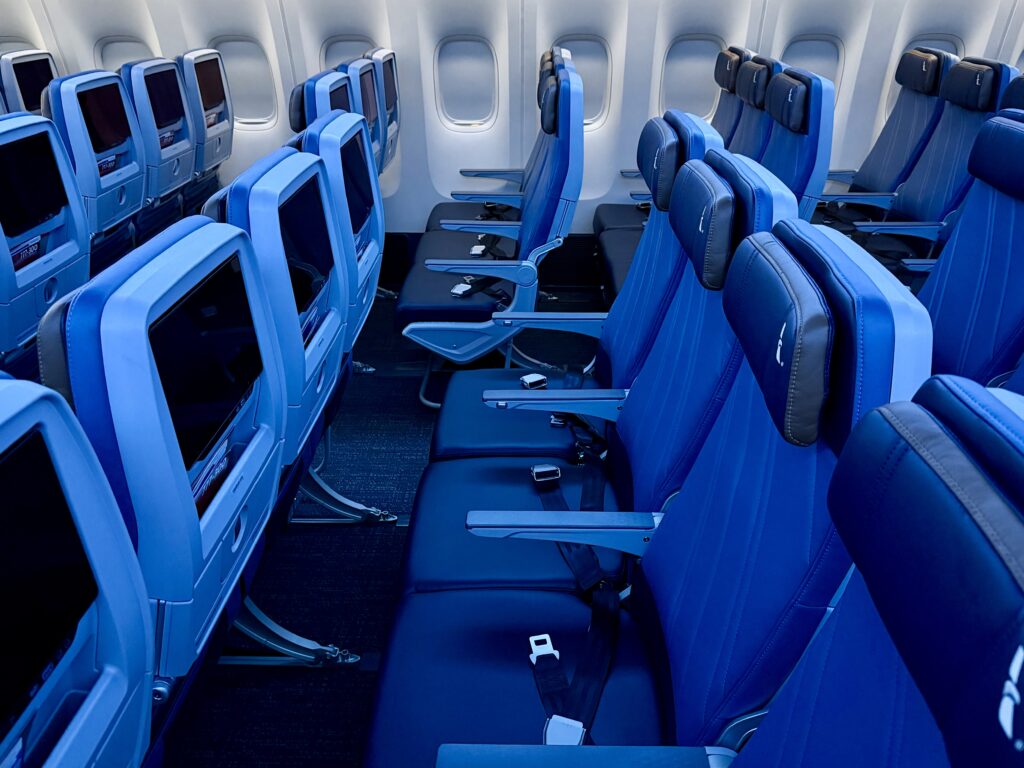
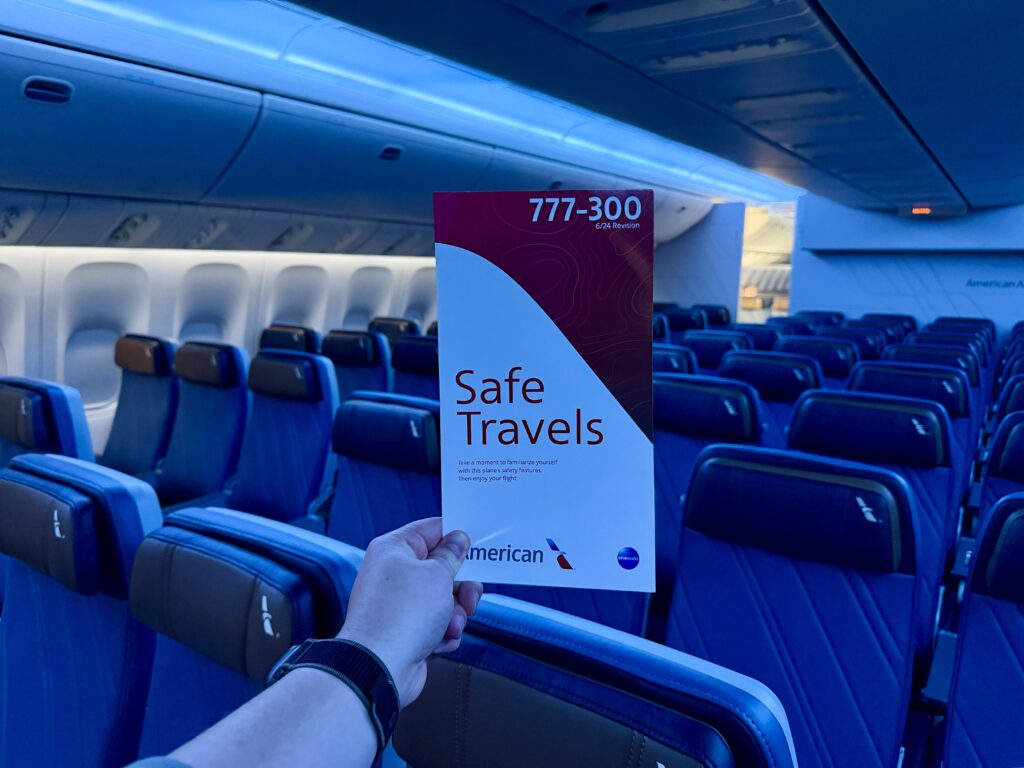
Economy itself isn’t revolutionary. But the cabin has a new lease on life.
Browns and blues replaced some of the older finishes. There are new entertainment screens, in-seat power, and the other updates expected from a modern widebody interior.
A short charter flight isn’t enough to say much about how those seats will feel after 10 or 15 hours.
TYLER GLATT / POINTS INSIDER
What’s more notable, though, is how little economy there seems to be.
For an airplane as large as a 777-300ER, the two economy sections feel surprisingly small. That’s not because American has done anything unusual within them. It’s because the majority of the airplane’s real estate comes before them.
TYLER GLATT / POINTS INSIDER
The premium cabins stretch almost to the end of the wing.
That might be the most effective way to understand just how different this configuration is. The 777-300ER can hold an enormous number of seats. American has chosen to devote a remarkable amount of that real estate to the front of the plane.
Retrofitting a 777 Isn’t the Same as Building a New One
Some things didn’t change.
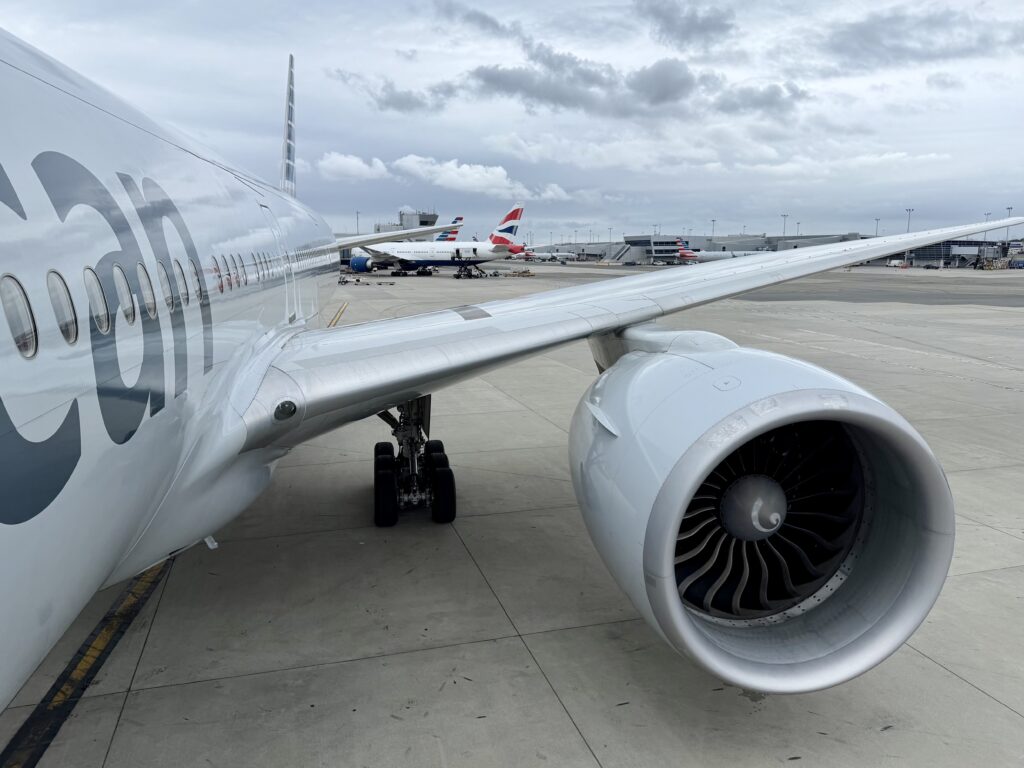
The overhead bins, for example, look just like they did before. So does the view through the well-traveled windows. And when the engines spool up for takeoff, this is still very much the same 777 that has been flying for American for years.
The challenge was putting a substantially different passenger experience inside it.
TYLER GLATT / POINTS INSIDER
From a design perspective, Girardoni said there weren’t any particular challenges with bringing Flagship Suite to the 777 that stood out during the project. American was also working with a familiar product, using the same Flagship Suite seat already flying aboard its 787-9P.
But there are still operational tradeoffs.
One flight attendant aboard Wednesday’s flight mentioned that the new layout leaves crews with somewhat less room to maneuver in parts of the galley, particularly when passengers are trying to squeeze around carts. It could make things a little trickier, although she said that adapting to different aircraft and working conditions is part of the job.
Passengers give up a little space elsewhere, too. The new configuration has fewer lavatories than the 777-300ER it replaces.
TYLER GLATT / POINTS INSIDER
American expects to complete the remaining 777-300ER retrofits by the middle of 2027.
The aircraft will also get free high-speed Wi-Fi for AAdvantage members, sponsored by AT&T. That’s a meaningful upgrade for airplanes expected to spend much of their lives on long international flights.
The first retrofitted 777 already has it.
A Look at Where American Wants to Go
American describes the new 777 as more than a refurbishment.
Pieper called the aircraft an embodiment of the airline’s ambitions as American works toward what he described as becoming a premier global airline.
TYLER GLATT / POINTS INSIDER
That’s a lofty goal.
But the 777 offers a tangible look at what American thinks getting there requires.
It’s eliminating its eight-seat international first-class cabin while dramatically expanding business class. It’s adding privacy doors, better technology, more thoughtful storage, and a much more contemporary interior. And it’s making similar investments across new aircraft, existing widebodies, lounges, Wi-Fi, Flagship airport check-in, and other parts of the travel experience.
TYLER GLATT / POINTS INSIDER
The first retrofitted 777-300ER begins commercial service between New York (JFK) and Buenos Aires (EZE) on September 2.
It won’t be a novelty flying around the network for a year or two. American expects this airplane, and eventually the others like it, to spend roughly another decade flying to some of its most important destinations around the world.
The first one shows just how much American thinks it can get out of an airplane it already owns. And now it has 19 more to rebuild.
The airline says at least seven additional lounges are planned over the following several years. This will put its initial network at 11 or more locations.
It goes without saying that these developments are another massive shift for Southwest, which has changed a lot about its experience in recent years. The airline has introduced assigned seating and extra-legroom seats, ended its long-standing two-free-checked-bags policy for most customers, and increasingly added products aimed at customers willing to pay more for their trip.
Now, that experience will extend into the airport.
Southwest’s First Lounges Are Coming to 4 Airports
Construction is already underway on Southwest’s first four lounges at:
Austin-Bergstrom International Airport (AUS)
Baltimore/Washington International Thurgood Marshall Airport (BWI)
Daniel K. Inouye International Airport (HNL)
Nashville International Airport (BNA)
Southwest expects to begin welcoming guests in late 2027, though it hasn’t provided opening dates for the individual locations.
JOHN CHASE / ISTOCK
The airline is working with Chase on the lounges and plans to draw on the bank’s existing Chase Sapphire Lounge network. Southwest says the spaces will combine its own approach to hospitality with locally inspired dining, more sophisticated design, and amenities and travel benefits already found in Chase’s lounges.
For now, that’s about as specific as Southwest is getting.
The airline hasn’t revealed the size or exact location of the first lounges, what amenities each will offer, or where the next seven or more locations will be. We don’t have renderings yet, either.
The initial airport choices do offer a sense of where Southwest is starting. Austin, Baltimore, Honolulu, and Nashville are all significant Southwest markets.
And with at least 11 lounges now in the pipeline, this is intended to become a network rather than a handful of experiments.
A New Premium Southwest Credit Card Is Coming, Too
Southwest will also introduce a new premium Rapid Rewards credit card from Chase in 2027. The card is slated to provide access to the new lounges.
That’s just about all we know about the card for now.
Southwest hasn’t announced its annual fee, welcome offer, other benefits, or exactly how lounge access will work. We also don’t yet know whether there will be other ways to enter the lounges, including for customers with certain Southwest tickets or elite status.
There are also some interesting questions about how the Southwest and Chase lounge networks will overlap.
Southwest hasn’t said whether Chase Sapphire Reserve cardholders will receive access to Southwest lounges or whether holders of the new Southwest card will have any access to Chase Sapphire Lounges.
Those details will come later. But the new card and lounge network indicate that Southwest is continuing its push to offer more to customers willing to pay for a premium experience.
American Airlines has been preparing to say goodbye to Flagship First for years. Until now, we just didn’t know when the airline would make it official.
On September 2, American announced that Flagship First will no longer be available for purchase on its Boeing 777-300ERs for travel beginning November 19, 2026. The airline will then stop selling Flagship First on its premium transcontinental routes for travel beginning March 28, 2027.
That will bring an end to American’s dedicated first-class cabin and leave the newer Flagship Suite as the airline’s top premium product.
It’ll also mark the end of an era for U.S. airlines.
American is the last U.S. carrier to offer a true international first-class cabin, something Delta and United abandoned years ago in favor of increasingly elaborate business-class products.
Flagship First Is Disappearing From the 777-300ER
American currently offers Flagship First on two aircraft: the Boeing 777-300ER used on long-haul international routes and the Airbus A321T used primarily on premium transcontinental routes from New York (JFK) and Boston (BOS) to the West Coast.
The airline has been working toward eliminating both versions for some time.
TYLER GLATT / POINTS INSIDER
American’s 20 Boeing 777-300ERs are being retrofitted with new interiors that replace the eight-seat Flagship First cabin with a much larger business-class cabin. The work is expected to be completed by mid 2027.
The new configuration has 70 Flagship Suite seats with privacy doors, 44 Premium Economy seats, 30 Main Cabin Extra seats, and 186 standard Main Cabin seats.
The first retrofitted 777-300ER enters commercial service on September 2 between New York (JFK) and Buenos Aires (EZE) as flight AA953.
American says Flagship First will no longer be available for purchase on the 777-300ER for travel beginning November 19.
Transcontinental First Class Gets a Few More Months
Flagship First will hang around a little longer on American’s transcontinental routes.
The Airbus A321T has an unusual three-cabin configuration with Flagship First, Flagship Business, and economy. But that premium-heavy configuration is also on its way out.
American is reconfiguring the A321Ts with a more standard layout as Airbus A321XLRs take over premium transcontinental flying.
The XLR still has a premium layout, but there’s no separate first-class cabin. Instead, it has 20 Flagship Suite seats, followed by 12 Premium Economy seats and 123 seats in Main Cabin.
But the XLR’s Flagship Suite isn’t identical to the version found on American’s new Boeing 787-9P (the P stands for premium) and retrofitted 777-300ER. The XLR requires a different seat design because of its narrower cabin.
As more XLRs enter the fleet, American says Flagship First will no longer be sold on transcontinental routes for travel beginning March 28, 2027.
That means Flagship First will disappear in two stages: first from international flying this November, then from the transcontinental network next March.
Flagship Suite Becomes American’s Top Seat
American revealed plans years ago that would ultimately eliminate Flagship First as it introduced its new Flagship Suite.
What’s new is that the airline has finally put dates on the transition that’s already well underway.
TYLER GLATT / POINTS INSIDER
Once Flagship First disappears, Flagship Suite will officially take over as American’s top long-haul product.
In many ways, the change makes sense. The differences between first and business class have been shrinking for years. Today’s best business-class seats offer privacy doors, direct aisle access, better bedding, and many of the features that once helped set international first class apart.
But that doesn’t mean there won’t be some nostalgia for Flagship First. American is the last U.S. airline to offer a true international first-class cabin, and its retirement will bring that era to an end.
So for anyone hoping to experience Flagship First one last time, or for the first time, the clock is now officially ticking.
JetBlue is getting ready to launch its take on first class. And now we know more about what the experience will look like.
The airline revealed new details Tuesday about BlueFirst, its domestic first-class product. The first aircraft with BlueFirst will take off later this year, and tickets will become available to book sometime this fall.
Where BlueFirst will fly first is still a mystery. But JetBlue says initial routes and more details about booking availability will be announced later this year.
What to Expect From JetBlue BlueFirst
BlueFirst will feature a fairly traditional domestic first-class layout, with seats arranged 2-2 in the first few rows of the plane. They’ll offer five inches of recline and up to seven inches more legroom than JetBlue’s standard Main seats.
Each seat will have a 13.3-inch entertainment screen with Bluetooth connectivity, plus USB-A, USB-C, and standard power outlets. Free inflight Fly-Fi isn’t going anywhere.
But as JetBlue executives told Points Insider at the recent opening of the airline’s Boston BlueHouse, the goal isn’t to copy what everyone else is doing in first class.
JetBlue sees an opportunity to put its own spin on the experience while sticking to what executives described as “affordable luxury.”
SPONDYLOLITHESIS / ISTOCK
The seat itself doesn’t stray far from the domestic first-class formula. Some of JetBlue’s more interesting twists come with the service.
BlueFirst customers will be able to order food and drinks from the seatback screen. A new “Mixologist Mode” will even let passengers build a cocktail by choosing a spirit, mixer, and flavorings before sending the order to the crew.
On flights of at least 899 miles, meals will include an entrée, side, and dessert served in a bento-inspired box. Premium snacks will be available on every flight, while passengers on overnight flights will get a blanket and snooze kit.
“Domestic first class has become easy to predict. We think it’s time for a fresh take,” JetBlue CEO Joanna Geraghty said. “Customers are increasingly looking for more premium experiences, and BlueFirst gives them an elevated experience that feels distinctly JetBlue.”
BlueFirst also comes with the more familiar first-class perks, including Group 1 boarding, dedicated overhead bin space, priority check-in and baggage delivery, two free checked bags, and expedited security lanes at more than 30 airports.
JetBlue will share more about Mosaic perks for BlueFirst closer to its arrival.
Another Piece of JetBlue’s Premium Push
BlueFirst isn’t meant to replace Mint. Instead, it fills a big hole by giving JetBlue a bona fide premium cabin on routes where it doesn’t offer lie-flat seats.
Passengers will be able to book BlueFirst on routes not served by a Mint-equipped aircraft.
It’s also the latest piece of a much bigger shift for the airline. JetBlue now has BlueHouse lounges in New York (JFK) and Boston (BOS). And BlueFirst brings that premium push onto more of its airplanes.
We still don’t know where BlueFirst will debut or, more importantly, how much it will cost.
And the price may ultimately tell us just as much about whether JetBlue can deliver on its vision of “affordable luxury” as the cocktails and bigger seats do.
If you’ve spent any time reading about points and miles, you’ve probably seen some enormous numbers.
Earn 75,000 points. Earn 100,000 points. Earn 150,000 points. Apply for this card. Transfer points here. Book this business class seat that normally costs $8,000.
Some of that can be useful. But it can also make getting started much harder than it needs to be.
If you want to use points to travel more or spend less on the trips you’re already taking, you don’t need to begin by figuring out which credit card has the biggest welcome offer. You don’t need to become a frequent flyer, either.
You should, however, start with the trip itself.
Where do you want to go? Who do you want to visit? Which trips are getting too expensive? What would you do if airfare or hotels cost a little less?
Once you know what you want points to accomplish, you can figure out which rewards could help you do it and how to earn them.
That’s a points strategy.
And it can be a lot simpler than the internet makes it look.
What Does Traveling With Points Mean?
Airlines and hotel companies have loyalty programs that are free to join. American Airlines has AAdvantage, United Airlines has MileagePlus, Marriott has Bonvoy, Hyatt has World of Hyatt, and so on.
Each program has its own rewards currency that’s called some variation of points or miles. And once you have enough, you can use those rewards to book travel instead of paying the full cash price.
OZGYRCANKAYA / ISTOCK
Say you want to visit family and the round-trip flight costs $500. You might find that the same trip can also be booked for 20,000 airline miles plus $5.60 in taxes.
You have a choice. Pay $500 or use miles and keep most of that cash in your pocket.
The ticket booked with miles is called an award ticket. Hotels work much the same way. A room selling for $300 might also be available for 25,000 hotel points.
That’s the foundation of points travel. You’re earning another type of currency that can be used to pay for some of your travel.
And despite the name, you do not need to be a frequent flyer to participate in a frequent flyer program.
You can join an airline loyalty program even if you fly once or twice a year. You don’t need elite status, and you don’t have to regularly fly an airline to earn its miles.
Plenty of miles are earned without going anywhere.
You Don’t Have to Travel to Earn Points
Flying can earn airline miles, and hotel stays can earn hotel points. But those are just two ways rewards make their way into your accounts.
Airlines and hotels have partnerships that let you earn points through things you may already be doing.
Shopping portals are a good example. Instead of going directly to a retailer’s website, you start at an airline’s shopping portal and click through to the same store. If the retailer is participating, your purchase can earn airline miles in addition to whatever rewards you were already getting from the purchase.
Airlines also have dining programs that can award miles when you eat at participating restaurants. There are promotions, rental car partnerships, hotel offers, and plenty of other opportunities to pick up rewards along the way.
Credit cards are another way to earn them.
MILORAD KRAVIC / ISTOCK
Some cards earn rewards with a particular airline or hotel company. A Marriott card earns Marriott Bonvoy points, for example, while an airline card earns miles in that airline’s program.
Other cards earn rewards through programs run by banks such as American Express, Capital One, Chase, and Citi. Those points can work differently because you may have more than one way to use them.
We’ll get to that.
For now, know that you don’t need to choose between flying constantly and opening credit cards. Points can come from travel, everyday spending, shopping, dining, promotions, and other parts of the loyalty ecosystem.
The more important question is which points make sense for you to earn.
Start With Where You Want to Go
Before applying for a new credit card, signing up for every loyalty program you can find, or chasing a particular kind of point, think about your travel.
What would you like points to help you do?
Maybe you want to fly to see your kids more often, but tickets routinely cost $500. Maybe you’re trying to take a family of four to Europe next summer. Perhaps you mostly take road trips, and hotels are the expense you’d most like to reduce.
Or maybe there isn’t one big trip. You’d just like to take another weekend away every once in a while without every trip putting a dent in the monthly budget.
Those goals can lead to very different strategies.
PYORSKY / ISTOCK
Imagine you visit family three times per year and airfare typically costs $500 round trip. That’s $1,500 per person each year for a trip you already know you want to take.
If those flights can sometimes be booked for a reasonable number of miles instead, you’ve found a job for points. Your goal isn’t to accumulate a million miles or recreate somebody else’s business class trip from Instagram. It’s to make those family visits less expensive.
Someone trying to take four people to Europe has a different problem. So does someone whose biggest travel expense is hotels.
Figure out the travel first. Then work backward.
Don’t Let Someone Else Pick Your Points Strategy
This is where it’s worth being skeptical of some of what you read online.
There are excellent websites, newsletters, and creators covering points and miles. There are also a lot of headlines telling you that a 100,000-point credit card offer is incredible and that you should apply before it disappears.
Sometimes it is a very good offer.
But a big number doesn’t tell you whether those points will help with the trips you want to take.
Credit cards are part of the points ecosystem, and you’ll find information about them on PointsYeah, too. But it’s also important to understand the incentives at work. Websites can earn money when readers apply for cards through their links, which is worth remembering when every new offer starts to sound like something you can’t afford to miss.
That doesn’t mean you should ignore the experts. It means their strategy doesn’t automatically need to become yours.
A 100,000-point offer could be nearly useless for your travel. A much less exciting opportunity to earn rewards that repeatedly save you $500 on trips to see family could be far more valuable.
Start with your game, not theirs.
Look at How You Travel Now and How You Want to Travel
The rewards you’re earning today may not line up with the travel you want to do tomorrow.
Suppose you tend to fly Frontier or Allegiant because they’re inexpensive from your home airport. There’s nothing wrong with that. Sometimes buying the cheap ticket is exactly the right move.
But what happens when you want to visit somewhere those airlines don’t fly?
Say you want to visit family in Wilmington, North Carolina. If the airline whose rewards you’ve been collecting doesn’t serve Wilmington, those points aren’t going to solve that particular problem.
SEAN PAVONE / ISTOCK
The same mismatch can happen with hotels.
You might put most of your everyday spending on a Marriott credit card and have a large balance of Marriott Bonvoy points. That’s useful if hotel stays are a major part of your travel.
But what if what you really want to do is fly more, and you tend to stay with family once you arrive?
You’re earning plenty of rewards. They’re just not necessarily helping with the expense that’s keeping you from taking more trips.
That doesn’t make Frontier miles or Marriott points bad rewards. It means every reward currency has things it’s useful for and things it can’t do.
Think about the places you visit today and the places you’d like to visit. Which airlines can get you there? Which ones serve your home airport? Do you spend more on flights or hotels? Are there trips you keep putting off because one part of them is especially expensive?
You’re beginning to identify which rewards might fit your travel.
Having More Than One Option Can Help
You don’t need to collect points with every airline and hotel program.
Spreading a few thousand points across a dozen accounts can leave you with a lot of balances that aren’t large enough to book much of anything.
But being locked into one corner of the travel world has its own drawbacks.
ANYABERKUT / ISTOCK
If all of your rewards are hotel points, they can’t do much when airfare is keeping you home. If all of your miles sit with one airline, you’re relying on that airline to serve the places you want to go and offer flights that work when you need them.
This is one reason some credit card rewards are useful.
Instead of earning points that immediately belong to one airline or hotel company, certain cards earn rewards that stay within the bank’s own rewards program. Depending on the program, you may later be able to move those points to one of several participating airline or hotel loyalty programs.
Suppose you have 50,000 points with a credit card rewards program. Months later, you’re planning a trip and find a flight that can be booked for 20,000 miles through one of that program’s airline partners.
You may be able to move 20,000 of your credit card points into the airline’s loyalty program and then use the resulting miles to book the flight.
Until you do that, the points haven’t been committed to that particular airline.
You’ll often hear these called transferable points. You may also see the term flexible points, which simply means the rewards give you multiple potential ways to use them rather than tying you to one airline or hotel from the beginning.
That can be useful if your trips don’t all follow the same pattern. The airline that gets you to your parents might be completely different from the one that works for your summer vacation.
You don’t need transferable points to travel with rewards. They’re one tool that can give you more choices.
Once you’ve thought about the travel you want to take, see what you’re already working with.
You may have more rewards than you realize.
Check any airline loyalty programs you’ve joined in the past, even if you don’t fly often. Look at hotel accounts you’ve used. Then check the rewards section of the credit cards already in your wallet.
Make a simple list. It might look like this:
15,000 American Airlines AAdvantage miles
55,000 Marriott Bonvoy points
40,000 points with a credit card rewards program
Don’t worry about assigning a dollar value to every balance. You’re trying to answer two simpler questions.
MSTUDIOIMAGES / ISTOCK
What do I have, and can any of it help with the travel I want to take?
If your goal is flying to see family, the airline miles may be immediately relevant. The Marriott points could be useful for another trip but may not help much if you stay with family when you visit. The credit card points could create additional options depending on the program.
And if you discover that you have almost nothing, that’s fine.
Starting with zero and knowing where you want to go can be more useful than starting with 100,000 points you don’t know what to do with.
PointsYeah’s My Wallet can also help you keep track of rewards in one place, including balances you’ve entered manually and supported accounts you connect.
You know the kinds of trips you want to take. You know which travel expenses you’d like points to help cover, and you’ve taken stock of the rewards you already have.
What’s missing?
Maybe you want to visit family three times a year and have learned that a certain type of airline mile could help with those flights. Perhaps you want to take a bigger trip next summer and would rather have rewards that give you several airline options. Or maybe you’ve spent years accumulating hotel points when airfare is the part of travel you’d really like help paying for.
Now you have a reason to decide what you want to earn next.
MARTIN DM / ISTOCK
That could mean earning miles on flights you’re already taking, clicking through a shopping portal before a purchase, joining a dining program, or watching for promotions.
It could also mean deciding that a credit card makes sense.
A welcome offer can provide a large number of rewards after you meet its requirements, and spending on the card can continue earning points afterward. But by this point in the process, you’re not choosing a card because 100,000 POINTS sounded impressive.
You’re asking whether those 100,000 points can help with your travel.
A credit card can be a useful earning tool. It isn’t the strategy by itself.
Then See What Your Points Can Do
Eventually, all of this needs to turn into a trip.
Airlines let you search their websites for flights that can be booked with miles, just as you’d search for a ticket you were buying with cash. Hotels let you search for rooms that can be booked with points.
These are called award searches.
You could go to each airline or hotel website individually. The challenge is that one trip can sometimes be booked through several loyalty programs, each with its own points price and rules.
This is where PointsYeah can make the process easier.
With a PointsYeah flight search, you enter where you’re leaving from, where you want to go, and when you’d like to travel. PointsYeah searches the supported airline loyalty programs and shows you available options that can be booked with points or miles.
Think of it as the points version of searching for a flight with cash.
If you wanted to fly from Raleigh-Durham (RDU) to New York, for example, you’d enter Raleigh-Durham as your starting point, New York as your destination, and your travel date. The results show which supported loyalty programs have options and how many points or miles they require.
You don’t need to understand every program that appears on the screen. Start by seeing what’s possible.
If you don’t know where you want to go yet, Daydream Explorer starts from a different question. Tell it where you’re leaving from and explore destinations you could reach with points. That’s useful when the goal is something broad like “We want to go somewhere warm in February” rather than “We need to be in Hawaii on June 12.”
Maybe the ticket costs $500 in cash, but you find an option for 20,000 miles plus $5.60 in taxes. If spending $500 is what’s making you hesitate to take the trip, those miles can be extremely useful.
On another weekend, the same route might cost $150 while the airline still wants 20,000 miles. You might decide to spend the $150 and keep the miles for the next expensive trip.
This is where points advice can get unnecessarily mathematical.
You’ll see websites assign monetary values to different kinds of points and calculate whether a redemption produces a certain number of cents per point. That can be useful for comparing options, but it doesn’t need to dictate whether a redemption makes sense for you.
If using points means you can make a trip you otherwise wouldn’t take, that matters. If cash is cheap and you’d rather save the points, that matters too.
Look at what you’d otherwise pay, what the award costs, what you have available, and which resource you’d rather spend.
DRAZEN ZIGIC / ISTOCK
And don’t assume points need to cover the entire trip.
Maybe you have enough miles for two of the four tickets your family needs. Perhaps you pay cash for a cheap flight out and use miles when the return is expensive. You could buy the airfare and use hotel points once you arrive.
Sometimes points will save you hundreds or thousands of dollars. Sometimes paying cash will make more sense.
Both can be part of the same strategy.
Your Points Strategy Is Yours
The deeper you get into points and miles, the more opinions you’ll encounter.
Someone will tell you which credit card you need. Someone else will tell you which airline program has the “best” redemptions. You’ll see people flying business class around the world and others squeezing every possible mile out of shopping portals, promotions, and credit card spending.
There’s plenty to learn from all of them.
But they don’t necessarily want to take the same trips you do.
If your goal is to fly to see your kids more often, build around that. If you want to take your family to Europe, start there. If you’d like to take more weekend trips but don’t particularly care where you go, that’s something you can build around too.
Figure out which rewards can help with the travel you want to take. See what you already have. Then decide how you want to earn what’s missing, whether that’s through flying, shopping, credit cards, or some combination over time.
The goal isn’t to become an expert at points. It’s to make points useful for the way you want to travel.
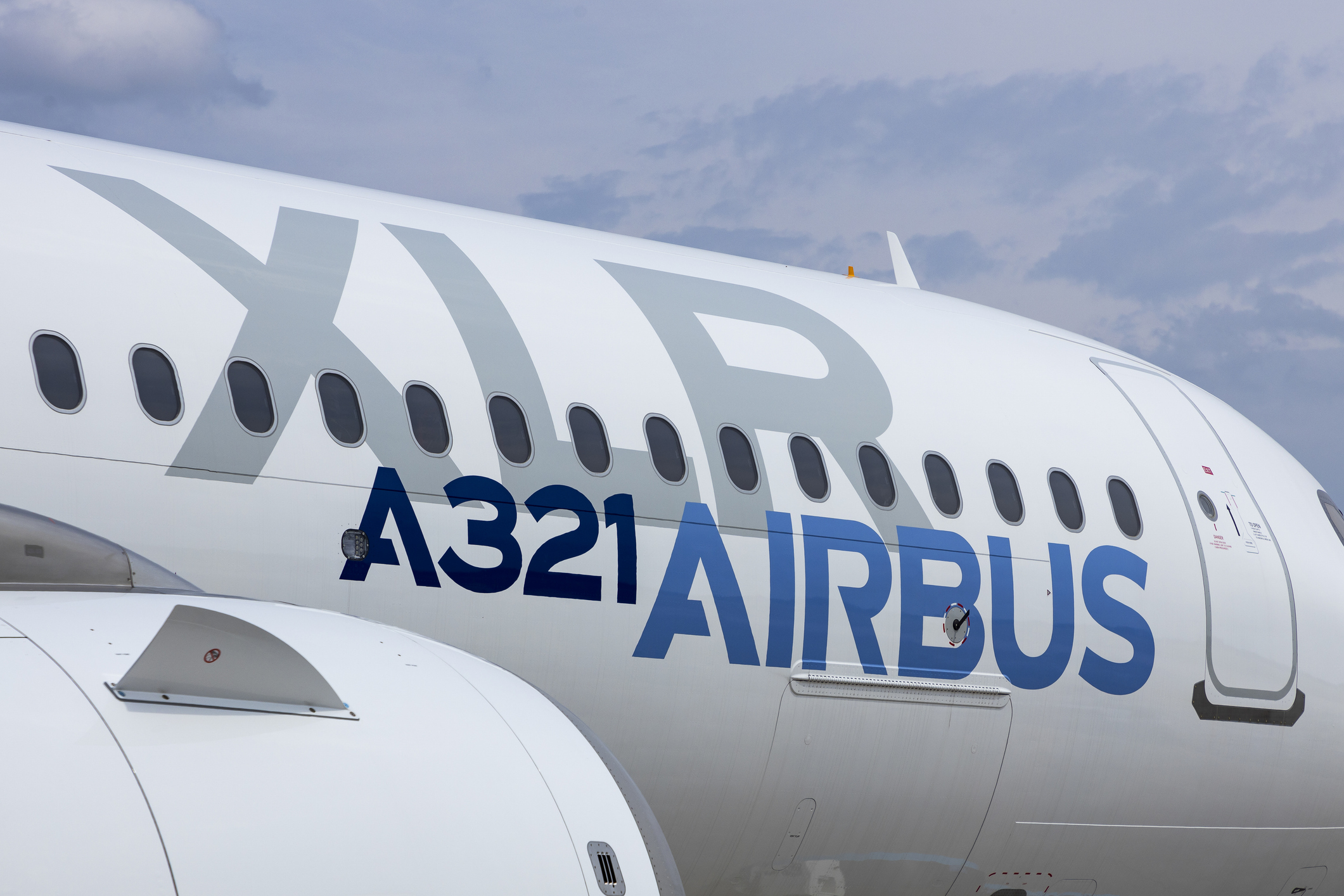
If you’re booking a long-haul flight, there’s a growing chance you’ll see an aircraft you may not associate with flying across an ocean: the Airbus A321XLR.
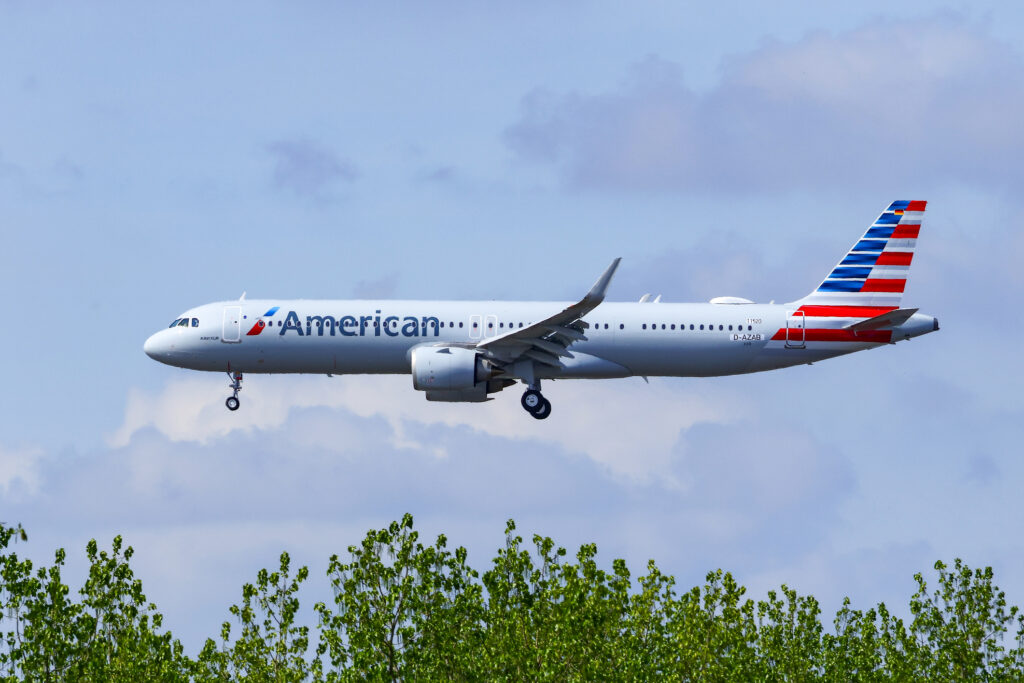
American Airlines is already flying the aircraft, while Iberia and Aer Lingus are among the airlines using it across the Atlantic. United Airlines and Air Canada have also taken delivery of their first XLRs, and plenty of other airlines are already operating the aircraft or planning to add it to their fleets.
At a high level, the A321XLR takes an aircraft that looks a lot like one you might fly from New York to Florida and gives it the ability to fly much farther. Airbus says the XLR can fly for up to 11 hours. It uses routes such as Orlando to Paris and Dallas to Lisbon as examples of what’s possible.
That puts a single-aisle aircraft on some of the same long-haul routes traditionally associated with much larger planes. The experience isn’t necessarily better or worse, but it is different.
What Is the Airbus A321XLR?
The A321XLR is the longest-range version of Airbus’ popular A321neo family. XLR stands for Extra Long Range.
The easiest way to understand it is to think of the XLR as a smaller aircraft capable of doing some of what airlines traditionally needed a widebody to do.
ANTONIO PIRRO / ISTOCK
It still has one aisle, and economy is generally arranged with three seats on either side. But airlines can also install premium economy and lie-flat business-class seats, along with the entertainment, Wi-Fi, and other features travelers have come to expect on long-haul flights.
But in many ways, it’s a squeezed-down version of the widebody experience.
And long flights aren’t the only place you’ll find one. American, for example, also uses its A321XLR on transcontinental routes from New York (JFK) and Boston (BOS) to California, giving the airline more ways to put the highly efficient aircraft to work.
Long-Haul Flights on an A321 Aren’t Entirely New
The A321XLR isn’t the first version of the A321 to cross the Atlantic.
JetBlue, Aer Lingus, TAP Air Portugal, and other airlines have been flying the A321LR, or Long Range, across the Atlantic for years. If you’ve flown JetBlue from the East Coast to Europe, for example, there’s a chance you’ve already spent a long flight aboard a single-aisle A321.
The XLR pushes that idea farther. Its additional range comes in part from an extra fuel tank, giving airlines more flexibility to connect cities that might be difficult to serve with an A321LR and don’t necessarily need a larger aircraft.
So while the XLR is getting plenty of attention, long-haul flying on an A321 isn’t particularly new.
What Is It Like to Spend Several Hours on an A321XLR?
This is probably the question that matters more than how Airbus managed to make the aircraft fly farther.
In economy, the cabin will look fairly familiar. Most airlines use a 3-3 configuration, with three seats on each side of a single aisle. What changes is how long you’re sitting in it.
There’s less room to move around than on a larger two-aisle aircraft. Passengers heading to the lavatory, flight attendants working the cabin, and anyone trying to stretch their legs are all sharing the same aisle.
Up front, airlines have found creative ways to fit a long-haul premium experience into the narrower cabin. Depending on the carrier, you might find lie-flat seats in a 1-1 layout or staggered configurations that create especially spacious “throne” seats in certain rows.
The result can feel like a condensed version of flying on a widebody such as a Boeing 777 or 787 or an Airbus A330 or A350. An XLR can still have multiple cabins, lie-flat seats, premium economy, seatback entertainment, and Wi-Fi, but everything has to fit within the narrower fuselage.
The experience can also vary quite a bit between airlines.
United is putting just 150 seats on its XLRs, while American has 155. Both include 20 lie-flat business-class seats and 12 dedicated premium economy seats. Iberia and Aer Lingus fit more than 180 seats on theirs.
That’s a wide range for the same aircraft.
Why Are Airlines Flying Smaller Aircraft Across the Atlantic?
This is where the XLR gets more interesting for travelers.
Not every city pair can support a Boeing 787 or Airbus A350 full of passengers every day. An A321XLR gives airlines a way to serve long-distance markets with fewer seats, which can make new nonstop routes possible or support existing routes where demand doesn’t justify a larger aircraft.
We’re already seeing that play out.
American’s latest international expansion leans heavily on the A321XLR, including new service to destinations such as Vienna and Porto. United is also using the aircraft to expand its international network. It added several new XLR routes that take advantage of both the jet’s range and smaller size.
How to Know What You’re Booking
Airlines don’t always make aircraft types particularly easy to decipher.
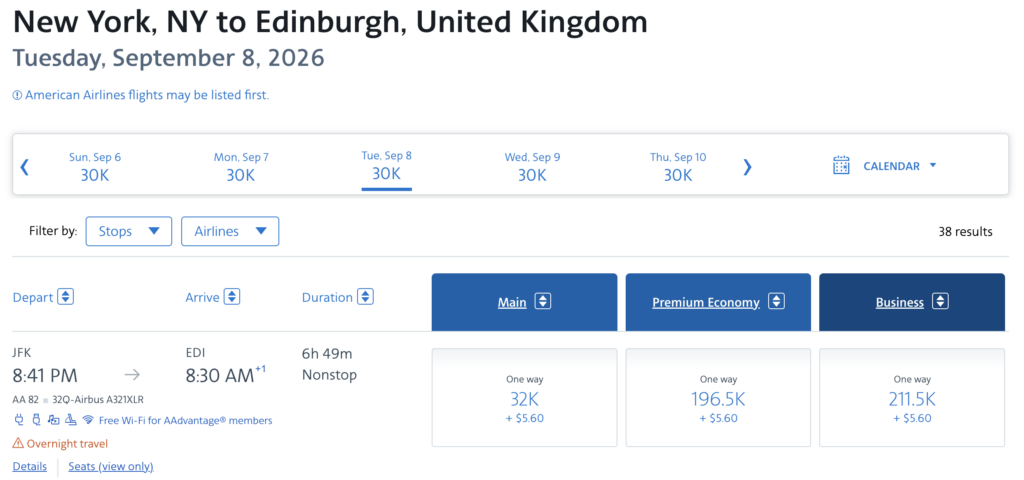
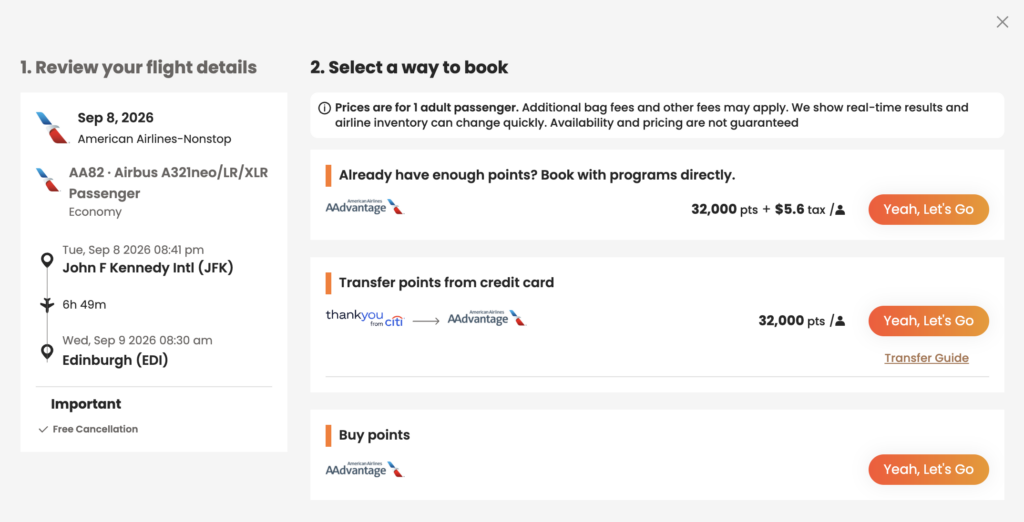
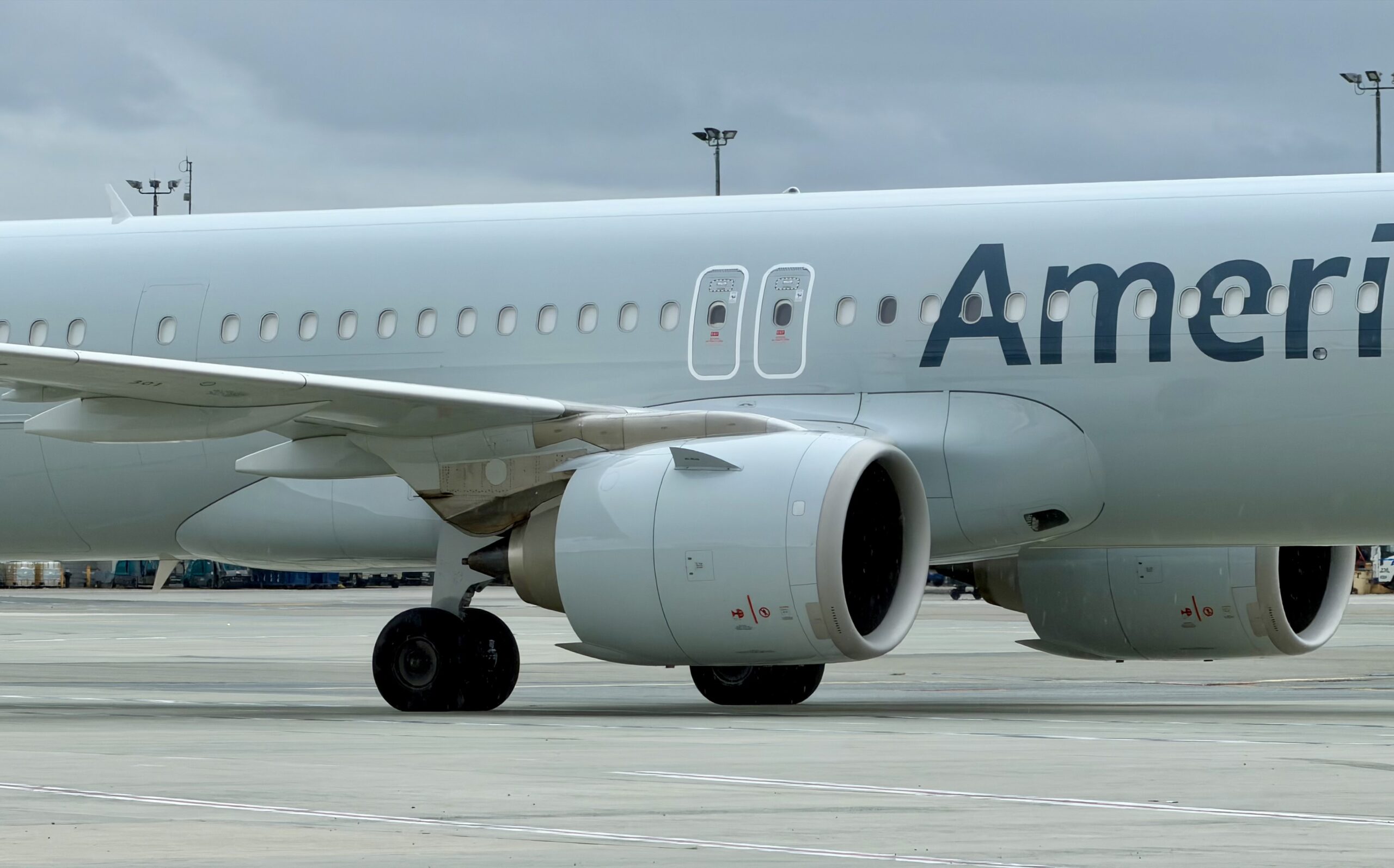
Some will spell out Airbus A321XLR during the booking process, while others use equipment codes. American, for example, displays its aircraft as 32Q-Airbus A321XLR.
AA.COM
PointsYeah shows the scheduled aircraft when you open the details for a flight, although closely related A321 versions may sometimes be grouped together.
You might see Airbus A321neo/LR/XLR, for example, rather than a definitive XLR designation.
POINTSYEAH
You can also pull up the seat map in PointsYeah. That can be more useful than the aircraft name alone, especially if you want to see the cabin layout or where your preferred seats are located.
If the seat you want isn’t available, you can also set a Seat Alert and PointsYeah will let you know if it opens up.
{{ search-widget mode=”flight” }}
If the exact version matters, check the operating airline’s website as well. Aircraft assignments can also change before departure, so the plane scheduled when you book isn’t guaranteed to be the one waiting at the gate.
Ultimately, the A321XLR isn’t something travelers need to seek out or avoid. But it is worth knowing what those letters mean when they appear on an itinerary.
You could be crossing an ocean on an aircraft that feels noticeably smaller than the widebodies traditionally used for the trip. But at the same time, the XLR’s smaller size and long range are giving airlines more opportunities to fly routes they might not otherwise operate.
If you want to know where people traveled this summer, those numbers aren’t particularly hard to find.
Airlines know how many passengers they carried. Hotels know how many rooms they filled. Tourism boards spend plenty of time counting visitors.
All of those numbers tell us where people went. Award searches tell us something different. They show where people were thinking about going next.
PointsYeah analyzed millions of award searches made between June 1 and August 15, 2026, to see which international routes travelers searched most often. Not every search turns into a trip, of course. But in the aggregate, they offer a fascinating snapshot of what travelers had on their minds this summer.
And routes to one part of the world appeared far more often than anywhere else.
Where Travelers Were Searching Abroad This Summer
Here are the 20 international routes that appeared most often in award searches made through PointsYeah this summer.
One thing to keep in mind is that each direction is counted separately. Someone searching Seoul (ICN) to Los Angeles (LAX), for example, may be looking for the return flight of a trip that started in Los Angeles.
Ranking
Route
1
Los Angeles (LAX) → Tokyo (TYO)
2
New York City (NYC) → Tel Aviv (TLV)
3
San Francisco (SFO) → Tokyo (TYO)
4
New York City (NYC) → Tokyo (TYO)
5
Seattle (SEA) → Tokyo (TYO)
6
San Francisco (SFO) → Taipei (TPE)
7
Los Angeles (LAX) → Taipei (TPE)
8
Chicago (ORD) → Tokyo (TYO)
9
London (LON) → New York City (NYC)
10
Seoul (ICN) → Los Angeles (LAX)
11
Athens (ATH) → New York City (NYC)
12
Hong Kong (HKG) → San Francisco (SFO)
13
Hong Kong (HKG) → Los Angeles (LAX)
14
Seattle (SEA) → Taipei (TPE)
15
New York City (NYC) → Taipei (TPE)
16
Seoul (ICN) → San Francisco (SFO)
17
Seoul (ICN) → Seattle (SEA)
18
Hong Kong (HKG) → New York City (NYC)
19
Delhi (DEL) → San Francisco (SFO)
20
Paris (CDG) → Los Angeles (LAX)
It doesn’t take much studying to spot the pattern.
Tokyo Is Extremely Popular
Tokyo appears five times in the top 20 most-searched international routes, more than any other destination.
The searches came from across the U.S.: Los Angeles (LAX), San Francisco (SFO), New York City (NYC), Seattle (SEA), and Chicago (ORD).
Different starting points, same destination.
Japan’s popularity isn’t exactly a new phenomenon. International visitors have returned in enormous numbers in recent years. For Americans, increased airline capacity across the Pacific has also made the country easier to reach from more cities.
Then there are the reasons that don’t fit neatly into an airline schedule. The favorable exchange rate. The food. The rail network. The mix of enormous cities, smaller towns, culture, and nature that makes it relatively easy to build several very different trips around one country.
For some, Japan has also become less of a once-in-a-lifetime destination and more of a place worth returning to.
And the search patterns suggest plenty are still trying to get there.
SEANPAVONEPHOTO / ISTOCK
Japan Was Only Part of the Story
Fourteen of the 20 most-searched international routes connected North America with destinations in Asia.
Taipei appears four times. Seoul and Hong Kong each appear three times. Delhi makes the list as well. Just beyond the top 20 were searches involving Bangkok, Singapore, Ho Chi Minh City, and other destinations throughout the region.
That’s a much bigger story than Japan alone.
There isn’t one clear-cut type of trip tying those places together, either. Some are enormous business and aviation hubs. Some draw travelers for food and history. Others have become popular jumping-off points for exploring elsewhere in the region.
What stands out is how often the same Asian destinations appear from different North American cities.
SEANPAVONEPHOTO / ISTOCK
Europe Is More Complicated
Only three European cities appear among the top 20 routes, with London, Athens, and Paris making the list. But that doesn’t necessarily mean travelers were less interested in Europe.
North America has far more nonstop routes to Europe than it does across the Pacific. That spreads searches for Europe across more city pairs, while searches for Asia are more likely to pile up on a smaller number of major routes.
So the regional comparison isn’t quite as simple as the top 20 makes it look. What is clear is that individual routes to Asia, particularly Japan, repeatedly rose to the top.
Then there’s the route sitting at No. 2.
New York City (NYC) to Tel Aviv (TLV) ranks behind only Los Angeles (LAX) to Tokyo, placing it ahead of every other route involving Tokyo, Taipei, Seoul, Hong Kong, or Europe.
It’s the most notable outlier in the top 20.
Searches Capture the Trip Before the Trip
Award searches aren’t bookings.
Someone can search Tokyo today, Paris tomorrow, and Bangkok the day after that. The award seats they find might disappear. Their dates might change. They may decide the trip is too expensive or get cold feet and go somewhere else.
But that uncertainty is also what makes the data interesting.
Passenger statistics capture travelers after they’ve made their decisions. Search data catches them earlier, while they’re still considering all the possibilities.
For this stretch of summer, individual routes to Asia dominated the top of the list, with Japan standing out most. The rankings don’t tell us that Asia was more popular than Europe overall, but they do show where searches were most concentrated.
Eventually, that’ll change.
Holiday travel will replace summer vacations. Ski destinations will start appearing more frequently. Before long, travelers will be searching for spring break and summer 2027. And we’ll soon get another look at where everyone wants to go next.
DOCTOREGG / ISTOCK
Where to Next?
If there’s one practical takeaway from the rankings, it’s that plenty of other travelers may be looking for the same trip you are.
Award availability can change quickly, particularly around busy travel periods. Searching earlier gives you more time to compare dates, airports, and programs before committing to a trip.
And if a destination on this list has you thinking about somewhere new, that’s probably reason enough to take a look.
American Airlines is adding seven international routes in 2027, and its Airbus A321XLR will be flying several of them.
Four of the routes announced Thursday will use the long-range narrowbody. That includes brand-new service to Vienna and Porto, along with new flights from New York (JFK) to Amsterdam and Nice.
The A321XLR has been flying for American for less than a year, starting with transcontinental flights before heading across the Atlantic to Edinburgh. Those early routes offered a small preview of what American had planned for the jet.
But its 2027 schedule is giving us a much better idea of what’s ahead.
American’s New International Routes for 2027
American’s expansion includes three destinations joining or returning to its network, plus several new routes to cities it already serves from other gateways.
Some were announced earlier this year, while others are new as of Thursday.
Route
Starts
Aircraft
Chicago (ORD) → Tokyo Narita (NRT)
March 19
Boeing 787-9
New York (JFK) → Amsterdam (AMS)
March 28
Airbus A321XLR
Philadelphia (PHL) → Porto (OPO)
March 28
Airbus A321XLR
New York (JFK) → Nice (NCE)
May 6
Airbus A321XLR
Philadelphia (PHL) → Vienna (VIE)
May 6
Airbus A321XLR
Charlotte (CLT) → Barcelona (BCN)
May 27
Boeing 777-200ER
Philadelphia (PHL) → Reykjavik (KEF)
May 27
Airbus A321neo
Vienna and Porto will be entirely new destinations for American. Reykjavik returns to the airline’s network for the first time since 2019.
Elsewhere, American is bringing back Charlotte to Barcelona and adding new service from New York to Amsterdam and Nice. The Chicago to Tokyo Narita route was previously announced in July but is still included in American’s seven-route expansion for 2027.
There are a few other schedule changes coming next year. American will add a fourth daily flight between New York and London Heathrow (LHR), while seasonal Charlotte to Paris (CDG) and Miami to Milan (MXP) service will extend into early January 2028.
Tickets were supposed to go on sale Monday, August 31, but went on sale a day early.
Four of the seven routes will be flown by an aircraft that carries just 155 passengers.
That’s considerably fewer seats than you’ll find on the Boeing 787s and 777s that do much of American’s long-haul flying. But the A321XLR can still cross the Atlantic. It’s outfitted with 20 Flagship Suite business class seats, 12 Premium Economy seats, and 123 seats in economy.
For American, that means having a smaller aircraft it can send on long international routes without giving up business class or Premium Economy.
The 2027 schedule shows how American can put that flexibility to work. The XLR can open new destinations like Vienna and Porto or add another U.S. gateway to cities already on the map, as American is doing with Amsterdam and Nice.
There are plenty more XLRs coming, too. American has dozens still on order. That could mean more niche European routes or flights to new destinations in South America.
For passengers, there is one very big tradeoff. More long-haul XLR routes also mean more opportunities to spend a transatlantic flight on a single-aisle aircraft.
Whether that matters probably depends on where you’re sitting.