Category: Travel

Practical travel content beyond loyalty programs, including airport and lounge guides, destination inspiration, trip planning, travel experiences, and general travel advice.

  • 5 Small Things That Can Make Traveling a Lot Easier

    5 Small Things That Can Make Traveling a Lot Easier

    I had some time to kill at the Philadelphia airport recently and started noticing the lines.

    The regular TSA security line was long. PreCheck had a few people waiting. The separate Touchless ID lane had absolutely nobody at all.

    A couple of minutes after collecting my belongings from security, I watched a separate American Airlines flight board. Plenty of passengers were still waiting when Groups 7 and 8 were called, followed by Group 9.

    Joining AAdvantage (American’s free loyalty program) would have put some of them in Group 6 and possibly saved them from gate-checking their bags.

    Neither observation was particularly groundbreaking. But they got me thinking about the small things that can make a trip easier without buying a better seat or having airline status.

    Some take a few minutes to set up. Others are just useful habits to have when something goes wrong.

    Here are five that can make a difference.

    Join the Airline’s Loyalty Program

    There doesn’t need to be much loyalty involved in joining a loyalty program.

    American is a good example. AAdvantage members board in Group 6. Nonmembers flying in Main Cabin board in Groups 7 or 8, while basic economy passengers without another form of priority board in Group 9.

    Signing up is free.

    Moving up a boarding group or two isn’t going to transform a trip, but it can mean getting on the plane before overhead bin space starts disappearing. And it’s an easy benefit to get even if you only fly American more than once or twice a year.

    AAdvantage members get access to free onboard Wi-Fi, too.
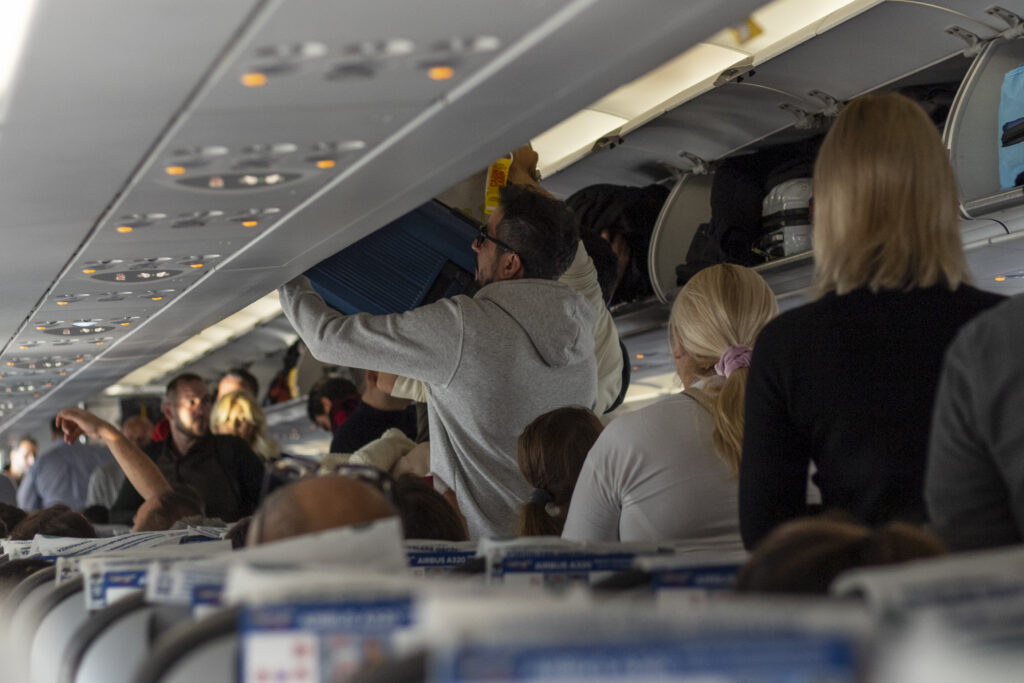
    Boarding a plane. Passengers stack baggage on luggage racks.
    SERHIL IVASHCHUK / ISTOCK

    Having an account also keeps reservations in one place, saves information such as a Known Traveler Number (KTN), and makes sure miles from a flight don’t disappear into nowhere.

    Not every airline gives members an earlier boarding group just for signing up, so this isn’t a reason to open a dozen loyalty accounts tonight. But when booking a flight, it’s worth seeing what joining the airline’s program gets beyond miles.

    Sometimes there’s a useful perk hiding behind a free signup.

    More on This: I Want to Travel With Points. Where Do I Start?

    Get TSA PreCheck and Look for Touchless ID

    The difference between the security lines at Philadelphia was hard to miss.

    TSA PreCheck doesn’t guarantee a short wait. I’ve certainly stood in some long PreCheck lines. But it does offer dedicated lanes at participating airports and a less cumbersome screening process, like leaving shoes on and laptops in bags.

    New enrollment currently starts as low as $76.75, depending on the provider. Renewals can start at $58.75, depending on the method.

    Global Entry is another option, particularly for international trips. It costs $120, includes TSA PreCheck benefits, and adds expedited processing when returning to the U.S.

    Before paying for either, check the credit cards already in the wallet. Plenty of travel cards (typically ones with annual fees) reimburse the application fee for TSA PreCheck or Global Entry. Enroll, charge the fee to an eligible card, and the reimbursement typically comes back as a statement credit.
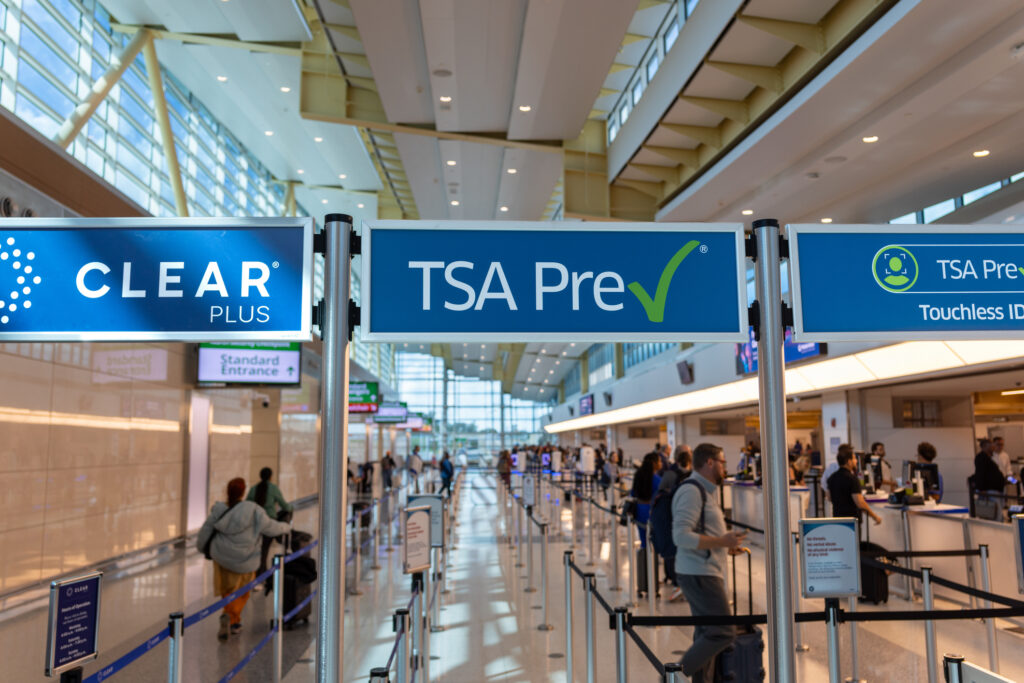
    Longer TSA lines in airports during government shutdown
    GREGGORY DISALVO / ISTOCK

    PreCheck can also unlock an even easier option at some airports.

    TSA PreCheck Touchless ID uses facial comparison technology for identity verification and has dedicated lanes. I’ve increasingly found those lines shorter than PreCheck itself. At PHL that day, nobody was waiting.

    Eligible PreCheck members with a valid passport can opt in through participating airlines. With an airline, that means adding a Known Traveler Number and passport information to the profile, then opting in either there or during check-in. A Touchless ID indicator on the boarding pass shows when it’s ready to use.

    American, Alaska, Delta, Hawaiian, Southwest, and United currently participate.

    Touchless ID isn’t everywhere yet. But after doing the work to get PreCheck, it’s worth checking whether there’s an even shorter line available.

    Download the Airline App Before Something Goes Wrong

    Airline apps aren’t particularly exciting when everything is running on time.

    They’re considerably more useful when a flight isn’t.

    Most handle the basics, including boarding passes, gate changes, delay notifications, and bag tracking. But they’re more helpful during a disruption.

    When a flight gets canceled, the instinct is often to head straight for a customer-service desk or call the airline, only to hear that “higher than normal call volume” message. Everyone else is doing the same thing.

    Depending on the airline, the app may already offer rebooking options while the line at the airport is still growing. Meal or hotel vouchers may show up there, too.

    That doesn’t mean an app can fix every problem. Sometimes an agent really is necessary. But it’s much easier to find out with the app already downloaded, logged in, and connected to the reservation.

    A flight cancellation is a bad time to discover the password doesn’t work.

    Know What Else Is Flying That Day

    When I really need to be somewhere, I like to know what comes after my flight.

    That doesn’t require memorizing the day’s schedule. A quick look can answer the important questions. Is there another nonstop that afternoon? Does another airline fly the route? Would a connection still get there in time?

    That information becomes much more useful when the original flight starts slipping.

    Instead of starting from scratch after a cancellation, there’s already some idea of what to ask for or look at next. If there’s a 3 p.m. flight that still gets there before dinner, that’s worth knowing before joining the line at the airport.

    The same applies to trips booked with points. A quick PointsYeah search can show other award options around the same time or day, including flights available through different loyalty programs.

    {{ search-widget mode=”flight-hotel” }}

    Availability can disappear quickly during a disruption, so none of this guarantees a seat. The point is knowing where to look before everyone else on the flight starts looking, too.

    Keep Some Points and Miles Around for When Things Go Sideways

    Some of my most useful points redemptions are the ones I never end up using.

    I needed to get to Boston recently, and my JetBlue flight kept getting delayed. At some point, another delay could have meant not getting there when I needed to.

    American had another flight leaving later that day, and there was award availability. So I booked it with AAdvantage miles.

    I didn’t particularly want to take that flight. It was there in case JetBlue never went anywhere.

    The cancellation terms on the American award gave me enough flexibility to hold onto the backup while I waited to see what happened. JetBlue eventually got moving, so I canceled the American flight and got the miles back.
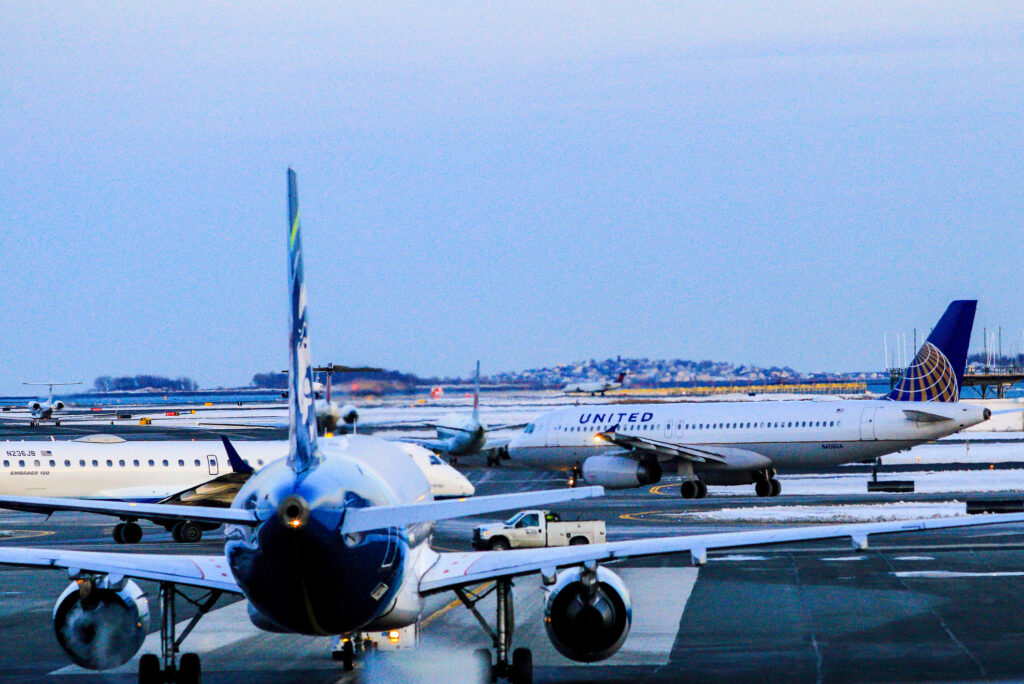
    Airplanes from different Airlines lined up for take-off from Boston Logan International Airport after snow.
    SHUNYU FAN / ISTOCK

    This is something to be careful with, though. Cancellation rules vary, it’s always worth checking the terms before booking something that may need to be canceled fairly close to departure.

    But it’s a good example of why having some miles available can be useful beyond planning the next vacation.

    The same goes for hotels. A cancellation, missed connection, or bad weather can unexpectedly create the need for a room near an airport, sometimes at an ugly last-minute price. Hotel points can cover the night instead. Transferable points can be even more useful because they provide options across several airline and hotel programs.

    There doesn’t need to be a giant balance sitting around indefinitely. But using every point down to zero can leave fewer options when a trip goes sideways.

    Points are usually the fun part of planning a trip. Sometimes they’re just a very useful Plan B.

    More on This: How Credit Card Transfer Partners Work

    Small Things Add Up

    None of these will prevent a delay, guarantee an empty security line, or make boarding particularly glamorous.

    But that’s what struck me at PHL. Some people were waiting in a long security line while another had nobody in it. Others were boarding later than they needed to because they hadn’t joined a free airline program.

    Flying comes with plenty of hassles that can’t be avoided. It makes sense to skip the ones that can.
  • What’s a Positioning Flight?

    What’s a Positioning Flight?

    Sometimes the flight you want doesn’t leave from your home airport.

    Maybe there’s no award availability from where you live, but plenty from an airport a short flight away. Or maybe starting somewhere else gets you a nonstop flight or costs fewer points.

    A positioning flight is a separate flight booked to get to the airport where the trip actually begins.

    For example, say someone lives in Raleigh (RDU) and finds a business-class award to Europe from Washington Dulles (IAD). They could book a separate flight to Washington, then begin the international itinerary from there.

    That first flight is the positioning flight.

    Why Book a Positioning Flight?

    Positioning gives you more airports to work with when searching for flights.

    Award availability can vary considerably depending on where a trip starts. A flight that isn’t available from a home airport might be available from another city, sometimes for fewer points or with a better itinerary.

    And positioning doesn’t always require another flight. If another airport is within driving distance, driving works too. In some places, a train might be an option.

    The idea is the same: getting to the airport where the itinerary you want begins.

    What to Know Before Booking a Positioning Flight

    The biggest thing to remember is that positioning flights are usually booked separately from the main itinerary.

    That means making the connection is your responsibility. If the positioning flight is delayed and the next flight is missed, the airline operating the main itinerary generally isn’t obligated to rebook it.

    A few things can make positioning less risky:

    • Leave plenty of time. For an important international flight, arriving the night before may make sense.
    • Be careful with checked bags. Bags may need to be collected and checked again before the next flight.
    • Consider the entire cost. Factor in the positioning flight, hotel, transportation, parking, and other expenses before deciding whether the better award is worth it.
    • Have a backup plan. Know what other options exist if the positioning flight is delayed or canceled.

    Are Positioning Flights Worth It?

    Sometimes.

    If getting to another airport requires a short flight or drive and opens up a much better itinerary, positioning can be worth the extra step.

    Other times, the additional cost and risk outweigh whatever the alternative itinerary saves.

    But knowing to search from other airports can open up options that aren’t obvious when looking only from home. Just leave enough room between separate itineraries that a good award doesn’t turn into a missed flight.

  • Southwest Airlines Shares Updates on Lounges, Premium Card, and Long-Haul Flying

    Southwest Airlines Shares Updates on Lounges, Premium Card, and Long-Haul Flying

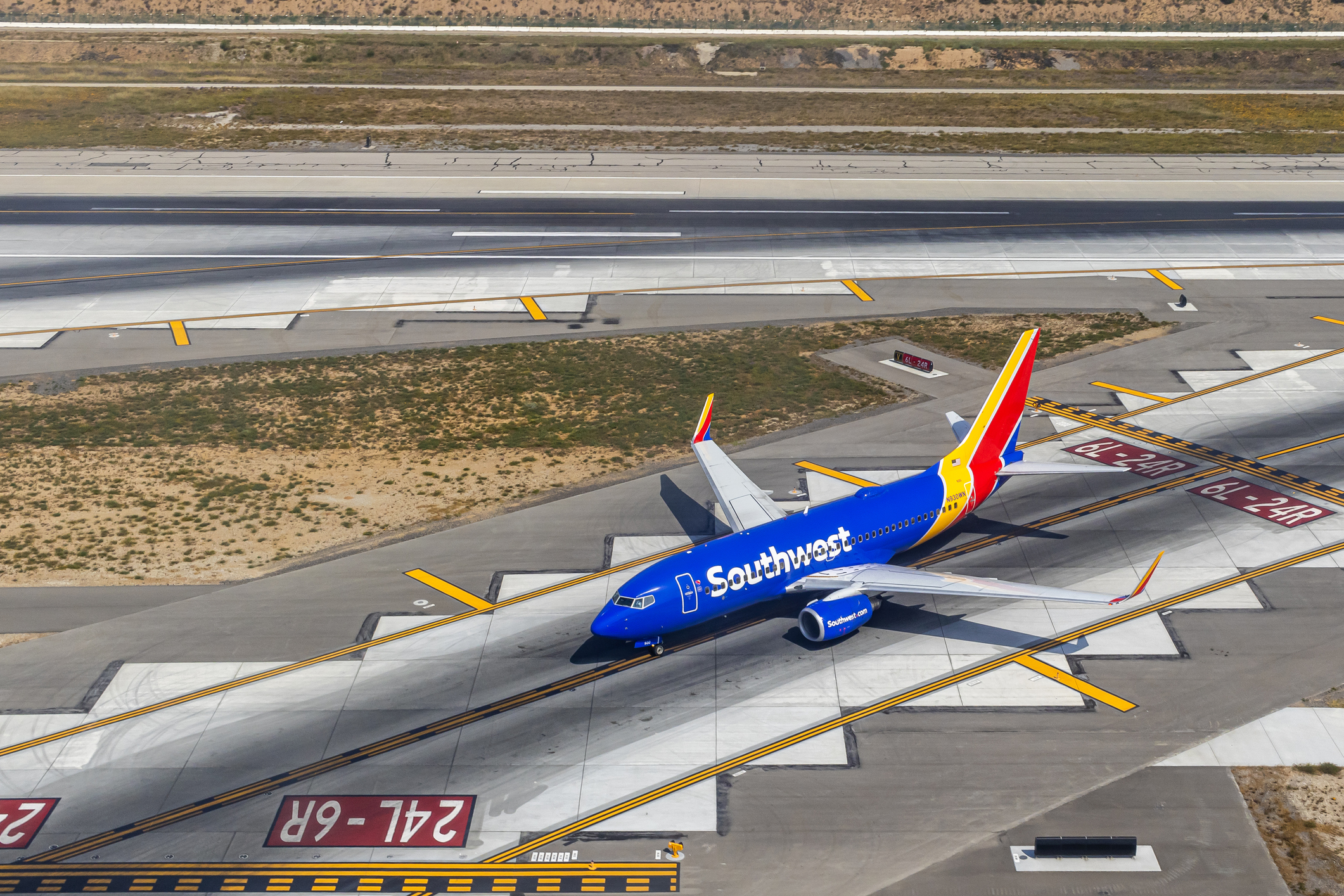
    Southwest Airlines has changed considerably over the past year and a half, from assigned seating and extra-legroom seats to bag fees. But the airline isn’t finished reshaping the guest experience.

    Southwest CFO Tom Doxey spoke this week at Morgan Stanley’s annual Laguna Conference and offered a handful of updates on what passengers can expect next.

    Some could start showing up fairly soon.

    Starlink Is Coming to Hundreds of Southwest Planes

    Southwest recently began installing Starlink, and the rollout is moving quickly.

    Doxey said the airline expects around 300 aircraft to have Starlink installed by the end of this year, with installations continuing into 2027.

    That means the faster Wi-Fi should become much easier to find on Southwest flights over the next few months. There will still be some luck involved, though, as plenty of planes will continue offering Southwest’s existing Wi-Fi until they get Starlink.

    Southwest’s Lounge Plans Are Already Taking Shape

    Southwest recently confirmed plans to open its first airport lounges in partnership with Chase. This is an amenity the airline has never offered before.

    The airline has already said it plans to start with 11 lounges, and Doxey indicated there could eventually be more. But perhaps more interesting is how far along some of those first locations already are.

    Construction has started at some locations, Doxey said, while designs and mock-ups are already taking shape. He suggested that early construction work contributed to the lounge plans becoming something of a “worst-kept secret” before Southwest announced them.

    He also hinted that the finished product may not look quite like what some people expect from Southwest.

    “I think some people are going to be a little surprised, actually, when they say, ‘Oh, this is the Southwest lounge,’” he said.

    Southwest still hasn’t revealed all 11 locations. Doxey didn’t name any additional airports, but said the choices should look “very logical” when looking at a map of Southwest’s network.

    A More Premium Southwest Credit Card Is Coming

    The lounges also give Southwest something new to offer current and future credit card holders.

    Southwest has already confirmed plans for a more premium credit card that will offer lounge access, but there’s still no word on when it will arrive or exactly what it will include.

    Doxey was unusually direct about why Southwest wants one. He called the absence of a top-tier premium card a “hole” in the airline’s current credit card lineup.

    For now, details such as the annual fee, other benefits, and launch date are still up in the air. But with lounge construction already underway, both pieces are getting closer.

    The Boeing 737 MAX 7 Could Finally Arrive Next Year

    Southwest also expects another long-awaited change to its fleet.

    The FAA certified the Boeing 737 MAX 7 in August after years of delays. This finally cleared the smaller MAX variant for commercial service.

    Southwest already has 27 MAX 7s that were built before certification and have been sitting in storage. Doxey said Boeing is now working to bring those aircraft up to the final approved specifications.

    Southwest expects some of those planes to begin arriving around the end of this year before entering passenger service in early 2027.

    International Long-Haul Flying Is Still on the Table

    One much bigger potential change is less certain.

    Southwest executives have repeatedly floated the possibility of eventually flying farther internationally. Doxey confirmed that the airline is still considering it, although no decision has been made.

    “We haven’t decided what we’re doing with that particular item,” Doxey said. “But what we have said is that we’re absolutely considering whether that should be part of the offering that we have.”

    There are still some big questions to answer, including where Southwest might fly and what aircraft it would use. For now, long-haul flying is something Southwest is considering rather than a firm plan.

    But it’s another example of just how different Southwest could look a few years from now. Assigned seating and bag fees are already changing the airline people know today. Add lounges, a higher-end credit card, better Wi-Fi, and perhaps longer international flights, and Southwest starts to look different in ways that go well beyond how boarding works.

  • American Airlines Is Planning More Premium Seats, Lounges, and Fleet Upgrades

    American Airlines Is Planning More Premium Seats, Lounges, and Fleet Upgrades

    American Airlines CEO Robert Isom and CFO Devon May sat down with investors this week at Morgan Stanley’s annual Laguna Conference. The majority of the conversation centered on revenue, fuel prices, and profitability, but there were also several updates that could affect the experience of flying American over the next few years.

    Here’s what stood out.

    American’s Premium Push Is Still Just Getting Started

    American has spent the last several years pushing its product upmarket, with upgraded lounges, more premium seats, and the launch of its new Flagship Suite.

    There’s a pretty simple reason why.

    Isom said just 30% of American’s seats now account for 50% of the airline’s revenue. And despite all the attention American has placed on premium cabins recently, the airline still considers itself relatively early in that transition.

    By the end of the decade, American expects its number of premium seats to grow by roughly 50%.

    Some of that growth is already underway. American’s first retrofitted Boeing 777-300ER entered service with a larger Flagship Suite cabin, while Isom said work on the airline’s 777-200ERs will be “moving before you know it.” Airbus A319 and A320 reconfigurations are also beginning to roll out.

    The result should be considerably more premium seating across American’s fleet over the next several years, on both its domestic and international jets.

    More on This: American’s Strangest Premium Plane Is Starting to Disappear

    American Says More Lounges Are Coming

    American also appears to be preparing for one of its biggest periods of lounge investment in years.

    Isom said customers will see “more new lounge openings at American over the next couple of years than we’ve done in decades.”

    Several lounge projects are already underway, but the comment suggests there’s plenty more happening behind the scenes.

    That’s worth watching as American puts more emphasis on the experience before a flight, not just the seat onboard.

    Free Wi-Fi Is Also Growing AAdvantage

    American’s rollout of free Wi-Fi isn’t just about making the flight better.

    Isom said AAdvantage enrollments are running at record levels, with much of that growth driven by free Wi-Fi. An AAdvantage membership is required to use the service.

    More members also gives American a larger pool of customers for other parts of AAdvantage, particularly its credit card partnership with Citi.

    The onboard upgrades still have some distance to go. Isom said a “significant chunk” of American’s fleet will have high-speed Starlink Wi-Fi as the airline moves through 2027. Seatback entertainment will take several years to spread across the fleet.

    Some Flights Could Be Trimmed

    There was one less exciting update.

    Higher fuel prices are causing American to reconsider some of its planned flying. May said the airline will make adjustments to its December schedule and now expects to grow somewhat less in 2027 than it anticipated several months ago.

    That doesn’t necessarily mean widespread route cuts. American still sees room to grow its network over the longer term.

    But schedules could get a little thinner in the near term as American adjusts to higher fuel costs.

    In the aggregate, the comments point to an American that will look different over the next several years. More premium seats and lounges are coming, Wi-Fi and seatback entertainment are spreading across the fleet, and some of that investment is already starting to show up. The immediate question is how much higher fuel prices slow the airline’s plans to grow the network around it.

  • Edelweiss and Discover Are Taking a Simpler Approach to Business Class

    Edelweiss and Discover Are Taking a Simpler Approach to Business Class

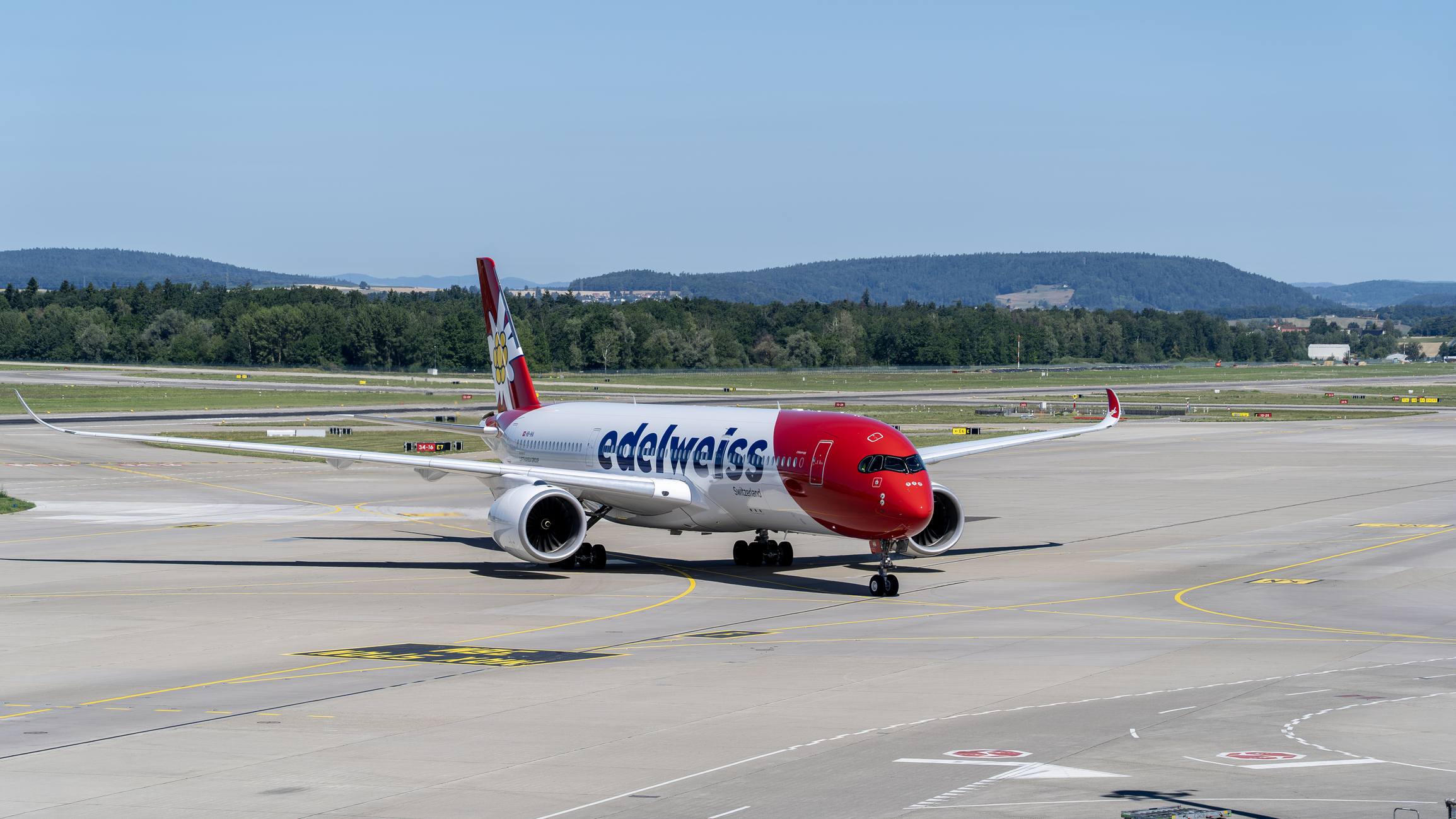
    Edelweiss is getting a new business class. And for an airline built largely around taking people on vacation, it’s fairly simple.

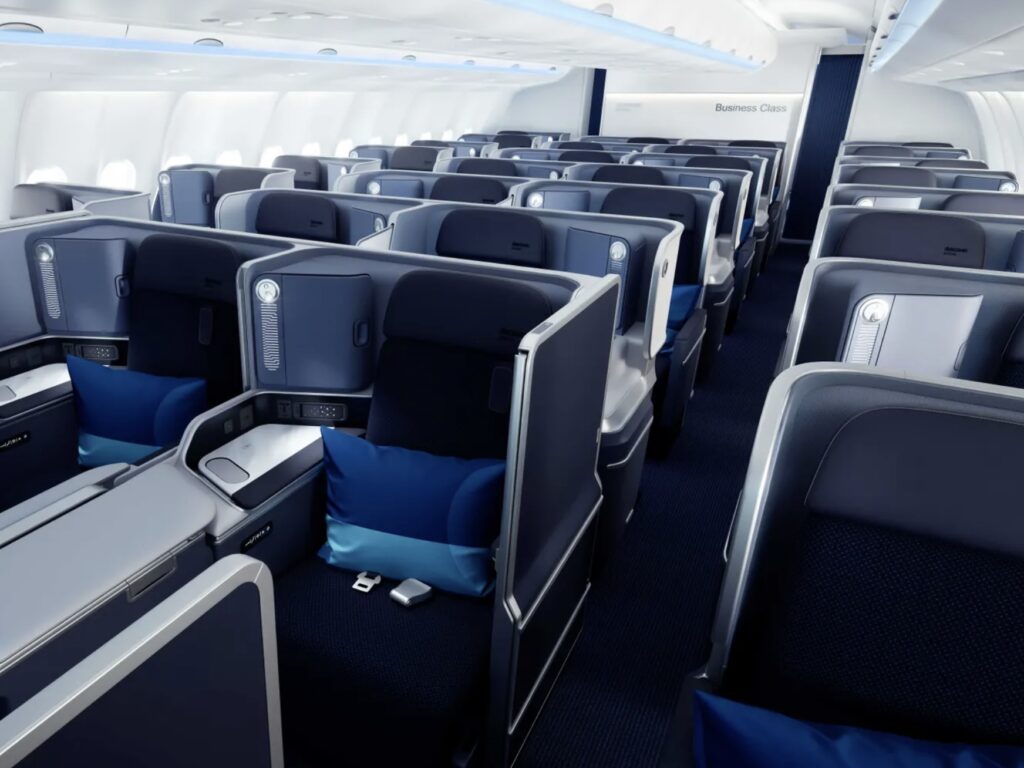
    The Swiss leisure airline unveiled the new cabins for its Airbus A350 fleet on Wednesday, September 16. There’s a standard business class seat, plus a small number of larger suites at the front. The first aircraft gets the new cabin in December, with the rest following by summer 2027.

    That’s not particularly notable on its own. But Edelweiss is part of Lufthansa Group and serves as the leisure counterpart to SWISS. Discover Airlines plays the same role alongside Lufthansa and unveiled a similarly straightforward business class earlier this year.

    Meanwhile, Lufthansa and SWISS have spent years developing Allegris and SWISS Senses (the respective terms for their new cabins), with five different business class seats offering different amounts of privacy, space, and bed length.

    Yet somehow, Lufthansa Group’s leisure airlines have ended up with business class that’s much less confusing. And depending on what matters in a seat, the standard product might be more appealing, too.

    Edelweiss Doesn’t Make the Seat Complicated

    Edelweiss’s new A350 cabin is a massive upgrade from what the airline offers today.

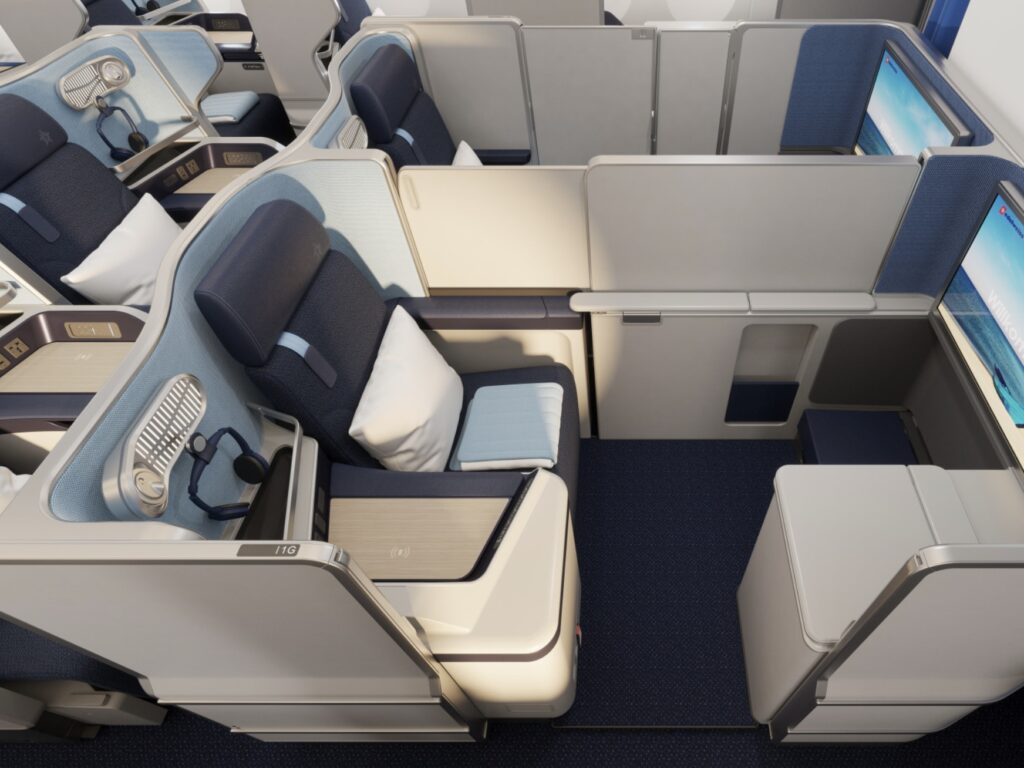
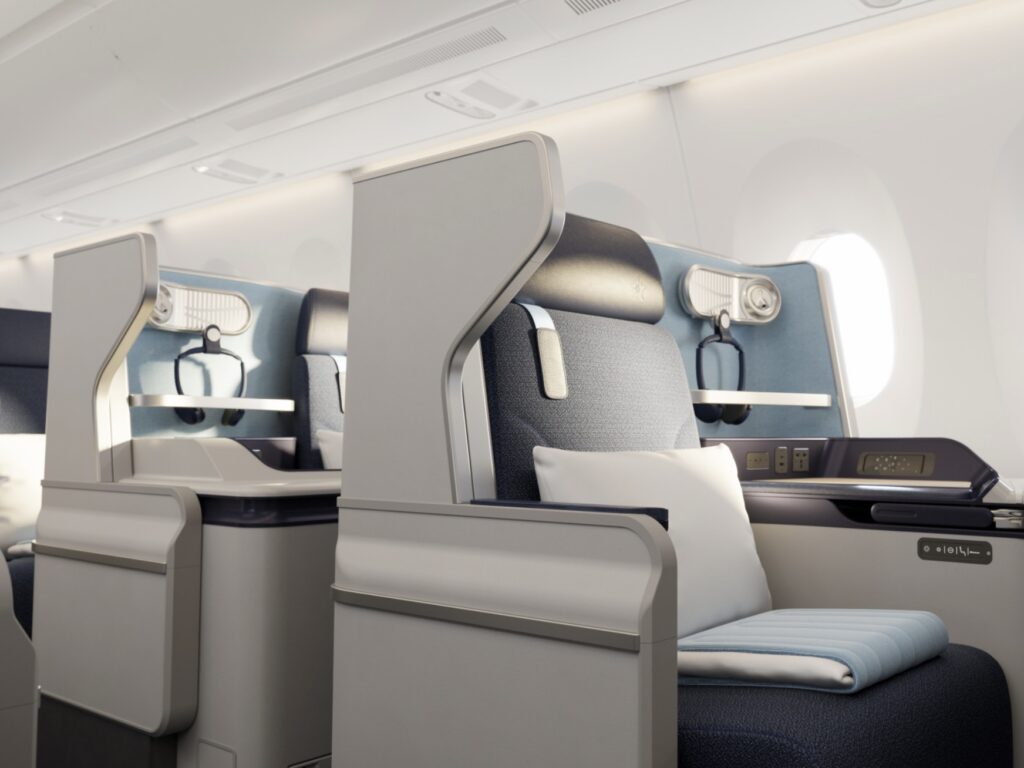
    Every business class seat will have direct aisle access, convert into a fully flat bed, and have a substantial shell separating it from the aisle. Roughly half are arranged as pairs for two people flying together.

    Edelweiss new business class seats.
    EDELWEISS

    The front-row Business Suites add roughly 4-foot-high closing doors, 32-inch screens, more storage and space around the feet, plus a mattress topper. That’s about as complicated as the cabin gets.

    The pricing structure is also straight and to the point. Edelweiss’s fare conditions say advance seat selection is free in business class, with the Business Suite specifically listed as the exception that costs extra.

    Edelweiss new business class seats.
    EDELWEISS

    Discover Keeps the Choices Limited, Too

    Discover Airlines announced its new Ocean Blue cabins in January. Its first retrofitted Airbus A330 is scheduled to enter service in April 2027.

    Its business class follows much the same formula. Standard lie-flat seats have direct aisle access and substantial privacy shells. The cabin has just two front-row Business Class Suites, which add roughly 4-foot-high doors, 32-inch screens, and additional space and storage.

    Discover Airlines business class seats.
    DISCOVER

    Standard business class seat selection is included with most Discover business fares, although its cheapest Business Light fare can charge for advance selection. Discover hasn’t published what selecting one of the future suites will cost.

    The details differ slightly, but both leisure airlines arrive at roughly the same place. The standard seat already delivers the basics expected from a modern business class, while a small number of suites offer a little something extra.

    Lufthansa and SWISS, on the other hand, have gone in a very different direction.

    Lufthansa and SWISS Turn One Cabin Into Five Choices

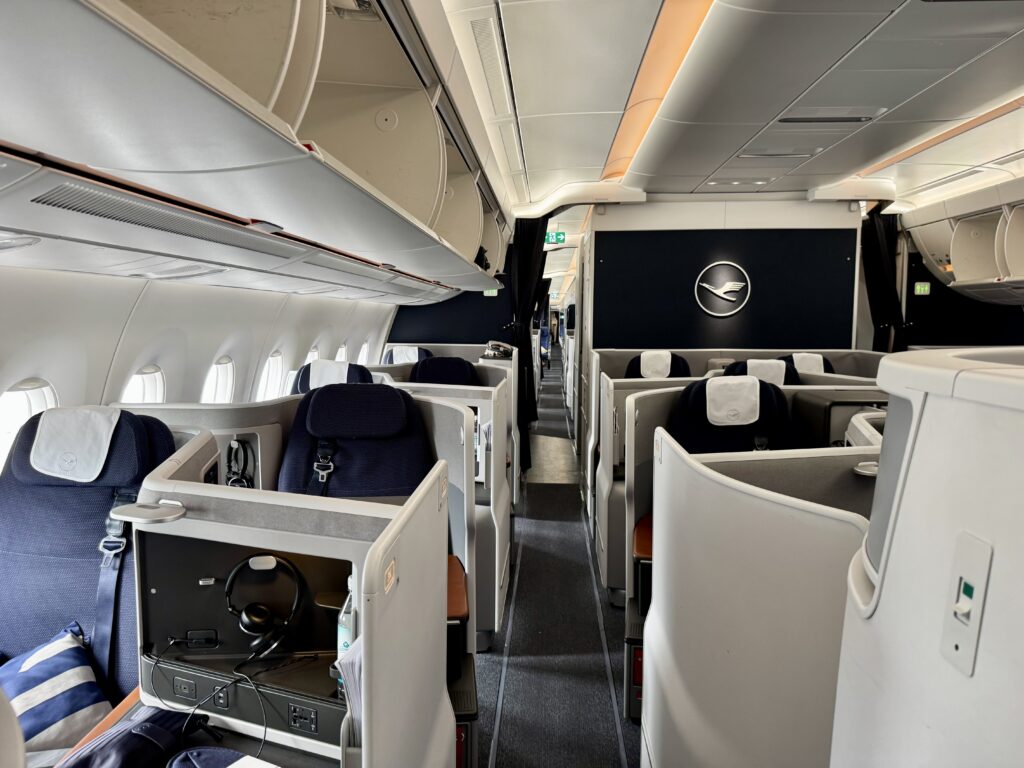
    Lufthansa’s Allegris has five business class seat types. There’s the Classic Seat, Privacy Seat, Extra Space Seat, Extra Long Bed Seat, and Business Suite.

    SWISS Senses follows essentially the same playbook with five categories of its own.

    The idea behind that is personalization. A longer bed, more room, more privacy, or a suite can be selected depending on what matters most. But that also means buying a business class ticket isn’t necessarily the end of the purchasing decision.

    Lufthansa Allegris business class.
    TYLER GLATT / POINTS INSIDER

    On my last Lufthansa Allegris award (that happened to be booked with Aeroplan points), the Classic Seat was the only option available without an additional charge. Lufthansa wanted 210 Canadian dollars, or about $153 at the time, for a Privacy Seat or Extra Long Bed Seat. The Extra Space Seat cost about $185.

    The Business Suite was about $545 just to select the seat.

    And those fees are per person. For two or more people flying together, choosing something other than the Classic Seat can very quickly become a significant additional expense.

    Those prices were specific to that flight, but they illustrate the tradeoff. The free Classic Seat is also the least private option, with considerably more exposure to the aisle. SWISS has a similarly exposed Classic Seat in its Senses cabin.

    That’s where Edelweiss and Discover start to look a lot more appealing. Their standard seats already have substantial shells wrapping around them. More privacy isn’t something reserved for another category of business class seat.

    There’s an aesthetic argument, too. Edelweiss and Discover arguably look more cohesive, with essentially one design language running through business class. Allegris and SWISS Senses mix several visibly different seats because each is meant to do something different.

    Put the four cabins next to each other without airline names attached, and it might be difficult to pick out which belong to the leisure airlines.

    Somehow, the Leisure Airlines Are Simpler

    That doesn’t make Edelweiss or Discover categorically better.

    Lufthansa and SWISS offer more choice, and their best business class seats can provide more space and privacy. Both also offer international first class, something Edelweiss and Discover don’t have.

    But business class is where the contrast within Lufthansa Group becomes hard to miss.

    Edelweiss and Discover are rolling out attractive cabins with suites, direct aisle access, free Starlink, and relatively simple seat choices. Lufthansa and SWISS have turned the business class seat itself into a menu, where more privacy, room, or bed length can mean paying again after the ticket is booked.

    It’s an odd state of affairs. Leisure airlines cater heavily to vacation trips, exactly where it would be easy to imagine more aggressive upselling.

    Instead, Edelweiss and Discover may have landed on something the group’s full-service carriers haven’t. Business class that looks premium without requiring much explanation or another round of nickel-and-diming.

  • Amex and Aspire Expand Canadian Lounge Partnership to Calgary and Montréal

    Amex and Aspire Expand Canadian Lounge Partnership to Calgary and Montréal

    American Express is expanding its partnership with airport lounge operator Aspire in Canada. A new co-branded lounge is now open in Calgary and another is coming to Montréal.

    The Aspire Amex Lounge at Calgary International Airport (YYC) opened September 16 in the domestic departures area. Another location will open in Montréal-Trudeau International Airport’s (YUL) transborder area by early 2027, serving passengers departing for the U.S.

    The expansion follows the first Aspire Amex Lounge, which opened in Montréal’s domestic departures area in September 2025. Amex says that location has recorded more than 50,000 cardmember visits since opening.

    Once the new Montréal location opens, the Aspire Amex network in Canada will include three lounges across two airports.

    These Lounges Aren’t Just for Canadian Amex Cardmembers

    These aren’t Centurion Lounges. They’re Aspire lounges operated by Swissport, with Amex partnering with Aspire to provide additional benefits for eligible cardmembers.

    But access isn’t limited to Canadian Amex cards. Aspire lounges also participate in Priority Pass, which is a benefit of several U.S. credit cards, including The Platinum Card® from American Express.

    U.S. Platinum Card members need to enroll in Priority Pass before using the benefit. Access requires a Priority Pass membership card and same-day boarding pass.

    Eligible Amex cardmembers receive priority lounge and waitlist access at Aspire Amex Lounges. The lounges also offer a mix of buffet options and tableside ordering.

    The upcoming Montréal location could be especially useful for U.S.-bound passengers. It will sit in the airport’s transborder area, while the existing Aspire Amex Lounge serves domestic departures.

    With Calgary now open and a second Montréal location coming, the partnership is expanding from one lounge last year to three across two Canadian airports.

  • Amex’s Newest Centurion Lounge Takes Its Cues From Amsterdam

    Amex’s Newest Centurion Lounge Takes Its Cues From Amsterdam

    American Express is bringing a Centurion Lounge to continental Europe for the first time.

    The 33rd Centurion Lounge opens Thursday, September 17, at Amsterdam Airport Schiphol (AMS). It’s in the airport’s non-Schengen zone between Concourses E and F. And the entryway is just up the stairs near the Lounge No. 50 sign.

    At nearly 6,000 square feet, Amsterdam is far from the largest Centurion Lounge in the issuer’s network. But after walking through the space ahead of its opening, it doesn’t feel quite as small as that number suggests.

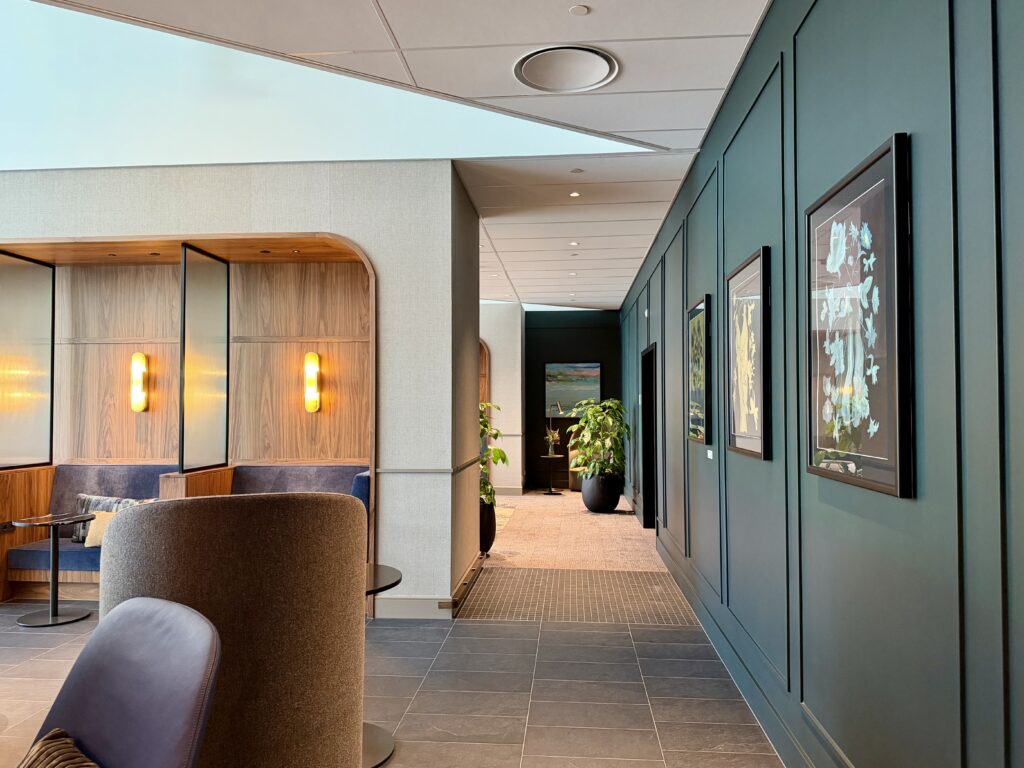
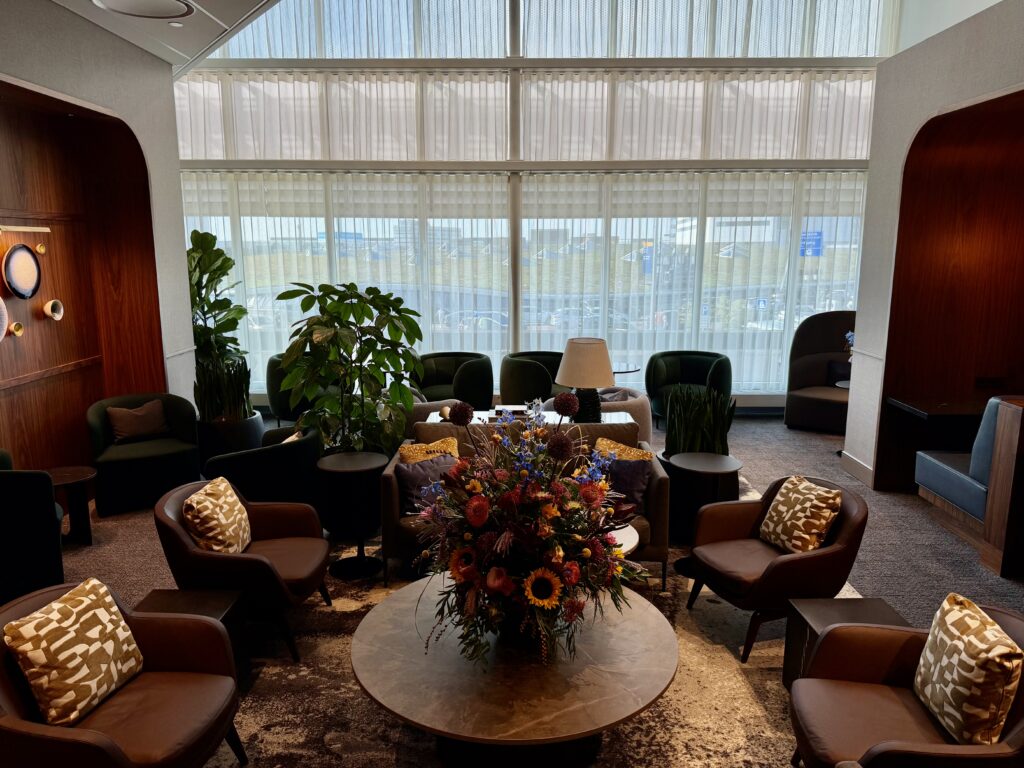
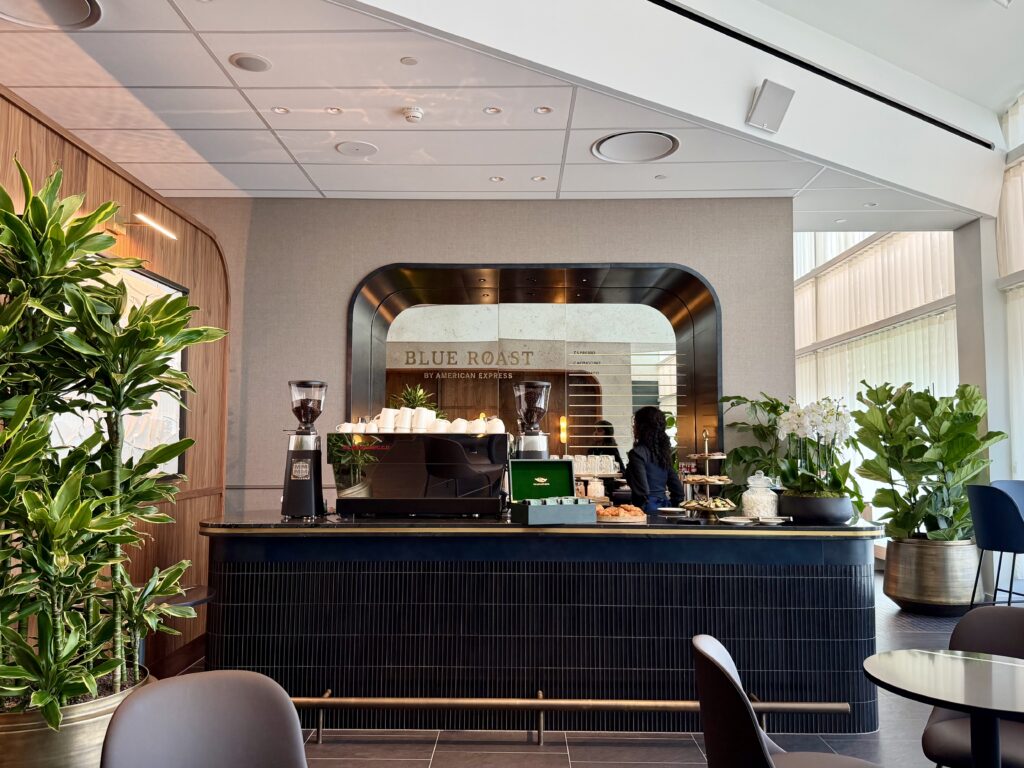
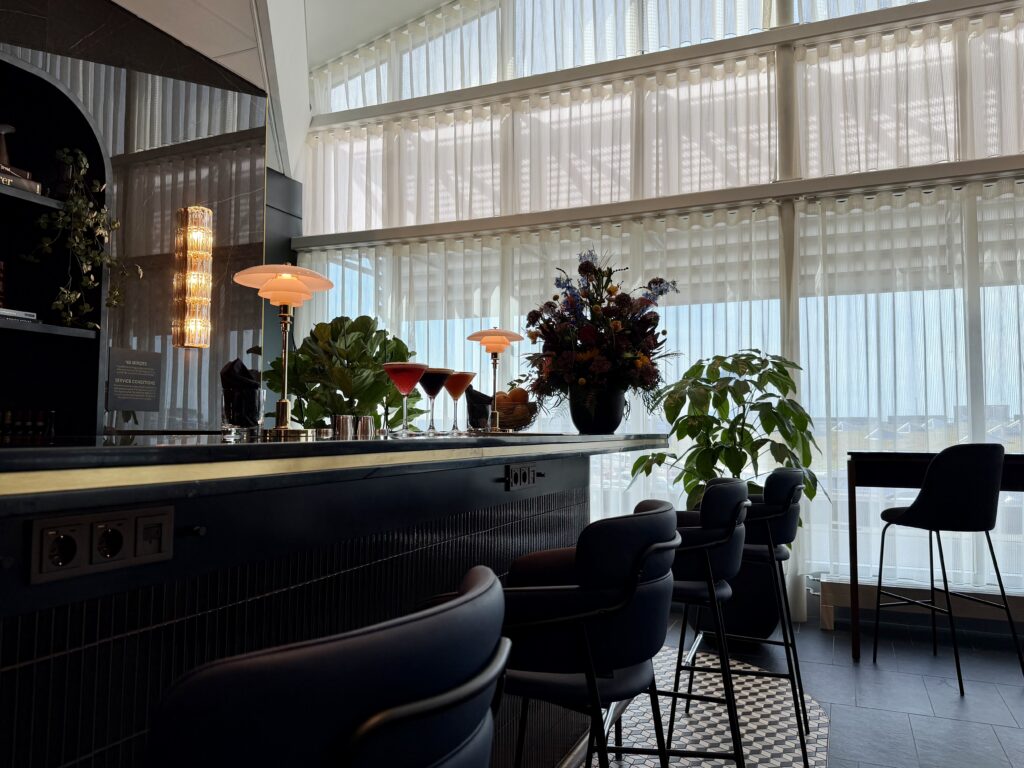
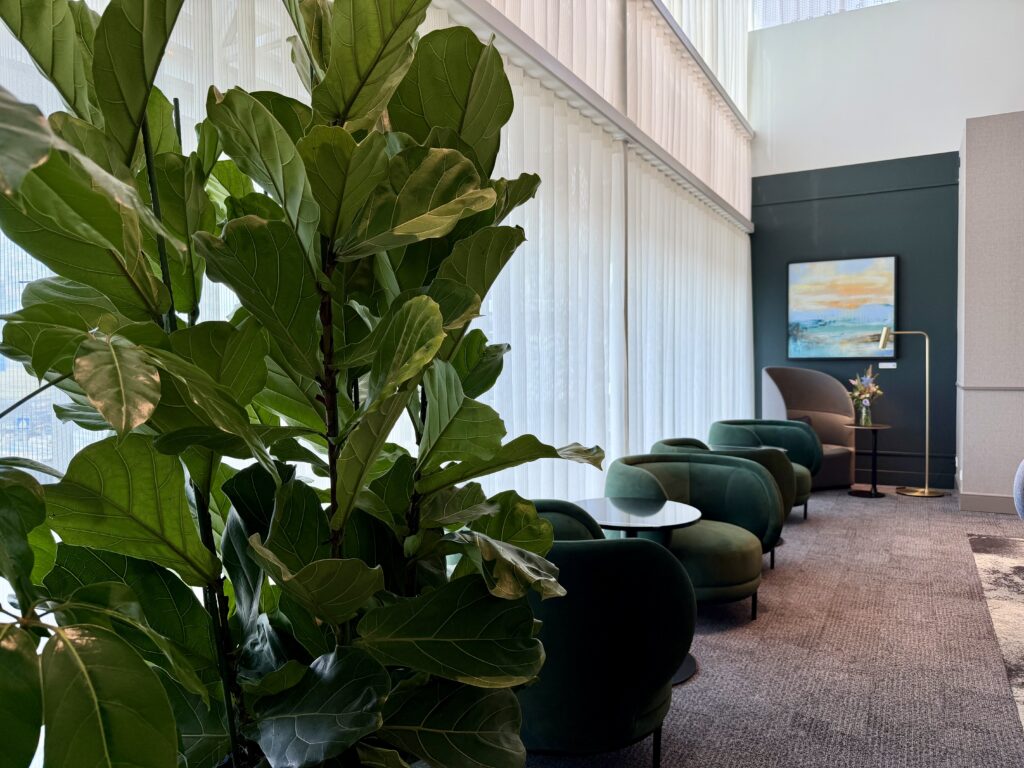
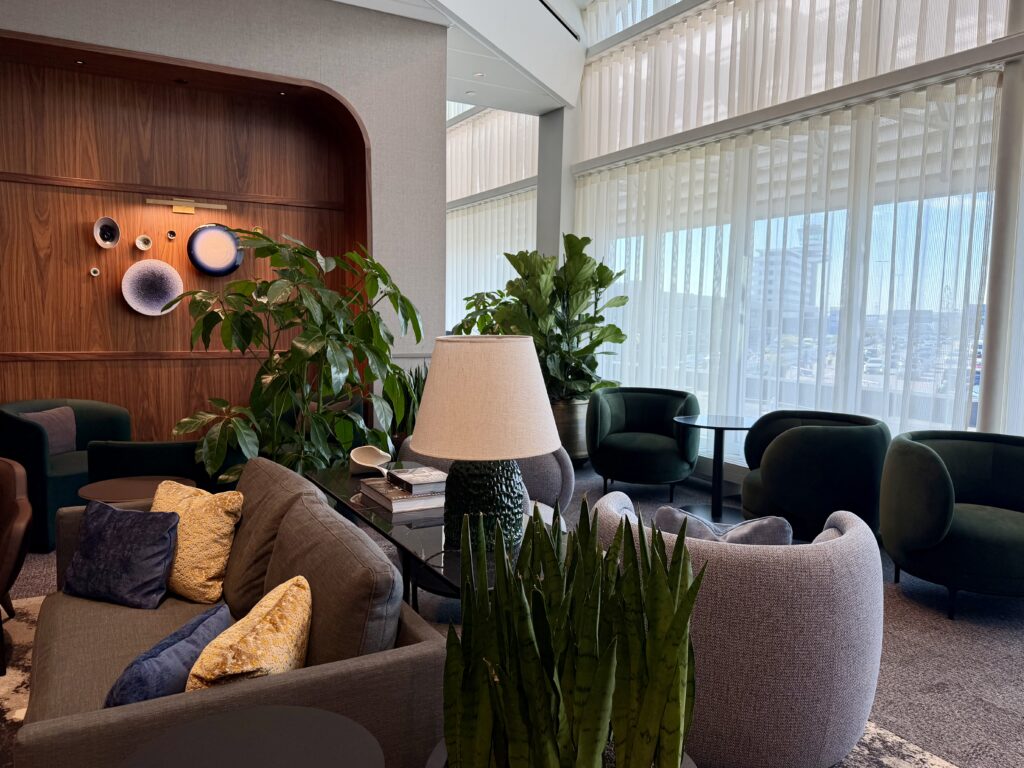
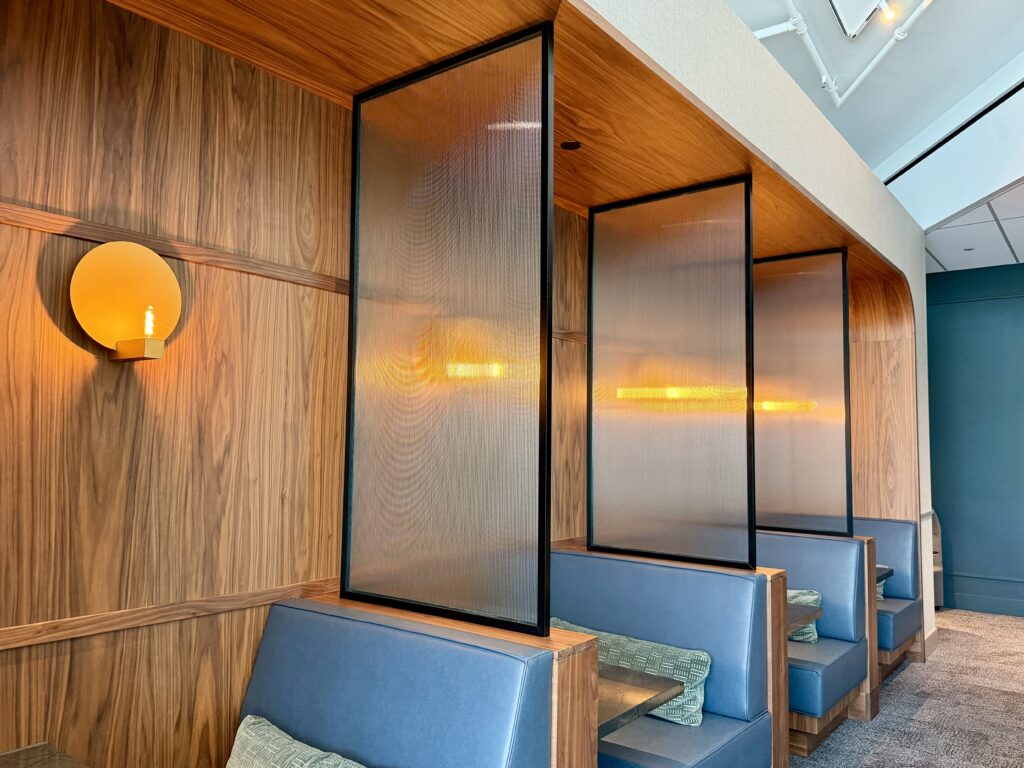
    Tall ceilings and floor-to-ceiling windows bring plenty of natural light into the lounge, while the layout breaks the space into several distinct areas. There’s a dedicated coffee bar, dining area, full-service bar, and different types of seating across the lounge.

    Hallway at the Amex Centurion Lounge AMS.
    TYLER GLATT / POINTS INSIDER

    Amex also packed quite a bit of the Netherlands into the space.

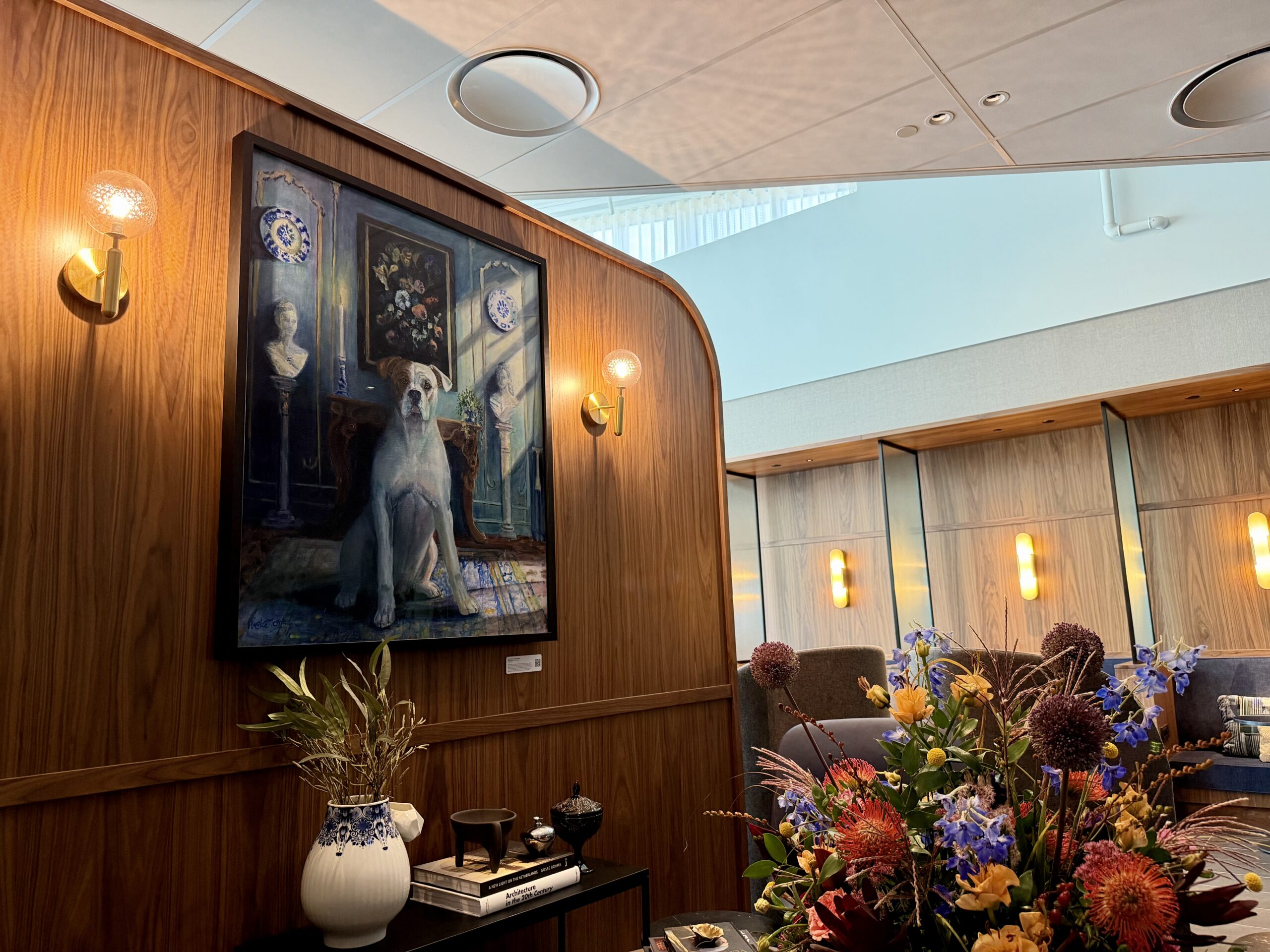
    There are deep greens and blues inspired by Amsterdam’s canals, Dutch florals, locally sourced coffee and tea, work from local artists, and a Delft-style version of Amex’s bulldog mascot.

    The goal, according to Vince Carbone, Amex’s director of global lounge design strategy, was to make the lounge distinctly Amsterdam without making the references too “on the nose.”

    That’s a pretty good description of what Amex built. It still looks and feels like a Centurion Lounge, but the Amsterdam influence is impossible to miss.

    Bringing Amsterdam Into a Centurion Lounge

    No two Centurion Lounges are designed to be exactly alike, and much of what distinguishes Amsterdam comes down to the details.

    The local references start near the entrance. A painting featuring Sir Charles Frosty Blue (Amex’s mascot, not Dutch royalty) incorporates Delftware and Dutch florals. Work from local artists lines the walls, while flowers and other references to the Dutch landscape decorate tables and shelves.

    Seating and foliage at the Amex Centurion Lounge AMS.
    TYLER GLATT / POINTS INSIDER

    Color plays an even bigger role.

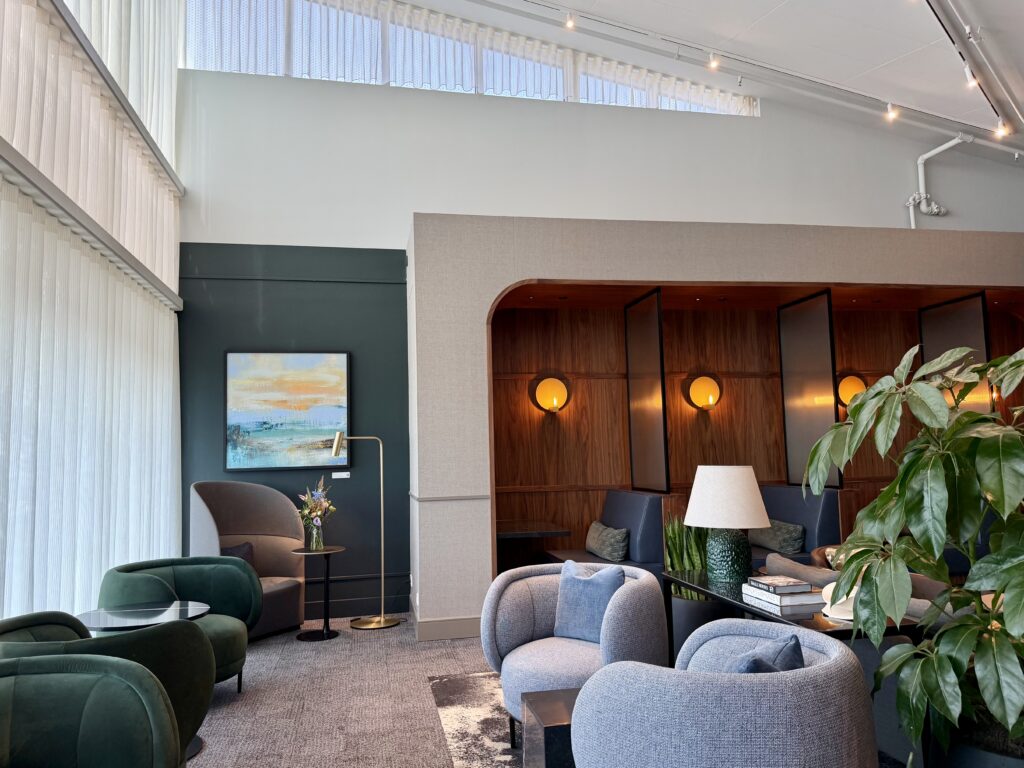
    Deep greens and blues run throughout the space, inspired in large part by Amsterdam’s maze of waterways. Color blocking (which, I learned, is the practice of using distinct areas of color to define a space) also helps separate one part of the lounge from another without making each area feel disconnected.

    The ceiling is another integral part of the space, although it isn’t entirely an Amex creation. The lounge was built out of former office space, and the tall, angular ceilings were already there.

    Amex incorporated that existing architecture into the design. The triangular forms overhead add dimension, while the ceiling height and floor-to-ceiling windows help make the relatively compact lounge feel a lot more open.

    And perhaps a little more upscale.

    Seating at the Amex Centurion Lounge AMS.
    TYLER GLATT / POINTS INSIDER

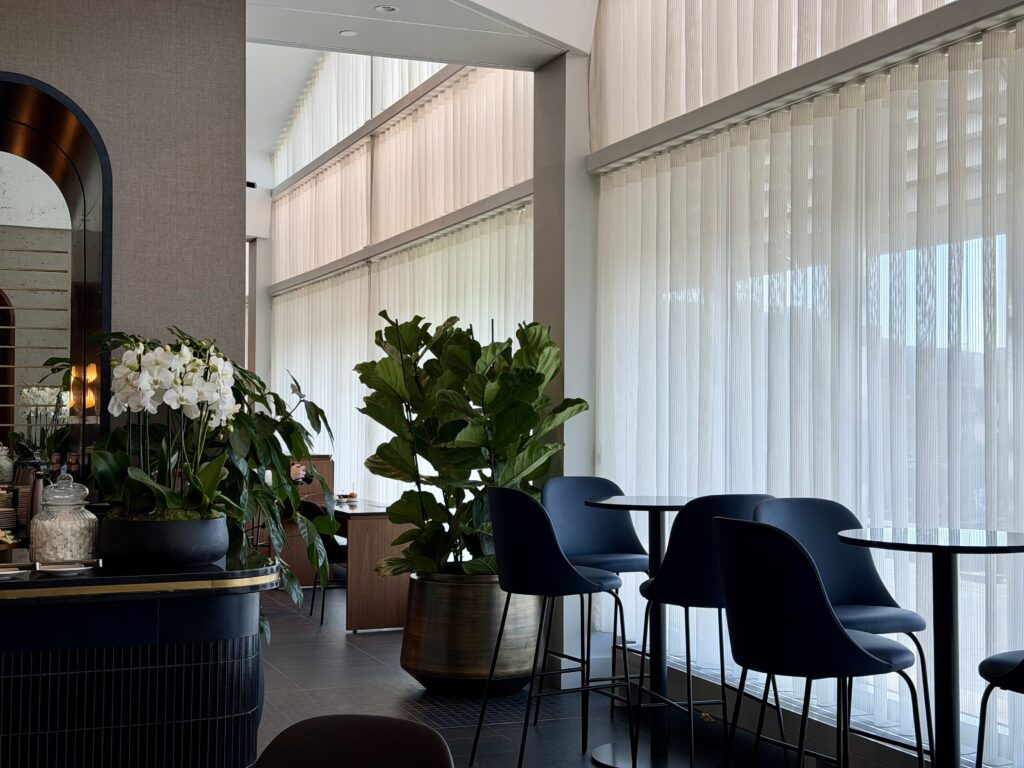
    Moving through the space takes you from general seating to the Blue Roast Coffee Bar, dining area, and eventually the main bar. Additional seating runs along the perimeter beside the windows.

    Then there are details that are easier to miss.

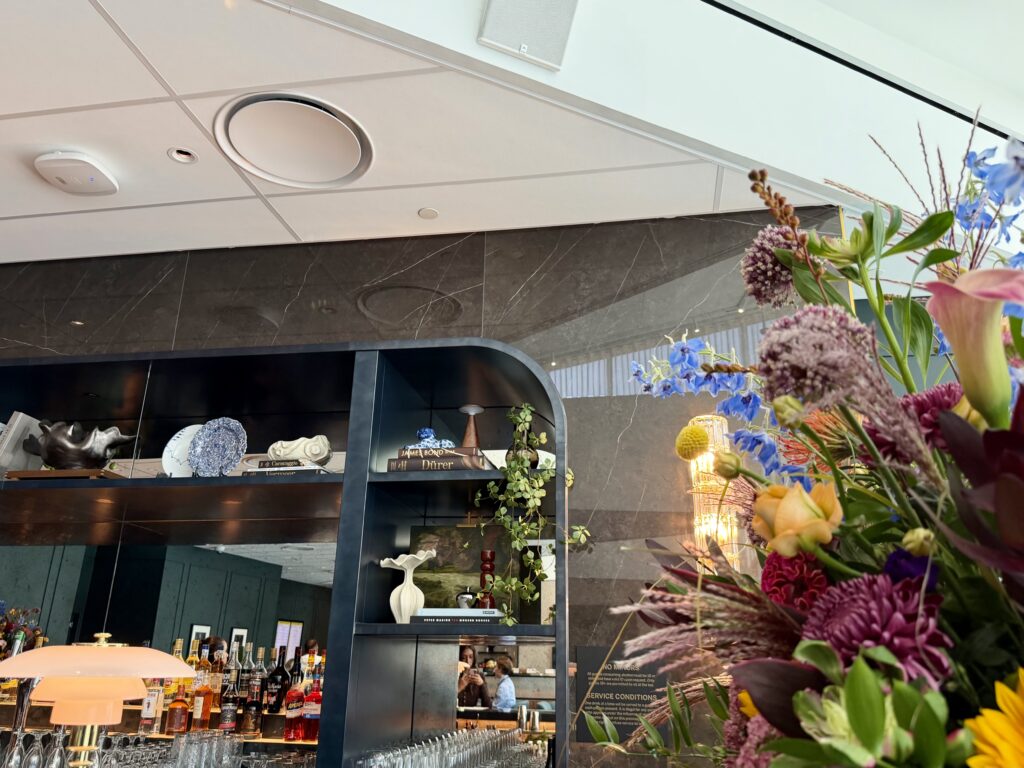
    For instance, Amex has made a habit of hiding a bulldog statue in its Centurion Lounges. Amsterdam’s version sits above the bar, rendered appropriately in Delft style.

    Bar at the Amex Centurion Lounge AMS.
    TYLER GLATT / POINTS INSIDER

    Coffee Is Getting More Attention

    One of the most prominent parts of the lounge isn’t the traditional Centurion bar.

    It’s the coffee bar.

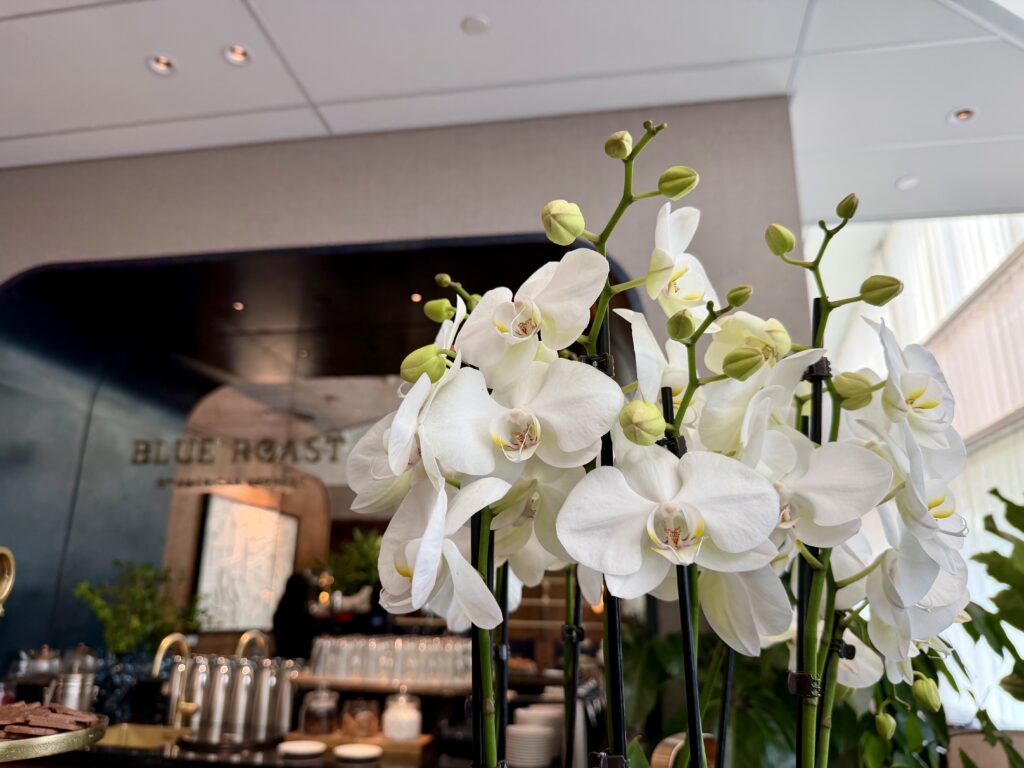
    Amsterdam is the fourth Centurion Lounge to feature Amex’s Blue Roast Coffee Bar, following Seattle, New York-JFK, and Salt Lake City. The branding carries over, but the coffee and tea are sourced locally and brewed fresh by a barista behind the counter.

    Coffee bar at the Amex Centurion Lounge AMS.
    TYLER GLATT / POINTS INSIDER

    There’s also another reason Amex is putting more emphasis on coffee.

    The Global Lounge team said it’s seeing customers drink less alcohol and show more interest in coffee and nonalcoholic beverages. That’s beginning to influence what Amex prioritizes inside its lounges.

    The full-service bar isn’t going anywhere, and Amsterdam has one of those, too. But Blue Roast gets its own dedicated space rather than feeling like an extension of the dining area.

    Bar at the Amex Centurion Lounge AMS.
    TYLER GLATT / POINTS INSIDER

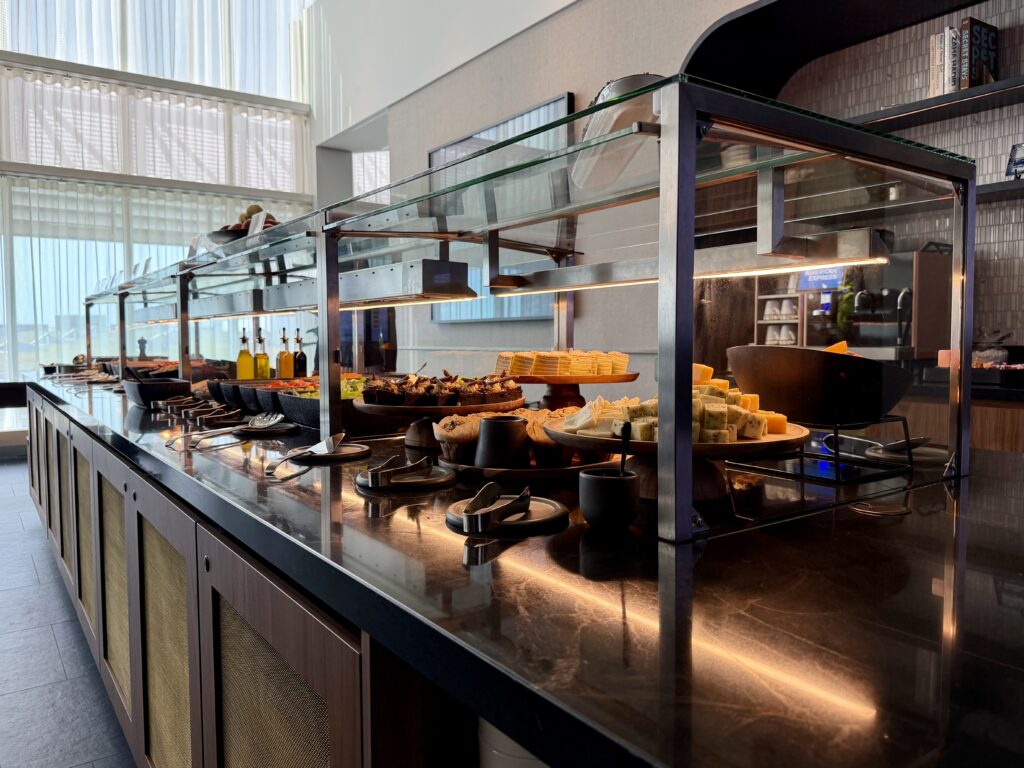
    Food is another important part of the Centurion Lounge experience. Amex even went so far as to call it a main draw.

    The Amsterdam menu mixes global and European flavors with Dutch staples, like bitterballen. Amex also mentioned herring and eel as examples of regional European dishes that will be served, although it wasn’t clear when or how often those will appear once the lounge opens.

    Some dishes are expected to rotate roughly every three weeks, while other staples will stay.

    Like the design itself, the food gives Amex another way to make the lounge feel connected to Amsterdam without changing the basic Centurion Lounge formula.

    Buffet at the Amex Centurion Lounge AMS.
    TYLER GLATT / POINTS INSIDER

    Making the Most of 6,000 Square Feet

    The Amsterdam lounge is noticeably smaller than some of the newer Centurion Lounges Amex has opened in the U.S.

    There’s a fairly simple reason for that. Airport real estate doesn’t grow on trees. And Amex’s team isn’t shy about saying that lounge development often comes down to what space an airport can make available.

    Seating and foliage at the Amex Centurion Lounge AMS.
    TYLER GLATT / POINTS INSIDER

    At Schiphol, space is particularly hard to come by.

    The existing architecture ended up working in Amex’s favor. Instead of one large seating area, the lounge progresses through smaller spaces for seating, coffee, dining, and the main bar. Combined with the tall ceilings and natural light, the layout keeps the footprint from feeling compressed.

    Patrick McGinley, Amex’s director and design and construction program manager for Centurion Lounges, said the finished product turned out better than he originally expected.

    Seating and foliage at the Amex Centurion Lounge AMS.
    TYLER GLATT / POINTS INSIDER

    Amex worked closely with Schiphol and Dutch partners to get the lounge built, and indicated that it expects to stay in touch with the airport if opportunities for additional space come along later.

    There’s nothing more concrete than that for now. But even ahead of the official opening, Amex isn’t ready to close the loop on what the lounge could eventually become.

    Why Amsterdam Makes Sense for Amex

    The opening is also another step in taking a Centurion Lounge network that has historically been concentrated in the U.S. farther abroad.

    Members of Amex’s Global Lounge team pointed to growth in the company’s international business and demand for lounges in more parts of the world.

    Schiphol is important both for people beginning trips in the Netherlands and for those passing through one of Europe’s biggest connecting hubs. Amex expects the lounge to draw a mix of U.S. and international Platinum Card Members, without a necessarily particular tilt toward either group.

    Seating at the Amex Centurion Lounge AMS.
    TYLER GLATT / POINTS INSIDER

    There’s also a notable network effect from the U.S.

    Several major U.S. gateways with nonstop service to Amsterdam already have Centurion Lounges. Platinum Card Members have access to a much broader collection of lounges around the world through the American Express Global Lounge Collection, but Amsterdam extends Amex’s own Centurion brand farther along those trips.

    Someone leaving a U.S. gateway with a Centurion Lounge, such as Atlanta or New York-JFK, can now see that same Centurion logo again while passing through Schiphol, just as they can in London, Tokyo, and elsewhere.

    And at 33 locations, the network is pretty substantial in its own right. The Centurion Lounge footprint rivals or even exceeds the proprietary lounge networks of some airlines.

    But that doesn’t mean Amex is about to start opening lounges across Europe or the rest of the world at the same pace it has in the U.S.

    Seating at the Amex Centurion Lounge AMS.
    TYLER GLATT / POINTS INSIDER

    The Global Lounge team was pretty careful on that point. International growth has made additional markets attractive, and there’s demand to put lounges in more places. Over the long term, some additional balance between the domestic and international network makes sense, but Amex isn’t looking to swing too far in either direction.

    Expansion isn’t the only focus, either. Lounges in Boston, Newark, and a Sidecar location in Charlotte are on the way, but Amex is also reinvesting in existing locations. Dallas Fort Worth, one of the older outposts in the Centurion network, is getting a revamped and larger lounge as part of that effort.

    That mix of new locations and updates to existing ones is shaping the network as it grows. And Amsterdam just happens to be the newest piece and the first in continental Europe.

    Foliage at the Amex Centurion Lounge AMS.
    TYLER GLATT / POINTS INSIDER

    But for all the significance Amex places on the opening, the lounge itself isn’t trying particularly hard to make a statement about it. It’s still recognizably a Centurion Lounge. The Amsterdam part comes through in the colors, artwork, coffee, food, and little details scattered around the space.

    It’s distinctly Amsterdam, without being too on the nose.

  • Air France Is Opening Its Largest International Lounge at New York-JFK

    Air France Is Opening Its Largest International Lounge at New York-JFK

    Air France is getting a much bigger home at New York-JFK.

    The airline announced September 15 that it will move its JFK flights into the airport’s New Terminal One starting next year. Along with the move, Air France plans to open a new lounge spanning more than 2,700 square meters, or roughly 29,000 square feet.

    It will be the largest lounge in Air France’s international network, with more than 400 seats spread across two levels.

    Air France already operates a lounge in JFK’s existing Terminal 1, so this isn’t a new addition as much as a major upgrade. The current lounge includes dining, showers, a Clarins treatment area, and dedicated services for La Première passengers.

    The new space will take that considerably further.

    What to Expect From Air France’s New JFK Lounge

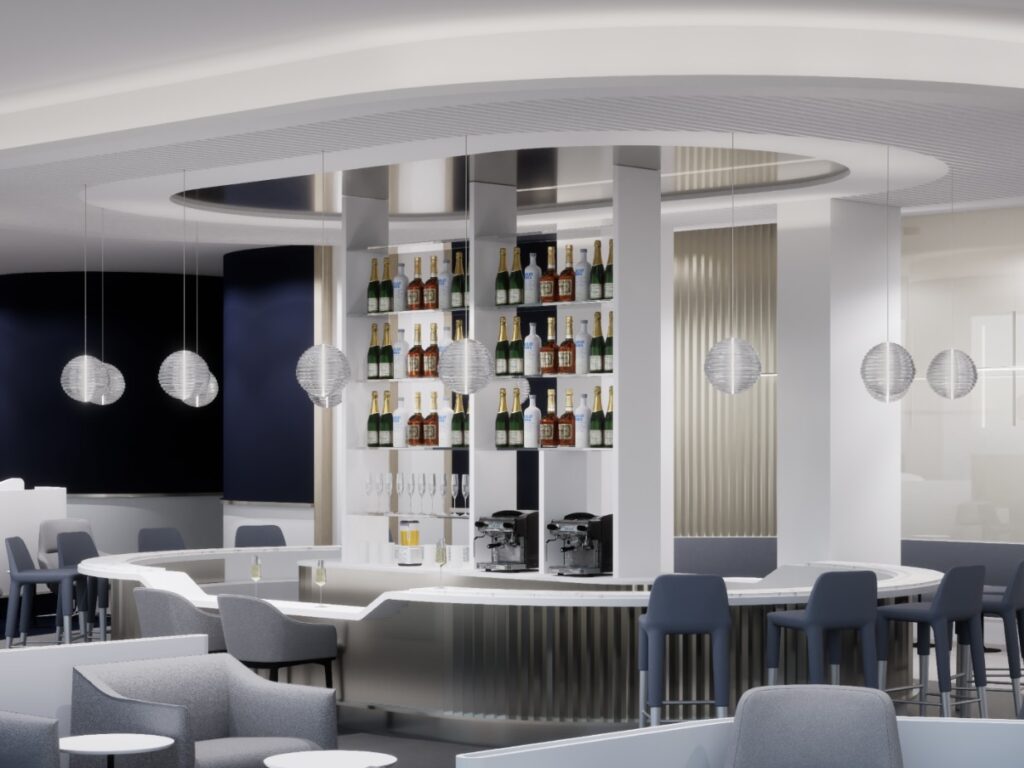
    Air France hasn’t revealed every detail of the lounge yet. So far, the airline has released a rendering of the bar along with some early details about what will be inside.

    The two-level lounge will include multiple dining areas focused on French cuisine, a bar serving French wines and Champagne, and dedicated spaces for working, relaxing, and beauty treatments.

    Rendering of the Air France lounge at JFK.
    AIR FRANCE

    There will also be an exclusive area for Flying Blue Ultimate members.

    La Première passengers will get a separate space of their own, including a dedicated dining experience created for the airline’s first class customers. Air France says the lounge will be part of a more personalized La Première airport experience extending from arrival at New Terminal One through boarding.

    Who Will Have Access to the New Lounge?

    The lounge will be open to Air France La Première and eligible business class passengers, although Business Light fares won’t include access.

    SkyTeam Elite Plus members will also be eligible, along with qualifying passengers flying KLM and other SkyTeam partner airlines.

    And Air France has plenty of passengers to accommodate at JFK. During the summer season, the airline operates up to six daily flights between JFK and Paris Charles de Gaulle (CDG), in addition to three flights operated by transatlantic joint-venture partner Delta Air Lines.

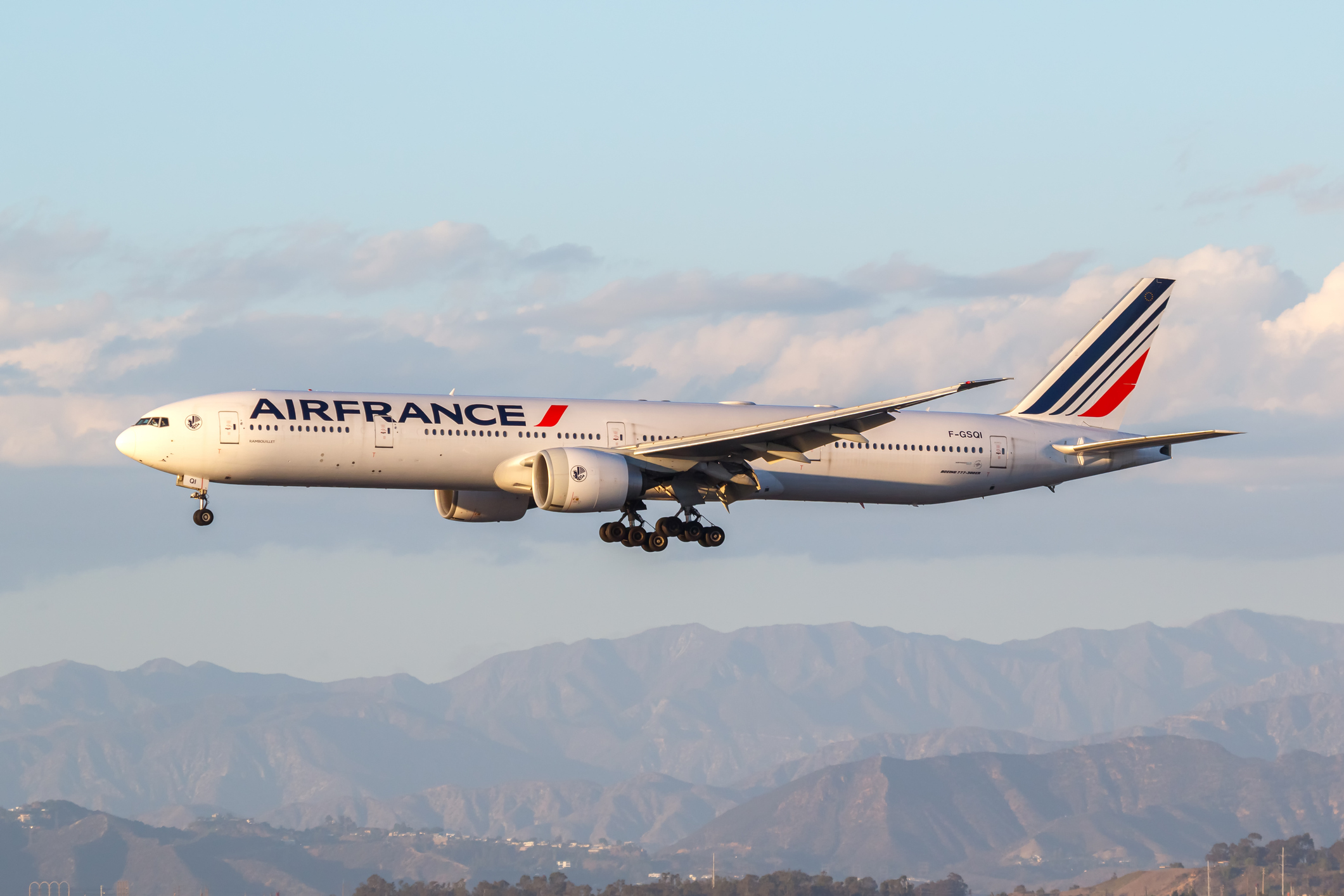
    Four of those daily Air France flights are operated by Boeing 777-300ERs equipped with the airline’s new La Première cabin.

    Air France Is Moving Into JFK’s New Terminal One

    The lounge is part of a much larger change underway at JFK.

    New Terminal One is being built as part of the airport’s $19 billion redevelopment and will eventually replace the existing Terminal 1. Air France plans to move all of its JFK operations there beginning next year.

    For Air France passengers, that also means the existing lounge’s days are numbered. Its replacement will be substantially larger and built around the airline’s latest premium products, including La Première.

    There’s still plenty Air France hasn’t shown, including what most of the lounge will actually look like. But at nearly 29,000 square feet and with room for more than 400 guests, the new space will be a major step up from Air France’s current JFK lounge.

  • American’s Strangest Premium Plane Is Starting to Disappear

    American’s Strangest Premium Plane Is Starting to Disappear

    American Airlines has made no secret of its interest in premium customers of late.

    New planes are arriving with private business class suites, existing ones are being reconfigured with more seats up front, and the airline is investing in lounges and other parts of the experience meant to convince people to spend more when they fly.

    Which makes the slow disappearance of the Airbus A321T a curious thing to watch.

    For more than a decade, American has flown a small number of these unusually configured planes primarily between New York and Los Angeles and San Francisco. There are only 102 seats onboard, and 30 of them turn into beds, an almost absurd amount of space to devote to premium passengers on a narrowbody flying within the United States.

    Now they’re disappearing.

    American Airlines A321T business class.
    TYLER GLATT / POINTS INSIDER

    American’s new Airbus A321XLR is taking over more transcontinental flying, and individual A321Ts are already being pulled out to be reconfigured with much more conventional interiors. Earlier this week, yet another flew to El Salvador to begin that process.

    The following day, I was sitting in business class on another A321T headed across the country to Los Angeles.

    It was a good place to consider what American is replacing, and what it isn’t.

    The A321T Was Never Meant to Be Normal

    When American introduced the A321T in late 2013, the airline was fighting hard for premium customers flying between New York and California.

    Its answer was an airplane built around them.

    At the front were 10 first-class seats, each with direct aisle access and enough room to turn into a bed. Behind them were 20 more lie-flat seats in business class. Even economy was unusual, with 36 extra-legroom seats and only 36 standard ones.

    It was an extravagant use of an A321, but that was the point.

    American Airlines A321T first class.
    TYLER GLATT / POINTS INSIDER

    American wasn’t alone in lavishing attention on these routes. United and Delta had their own premium transcontinental products, and JetBlue would bring Mint into the fight. But American’s solution was particularly unusual. Nearly a third of the people onboard could go to sleep in a bed.

    The result was a narrowbody that felt almost deliberately underfilled.

    More than a decade later, American still wants those premium customers. But the airplane built specifically for them is another matter.

    The Part Behind First Class

    The disappearance of the A321T’s Flagship First cabin has gotten plenty of attention, including from us. That’s understandable. A 10-seat first-class cabin on a domestic narrowbody is unusual.

    But sitting a few rows behind it made the focus on first class seem a little incomplete.

    American changed its complimentary elite upgrade policy on August 25. On domestic routes with a distinct premium economy cabin, complimentary upgrades from Main Cabin now stop at premium economy rather than jumping directly to business class. More broadly, complimentary upgrades move passengers forward by one cabin.

    The A321T doesn’t have premium economy. It has Main Cabin, business class, and first class, which meant my complimentary upgrade from economy could move me one cabin forward into business, but not into first.

    That landed me in what may have been the more interesting cabin all along.

    American Airlines A321T business class boarding pass.
    TYLER GLATT / POINTS INSIDER

    The A321T has 20 lie-flat business class seats behind first. They gave American a sizable second cabin full of beds without requiring everyone who wanted to lie flat across the country to buy the most expensive ticket on the plane.

    By 2026 standards, the seats themselves aren’t particularly cutting-edge. They’re arranged 2-2, so half the cabin lacks direct aisle access, and years of flying back and forth across the country are beginning to show.

    Mine certainly had some character.

    American Airlines A321T business class.
    TYLER GLATT / POINTS INSIDER

    A gate agent let me know before boarding that something at the seat wasn’t working correctly, though it was never entirely clear whether she meant the entertainment screen, its remote, or something else. One of the armrests had also developed a considerable amount of bounce.

    Once we left New York, though, I put the seat into its lounge position and settled in. Later, it went completely flat.

    There are newer and more private ways to cross the country now. But lying there, the thing that stood out about the A321T wasn’t really the seat. It was how many lie-flat seats American had been willing to install.

    American Airlines A321T business class.
    TYLER GLATT / POINTS INSIDER

    Thirty Beds on an Airplane With 102 Seats

    That’s what makes the A321T difficult to replace, even with something newer.

    American’s A321XLR has plenty going for it. There are 20 Flagship Suites with direct aisle access and privacy doors, plus 12 premium economy seats. The airplane can also fly international routes that were never part of the A321T’s job.

    And it carries 155 people.

    The comparison says more about the A321T than it does the XLR. For all the attention paid to its first-class cabin, what really made this airplane unusual was the amount of room American was willing to devote to relatively few passengers.

    That has practical consequences as these planes disappear. There will be fewer lie-flat seats on each flight. That doesn’t mean awards will suddenly cost more or upgrades will become impossible. There are too many other factors at play. But for anyone accustomed to using miles or status to get into one, there will simply be fewer places to land.

    American says Flagship First will stop being sold on transcontinental routes as more XLRs enter the fleet. And unlike a traditional retirement, the A321Ts themselves aren’t necessarily going anywhere. They’re being reconfigured and returned to American’s fleet as much more ordinary A321s.

    That’s perhaps the strangest part of watching them disappear. The airplanes will still be around. What made them special won’t be.

    American still wants the premium customers the A321T was built to attract. It just doesn’t need an airplane quite this extravagant to get them anymore.

  • SWISS Is Adding Another Airbus A350 With Its Newest Cabins

    SWISS Is Adding Another Airbus A350 With Its Newest Cabins

    SWISS is about to have a third Airbus A350 in its fleet.

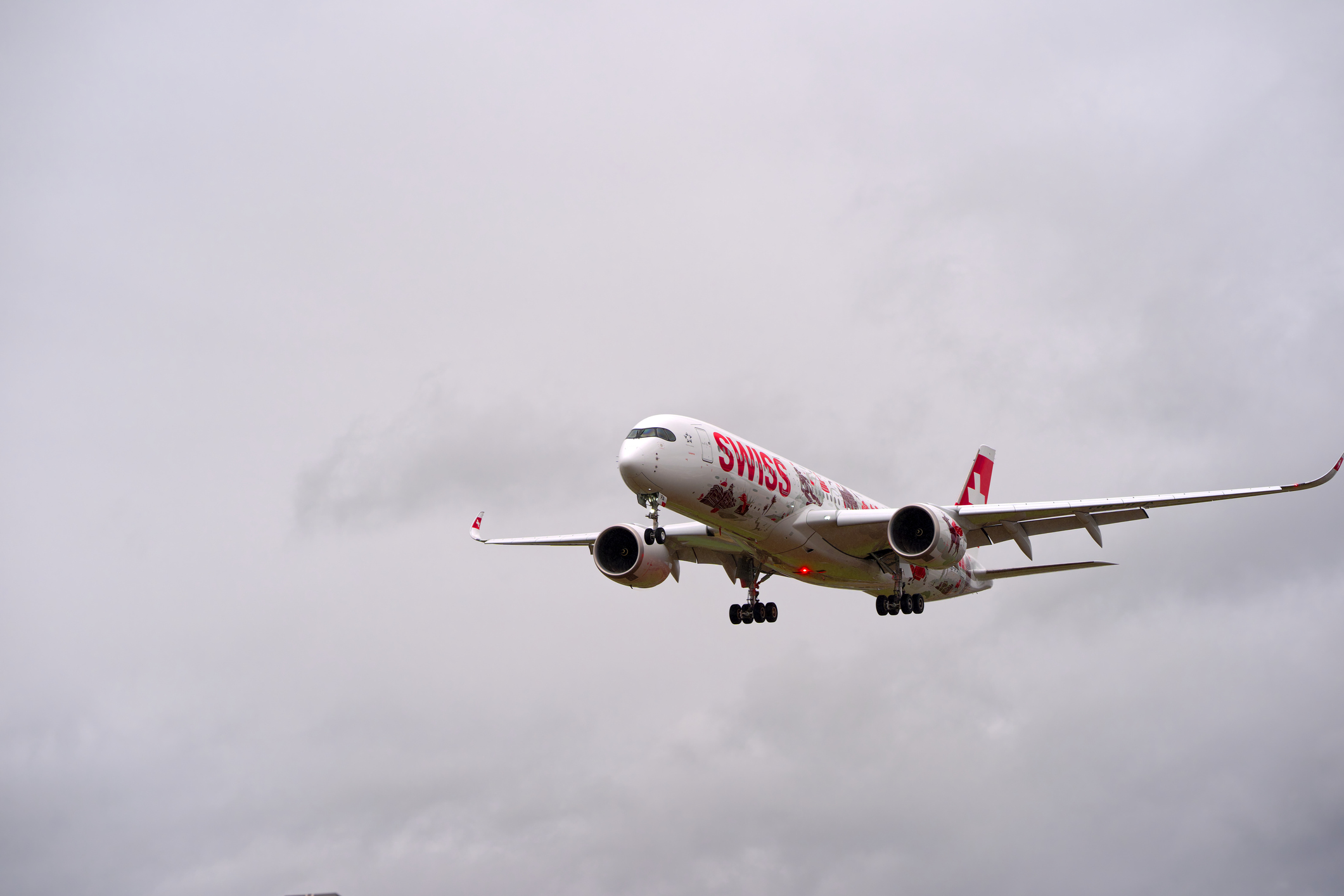
    The airline announced that it expects its newest A350-900 to arrive in Zurich on Saturday, September 12, following a delivery flight from Airbus in Toulouse. The aircraft, registered HB-IFC and named Zug, is scheduled to land around 9:30 a.m. local time.

    Three airplanes isn’t a huge fleet. But SWISS only has 10 A350s on order, which means 30% of them will have arrived once Zug touches down in Zurich.

    SWISS is also bringing its newest cabins to some older aircraft through retrofits. The difference with the A350 is that each one arrives from the factory with the entire new SWISS Senses interior already installed.

    SWISS Is Slowly Getting More of Its New Cabins

    SWISS introduced the A350 in 2025 with its new SWISS Senses cabins from front to back.

    There are just 243 seats onboard, starting with four first-class suites and 45 business class seats. Another 38 seats are in premium economy, followed by 156 in economy.

    Every delivery puts another full set of SWISS’s newest seats into service as the airline gradually replaces some of its older long-haul aircraft. And with only 10 A350s planned, the arrival of a third is a meaningful step in what is still a relatively small fleet.

    I’ve seen the new interior firsthand. SWISS showed off its first A350 before it entered service last year, and the cabins are a considerable departure from what can still be found across much of the airline’s long-haul fleet.

    The changes aren’t limited to the airplane. SWISS is also updating its experience in Zurich, with two new lounges coming to Dock B in 2027. The roughly 28,000-square-foot project will include separate Business and Senator lounges.

    The third A350 will get a small welcome before it reaches the airport. SWISS says the aircraft is expected to circle over Zug, the city whose name it carries, before making its final approach into Zurich.

    Another A350 Becomes Bookable With Points

    There’s also a practical reason to keep an eye on aircraft deliveries.

    SWISS award seats can be booked through several Star Alliance loyalty programs, including United MileagePlus, Air Canada Aeroplan, and Avianca LifeMiles. That means Miles & More isn’t the only option for booking a SWISS flight with points or miles.

    Each new A350 therefore puts another aircraft with SWISS’s newest first, business, premium economy, and economy cabins into the mix when searching for an award with points and miles.

    Seven A350s are still to come. But with the third arriving Saturday, SWISS is getting closer to the point where its newest long-haul cabins aren’t quite as difficult to find.