Timely coverage of major developments in travel, loyalty programs, airlines, hotels, and credit cards. News should answer what happened and why it matters.
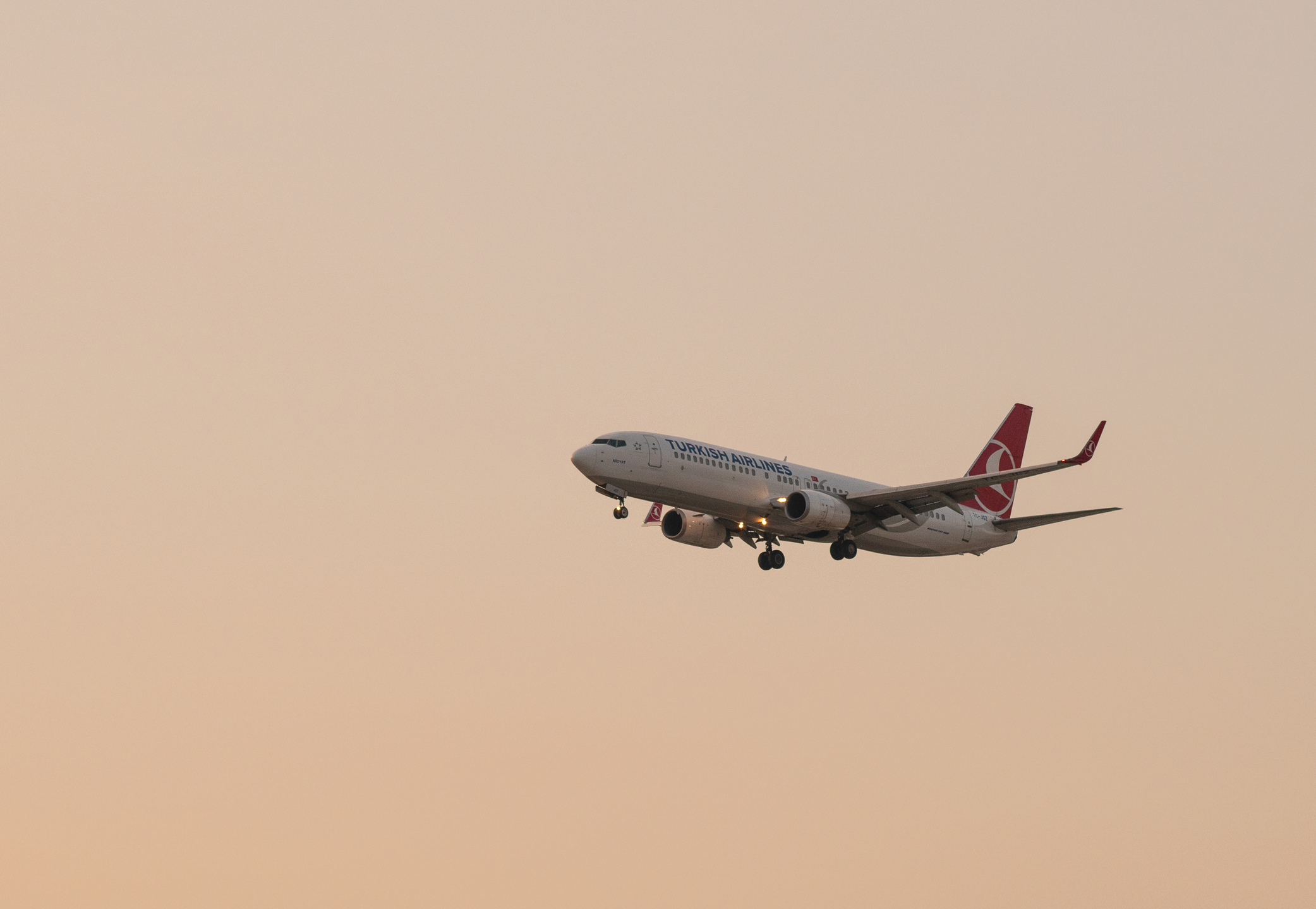
Turkish Airlines is moving ahead with plans to add a lot more airplanes.
The airline finalized an order Wednesday for 100 Boeing 737-8 aircraft, with options for another 50 737 MAX jets. Turkish can also substitute some of those planes for the larger 737-10.
For passengers, the useful part isn’t necessarily the aircraft itself. It’s what Turkish could do with a fleet that continues to get much bigger.
More planes give the airline room to add flights, destinations, and seats over time. Turkish hasn’t said where these particular aircraft will fly, and some could replace older planes rather than represent entirely new capacity.
But this order is part of a much larger growth plan.
Turkish Airlines Is Building Toward More Than 800 Aircraft
The 787 order includes 35 787-9s and 15 of the larger 787-10, which Turkish plans to use to support long-haul growth. Boeing has said the 787 and 737 MAX deals together will double Turkish Airlines’ Boeing fleet.
Turkish has an even bigger target beyond Boeing. The airline wants its overall fleet to exceed 800 aircraft by 2033 while sustaining average annual growth of 6%.
The 737 MAX aircraft are intended for shorter routes, while the additional Dreamliners give Turkish more room to grow long-haul flying. That combination matters at Istanbul, where shorter flights from across the region feed Turkish’s much larger international network.
None of that guarantees more seats on a particular route or the introduction of new ones. But Turkish is planning for a substantially larger fleet, and more aircraft give it more room to add capacity.
Amtrak is Bilt’s first rail transfer partner and its 26th travel partner overall. And the partnership could be particularly useful in situations where taking the train can make more sense than flying.
Bilt Points transfer in increments of 1,000. Members who have earned Bilt status can transfer as few as 1,000 points at a time, while members with entry-level Blue status (which everyone receives when joining Bilt) need to transfer at least 2,000.
Amtrak tickets can start at 400 Guest Rewards points, or 100 points when combining points and cash. Points can also be used for lounge passes starting at 1,500 points and one-class upgrade coupons starting at 2,500 points.
The important number to check before transferring is how many Amtrak points a particular trip requires. Since Bilt Points become half as many Amtrak points, a ticket costing 2,500 Amtrak points would require transferring 5,000 Bilt Points.
Bilt Continues to Expand Beyond Traditional Travel Rewards
Amtrak also fits into something broader happening at Bilt.
Airline and hotel transfers are still a big part of the program, but Bilt has increasingly added ways to use points outside the usual airline-hotel playbook. Points can go toward fitness classes, student loan payments, and other expenses tied more closely to everyday life.
Train travel fits neatly into that expansion. It’s transportation, but for plenty of people, especially along the Northeast Corridor, it’s also part of life in a way that an airline transfer partner might not be.
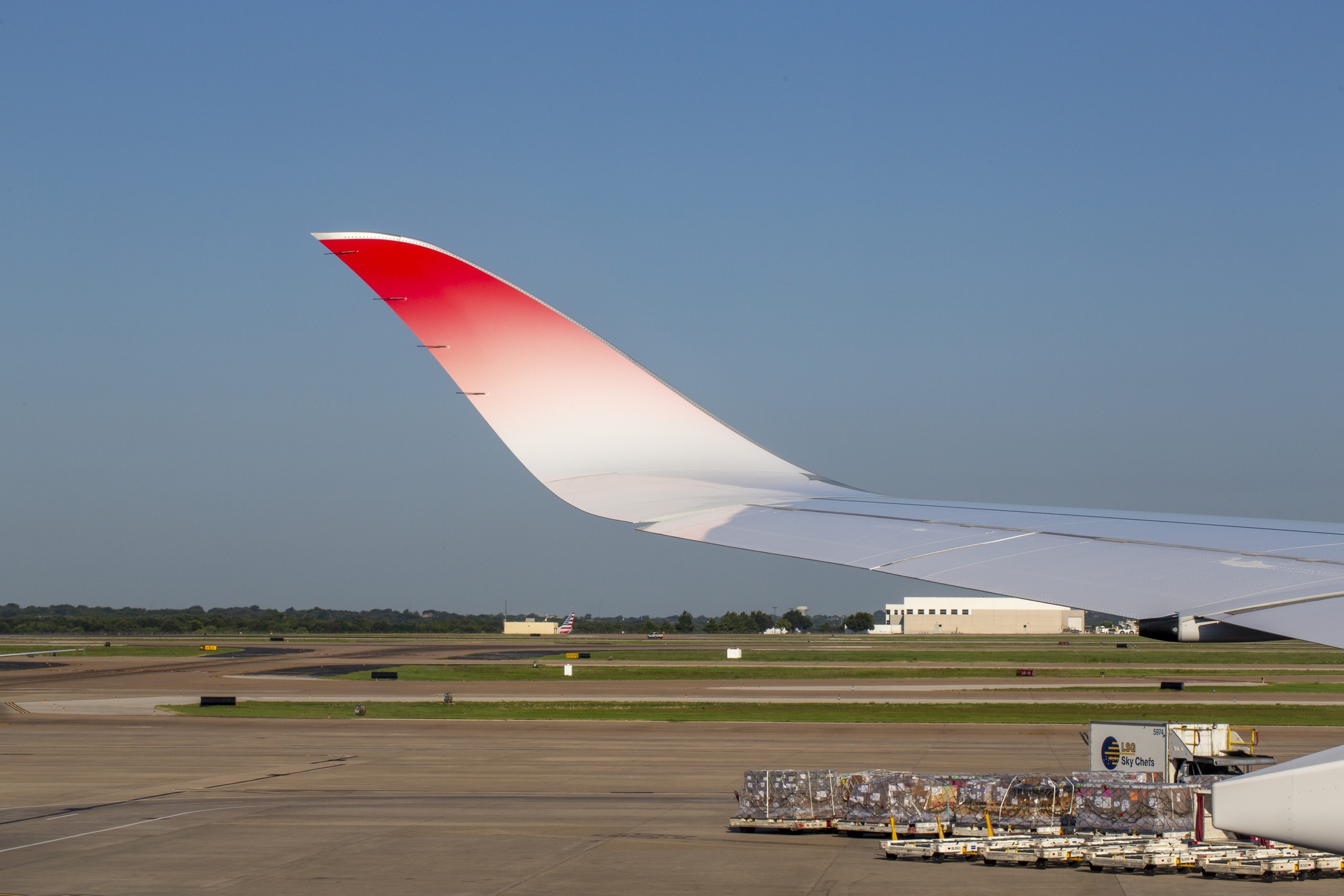
Japan Airlines miles used to be a little harder to come by in the U.S.
Flying JAL was one way to earn them, and transferring hotel points was another. But for most people earning points through credit cards, Mileage Bank wasn’t an obvious program to use.
That’s changing quickly.
Citi ThankYou Rewards became the latest program to add Japan Airlines Mileage Bank as a transfer partner on September 20. Bilt, Capital One, and Rove also transfer directly to JAL. Hotel programs like Marriott Bonvoy and Accor Live Limitless add a few more options.
For most Citi cardholders who can transfer ThankYou points to airlines, the new JAL partnership is 1:1. That means 1,000 Citi points become 1,000 JAL miles. Cardholders with Citi’s no-annual-fee cards get a lower 1:0.7 ratio, turning 1,000 points into 700 miles.
But why care about JAL miles in the first place?
Japan has been one of the most searched international destinations among PointsYeah users. JAL flies there nonstop from several U.S. cities, and its miles can be used to book those flights. They can also be used for flights on partner airlines, including American Airlines and other Oneworld carriers.
So there’s a lot more that can be booked with JAL miles than the name might suggest.
There are also a few things worth knowing before transferring points over.
That 55,000-Mile Business-Class Award Has an Asterisk
Between North America and Japan, a one-way flight starts at 27,000 miles in economy, 40,000 in premium economy, and 55,000 in business class.
Those are the starting prices. What shows up when searching can look very different.
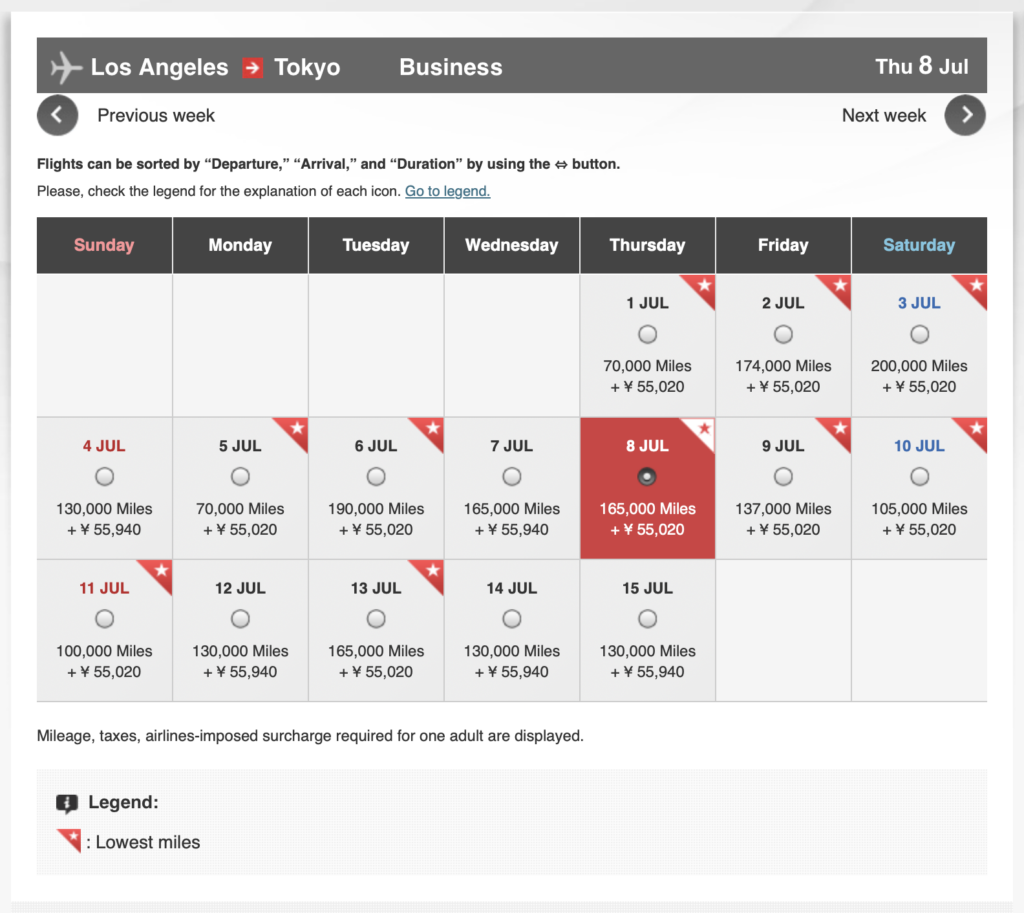
JAL uses a system called Award Ticket PLUS. If the cheapest award seats are all booked up, the airline can sometimes make another seat available for more miles. The price rises based on how many seats JAL expects to have left.
I searched from Los Angeles to Tokyo and saw just about every outcome. Several dates had no business-class awards available. Some flights checked in around 80,000 miles. Plenty approached 200,000. Others were somewhere in the middle.
JAPAN AIRLINES
And 200,000 isn’t the ceiling.
JAL’s award chart shows that a business-class award from Los Angeles can climb as high as 421,500 miles with PLUS. From Dallas, the maximum is 509,500 miles.
Those are extreme examples, but they illustrate why it’s worth searching before transferring points. A flight that starts at 55,000 miles on the chart may cost considerably more on the date you want to travel.
First class follows different rules. JAL doesn’t use PLUS there, but prices change depending on the season. Los Angeles to Japan currently ranges from 110,000 miles one way during low season to 140,000 during high season.
There’s cash to pay on top of the miles, too. JAL currently lists fuel surcharges starting at $320 one way between North America and Japan, plus taxes and fees.
JAL Miles Aren’t Just for JAL
There’s another reason all these new transfer options matter.
Mileage Bank miles can be used to book flights on partner airlines, including American Airlines, Alaska Airlines, British Airways, and Cathay Pacific. Instead of PLUS, these awards are priced based on the total distance of the trip.
For example, a partner trip covering 2,001 to 4,000 miles costs 23,000 miles in economy or 42,000 in business class. A flight from New York to Los Angeles falls within that distance band.
Longer trips cost more. An itinerary covering 6,001 to 8,000 miles costs 45,000 miles in economy or 80,000 in business class.
BOARDING1NOW / ISTOCK
That doesn’t mean JAL will always be the best program for booking those flights. There still needs to be an award seat available, and it’s worth comparing the price with other programs before transferring anything.
But JAL Mileage Bank is suddenly relevant to a much bigger group of people.
That’s really what makes Citi’s addition interesting. It isn’t another transfer partner to memorize. It’s another way into a program that can book flights to Japan and plenty of flights that never touch Japan at all.
The useful part is knowing it’s there when one of those awards turns up.
Southwest Airlines has changed considerably over the past year and a half, from assigned seating and extra-legroom seats to bag fees. But the airline isn’t finished reshaping the guest experience.
Starlink Is Coming to Hundreds of Southwest Planes
Southwest recently began installing Starlink, and the rollout is moving quickly.
Doxey said the airline expects around 300 aircraft to have Starlink installed by the end of this year, with installations continuing into 2027.
That means the faster Wi-Fi should become much easier to find on Southwest flights over the next few months. There will still be some luck involved, though, as plenty of planes will continue offering Southwest’s existing Wi-Fi until they get Starlink.
The airline has already said it plans to start with 11 lounges, and Doxey indicated there could eventually be more. But perhaps more interesting is how far along some of those first locations already are.
Construction has started at some locations, Doxey said, while designs and mock-ups are already taking shape. He suggested that early construction work contributed to the lounge plans becoming something of a “worst-kept secret” before Southwest announced them.
He also hinted that the finished product may not look quite like what some people expect from Southwest.
“I think some people are going to be a little surprised, actually, when they say, ‘Oh, this is the Southwest lounge,’” he said.
Southwest still hasn’t revealed all 11 locations. Doxey didn’t name any additional airports, but said the choices should look “very logical” when looking at a map of Southwest’s network.
A More Premium Southwest Credit Card Is Coming
The lounges also give Southwest something new to offer current and future credit card holders.
Doxey was unusually direct about why Southwest wants one. He called the absence of a top-tier premium card a “hole” in the airline’s current credit card lineup.
For now, details such as the annual fee, other benefits, and launch date are still up in the air. But with lounge construction already underway, both pieces are getting closer.
The Boeing 737 MAX 7 Could Finally Arrive Next Year
Southwest also expects another long-awaited change to its fleet.
The FAA certified the Boeing 737 MAX 7 in August after years of delays. This finally cleared the smaller MAX variant for commercial service.
Southwest already has 27 MAX 7s that were built before certification and have been sitting in storage. Doxey said Boeing is now working to bring those aircraft up to the final approved specifications.
Southwest expects some of those planes to begin arriving around the end of this year before entering passenger service in early 2027.
International Long-Haul Flying Is Still on the Table
One much bigger potential change is less certain.
Southwest executives have repeatedly floated the possibility of eventually flying farther internationally. Doxey confirmed that the airline is still considering it, although no decision has been made.
“We haven’t decided what we’re doing with that particular item,” Doxey said. “But what we have said is that we’re absolutely considering whether that should be part of the offering that we have.”
There are still some big questions to answer, including where Southwest might fly and what aircraft it would use. For now, long-haul flying is something Southwest is considering rather than a firm plan.
But it’s another example of just how different Southwest could look a few years from now. Assigned seating and bag fees are already changing the airline people know today. Add lounges, a higher-end credit card, better Wi-Fi, and perhaps longer international flights, and Southwest starts to look different in ways that go well beyond how boarding works.
American Airlines CEO Robert Isom and CFO Devon May sat down with investors this week at Morgan Stanley’s annual Laguna Conference. The majority of the conversation centered on revenue, fuel prices, and profitability, but there were also several updates that could affect the experience of flying American over the next few years.
Here’s what stood out.
American’s Premium Push Is Still Just Getting Started
American has spent the last several years pushing its product upmarket, with upgraded lounges, more premium seats, and the launch of its new Flagship Suite.
There’s a pretty simple reason why.
Isom said just 30% of American’s seats now account for 50% of the airline’s revenue. And despite all the attention American has placed on premium cabins recently, the airline still considers itself relatively early in that transition.
By the end of the decade, American expects its number of premium seats to grow by roughly 50%.
Some of that growth is already underway. American’s first retrofitted Boeing 777-300ER entered service with a larger Flagship Suite cabin, while Isom said work on the airline’s 777-200ERs will be “moving before you know it.” Airbus A319 and A320 reconfigurations are also beginning to roll out.
The result should be considerably more premium seating across American’s fleet over the next several years, on both its domestic and international jets.
American also appears to be preparing for one of its biggest periods of lounge investment in years.
Isom said customers will see “more new lounge openings at American over the next couple of years than we’ve done in decades.”
Several lounge projects are already underway, but the comment suggests there’s plenty more happening behind the scenes.
That’s worth watching as American puts more emphasis on the experience before a flight, not just the seat onboard.
Free Wi-Fi Is Also Growing AAdvantage
American’s rollout of free Wi-Fi isn’t just about making the flight better.
Isom said AAdvantage enrollments are running at record levels, with much of that growth driven by free Wi-Fi. An AAdvantage membership is required to use the service.
More members also gives American a larger pool of customers for other parts of AAdvantage, particularly its credit card partnership with Citi.
The onboard upgrades still have some distance to go. Isom said a “significant chunk” of American’s fleet will have high-speed Starlink Wi-Fi as the airline moves through 2027. Seatback entertainment will take several years to spread across the fleet.
Some Flights Could Be Trimmed
There was one less exciting update.
Higher fuel prices are causing American to reconsider some of its planned flying. May said the airline will make adjustments to its December schedule and now expects to grow somewhat less in 2027 than it anticipated several months ago.
That doesn’t necessarily mean widespread route cuts. American still sees room to grow its network over the longer term.
But schedules could get a little thinner in the near term as American adjusts to higher fuel costs.
In the aggregate, the comments point to an American that will look different over the next several years. More premium seats and lounges are coming, Wi-Fi and seatback entertainment are spreading across the fleet, and some of that investment is already starting to show up. The immediate question is how much higher fuel prices slow the airline’s plans to grow the network around it.
Chase is making two changes to the Sapphire Reserve for Business, and one is considerably easier to call an upgrade than the other.
The card’s annual statement credit for hotel stays through The Edit by Chase Travel will double from $500 to $1,000 beginning January 1, 2027. Meanwhile, Chase is adding a $1 million annual spending cap to the card’s 3-points-per-dollar earning rate on eligible social media and search engine advertising purchases beginning November 15, 2026.
Here’s what’s changing.
The Edit Credit Doubles, but Takes More Stays to Use
Beginning January 1, the Sapphire Reserve for Business will offer up to $1,000 in annual statement credits for stays booked through The Edit by Chase Travel, up from the current $500.
That’s a meaningful increase, but Chase isn’t handing cardmembers a single $1,000 hotel credit.
Instead, the benefit will be divided into a minimum of four statement credits worth up to $250 per stay. Using the full $1,000 will therefore require at least four qualifying stays during the year.
The Edit is Chase’s collection of higher-end hotels and resorts. Eligible stays also include benefits such as daily breakfast for two, a $100 property credit, and a room upgrade when available.
For businesses already booking several stays through The Edit each year, the additional $500 could be valuable. Those making only one or two eligible stays will have a harder time using the full benefit.
Advertising Spend Gets a $1 Million Cap
The other change goes in the opposite direction.
Beginning November 15, cardmembers will earn 3 points per dollar on the first $1 million spent on eligible social media and search engine advertising each account anniversary year. Spending beyond that threshold will earn the card’s standard 1 point per dollar.
A $1 million annual cap won’t affect most small businesses. But it is still a restriction on one of the card’s business-focused bonus categories, and it could matter for companies with particularly large advertising budgets.
The unusual timing is worth noting, too. For this benefit, Chase defines the first account anniversary year as beginning November 15, 2026, and running through the monthly statement on which the next annual fee appears. Subsequent periods will run for 12 months.
Neither change alters the Sapphire Reserve for Business’s other benefits. But together they make for a mixed update. There’s potentially another $500 a year available through The Edit, provided there are enough qualifying stays to use it, while the advertising category becomes less rewarding after $1 million in annual spending.
American Express is expanding its partnership with airport lounge operator Aspire in Canada. A new co-branded lounge is now open in Calgary and another is coming to Montréal.
The Aspire Amex Lounge at Calgary International Airport (YYC) opened September 16 in the domestic departures area. Another location will open in Montréal-Trudeau International Airport’s (YUL) transborder area by early 2027, serving passengers departing for the U.S.
The expansion follows the first Aspire Amex Lounge, which opened in Montréal’s domestic departures area in September 2025. Amex says that location has recorded more than 50,000 cardmember visits since opening.
Once the new Montréal location opens, the Aspire Amex network in Canada will include three lounges across two airports.
These Lounges Aren’t Just for Canadian Amex Cardmembers
These aren’t Centurion Lounges. They’re Aspire lounges operated by Swissport, with Amex partnering with Aspire to provide additional benefits for eligible cardmembers.
But access isn’t limited to Canadian Amex cards. Aspire lounges also participate in Priority Pass, which is a benefit of several U.S. credit cards, including The Platinum Card® from American Express.
U.S. Platinum Card members need to enroll in Priority Pass before using the benefit. Access requires a Priority Pass membership card and same-day boarding pass.
Eligible Amex cardmembers receive priority lounge and waitlist access at Aspire Amex Lounges. The lounges also offer a mix of buffet options and tableside ordering.
The upcoming Montréal location could be especially useful for U.S.-bound passengers. It will sit in the airport’s transborder area, while the existing Aspire Amex Lounge serves domestic departures.
With Calgary now open and a second Montréal location coming, the partnership is expanding from one lounge last year to three across two Canadian airports.
The Chase Sapphire Reserve is turning 10, and Chase is marking the occasion with several limited-time travel offers and an upgrade to one of the card’s existing benefits.
The most lasting change is coming to its DoorDash perk. Beginning October 1, 2026, the current $5 monthly restaurant credit will increase to $15 and become usable on all eligible DoorDash orders.
Chase is also rolling out limited-time statement credit offers with IHG, Hyatt, JSX, Wander, and SIXT.
Here’s what’s new and what’s on offer.
The DoorDash Credit Is Getting More Useful
Beginning October 1, Sapphire Reserve cardmembers with an eligible DashPass membership will receive a $15 monthly DoorDash credit that can be used on eligible DoorDash orders.
That’s an increase from the current $5 monthly restaurant credit, and the restriction to restaurant orders is going away.
The card’s two existing $10 monthly non-restaurant DoorDash promotions aren’t changing. Combined, that means eligible cardmembers can receive up to $35 in DoorDash value each month.
Chase says the updated benefits will be available through December 31, 2029.
Getting the full $35 in value still means using DoorDash multiple times each month. But the larger and more flexible $15 credit should be easier to use than the benefit it replaces.
Sapphire Reserve Adds Limited-Time Travel Credits
The anniversary also brings several travel offers for existing Sapphire Reserve cardmembers. Activation is required, and each comes with its own spending requirement.
$125 back at IHG Hotels & Resorts after spending at least $500 on an eligible U.S. stay. Payment must be completed by October 16, 2026.
$250 back at Miraval and Alila after spending $1,000 at participating U.S. properties that are part of World of Hyatt. Payment must be completed by December 14, 2026.
$200 back with JSX after spending $200 on a semi-private flight by December 14, 2026.
$350 back with Wander after spending $1,500 on a vacation home by December 14, 2026.
$125 back with SIXT after spending $500 on a premium car rental by December 14, 2026. Chase says this offer is available to eligible cardmembers as of August 25, 2026.
There’s one additional detail to know before booking. These anniversary offers apply when booking or paying directly with the participating partner, not through Chase Travel.
And some of the discounts are sizable if an eligible purchase was already in the plans. The JSX offer covers a $200 purchase entirely, while the IHG and SIXT offers amount to 25% back when spending exactly the required amount.
Chase Is Also Giving Away Ultimate Rewards Points
Chase is also running an anniversary contest from September 16 through November 6.
Cardmembers can share a favorite trip taken since 2016 for a chance to be one of 10 finalists. The grand-prize winner will receive 5.5 million Ultimate Rewards points, while the other nine finalists will each receive 500,000 points.
The contest comes with the biggest number, but the DoorDash change and anniversary travel offers are likely to matter more for most existing cardmembers. The travel offers are temporary and require activation, while the expanded DoorDash benefit begins October 1 and is slated to stick around through the end of 2029.
American Express is bringing a Centurion Lounge to continental Europe for the first time.
The 33rd Centurion Lounge opens Thursday, September 17, at Amsterdam Airport Schiphol (AMS). It’s in the airport’s non-Schengen zone between Concourses E and F. And the entryway is just up the stairs near the Lounge No. 50 sign.
At nearly 6,000 square feet, Amsterdam is far from the largest Centurion Lounge in the issuer’s network. But after walking through the space ahead of its opening, it doesn’t feel quite as small as that number suggests.
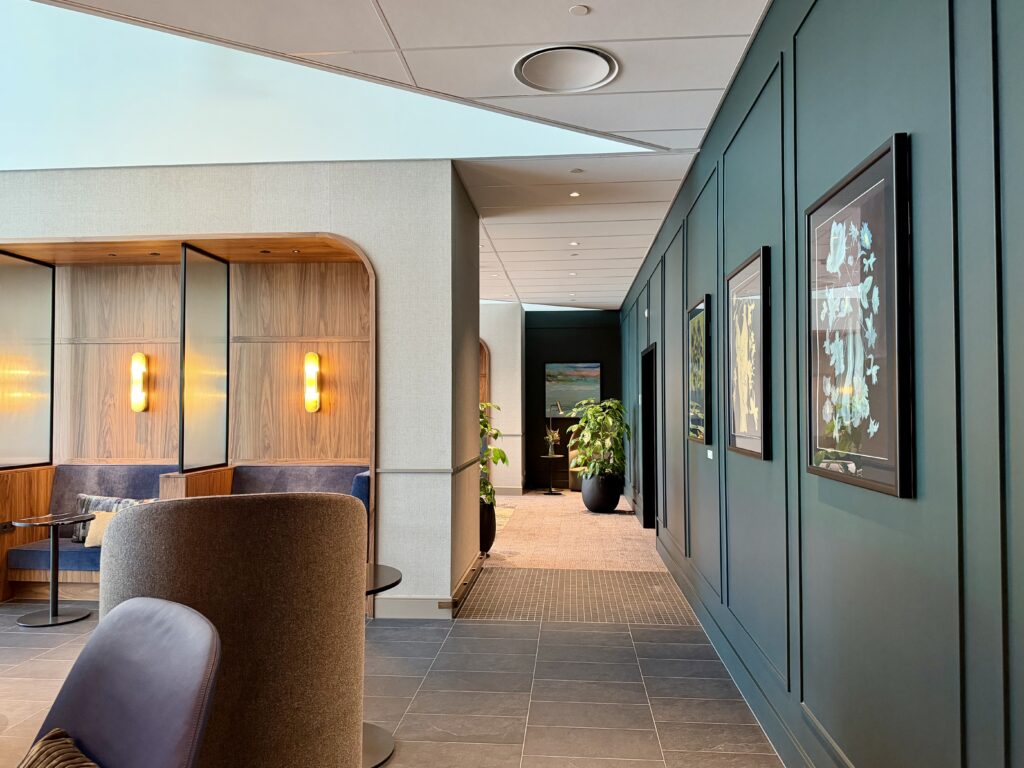
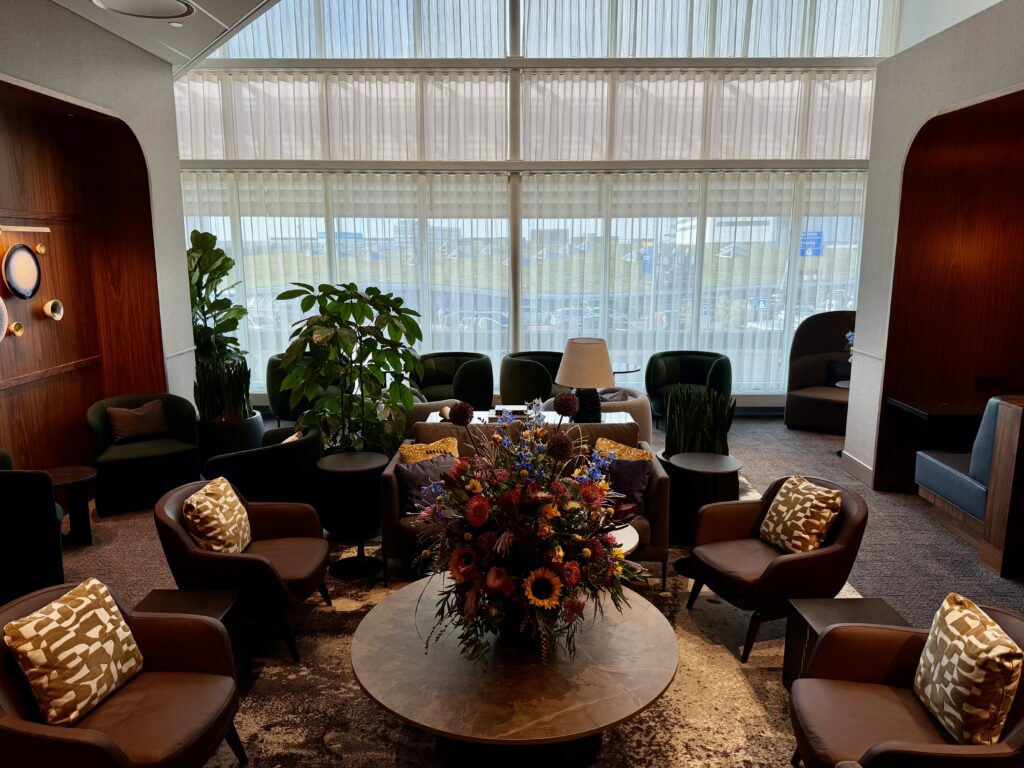
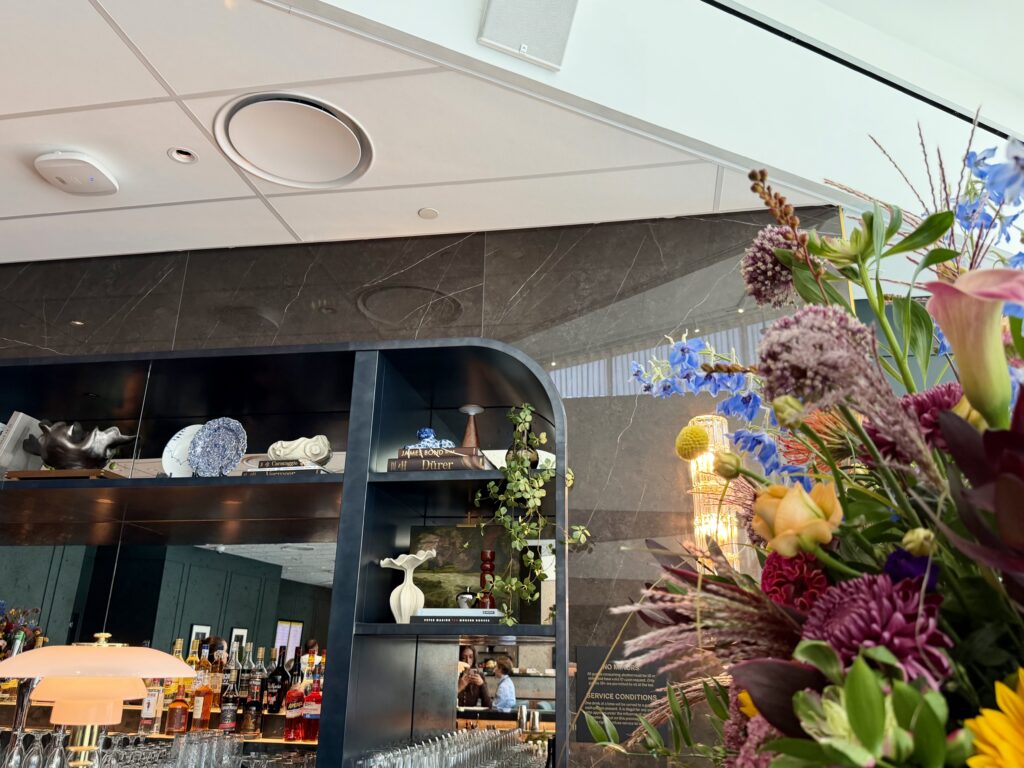
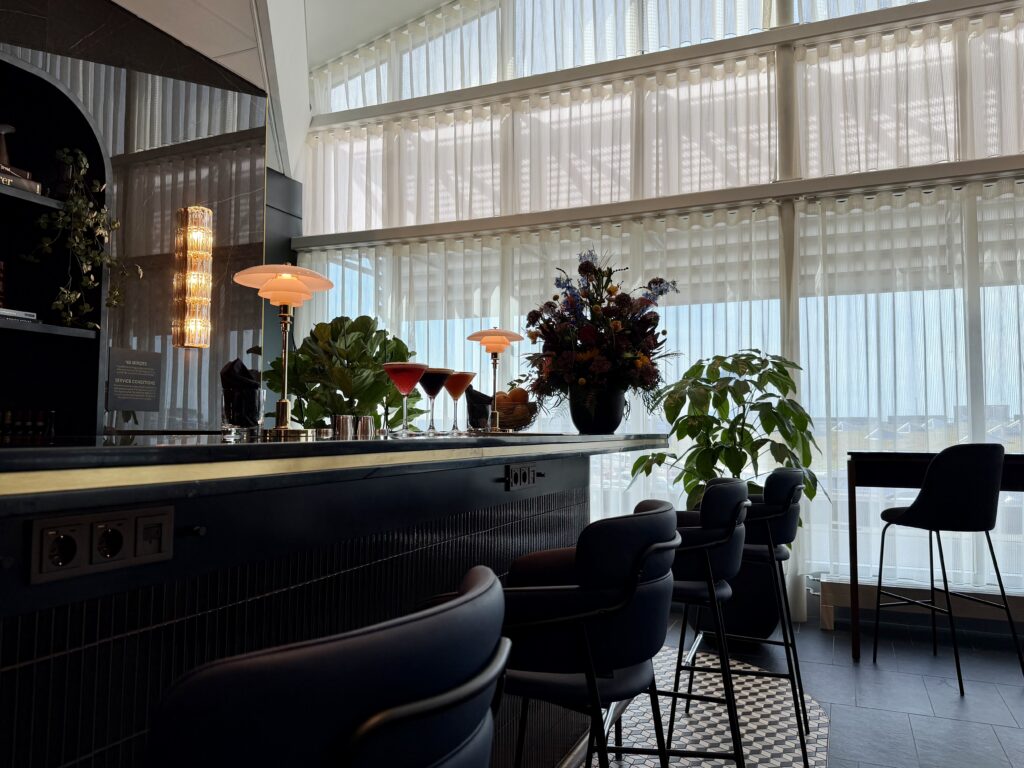
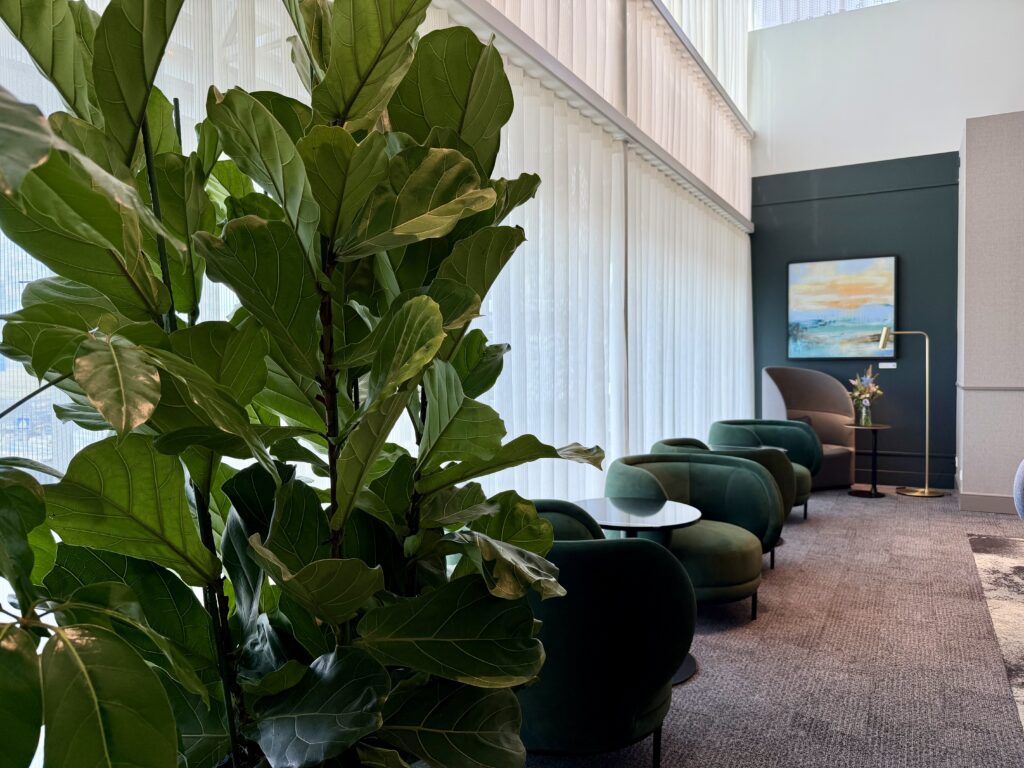
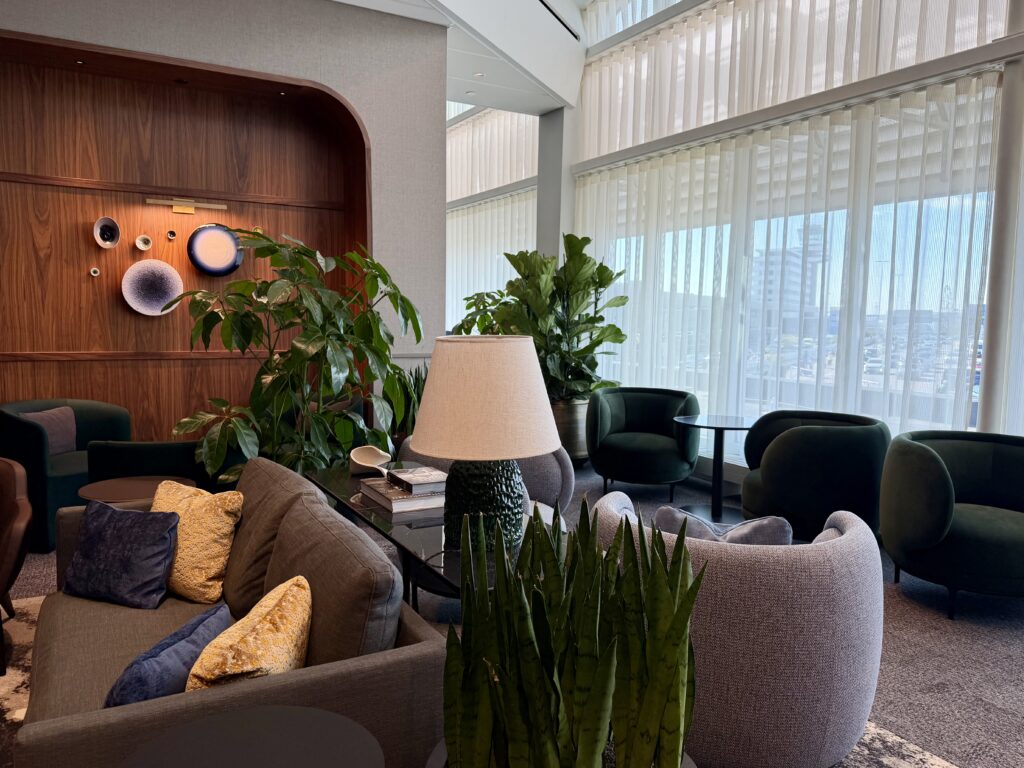
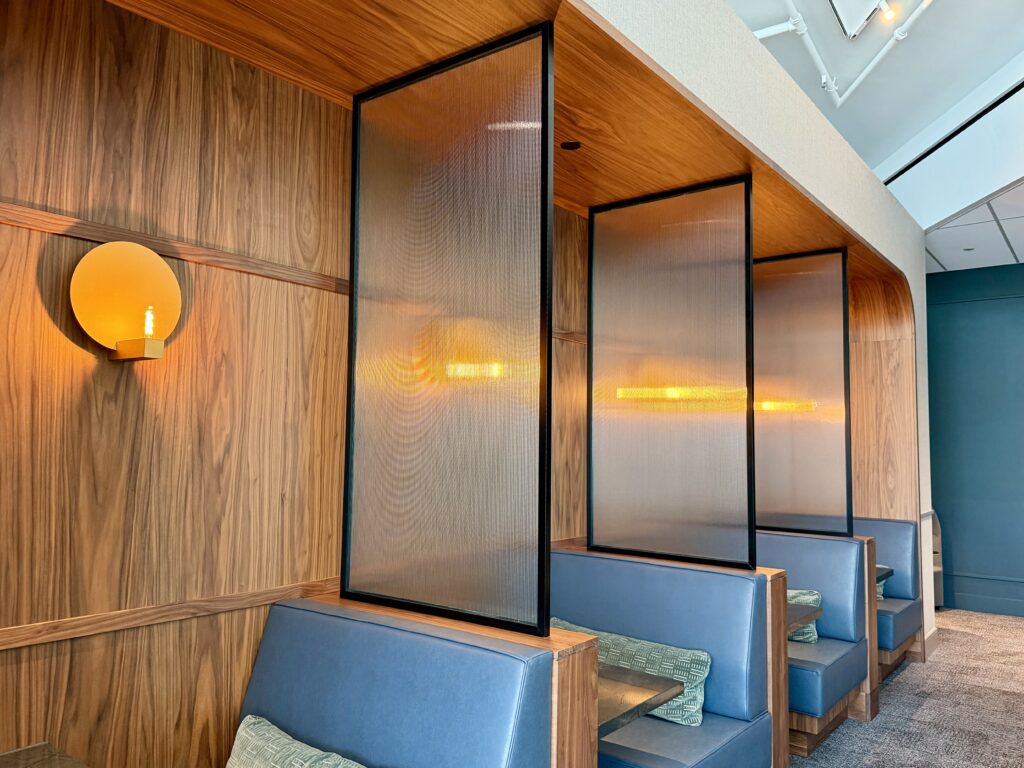
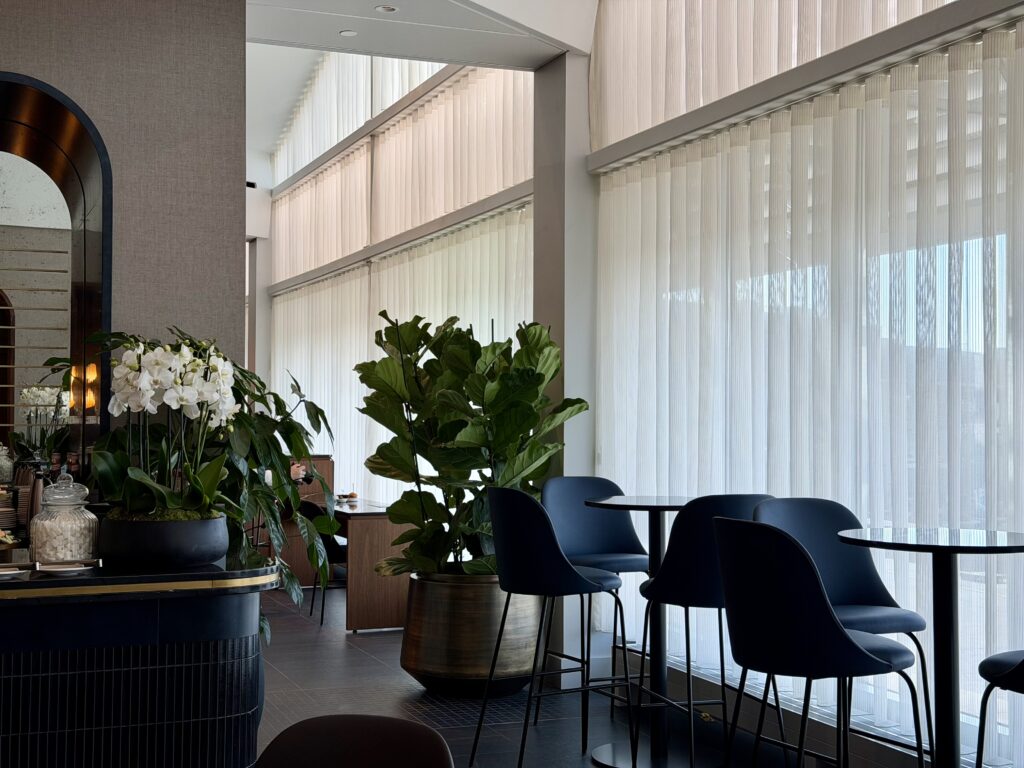
Tall ceilings and floor-to-ceiling windows bring plenty of natural light into the lounge, while the layout breaks the space into several distinct areas. There’s a dedicated coffee bar, dining area, full-service bar, and different types of seating across the lounge.
TYLER GLATT / POINTS INSIDER
Amex also packed quite a bit of the Netherlands into the space.
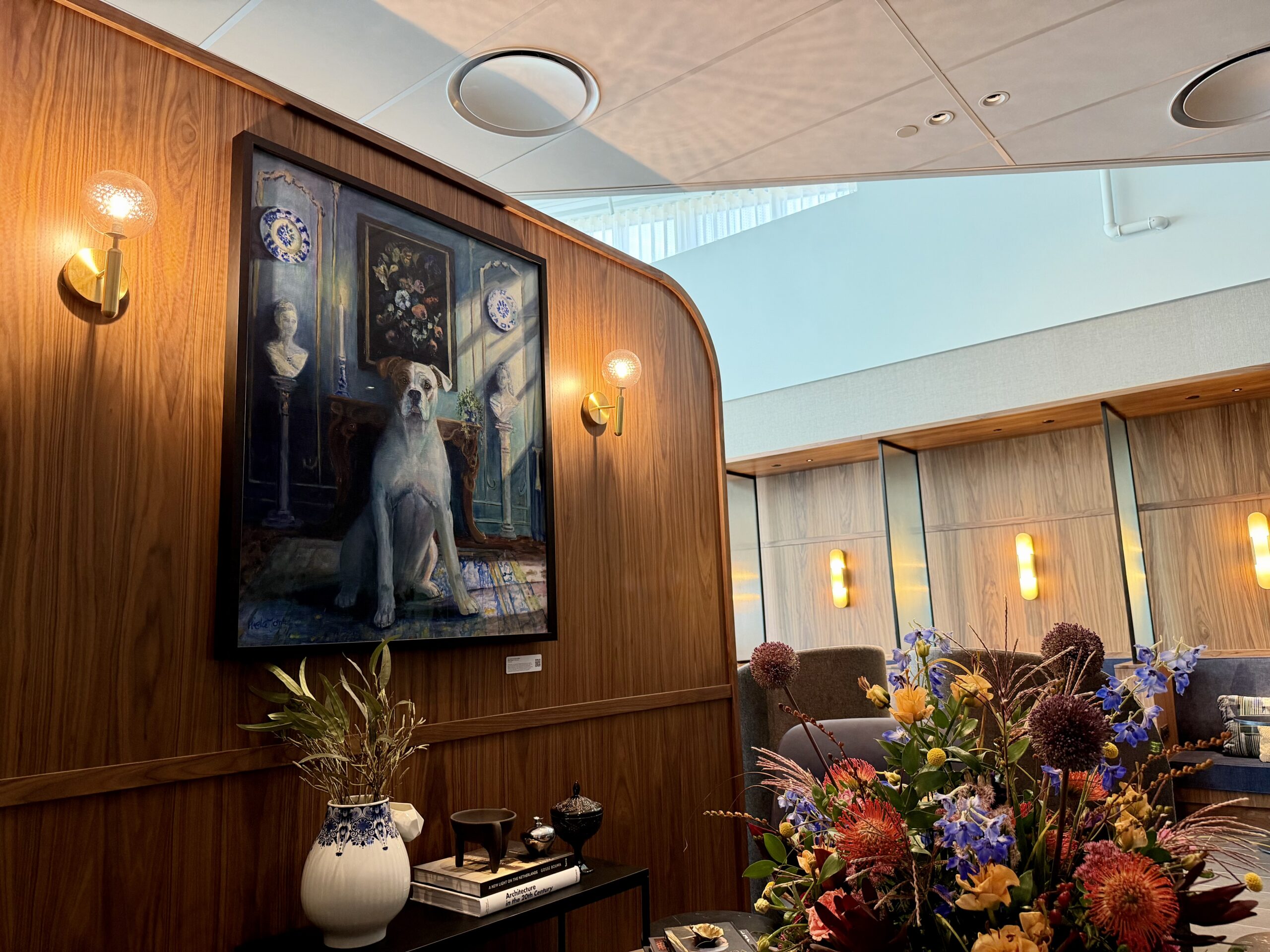
There are deep greens and blues inspired by Amsterdam’s canals, Dutch florals, locally sourced coffee and tea, work from local artists, and a Delft-style version of Amex’s bulldog mascot.
The goal, according to Vince Carbone, Amex’s director of global lounge design strategy, was to make the lounge distinctly Amsterdam without making the references too “on the nose.”
That’s a pretty good description of what Amex built. It still looks and feels like a Centurion Lounge, but the Amsterdam influence is impossible to miss.
Bringing Amsterdam Into a Centurion Lounge
No two Centurion Lounges are designed to be exactly alike, and much of what distinguishes Amsterdam comes down to the details.
The local references start near the entrance. A painting featuring Sir Charles Frosty Blue (Amex’s mascot, not Dutch royalty) incorporates Delftware and Dutch florals. Work from local artists lines the walls, while flowers and other references to the Dutch landscape decorate tables and shelves.
TYLER GLATT / POINTS INSIDER
Color plays an even bigger role.
Deep greens and blues run throughout the space, inspired in large part by Amsterdam’s maze of waterways. Color blocking (which, I learned, is the practice of using distinct areas of color to define a space) also helps separate one part of the lounge from another without making each area feel disconnected.
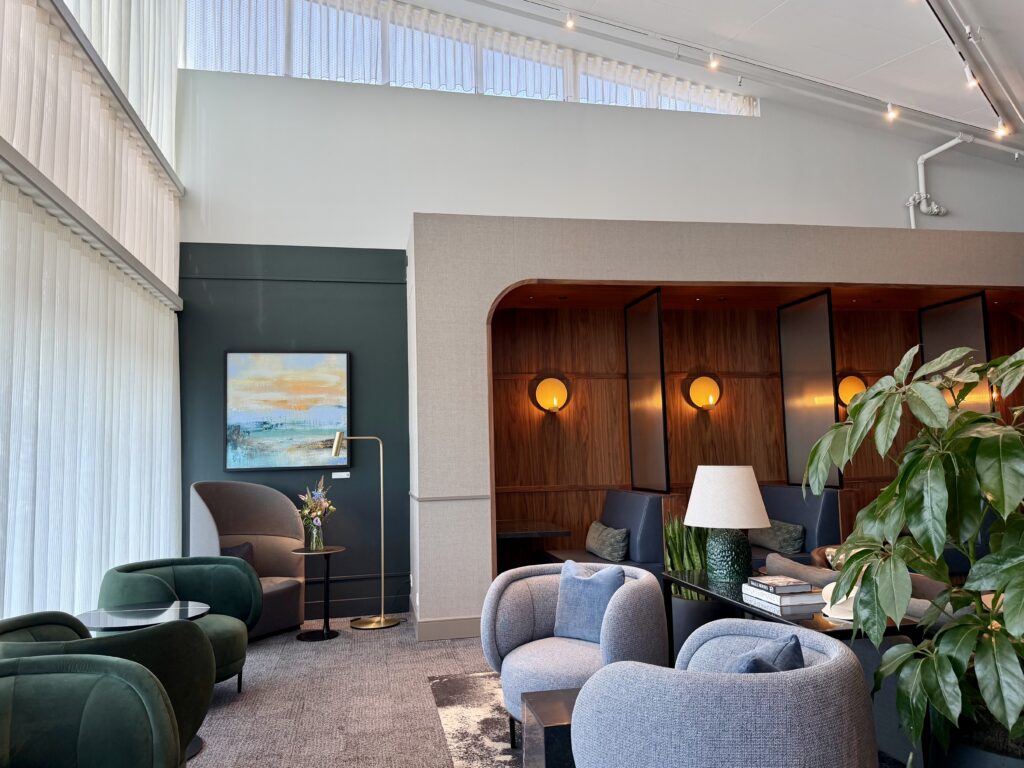
The ceiling is another integral part of the space, although it isn’t entirely an Amex creation. The lounge was built out of former office space, and the tall, angular ceilings were already there.
Amex incorporated that existing architecture into the design. The triangular forms overhead add dimension, while the ceiling height and floor-to-ceiling windows help make the relatively compact lounge feel a lot more open.
And perhaps a little more upscale.
TYLER GLATT / POINTS INSIDER
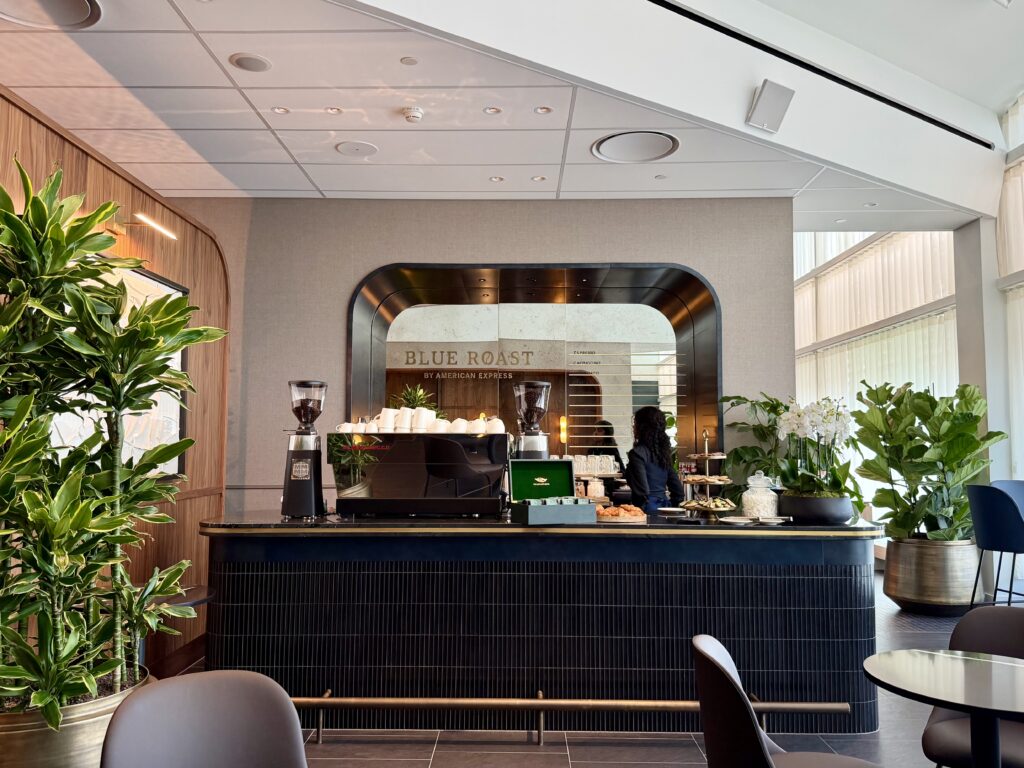
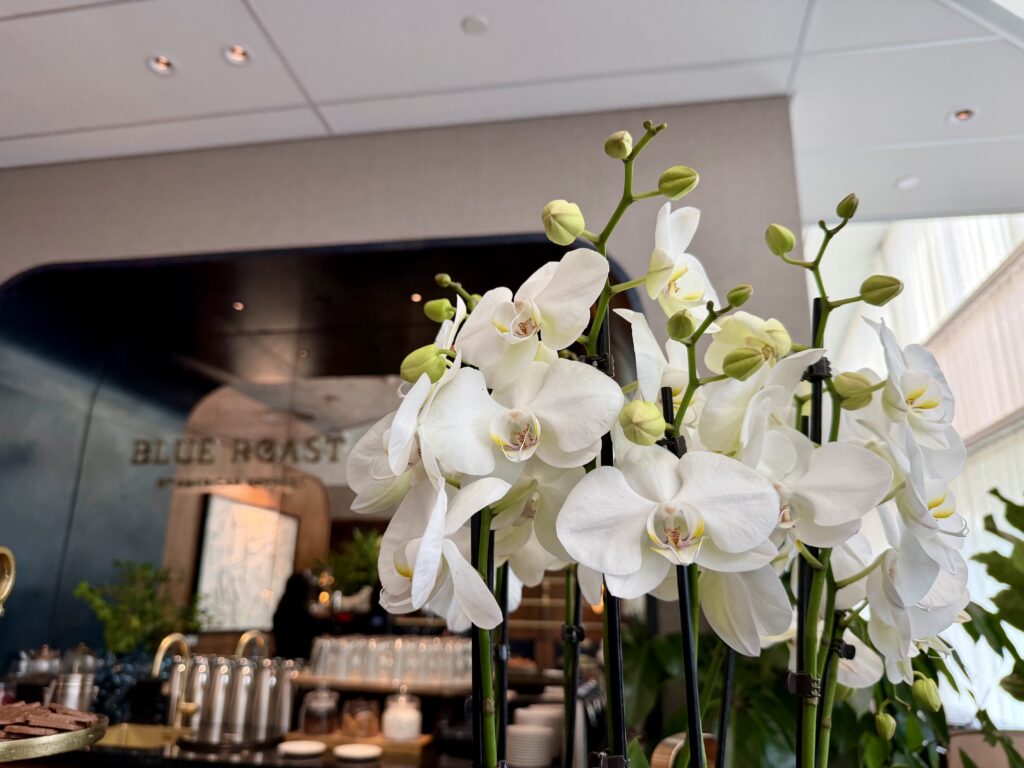
Moving through the space takes you from general seating to the Blue Roast Coffee Bar, dining area, and eventually the main bar. Additional seating runs along the perimeter beside the windows.
Then there are details that are easier to miss.
For instance, Amex has made a habit of hiding a bulldog statue in its Centurion Lounges. Amsterdam’s version sits above the bar, rendered appropriately in Delft style.
TYLER GLATT / POINTS INSIDER
Coffee Is Getting More Attention
One of the most prominent parts of the lounge isn’t the traditional Centurion bar.
It’s the coffee bar.
Amsterdam is the fourth Centurion Lounge to feature Amex’s Blue Roast Coffee Bar, following Seattle, New York-JFK, and Salt Lake City. The branding carries over, but the coffee and tea are sourced locally and brewed fresh by a barista behind the counter.
TYLER GLATT / POINTS INSIDER
There’s also another reason Amex is putting more emphasis on coffee.
The Global Lounge team said it’s seeing customers drink less alcohol and show more interest in coffee and nonalcoholic beverages. That’s beginning to influence what Amex prioritizes inside its lounges.
The full-service bar isn’t going anywhere, and Amsterdam has one of those, too. But Blue Roast gets its own dedicated space rather than feeling like an extension of the dining area.
TYLER GLATT / POINTS INSIDER
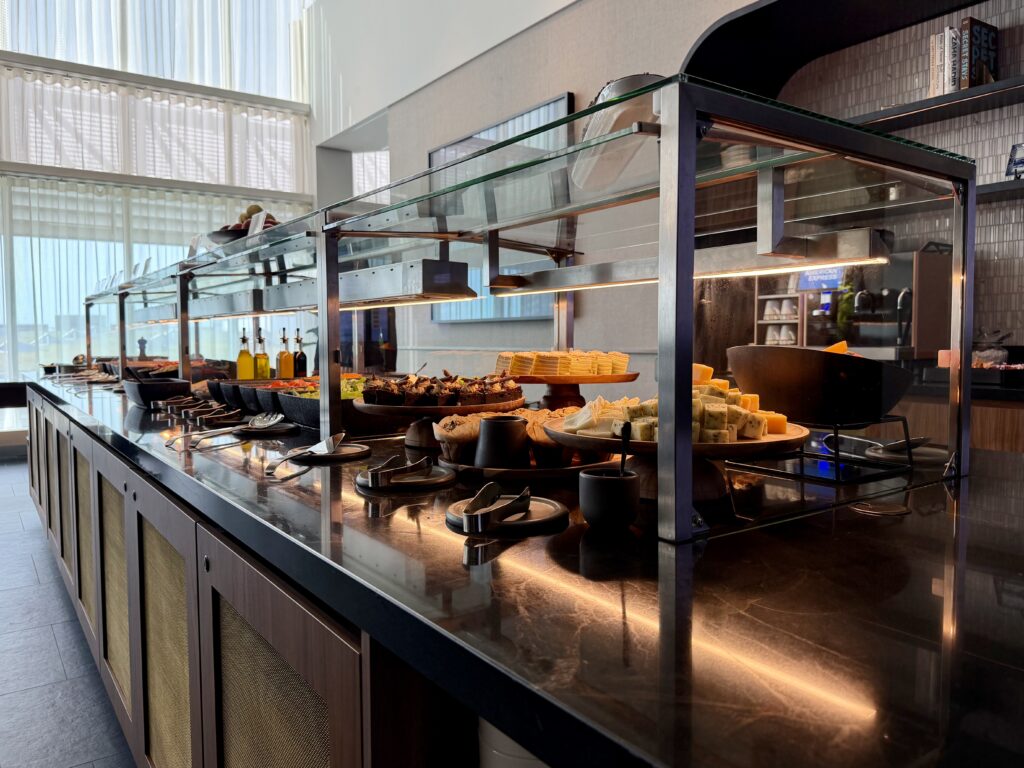
Food is another important part of the Centurion Lounge experience. Amex even went so far as to call it a main draw.
The Amsterdam menu mixes global and European flavors with Dutch staples, like bitterballen. Amex also mentioned herring and eel as examples of regional European dishes that will be served, although it wasn’t clear when or how often those will appear once the lounge opens.
Some dishes are expected to rotate roughly every three weeks, while other staples will stay.
Like the design itself, the food gives Amex another way to make the lounge feel connected to Amsterdam without changing the basic Centurion Lounge formula.
TYLER GLATT / POINTS INSIDER
Making the Most of 6,000 Square Feet
The Amsterdam lounge is noticeably smaller than some of the newer Centurion Lounges Amex has opened in the U.S.
There’s a fairly simple reason for that. Airport real estate doesn’t grow on trees. And Amex’s team isn’t shy about saying that lounge development often comes down to what space an airport can make available.
TYLER GLATT / POINTS INSIDER
At Schiphol, space is particularly hard to come by.
The existing architecture ended up working in Amex’s favor. Instead of one large seating area, the lounge progresses through smaller spaces for seating, coffee, dining, and the main bar. Combined with the tall ceilings and natural light, the layout keeps the footprint from feeling compressed.
Patrick McGinley, Amex’s director and design and construction program manager for Centurion Lounges, said the finished product turned out better than he originally expected.
TYLER GLATT / POINTS INSIDER
Amex worked closely with Schiphol and Dutch partners to get the lounge built, and indicated that it expects to stay in touch with the airport if opportunities for additional space come along later.
There’s nothing more concrete than that for now. But even ahead of the official opening, Amex isn’t ready to close the loop on what the lounge could eventually become.
Why Amsterdam Makes Sense for Amex
The opening is also another step in taking a Centurion Lounge network that has historically been concentrated in the U.S. farther abroad.
Members of Amex’s Global Lounge team pointed to growth in the company’s international business and demand for lounges in more parts of the world.
Schiphol is important both for people beginning trips in the Netherlands and for those passing through one of Europe’s biggest connecting hubs. Amex expects the lounge to draw a mix of U.S. and international Platinum Card Members, without a necessarily particular tilt toward either group.
TYLER GLATT / POINTS INSIDER
There’s also a notable network effect from the U.S.
Several major U.S. gateways with nonstop service to Amsterdam already have Centurion Lounges. Platinum Card Members have access to a much broader collection of lounges around the world through the American Express Global Lounge Collection, but Amsterdam extends Amex’s own Centurion brand farther along those trips.
Someone leaving a U.S. gateway with a Centurion Lounge, such as Atlanta or New York-JFK, can now see that same Centurion logo again while passing through Schiphol, just as they can in London, Tokyo, and elsewhere.
And at 33 locations, the network is pretty substantial in its own right. The Centurion Lounge footprint rivals or even exceeds the proprietary lounge networks of some airlines.
But that doesn’t mean Amex is about to start opening lounges across Europe or the rest of the world at the same pace it has in the U.S.
TYLER GLATT / POINTS INSIDER
The Global Lounge team was pretty careful on that point. International growth has made additional markets attractive, and there’s demand to put lounges in more places. Over the long term, some additional balance between the domestic and international network makes sense, but Amex isn’t looking to swing too far in either direction.
Expansion isn’t the only focus, either. Lounges in Boston, Newark, and a Sidecar location in Charlotte are on the way, but Amex is also reinvesting in existing locations. Dallas Fort Worth, one of the older outposts in the Centurion network, is getting a revamped and larger lounge as part of that effort.
That mix of new locations and updates to existing ones is shaping the network as it grows. And Amsterdam just happens to be the newest piece and the first in continental Europe.
TYLER GLATT / POINTS INSIDER
But for all the significance Amex places on the opening, the lounge itself isn’t trying particularly hard to make a statement about it. It’s still recognizably a Centurion Lounge. The Amsterdam part comes through in the colors, artwork, coffee, food, and little details scattered around the space.
It’s distinctly Amsterdam, without being too on the nose.
Air France is getting a much bigger home at New York-JFK.
The airline announced September 15 that it will move its JFK flights into the airport’s New Terminal One starting next year. Along with the move, Air France plans to open a new lounge spanning more than 2,700 square meters, or roughly 29,000 square feet.
It will be the largest lounge in Air France’s international network, with more than 400 seats spread across two levels.
Air France already operates a lounge in JFK’s existing Terminal 1, so this isn’t a new addition as much as a major upgrade. The current lounge includes dining, showers, a Clarins treatment area, and dedicated services for La Première passengers.
The new space will take that considerably further.
What to Expect From Air France’s New JFK Lounge
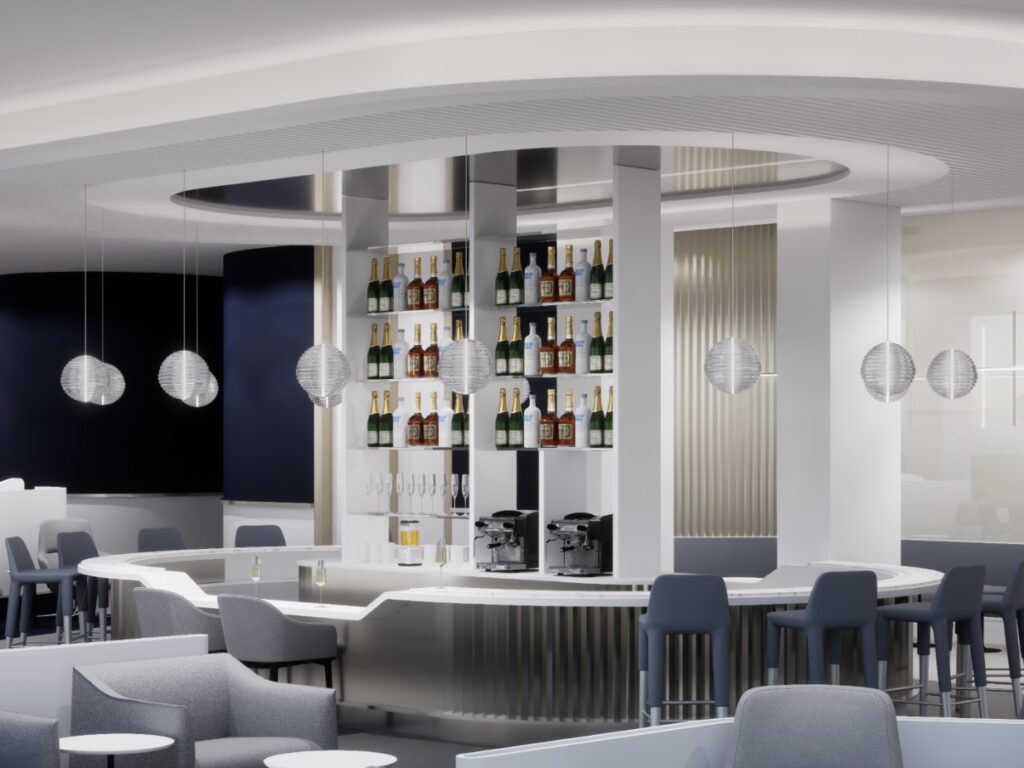
Air France hasn’t revealed every detail of the lounge yet. So far, the airline has released a rendering of the bar along with some early details about what will be inside.
The two-level lounge will include multiple dining areas focused on French cuisine, a bar serving French wines and Champagne, and dedicated spaces for working, relaxing, and beauty treatments.
AIR FRANCE
There will also be an exclusive area for Flying Blue Ultimate members.
La Première passengers will get a separate space of their own, including a dedicated dining experience created for the airline’s first class customers. Air France says the lounge will be part of a more personalized La Première airport experience extending from arrival at New Terminal One through boarding.
Who Will Have Access to the New Lounge?
The lounge will be open to Air France La Première and eligible business class passengers, although Business Light fares won’t include access.
SkyTeam Elite Plus members will also be eligible, along with qualifying passengers flying KLM and other SkyTeam partner airlines.
And Air France has plenty of passengers to accommodate at JFK. During the summer season, the airline operates up to six daily flights between JFK and Paris Charles de Gaulle (CDG), in addition to three flights operated by transatlantic joint-venture partner Delta Air Lines.
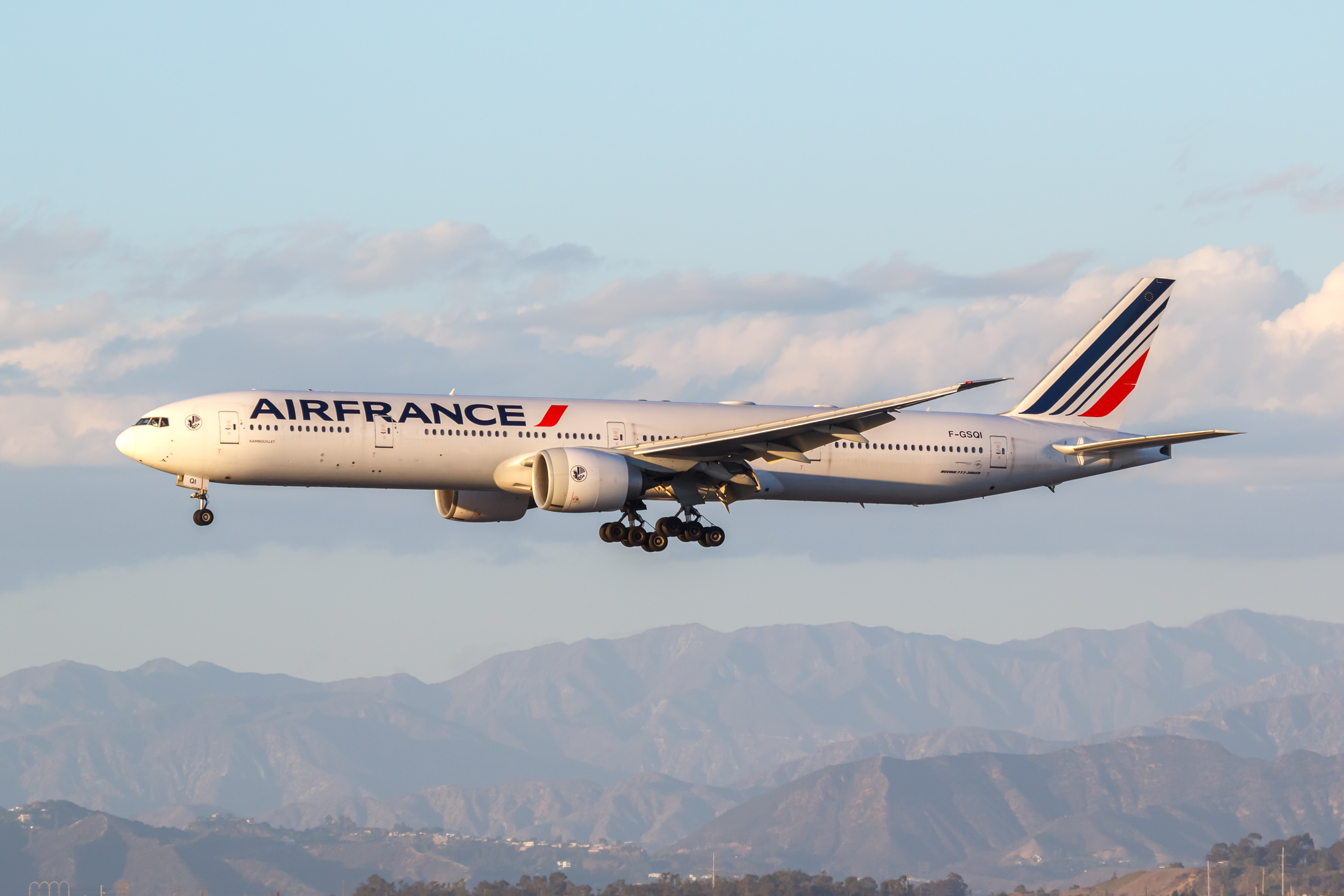
Four of those daily Air France flights are operated by Boeing 777-300ERs equipped with the airline’s new La Première cabin.
Air France Is Moving Into JFK’s New Terminal One
The lounge is part of a much larger change underway at JFK.
New Terminal One is being built as part of the airport’s $19 billion redevelopment and will eventually replace the existing Terminal 1. Air France plans to move all of its JFK operations there beginning next year.
For Air France passengers, that also means the existing lounge’s days are numbered. Its replacement will be substantially larger and built around the airline’s latest premium products, including La Première.
There’s still plenty Air France hasn’t shown, including what most of the lounge will actually look like. But at nearly 29,000 square feet and with room for more than 400 guests, the new space will be a major step up from Air France’s current JFK lounge.