Category: News

Timely coverage of major developments in travel, loyalty programs, airlines, hotels, and credit cards. News should answer what happened and why it matters.

  • Asiana Revises Deadlines for Star Alliance Redemptions

    Asiana Revises Deadlines for Star Alliance Redemptions

    Asiana Club members planning to use miles for Star Alliance partner tickets have a few new dates to keep track of.

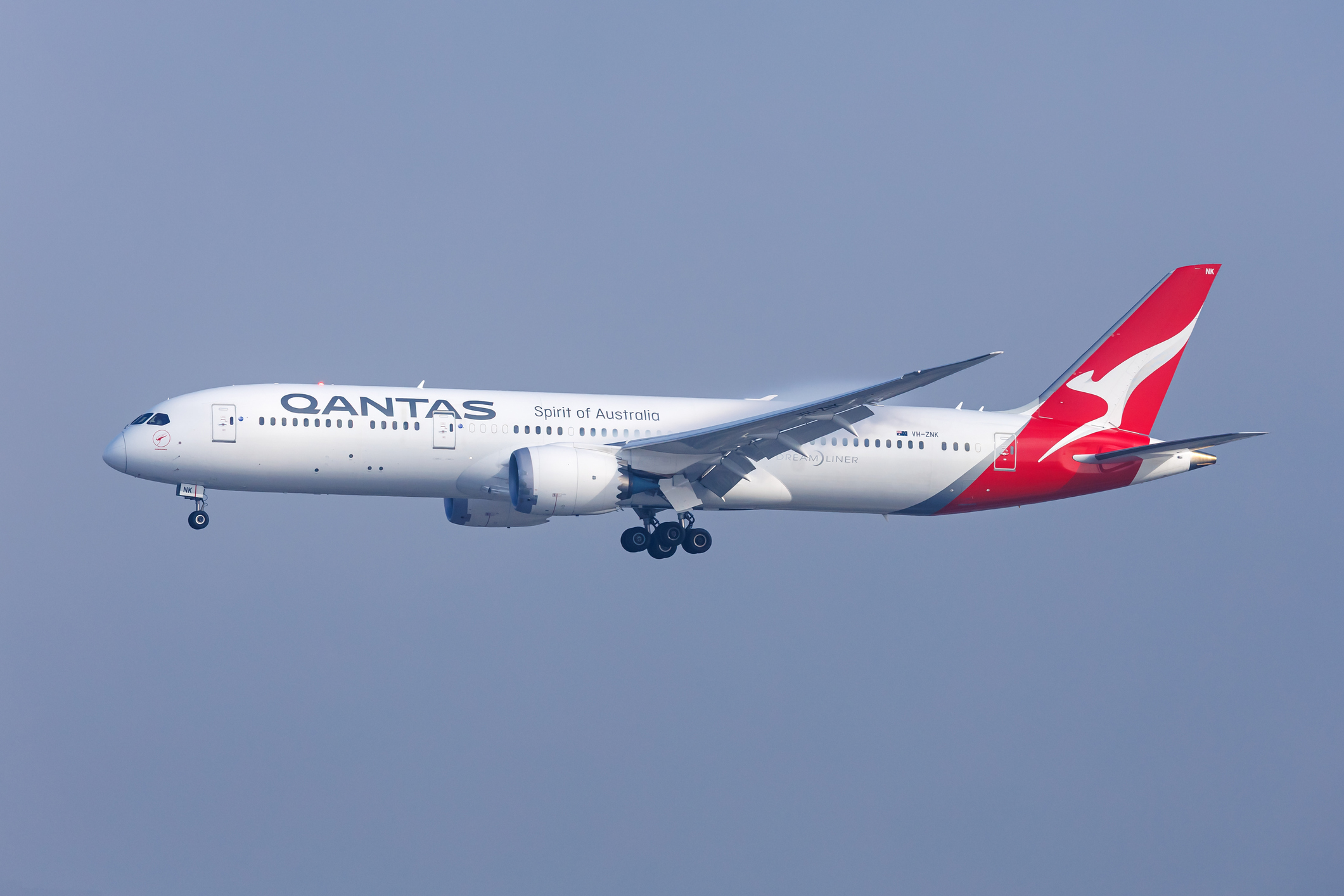
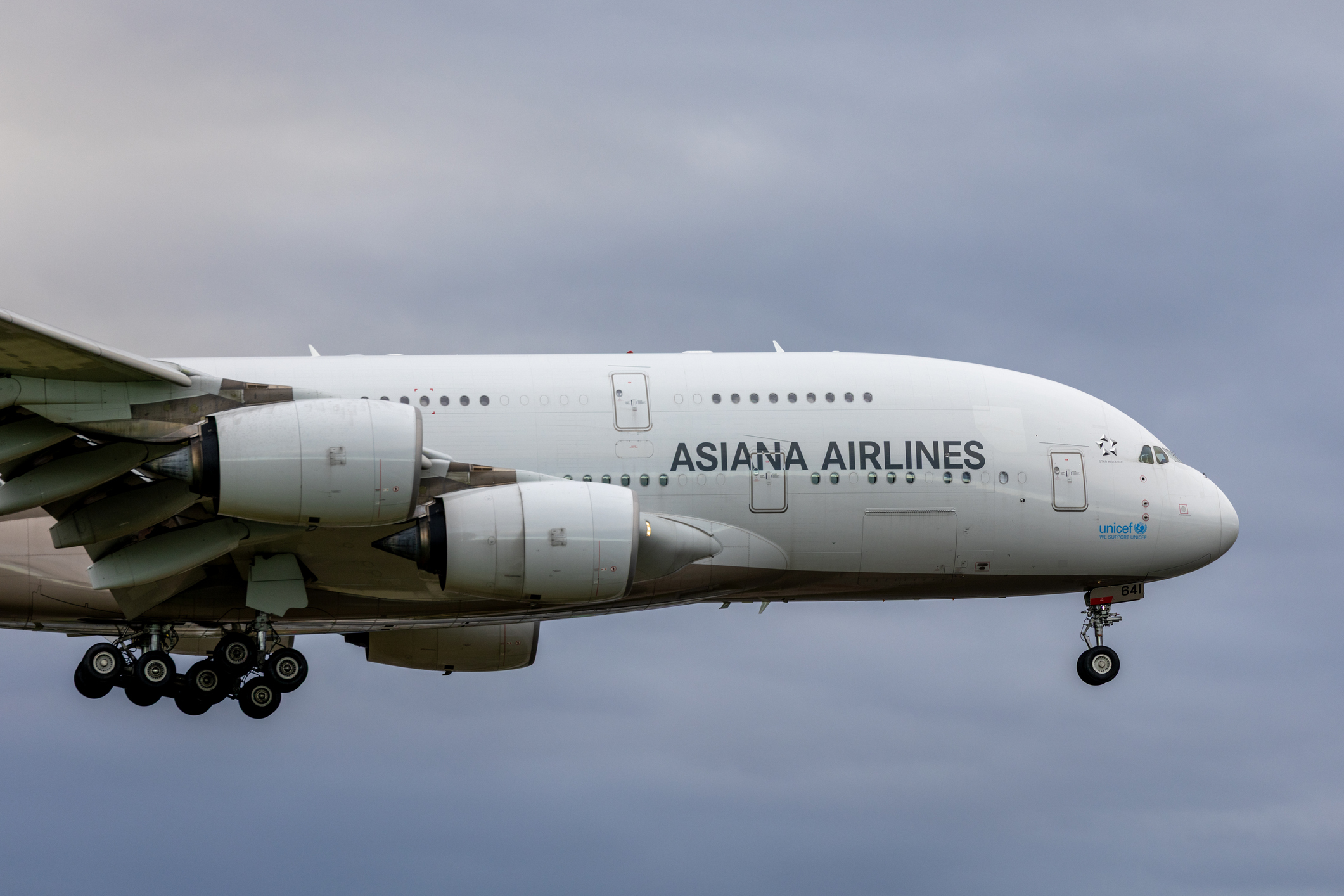
    Asiana Airlines announced revised ticketing and travel deadlines for three partners ahead of its December 17 integration with Korean Air. Copa Airlines and ANA are getting more time, while the window for LOT Polish Airlines is getting shorter.

    The changes come at the request of the partner airlines and affect both mileage tickets and upgrades. They’re part of a broader wind-down of Asiana’s Star Alliance relationships, with deadlines varying considerably from one airline to another.

    Copa and ANA Get More Time, While LOT’s Window Shrinks

    Asiana Club members can now book and travel on Copa Airlines through December 16, extending the previous October 31 deadline.

    ANA also moves to December 16, rather than November 30.

    LOT Polish Airlines goes the other direction. Its deadline moves forward from November 30 to November 5. Asiana says travel will still be honored for LOT tickets booked and issued on or before September 30.

    Most Star Alliance Redemptions End by December 16

    December 16 is the final date for mileage tickets and upgrades with many of Asiana’s Star Alliance partners, including Air Canada, EVA Air, Air China, Copa, ANA, Singapore Airlines, Thai Airways, TAP Air Portugal, United, and several others.

    Some disappear sooner. Lufthansa, SWISS, Air New Zealand, Austrian Airlines, and Brussels Airlines are available through October 31. LOT now ends November 5, while Air India, Ethiopian Airlines, and EgyptAir run through November 30.

    Four Partners Can Still Be Flown Through 2027

    Four airlines get a considerably longer travel window.

    Asiana Club members can use miles for Aegean Airlines, Avianca, Croatia Airlines, and Turkish Airlines flights through December 16, 2027, as long as tickets are issued by December 16, 2026.

    Reservations for flights departing December 17, 2026, or later open October 15. Once Asiana’s Star Alliance partnership ends, those tickets can’t be newly issued or changed. Existing tickets can still be refunded within their validity period, but expired miles won’t be restored.

    More on This: What Happens to Asiana Miles When Korean Air and Asiana Combine

    Mileage Earning Is Winding Down, Too

    Asiana is also winding down mileage earning with Star Alliance partners.

    For flights taken through October 15, missing Asiana Club miles must be claimed by October 31.

    For flights between October 16 and December 16, automatic Asiana Club mileage accrual won’t be available. Members will instead need to submit a claim after flying with both the boarding pass and e-ticket receipt.

    Asiana’s Star Alliance exit is approaching quickly, but December 16 isn’t the only date that matters. Some partners disappear weeks earlier, while four remain available for travel well into 2027.
  • Singapore Airlines Is Adding 100+ New Dishes and Overhauling In-Flight Dining

    Singapore Airlines Is Adding 100+ New Dishes and Overhauling In-Flight Dining

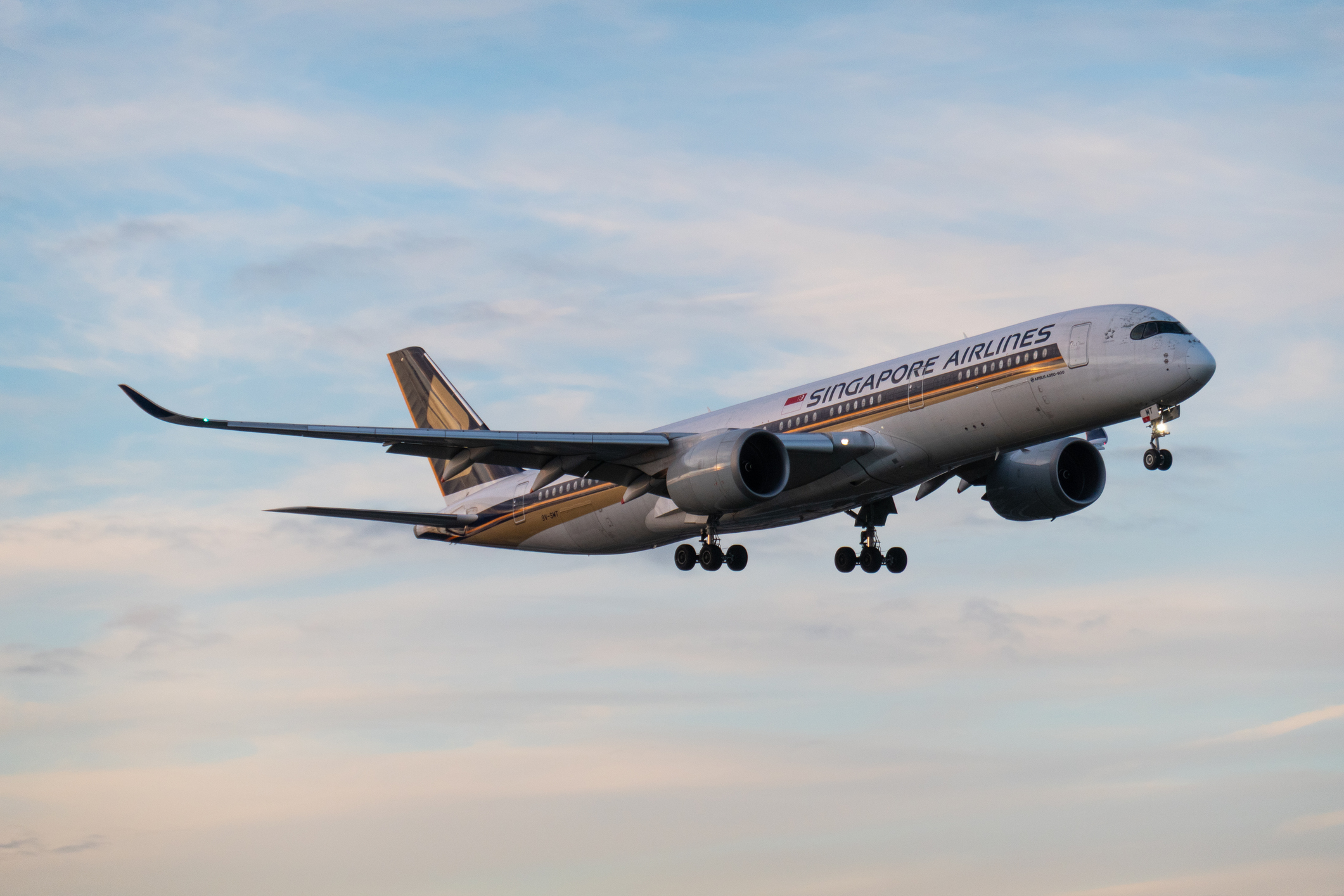
    Singapore Airlines is making a fairly substantial update to what gets served onboard.

    The airline is introducing more than 100 new and refreshed dishes across all four cabin classes, along with new wines and spirits, redesigned tableware in its premium cabins, and several changes to how meals are presented and served.

    Some of the new dishes are already appearing onboard, while the broader dining changes will begin rolling out in November.

    More Than 100 Dishes Are New or Getting an Update

    At the center of the changes is a new menu category called SIA Chefs’ Selection.

    It brings together more than 100 new and refreshed appetizers, main courses, and desserts developed by Singapore Airlines’ in-house and guest chefs. The selections span everything from regional dishes to reworked classics, and they’re not limited to premium cabins.

    Among the new dishes are char siew wonton noodles in business class, beef short rib with sambal percik and blue pea rice in Suites and first class, Irish lamb stew in premium economy, and roasted chicken with black pepper sauce in economy.

    Some dishes are also being interpreted differently depending on the cabin. Tandoor-roasted paneer, for example, will appear across every cabin, with different preparations in the premium cabins and premium economy and economy.

    Premium Cabins Are Getting New Tableware, Too

    Singapore Airlines is also replacing some of what’s underneath the food.

    Suites, first class, and business class will receive custom-designed serviceware created with French tableware company Christofle. Singapore Airlines says it will be the first airline to use Christofle chinaware onboard, with designs incorporating the airline’s familiar batik pattern.

    Suites and first class will also get custom Christofle glassware, including tulip-shaped Champagne glasses.

    The beverage list is changing alongside it. New wines are coming to Suites, first class, and business class, while new spirits will appear throughout the aircraft. That includes a Singapore Airlines-exclusive Japanese blended whisky from Komoro Distillery in Suites and first class.

    There are some smaller service changes as well. Cabin crew in Suites and first class may recommend drinks to pair with meals, while selected dishes will receive new presentation touches. Singapore Airlines is also introducing face-to-face companion dining with its forthcoming first-class seats.

    The first dishes are already rolling out, with the new beverages, serviceware, and other changes beginning in November.

  • First-Time U.S. Passport Applications Are Moving Online

    First-Time U.S. Passport Applications Are Moving Online

    Getting a first U.S. passport is about to involve a lot less paper.

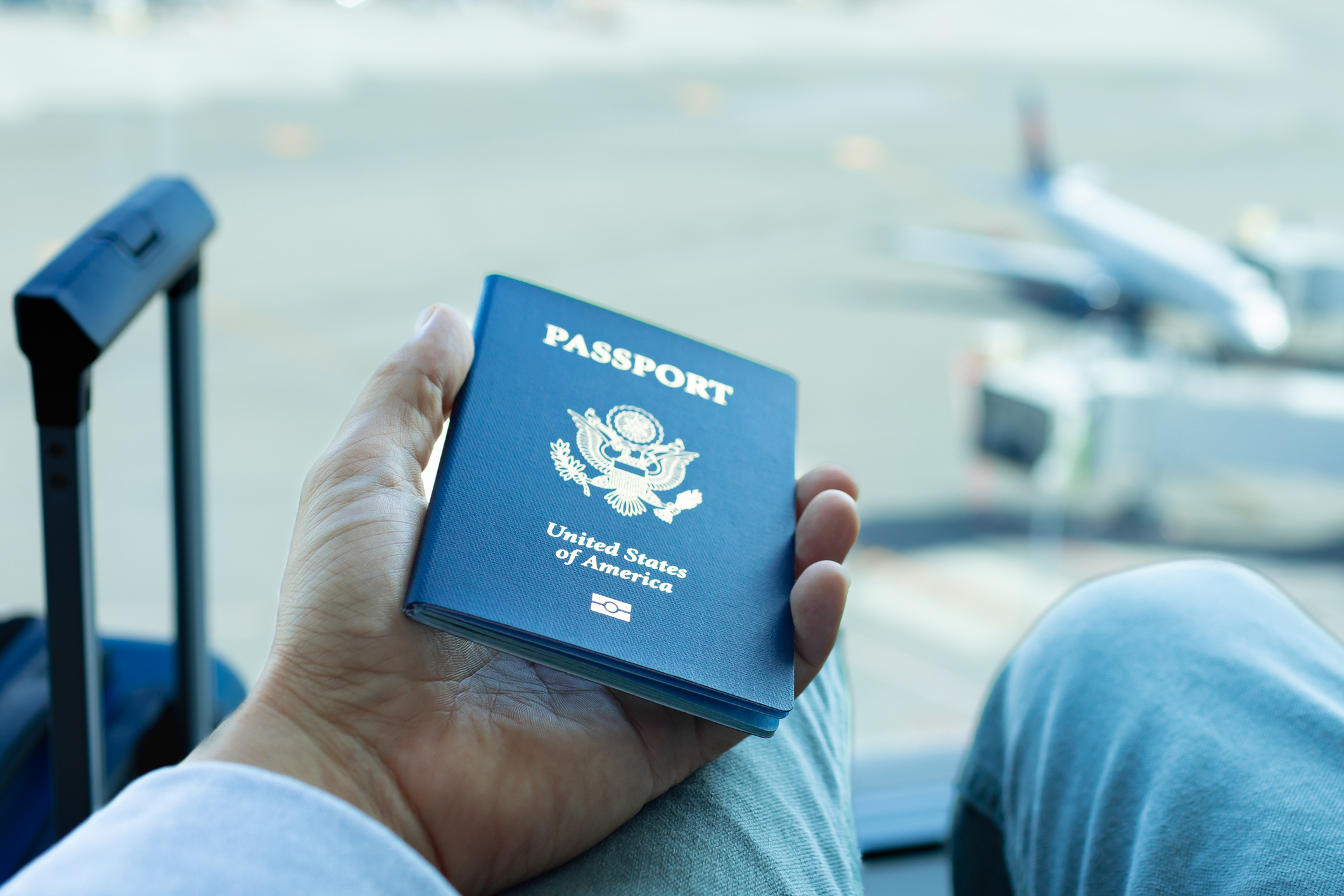
    Beginning next year, Americans will be able to apply for their first passport entirely online, Secretary of State Marco Rubio announced Tuesday, September 29. The State Department is also preparing a redesigned U.S. passport that will begin arriving in 2028.

    Both are part of a broader overhaul of the passport process built around the government’s new America.gov website.

    First-Time Passport Applications Are Going Online

    The biggest change comes first.

    Starting next year, first-time applicants will be able to complete the passport application process online through America.gov. That means no printing an application, scheduling an appointment, or visiting an acceptance facility just to submit it.

    After signing in through Login.gov, applicants will be able to use information the government already has on file, take a passport photo with a phone or upload one from another device, preview how the photo will look in the finished passport, and pay online.

    The new system will also show the status of an application and provide an estimated delivery date.

    Online passport service itself isn’t entirely new. Eligible Americans can already renew passports online. What’s changing is the ability to get a first passport without going through the traditional in-person application process.

    And the State Department plans to go further. Rubio said the goal is for the “vast majority” of Americans to be able to apply for a passport or passport card through America.gov by the end of 2027.

    U.S. Passports Are Getting a New Look in 2028

    The passport itself is changing, too.

    In 2028, the State Department plans to introduce a redesigned U.S. passport built around the American eagle. The familiar blue cover remains, but “United States of America” moves to the top and the Great Seal becomes larger and more prominent.

    The changes continue inside. Pages will depict different periods of American history, including Lexington, westward expansion, early aviation, Iwo Jima, and space exploration.

    There’s also a considerably less serious detail: flip through the pages quickly and an eagle appears to fly.

    Rubio joked that people will soon be sitting in airports repeatedly flipping through their passports.

    The packaging is getting an upgrade as well. Instead of arriving in the envelope used today, the redesigned passport will come in new presentation packaging.

    The new passport is still a couple of years away. The application overhaul comes sooner, and should remove several of the more cumbersome parts of getting a first passport starting next year.

  • Atmos Rewards Is Adding New Ways to Earn, Family Benefits, and Bank Transfers

    Atmos Rewards Is Adding New Ways to Earn, Family Benefits, and Bank Transfers

    Atmos Rewards is on the verge of becoming a lot more customizable.

    Starting October 1, members will be able to choose how they earn points and status points on flights, join new groups that unlock benefits based on how they travel, and get several new perks.

    And there’s considerably more coming in 2027.

    Alaska Air Group announced a broad expansion of Atmos Rewards on Tuesday, September 29, including a new debit card and the ability to transfer points from eligible Bank of America cards. The latter could make Atmos Rewards points considerably easier to earn without flying Alaska or Hawaiian or spending on one of their cobranded credit cards.

    There’s a lot changing, and some of it takes effect this week.

    Atmos Rewards Members Can Choose How They Earn

    Starting October 1, Atmos Rewards members can select one of three ways to earn points and status points on flights: distance traveled, dollars spent, or segments flown.

    The choice will apply to flights departing January 1, 2027 or later.

    Existing members who don’t make a selection will continue earning based on distance, while new members joining January 1 or later will default to earning based on the price of the ticket. Members can change their selection once per calendar year for future flights.

    It’s an unusual amount of control for an airline loyalty program.

    Someone taking frequent short flights could choose to earn based on segments, while another member could stick with distance. Higher-spending members have the option of tying earnings to the price of their tickets instead.

    And earning is only one part of the customization Alaska is adding.

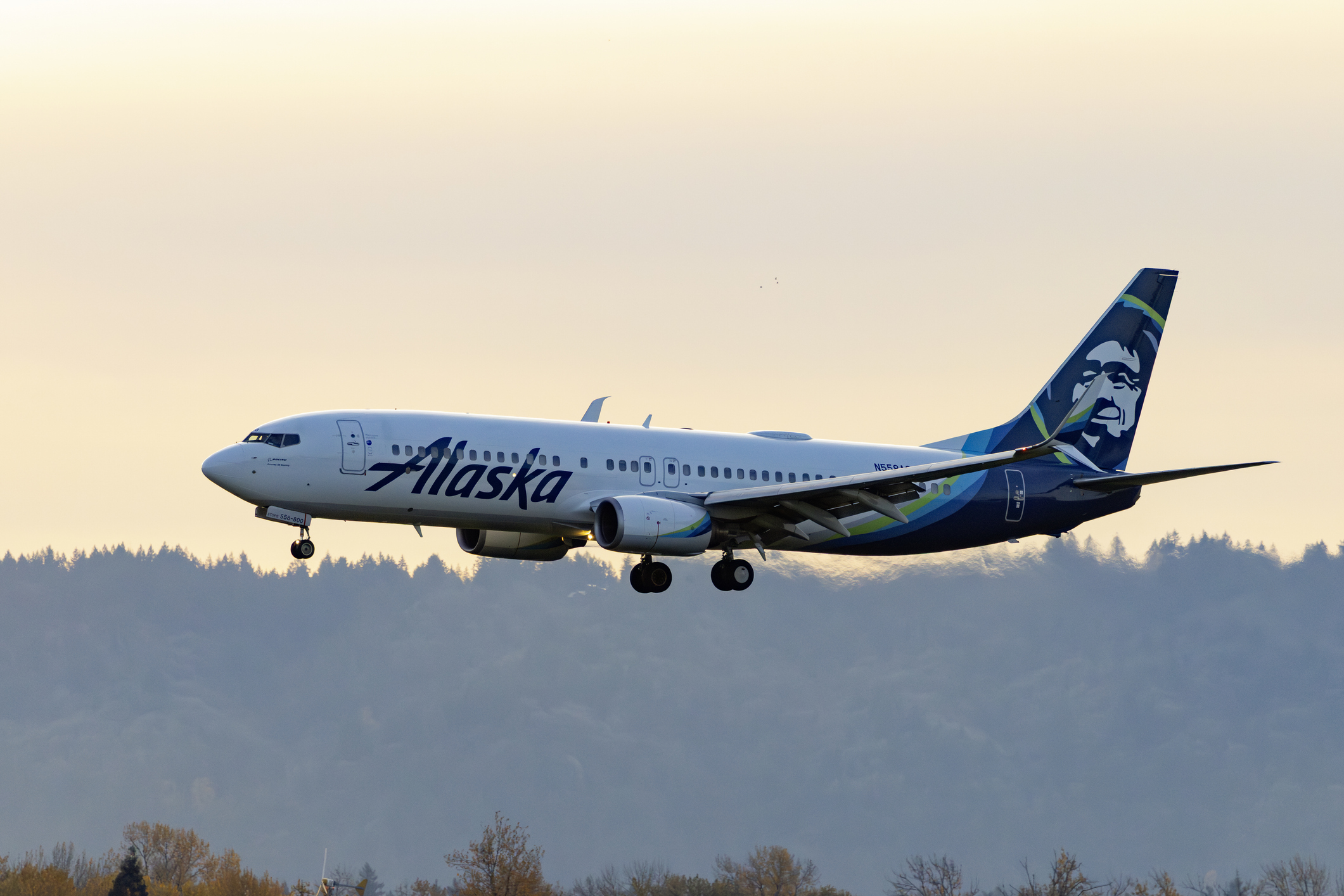
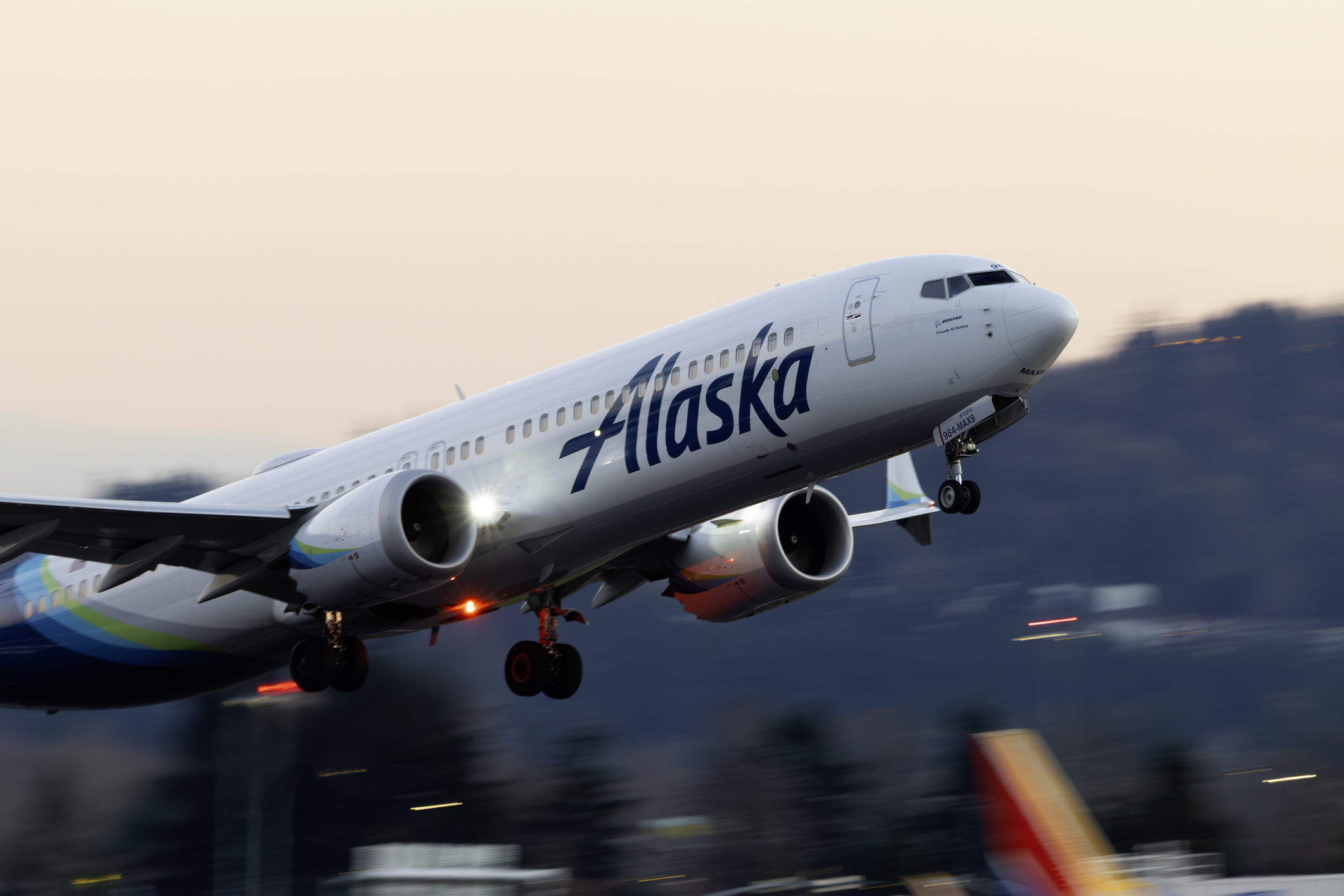
    Portland, Oregon, USA - March 2, 2025: An Alaska Airlines Boeing 737 MAX 9 lands at Portland International Airport at sunset.
    DAVEALAN / ISTOCK

    New Atmos Rewards Communities Come With Different Benefits

    Atmos Rewards is expanding its Communities program from two groups to six on October 1.

    Club 49 and Huakaʻi by Hawaiian, which are built around Alaska and Hawaii residents respectively, will be joined by Global Locals, Families on the Go, Culinary Journeys, and Active Escapes.

    Depending on the group, perks can include free checked bags, flight deals, bonus point challenges, partner offers, discounts on Atmos Rewards Unlocked experiences, bonus status points for international travel, and discounts on points bookings for children.

    The last one is particularly interesting for families, while the international status point bonuses give Atmos Rewards another way to reward members differently based on how they actually travel.

    Bank of America Points Will Become Transferable to Atmos Rewards

    One of the bigger changes isn’t arriving until 2027.

    Alaska says customers with eligible Bank of America cards will be able to transfer points directly into Atmos Rewards.

    There are still some important blanks. Alaska hasn’t said which Bank of America cards will participate, which rewards will be transferable, or what the transfer ratio will be.

    But the concept itself is notable.

    Bank of America already issues the Atmos Rewards credit cards. Allowing points from other eligible cards to transfer into Atmos Rewards would create another path into the program without requiring spending directly on an Atmos Rewards card.

    And Bank of America won’t necessarily be alone. Alaska says Atmos Rewards eventually plans to add points transfers from other select financial institutions around the world.

    An Atmos Rewards Debit Card Is Coming, Too

    Atmos Rewards is also moving beyond credit cards.

    A new Atmos Rewards debit card is planned for the first quarter of 2027, with preregistration open now. The card will earn Atmos Rewards points and status points on purchases, but Alaska is also teasing something less typical for a debit card: the ability to earn rewards on savings.

    Other announced benefits include an annual flight discount, discounts on flights and onboard purchases, free points sharing, no foreign transaction fees, and the ability to use points toward certain account fees.

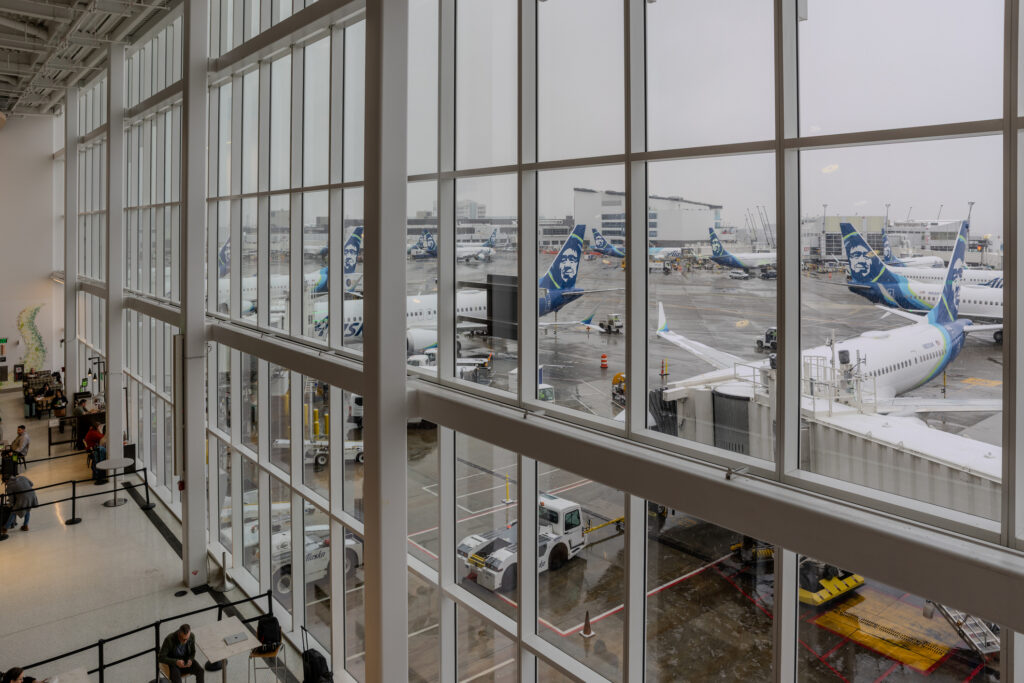
    Seattle, Washington - March 13, 2026:  It snowed all day in Seattle causing massive flight delay and cancellation at Sea-Tac Airport, as viewed from mezzanine in North Satallite.  HDR encoded
    MAK STUDIO / ISTOCK

    There aren’t many specifics yet about how earning on purchases or savings will work, or the value of the annual flight discount.

    There is, however, an incentive to register early. Atmos Rewards members who join the early access list by October 31 will receive a code for 20% off an eligible Alaska flight for travel from January 6 through March 10, 2027. Registration doesn’t open an account or guarantee eligibility for the debit card.

    The card will be issued by Cross River Bank and managed by Alviere rather than Bank of America, which issues the Atmos Rewards credit cards.

    There’s another card update coming sooner. Alaska plans to refresh its Atmos Rewards Visa Business Card later this year with lounge passes, free same-day confirmed flight changes, and 10X points on eligible purchases through Atmos Rewards for Business.

    More details are expected later this fall.

    More Benefits Are Coming for Platinum and Titanium Members

    Higher-tier Atmos Rewards members are getting another change beginning November 2.

    Platinum and Titanium members will be able to bring eligible children and one companion into Premium Class at no additional charge when space is available.

    Alaska has also introduced a dedicated Titanium check-in facility in Seattle and is offering Titanium members global upgrades into Alaska’s premium cabins.

    There’s a lot happening to Atmos Rewards at once, but the common thread is choice. Members can choose how they earn, join communities based on how they travel, and soon have more ways to earn or move points into the program.

    The Bank of America piece could be particularly important once Alaska fills in the missing details. For now, though, the first round of changes starts October 1.

  • Alaska Is Going Much More Premium With Lie-Flat 737s, New Cabins, and Huge Lounges

    Alaska Is Going Much More Premium With Lie-Flat 737s, New Cabins, and Huge Lounges

    Alaska Airlines has spent the last couple of years building a much bigger airline. Now it’s starting to show what it wants that airline to become in the years ahead.

    On Tuesday, September 29, Alaska Air Group announced new premium cabins for both Alaska and Hawaiian Airlines, a new premium economy product, and multiple major lounge projects. The changes will start arriving over the next couple of years as Alaska expands farther into Europe and Asia.

    There’s a lot here. But some of the more interesting changes isn’t happening on a long-haul Dreamliner.

    Alaska Is Putting Lie-Flat Seats on Some 737s

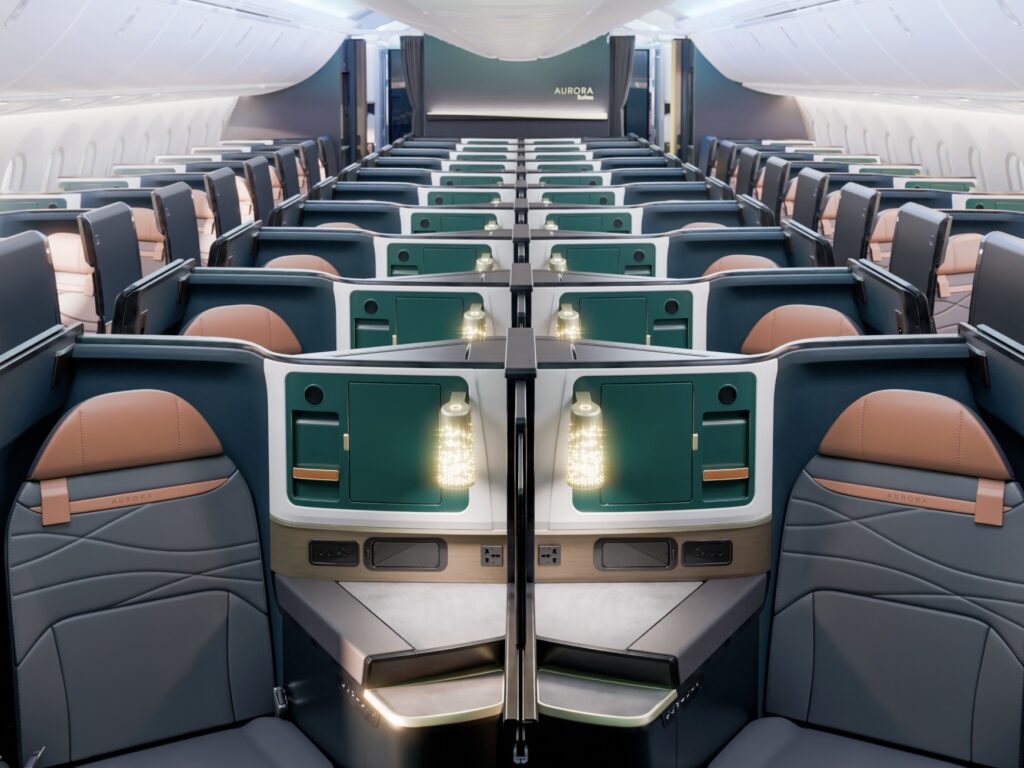
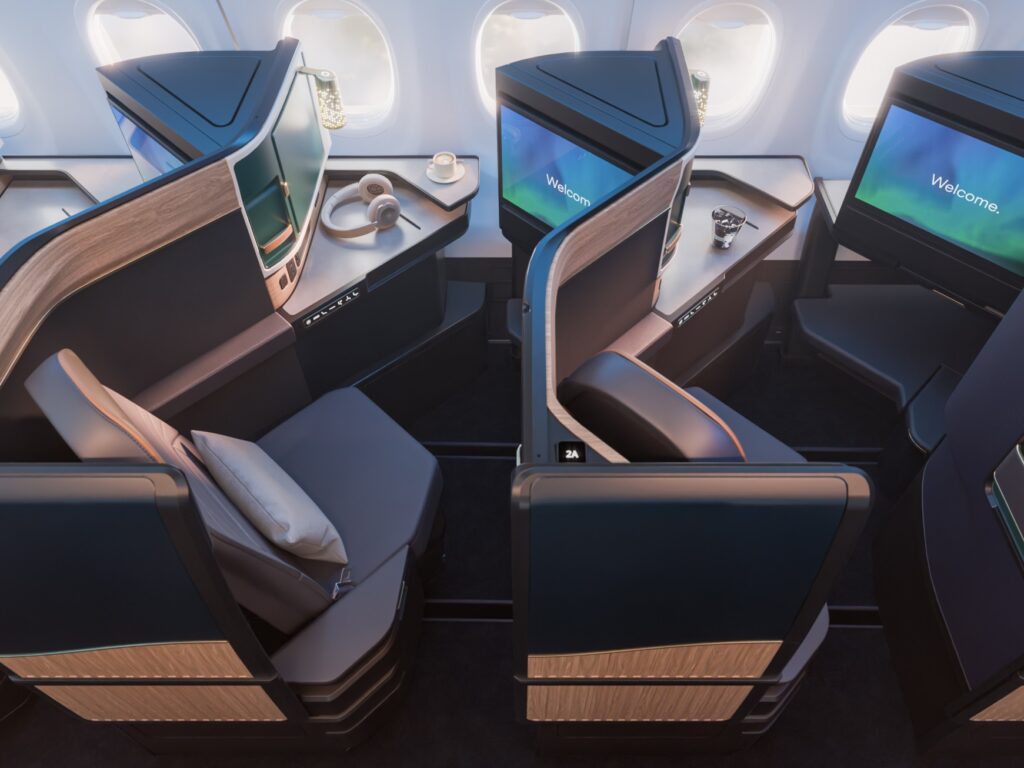
    Alaska’s new top-end product will be called Aurora Suites, and it’ll eventually appear on both the airline’s Boeing 787 Dreamliners and at least 25 new Boeing 737-10s.

    The 787-9 will have 34 Aurora Suites with lie-flat beds, privacy doors, direct aisle access, 19-inch 4K screens, and upgraded dining. The updated aircraft will be about 46% premium seating, up from 38% today.

    Rendering of Alaska Airlines new 787 business class cabins.
    ALASKA AIRLINES

    The 737-10 is where things get more interesting.

    At least 25 will be configured with 12 lie-flat Aurora Suites. Alaska says they’ll be used on select transcontinental flights beginning in 2028, bringing lie-flat seats to the airline’s narrowbody fleet for the first time.

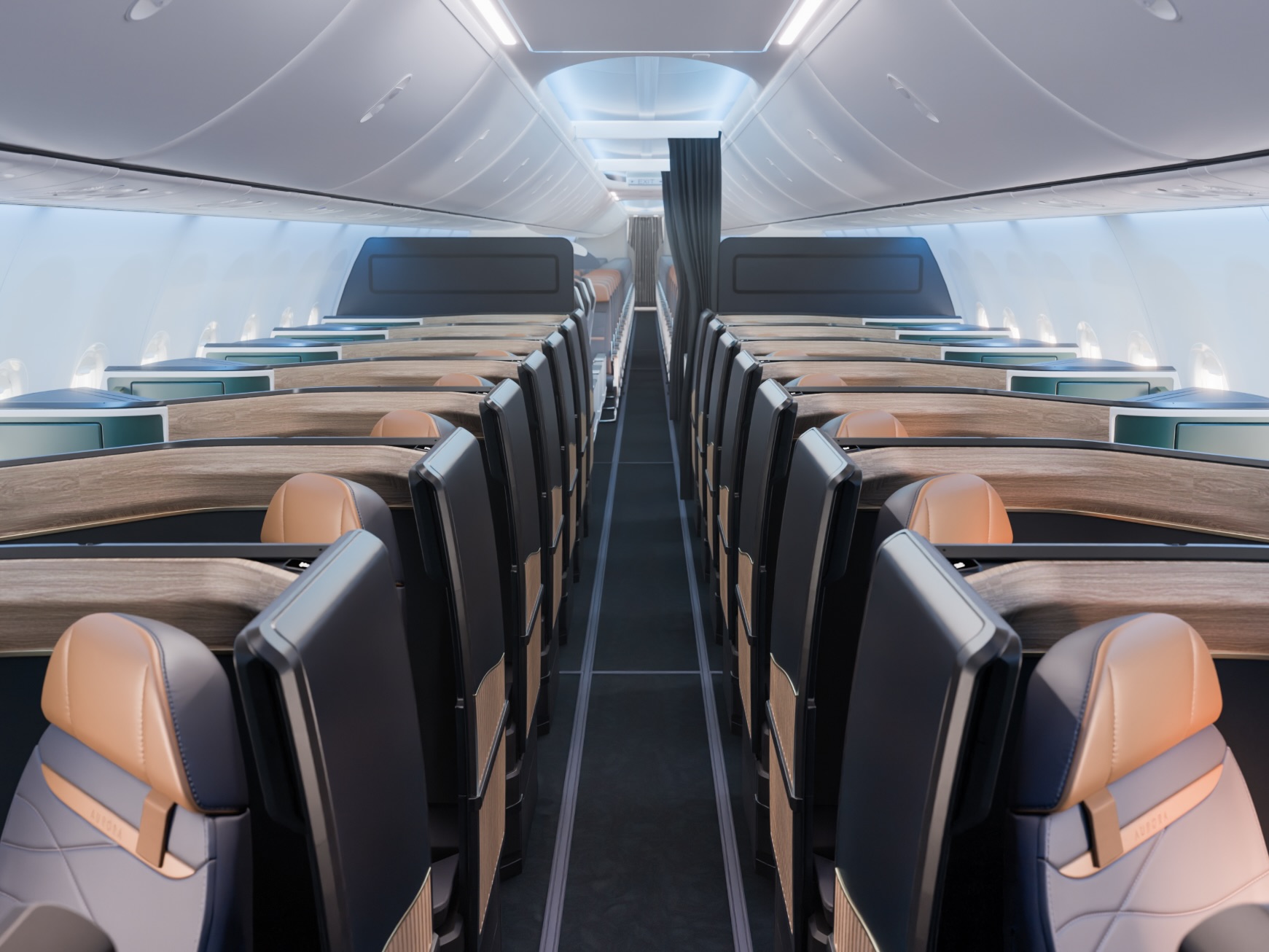
    Rendering of Alaska Airlines new business class cabins.
    ALASKA AIRLINES

    These won’t exactly blend into the rest of Alaska’s 737 fleet. They’ll wear the same northern lights-inspired Aurora livery as the 787s and add another 12 Premium Reserve seats behind the suites.

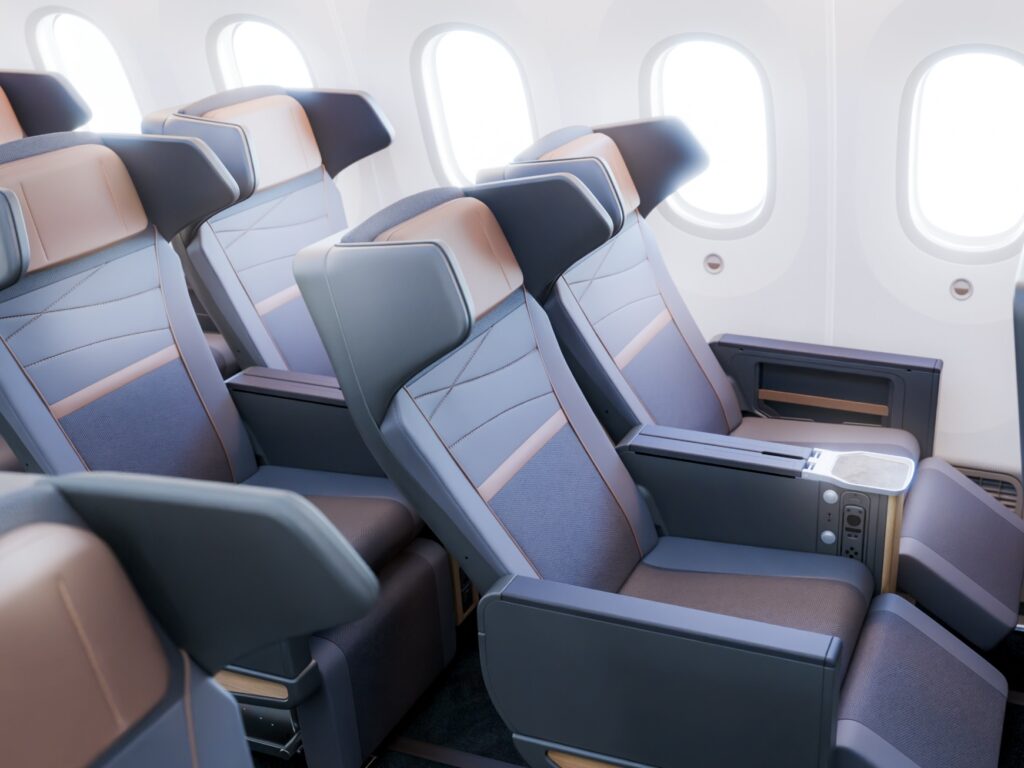
    Premium Reserve is Alaska’s new premium economy cabin, sitting above the extra-legroom economy seats it currently sells as Premium Class. Seats will have 38 inches of pitch, more recline, leg and calf rests, 16-inch 4K screens, and upgraded dining.

    There will be 35 Premium Reserve seats on Alaska’s 787s, 28 on Hawaiian’s A330s, and 12 on the specially configured 737-10s. The seats go on sale next summer before entering service in 2028.

    Rendering of Alaska Airlines new premium economy cabins.
    ALASKA AIRLINES

    The Aurora experience won’t start at the airplane, either. Suite passengers will get dedicated check-in and concierge service in Seattle, access to a separate Aurora Lounge, and upgraded onboard dining. Complimentary Starlink Wi-Fi will also be available to Atmos Rewards members.

    Put it all together and Alaska is creating a pretty unusual 737, with lie-flat suites and premium economy ahead of its existing Premium Class and Main Cabin.

    Hawaiian’s A330s Are Getting Rebuilt Too

    Hawaiian isn’t getting the same cabin with a different logo.

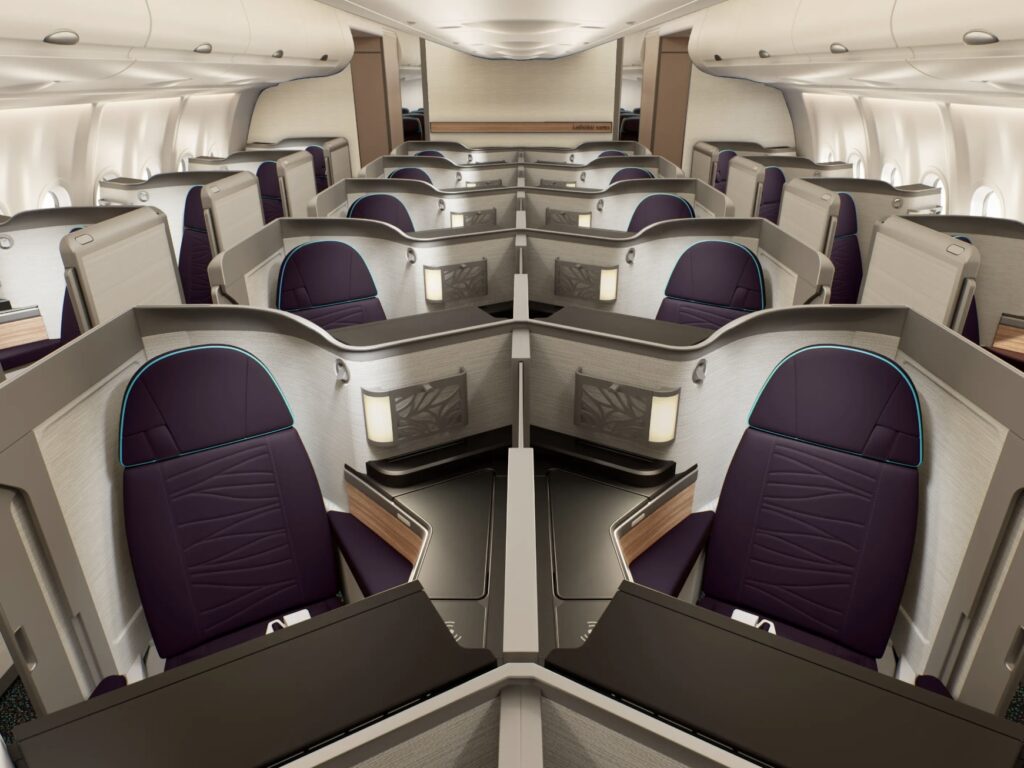
    Its fleet of 24 Airbus A330s will receive completely new interiors beginning in 2028, including 22 new Leihōkū Suites. They’ll have lie-flat seats with privacy doors and direct aisle access, along with 19-inch 4K screens, hotel-quality bedding, and upgraded dining.

    Rendering of Hawaiian Airlines new A330 business class cabins.
    ALASKA AIRLINES

    Another 28 seats will be Premium Reserve.

    Altogether, about 40% of the A330 will be premium seating, up from 30% today. The rest of the airplane is getting attention too, with new interiors throughout and upgraded entertainment with 4K screens and Bluetooth connectivity.

    The Leihōkū experience will also include dedicated check-in and concierge service in Honolulu and Seattle.

    Keeping Aurora and Leihōkū separate is also intentional. Alaska and Hawaiian are increasingly becoming one airline behind the scenes, but the company is still trying to preserve what makes the two brands distinct.

    That extends to the food. Seattle chef Renee Erickson will develop menus for Alaska’s European flights, including London, Rome, Athens, and Paris, while James Beard Award-winning chef Brady Ishiwata Williams will handle routes to Asia. Hawaiian will continue building its menus around local chefs and ingredients.

    Seattle Is Getting a 41,000-Square-Foot Lounge Complex

    The premium push starts well before boarding.

    Alaska plans to open a nearly 41,000-square-foot lounge complex in Seattle’s expanded C Concourse in late 2027. The airline says it’ll be Seattle-Tacoma International Airport’s largest lounge and one of the largest in the country.

    Rendering of Alaska Airlines new lounge at SEA.
    ALASKA AIRLINES

    It’s actually two connected lounges.

    A 500-seat Alaska Lounge will occupy the main level and follow Alaska’s existing access policies. A separate 200-seat Aurora Lounge will be reserved for Aurora Suites passengers traveling on intercontinental flights.

    The complex will have an outdoor patio with a fireplace, private work pods, three bars, a pizza oven, and what Alaska calls a coffee lab.

    The Aurora side goes further with private showers, wellness spaces, made-to-order food, à la carte dining, and tableside service.

    Hawaiian is getting a substantial lounge of its own. A nearly 13,000-square-foot, 200-seat lounge is scheduled to open in Honolulu in early 2028. Alaska also plans a new 14,000-square-foot lounge in San Diego that year.

    Rendering of new Alaska Airlines/Hawaiian Airlines lounge at HNL.
    ALASKA AIRLINES

    All of this starts to make more sense alongside where Alaska wants to fly.

    The company currently serves seven intercontinental destinations and plans to reach at least 15 by 2030. Long-haul flying is expected to grow from about 8% of capacity today to roughly 15% by then.

    Premium is becoming a bigger part of the business, too. Alaska expects premium revenue to grow from 35% to more than 40% of total revenue by 2030.

  • Chase Is Changing Hyatt Transfers for Select Cards on Oct. 1

    Chase Is Changing Hyatt Transfers for Select Cards on Oct. 1

    Time is fleeting to transfer Chase points to World of Hyatt at 1:1 with some Ultimate Rewards cards.

    Starting October 1, the Chase Sapphire Preferred and Ink Business Preferred will transfer points to Hyatt at a 4:3 ratio. For every 1,000 Chase points transferred, that means 750 Hyatt points instead of 1,000.

    Some Sapphire Preferred cardholders are already living with the new ratio. Anyone who opened the card on or after June 15 got the 4:3 ratio from the start.

    The Chase Sapphire Reserve and Sapphire Reserve for Business, meanwhile, are keeping 1:1 transfers.

    That’s a pretty meaningful divide for people who regularly use Chase points to book Hyatt hotels.

    A Hyatt stay costing 20,000 points currently takes 20,000 Chase points with a 1:1 transfer. At 4:3, it takes 27,000 Chase points, since Chase processes transfers in 1,000-point increments.

    Three nights at that price goes from 60,000 Chase points to 80,000.

    What to Do Before October 1

    If there’s a Hyatt stay somewhere in the plans, now is a good time to price it out.

    That doesn’t have to mean booking a hotel today. Check trips already planned for next year, weekends under consideration, or anywhere Hyatt was already a possibility.

    If a hotel is available with points and the trip is likely to happen, waiting until after October 1 to transfer could mean spending considerably more Chase points for exactly the same stay.

    {{ search-widget mode=”hotel” }}

    That doesn’t mean emptying an Ultimate Rewards account into Hyatt. Transfers are final, and keeping points with Chase leaves more options if plans change.

    There is another way to keep the 1:1 ratio.

    Chase is effectively making it a perk of its more expensive Sapphire Reserve cards. Someone who uses Hyatt regularly now has another reason to compare the Sapphire Preferred with the Sapphire Reserve, or the Ink Business Preferred with the Sapphire Reserve for Business.

    That’s a bigger decision than what to do before October 1. For now, if a Hyatt stay is somewhere on the horizon, it’s worth seeing what it costs before the transfer rate changes.

    {{ credit-card-widget uri=”chasesapphirereserve” }}

    {{ credit-card-widget uri=”csrbiz” }}

  • Delta Adds New Flights to Athens, Venice, and Paris for 2027

    Delta Adds New Flights to Athens, Venice, and Paris for 2027

    Delta is adding three new routes to Europe in 2027, with new nonstop flights to Athens, Venice, and Paris.

    The airline announced Thursday, September 25, that it will begin flying from Detroit (DTW) to Athens (ATH) and Boston (BOS) to Venice (VCE) next summer. Those flights will join a previously announced route from Austin (AUS) to Paris (CDG), which begins in March.

    Delta is also stretching several seasonal Europe routes farther into the spring and fall, giving some destinations a longer window than the usual summer schedule.

    Delta Adds New Flights to Athens, Venice, and Paris

    Delta will begin flying from Detroit to Athens three times weekly on June 8, 2027. Flights will operate through October 28 aboard an Airbus A330-200.

    It will be the first nonstop flight between Detroit and Athens, making Detroit Delta’s fourth U.S. gateway to the Greek capital.

    Boston gets a new route of its own beginning May 7. Delta will fly four times weekly to Venice through October 29 using an Airbus A330-300.

    That gives Boston another nonstop option to Italy, where Delta has been steadily adding service over the past few years. The airline will also increase its Boston-Milan route to daily service in 2027.

    Farther south, Delta will begin daily flights between Austin and Paris on March 27, 2027, giving Austin its first nonstop connection to the French capital. The route will use an Airbus A330-900neo.

    All three routes will offer Delta One business class and Delta Premium Select premium economy in addition to economy.

    The additions are part of a broader period of international growth for Delta. The airline is also preparing to launch its first flights to Riyadh (RUH) on October 23, 2026, adding Saudi Arabia to its route map.

    Delta Is Lengthening the Europe Season

    The new routes aren’t the only change coming to Delta’s Europe schedule.

    Several seasonal flights will start earlier in 2027, while others will stick around longer.

    Flights from Minneapolis-St. Paul and Detroit to Rome will begin in early March, for example, while Seattle-Rome will start in April. Delta is also bringing back several routes earlier in the year, including New York-JFK to Catania, Porto, Prague, and Copenhagen.

    Boston and Seattle flights to Barcelona and Atlanta-Edinburgh will return earlier as well.

    Some routes are also getting more service. Detroit-Rome and New York-Copenhagen will operate daily when they return, while Cincinnati-Paris will continue three times weekly from January through March.

    That makes Delta’s transatlantic network a little less dependent on the traditional summer rush.

  • American and STARLUX Are Working Toward Mileage Redemptions

    American and STARLUX Are Working Toward Mileage Redemptions

    American Airlines and STARLUX have officially launched their codeshare partnership. But for anyone with American miles, the more interesting part is what could come next.

    American says the airlines are working toward mileage redemptions and additional benefits. If that happens, STARLUX would become another way to use AAdvantage miles to get to Asia.

    That’s already one of the more useful aspects of American’s program. AAdvantage miles can be used on American’s own flights across the Pacific, along with partners including Japan Airlines and Cathay Pacific. Malaysia Airlines can help with trips farther into Southeast Asia, while Qantas opens up additional possibilities through Australia.

    STARLUX could add another piece to that network, with flights from several U.S. cities to Taipei and connections throughout Asia.

    More on This: Where Everyone Wanted to Go Abroad This Summer, According to PointsYeah Search Data

    STARLUX Redemptions Aren’t Available Yet

    The codeshare is the first step. American is now selling select STARLUX flights from Los Angeles (LAX), Ontario (ONT), San Francisco (SFO), and Seattle (SEA) to Taipei (TPE), with Phoenix (PHX) expected to follow pending approval.

    AAdvantage members can earn miles and Loyalty Points when those STARLUX flights are sold under an American flight number.

    What isn’t possible yet is booking a STARLUX flight with AAdvantage miles.

    American says the airlines will work together on future opportunities including “mileage redemption and additional travel benefits,” but hasn’t said when that will happen, what flights will be available, or how many miles they’ll cost.

    STARLUX isn’t the only potential addition, either. Philippine Airlines is preparing to join Oneworld, the airline alliance that includes American, Japan Airlines, Cathay Pacific, Qantas, and several other carriers. Its membership should eventually create another way to use American miles for flights in Asia.

    There’s plenty left to learn about both additions. But the direction is pretty interesting. AAdvantage already offers several ways to cross the Pacific using miles, and that list looks likely to get longer.

  • Alaska Airlines Is Getting Much Bigger at Seattle’s Other Airport

    Alaska Airlines Is Getting Much Bigger at Seattle’s Other Airport

    Alaska Airlines is planning a sizable expansion at Paine Field, giving the Seattle area’s secondary airport considerably more service over the next year.

    The airline announced September 24 that it will increase its seat capacity at Seattle Paine Field (PAE) by 50% between this fall and summer 2027.

    The expansion includes one new destination, San Jose, along with more flights or larger aircraft on several existing routes.

    Alaska plans to begin twice-daily flights between Paine Field and San Jose on April 14, 2027, operated by Horizon Air with Embraer E175 aircraft.

    Los Angeles will also increase to twice-daily service, with both flights moving to larger Boeing 737 aircraft. Portland grows to two flights per day, while Alaska is adding seats to San Diego and San Francisco.

    Paine Field Is Becoming a Bigger Part of Alaska’s Seattle Network

    None of the individual route changes is especially dramatic. Taken together, though, a 50% increase in seats is meaningful for an airport that offers an alternative to Seattle-Tacoma International Airport (SEA).

    Paine Field sits roughly 25 miles north of downtown Seattle in Everett, making it considerably closer for parts of northern Seattle and communities north of the city. Its small passenger terminal also offers a very different experience from Alaska’s much larger operation at SeaTac.

    The expansion doesn’t turn Paine Field into another major hub. Most of Alaska’s Seattle-area flying will continue to operate from SEA.

    But by summer 2027, PAE will offer substantially more Alaska capacity to several major West Coast destinations. For anyone living north of Seattle, that makes checking both airports before booking a trip a little more important.

  • Qantas Will Fly Nonstop From Sydney to New York Starting in 2028

    Qantas Will Fly Nonstop From Sydney to New York Starting in 2028

    Flying between Sydney and New York is about to get a little more direct, even if it won’t get much shorter.

    Qantas announced September 22 that it will launch nonstop flights between the two cities in mid-2028 as part of its long-planned Project Sunrise. The roughly 18-hour flight will be the first nonstop commercial service between Australia and New York.

    Tickets are expected to go on sale in August 2027.

    Qantas already flies between Sydney and New York, but the current route stops in Auckland. Removing that stop is expected to cut more than three hours from the total trip.

    Qantas Is Building a Plane for Some Very Long Flights

    The New York route will use Qantas’ specially configured Airbus A350-1000ULR, with ULR standing for Ultra Long Range. The aircraft will first enter commercial service on nonstop Sydney to London flights in October 2027.

    Those flights will spend roughly 20 hours in the air, giving a sense of what Qantas is building these aircraft to do. The airline says the A350-1000ULR can fly for up to 22 hours nonstop.

    Qantas is configuring its 12 Project Sunrise aircraft with just 238 seats across first class, business class, premium economy, and economy. The planes will also have an additional 20,000-liter fuel tank to make these ultra-long flights possible.

    There’s even a dedicated Wellbeing Zone where passengers can stretch, grab a drink or snack, and follow guided movements on large screens. Spending the better part of a day on an airplane makes that sound a little less gimmicky.

    The first aircraft is expected to arrive in April 2027.

    New York will be the second confirmed Project Sunrise route after London. Qantas hasn’t released the Sydney to New York schedule or said how frequently it will operate.

    There’s also no word yet on what tickets will cost or how many seats might eventually be bookable with Qantas points or through partners such as American Airlines.

    Those details are a ways off. But beginning in 2028, getting from Sydney to New York should no longer require landing somewhere in between.

    Eighteen hours in a middle seat, on the other hand, is one problem Project Sunrise can’t solve.