Timely coverage of major developments in travel, loyalty programs, airlines, hotels, and credit cards. News should answer what happened and why it matters.
American Airlines has been preparing to say goodbye to Flagship First for years. Until now, we just didn’t know when the airline would make it official.
On September 2, American announced that Flagship First will no longer be available for purchase on its Boeing 777-300ERs for travel beginning November 19, 2026. The airline will then stop selling Flagship First on its premium transcontinental routes for travel beginning March 28, 2027.
That will bring an end to American’s dedicated first-class cabin and leave the newer Flagship Suite as the airline’s top premium product.
It’ll also mark the end of an era for U.S. airlines.
American is the last U.S. carrier to offer a true international first-class cabin, something Delta and United abandoned years ago in favor of increasingly elaborate business-class products.
Flagship First Is Disappearing From the 777-300ER
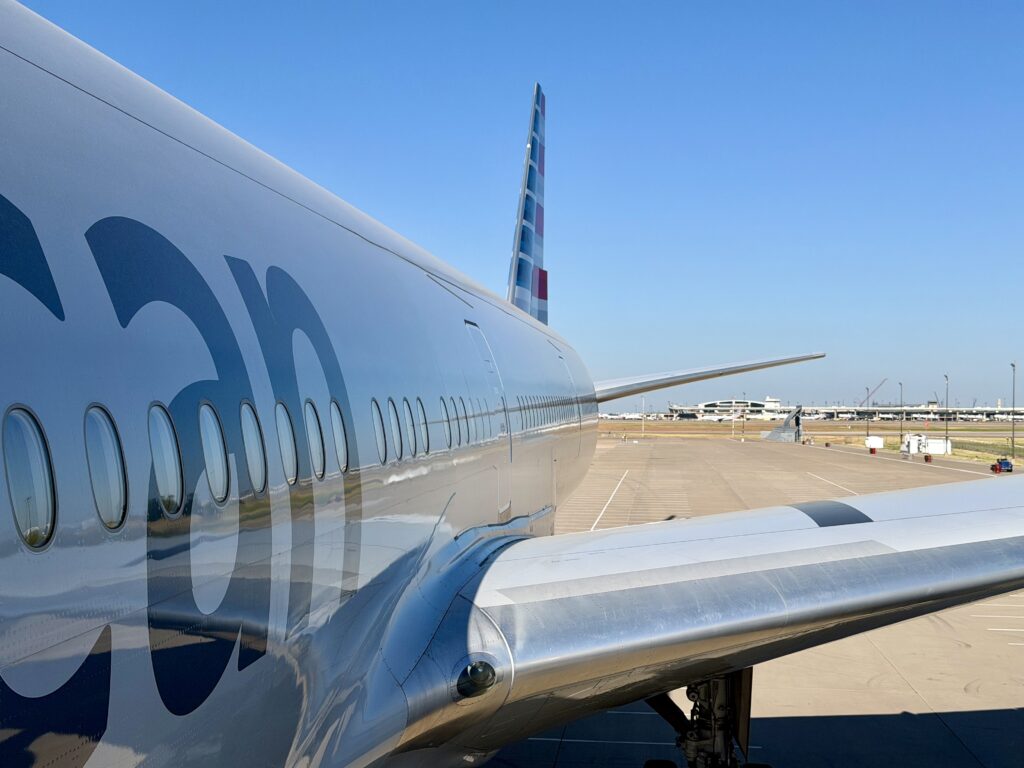
American currently offers Flagship First on two aircraft: the Boeing 777-300ER used on long-haul international routes and the Airbus A321T used primarily on premium transcontinental routes from New York (JFK) and Boston (BOS) to the West Coast.
The airline has been working toward eliminating both versions for some time.
TYLER GLATT / POINTS INSIDER
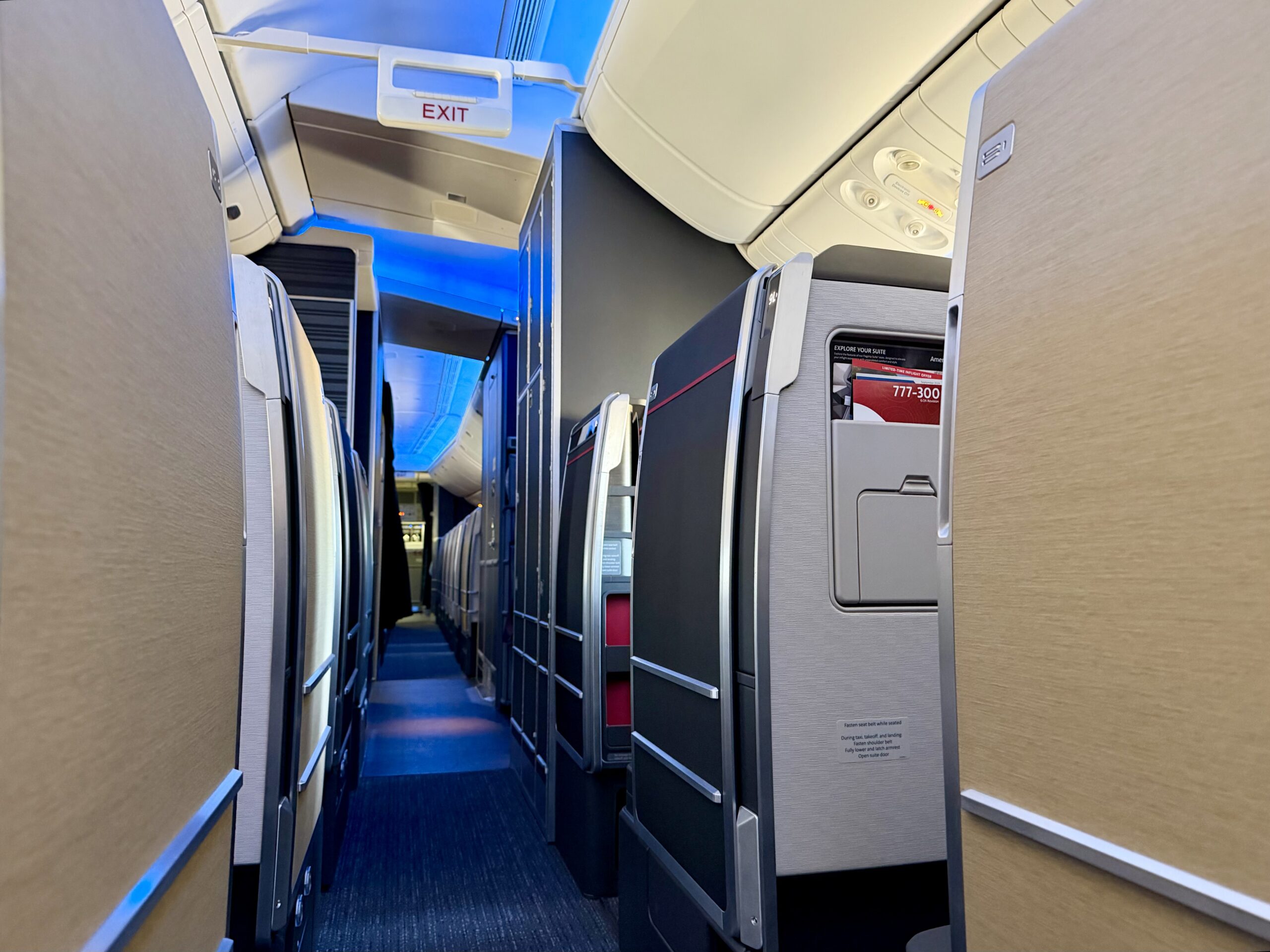
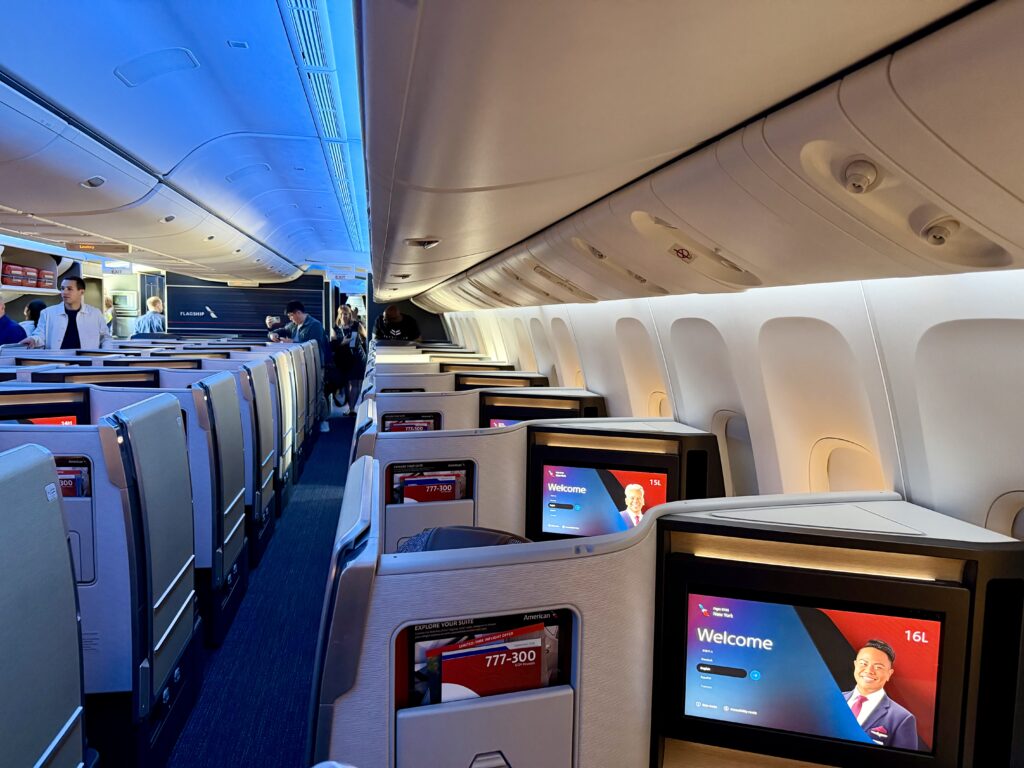
American’s 20 Boeing 777-300ERs are being retrofitted with new interiors that replace the eight-seat Flagship First cabin with a much larger business-class cabin. The work is expected to be completed by mid 2027.
The new configuration has 70 Flagship Suite seats with privacy doors, 44 Premium Economy seats, 30 Main Cabin Extra seats, and 186 standard Main Cabin seats.
The first retrofitted 777-300ER enters commercial service on September 2 between New York (JFK) and Buenos Aires (EZE) as flight AA953.
American says Flagship First will no longer be available for purchase on the 777-300ER for travel beginning November 19.
Transcontinental First Class Gets a Few More Months
Flagship First will hang around a little longer on American’s transcontinental routes.
The Airbus A321T has an unusual three-cabin configuration with Flagship First, Flagship Business, and economy. But that premium-heavy configuration is also on its way out.
American is reconfiguring the A321Ts with a more standard layout as Airbus A321XLRs take over premium transcontinental flying.
The XLR still has a premium layout, but there’s no separate first-class cabin. Instead, it has 20 Flagship Suite seats, followed by 12 Premium Economy seats and 123 seats in Main Cabin.
But the XLR’s Flagship Suite isn’t identical to the version found on American’s new Boeing 787-9P (the P stands for premium) and retrofitted 777-300ER. The XLR requires a different seat design because of its narrower cabin.
As more XLRs enter the fleet, American says Flagship First will no longer be sold on transcontinental routes for travel beginning March 28, 2027.
That means Flagship First will disappear in two stages: first from international flying this November, then from the transcontinental network next March.
Flagship Suite Becomes American’s Top Seat
American revealed plans years ago that would ultimately eliminate Flagship First as it introduced its new Flagship Suite.
What’s new is that the airline has finally put dates on the transition that’s already well underway.
TYLER GLATT / POINTS INSIDER
Once Flagship First disappears, Flagship Suite will officially take over as American’s top long-haul product.
In many ways, the change makes sense. The differences between first and business class have been shrinking for years. Today’s best business-class seats offer privacy doors, direct aisle access, better bedding, and many of the features that once helped set international first class apart.
But that doesn’t mean there won’t be some nostalgia for Flagship First. American is the last U.S. airline to offer a true international first-class cabin, and its retirement will bring that era to an end.
So for anyone hoping to experience Flagship First one last time, or for the first time, the clock is now officially ticking.
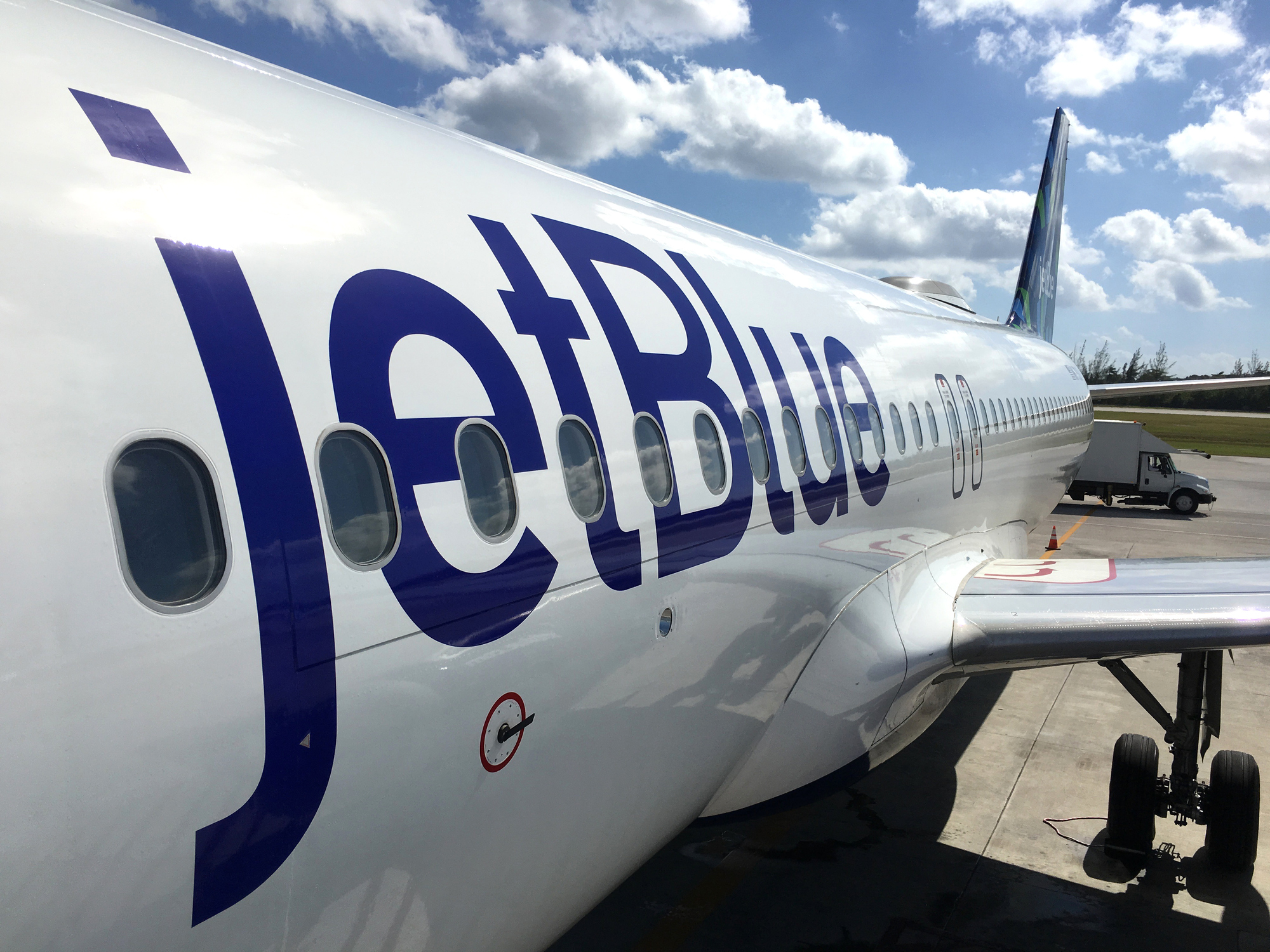
JetBlue is getting ready to launch its take on first class. And now we know more about what the experience will look like.
The airline revealed new details Tuesday about BlueFirst, its domestic first-class product. The first aircraft with BlueFirst will take off later this year, and tickets will become available to book sometime this fall.
Where BlueFirst will fly first is still a mystery. But JetBlue says initial routes and more details about booking availability will be announced later this year.
What to Expect From JetBlue BlueFirst
BlueFirst will feature a fairly traditional domestic first-class layout, with seats arranged 2-2 in the first few rows of the plane. They’ll offer five inches of recline and up to seven inches more legroom than JetBlue’s standard Main seats.
Each seat will have a 13.3-inch entertainment screen with Bluetooth connectivity, plus USB-A, USB-C, and standard power outlets. Free inflight Fly-Fi isn’t going anywhere.
But as JetBlue executives told Points Insider at the recent opening of the airline’s Boston BlueHouse, the goal isn’t to copy what everyone else is doing in first class.
JetBlue sees an opportunity to put its own spin on the experience while sticking to what executives described as “affordable luxury.”
SPONDYLOLITHESIS / ISTOCK
The seat itself doesn’t stray far from the domestic first-class formula. Some of JetBlue’s more interesting twists come with the service.
BlueFirst customers will be able to order food and drinks from the seatback screen. A new “Mixologist Mode” will even let passengers build a cocktail by choosing a spirit, mixer, and flavorings before sending the order to the crew.
On flights of at least 899 miles, meals will include an entrée, side, and dessert served in a bento-inspired box. Premium snacks will be available on every flight, while passengers on overnight flights will get a blanket and snooze kit.
“Domestic first class has become easy to predict. We think it’s time for a fresh take,” JetBlue CEO Joanna Geraghty said. “Customers are increasingly looking for more premium experiences, and BlueFirst gives them an elevated experience that feels distinctly JetBlue.”
BlueFirst also comes with the more familiar first-class perks, including Group 1 boarding, dedicated overhead bin space, priority check-in and baggage delivery, two free checked bags, and expedited security lanes at more than 30 airports.
JetBlue will share more about Mosaic perks for BlueFirst closer to its arrival.
Another Piece of JetBlue’s Premium Push
BlueFirst isn’t meant to replace Mint. Instead, it fills a big hole by giving JetBlue a bona fide premium cabin on routes where it doesn’t offer lie-flat seats.
Passengers will be able to book BlueFirst on routes not served by a Mint-equipped aircraft.
It’s also the latest piece of a much bigger shift for the airline. JetBlue now has BlueHouse lounges in New York (JFK) and Boston (BOS). And BlueFirst brings that premium push onto more of its airplanes.
We still don’t know where BlueFirst will debut or, more importantly, how much it will cost.
And the price may ultimately tell us just as much about whether JetBlue can deliver on its vision of “affordable luxury” as the cocktails and bigger seats do.
There’s a new way to book Condor flights with points.
As of September 1, Qantas Frequent Flyer members can redeem points for Condor flights in economy, premium economy, and business class.
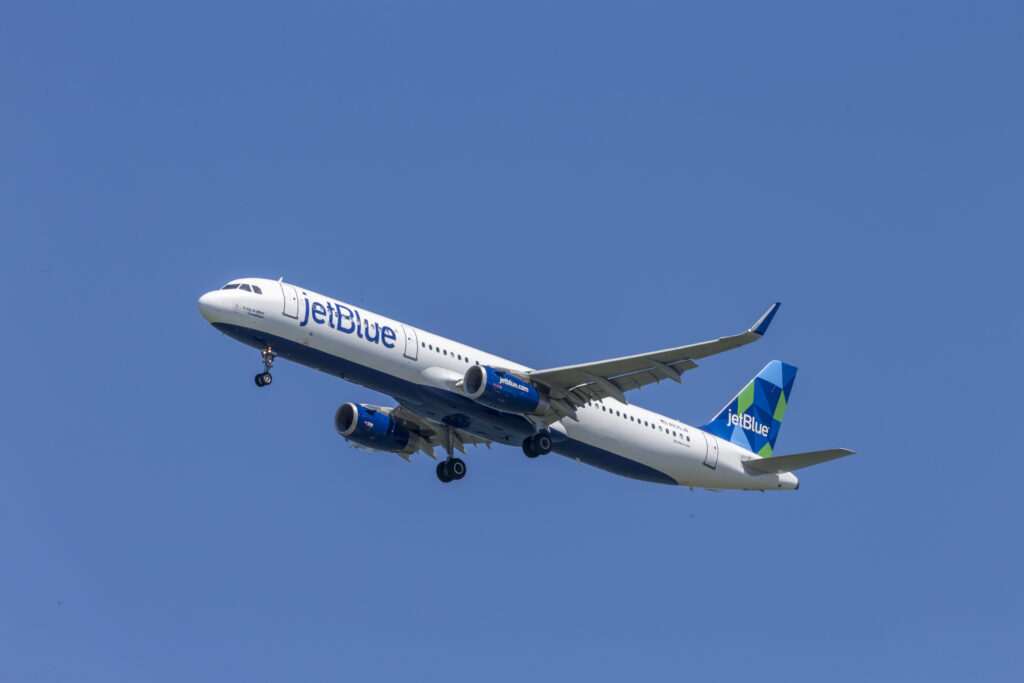
Condor has become an increasingly popular redemption partner for airline loyalty programs. Qantas joins Alaska Atmos Rewards, JetBlue TrueBlue, and Emirates Skywards in offering Condor awards.
Qantas Points Can Now Be Used for Condor Flights
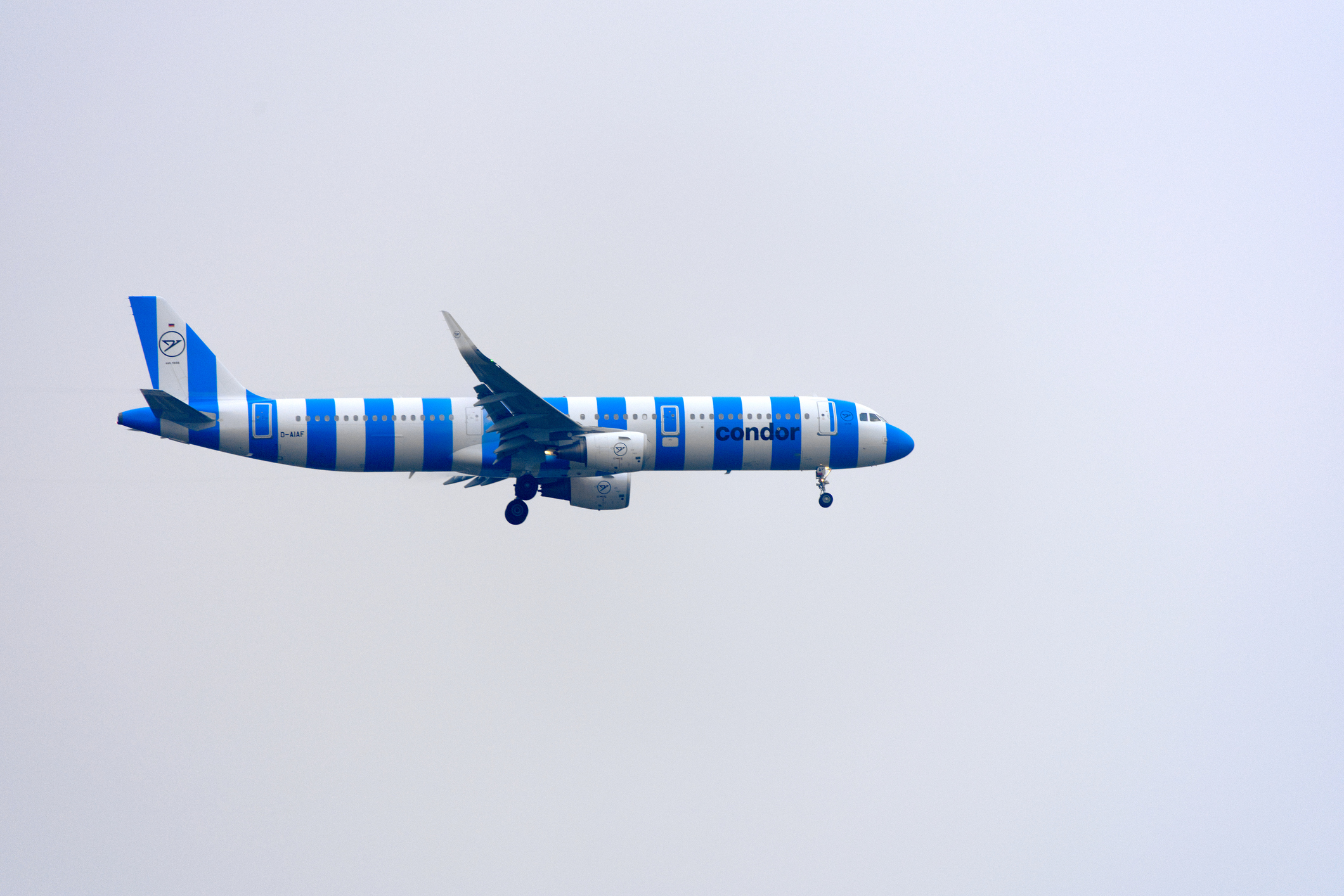
Condor is a German airline with a sizable route network between North America and Europe. It flies from several cities across the U.S. and Canada to Frankfurt (FRA), including New York, Los Angeles, San Francisco, Seattle, and Anchorage.
From Germany, Condor also flies throughout Europe and to destinations in Africa, Asia, and the Middle East.
And those flights can now be booked with Qantas Points.
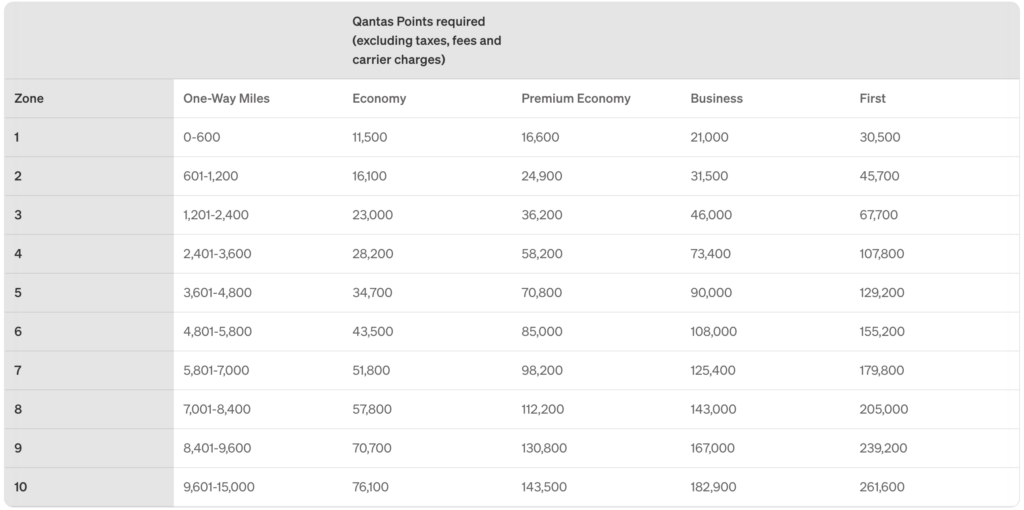
Condor awards booked through Qantas follow the program’s distance-based partner award chart. The number of points required depends on the distance flown and cabin booked.
QANTAS.COM
Qantas award pricing shown above is accurate as of September 1, 2026. Award rates can change, so check Qantas for current pricing before booking.
Taxes and fees are charged in addition to the points required and vary by route.
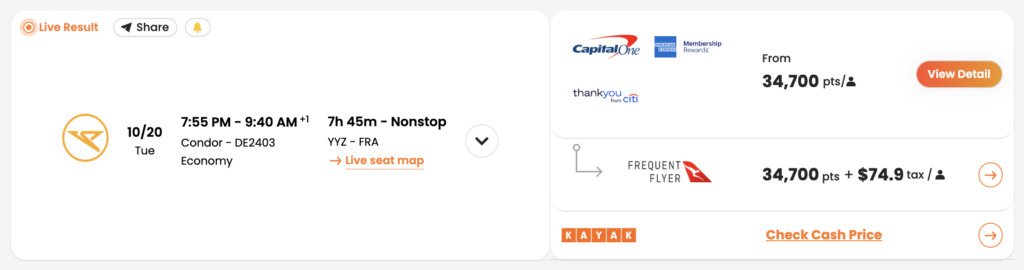
Condor awards bookable with Qantas Points are already appearing in PointsYeah searches.
POINTSYEAH
Searching a route and dates can surface Condor alongside other award options for the same trip. Award space varies by date and cabin, so checking nearby dates can help turn up additional options.
Qantas isn’t the only option for booking Condor awards.
Condor flights can also be booked with Alaska Atmos Rewards points, JetBlue TrueBlue points, and Emirates Skywards miles. Each program prices awards differently, and the seats available through one program may not always match what’s available through another.
But with Qantas now in the mix, there’s one more program to lean on when booking Condor awards to and through Germany.
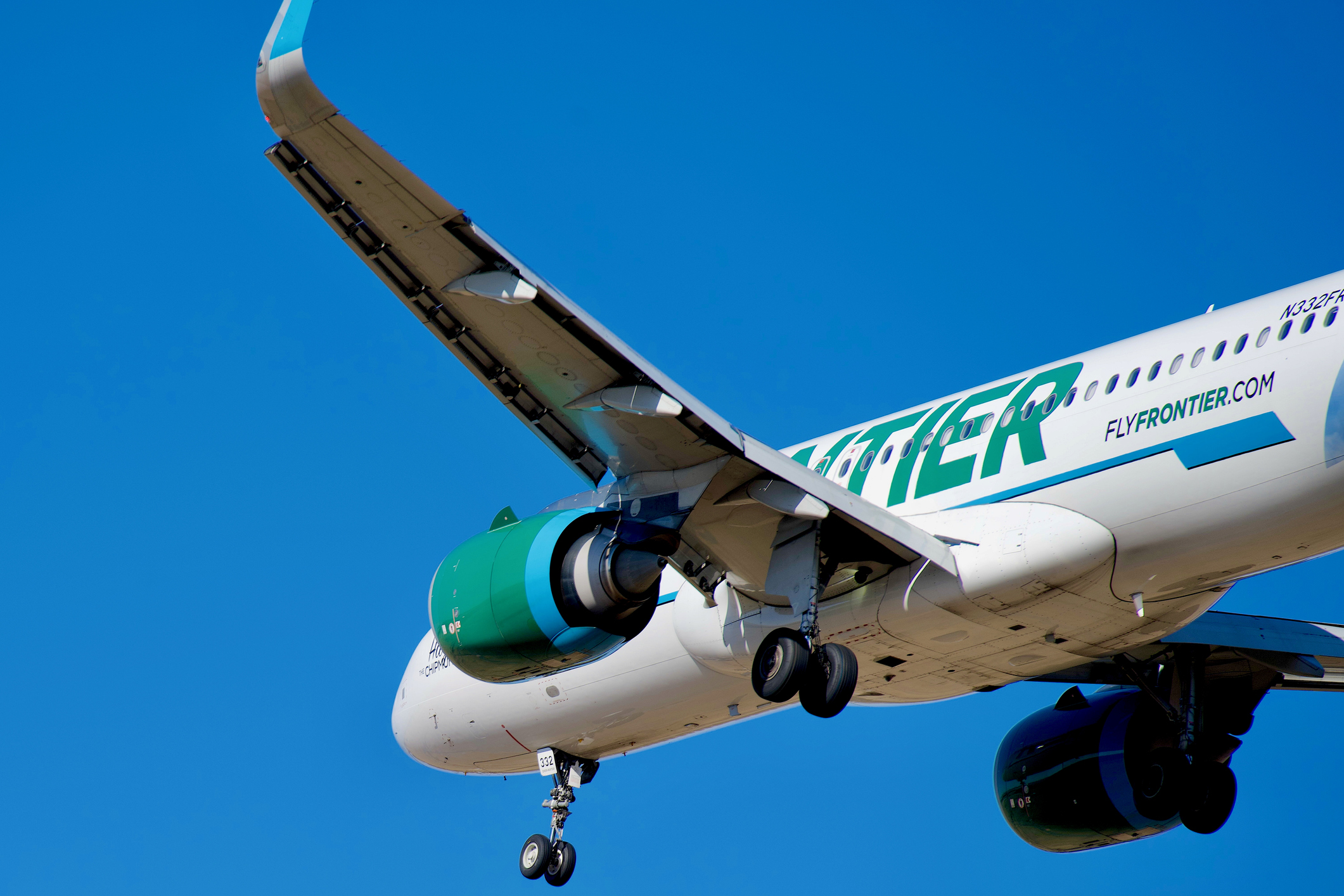
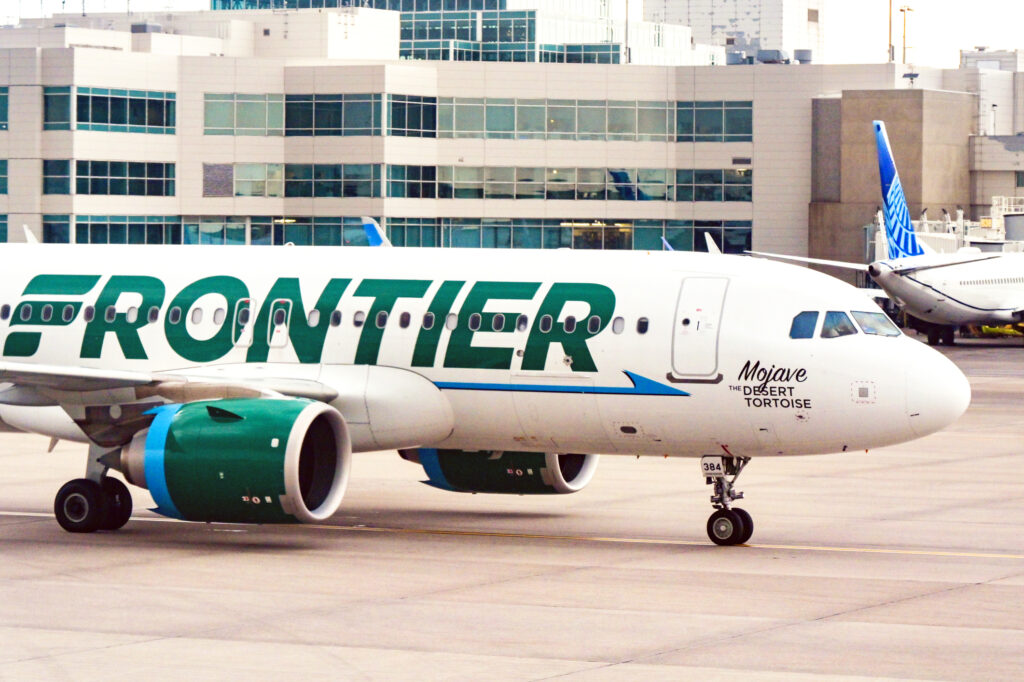
Frontier Airlines is adding more benefits for its elite members next year. And some of them sound a lot more like what you’d expect from a full-service airline.
Beginning in 2027, every level of Frontier Miles elite status will come with a chance at a complimentary upgrade to UpFront Plus or the airline’s forthcoming First Class seats. That includes Silver, Frontier’s entry-level elite tier.
Frontier is also reshuffling how members qualify for status. Diamond is getting 25% easier to earn, while the requirements for Silver and Gold are going up.
The changes come as Frontier continues to stretch beyond its ultra-low-cost roots. First Class, upgrades, a more comprehensive loyalty program, and Starlink Wi-Fi are all things that would have sounded almost unthinkable just a few years ago for an airline known for selling fares for less than $20.
First Class Upgrades Are Coming to Every Elite Tier
Frontier plans to introduce First Class later this year. It’s in the process of installing two-by-two seating at the front of its aircraft.
Starting in 2027, every Frontier Miles elite tier will have a chance to upgrade into First Class or UpFront Plus (a handful of rows where the middle seat is kept empty). The benefit will be available to elite members who purchase an Economy or Premium bundle.
How early that chance comes depends on status. Silver members become eligible for upgrades four hours before departure, followed by Gold at eight hours, Platinum at 18 hours, and Diamond at 24 hours.
There are other improvements coming for elites, too. Platinum members will receive a free checked bag for everyone on their reservation. Diamond members will get two.
Frontier is also introducing Milestone Rewards in 2027, although it hasn’t revealed what those rewards will include yet.
CERI BREEZE / ISTOCK
Frontier Is Reshuffling How You Earn Elite Status
Frontier isn’t making every level of status easier to earn.
Starting September 1, the requirement for Diamond will drop from 100,000 Elite Status Points to 75,000. Anyone who reaches 75,000 points in 2026 will earn Diamond status for 2027.
But starting January 1, the requirement for Silver will increase from 10,000 to 15,000 points, while Gold will move from 20,000 to 25,000. Platinum will stay at 50,000 points.
Frontier is also adjusting how members earn miles and Elite Status Points on tickets purchased beginning September 1. Travelers buying Economy, Premium, or Business bundles will earn at higher rates, and Frontier cardmembers can earn even more.
The end result is a loyalty program that’s raising the bar at the bottom while making its top status easier to reach and more rewarding to hold.
That’s an interesting direction for an airline built around low fares and charging separately for much of everything else. The irony is that the more you spend with Frontier, the fewer of those extras you’ll have to pay for.
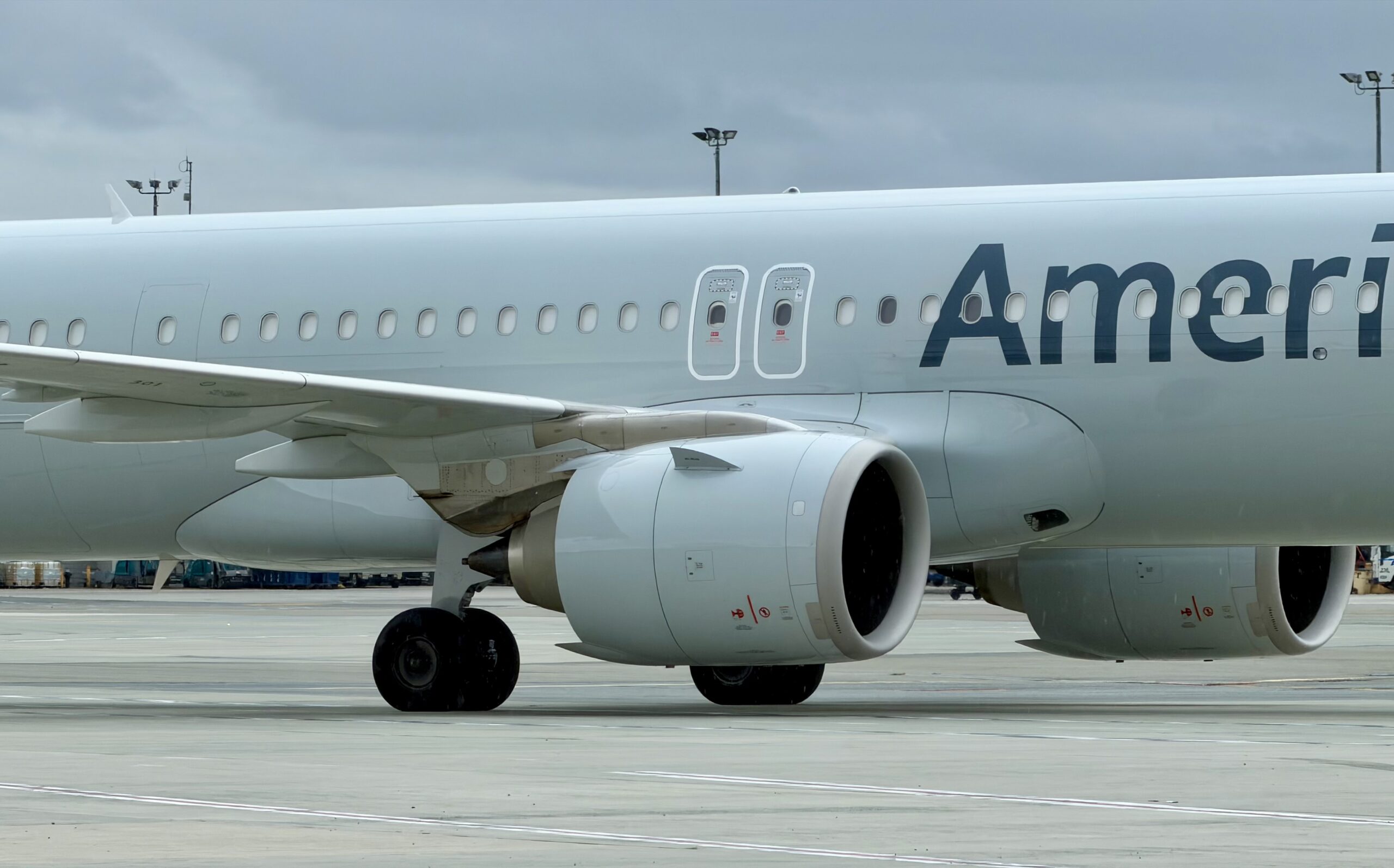
American Airlines is adding seven international routes in 2027, and its Airbus A321XLR will be flying several of them.
Four of the routes announced Thursday will use the long-range narrowbody. That includes brand-new service to Vienna and Porto, along with new flights from New York (JFK) to Amsterdam and Nice.
The A321XLR has been flying for American for less than a year, starting with transcontinental flights before heading across the Atlantic to Edinburgh. Those early routes offered a small preview of what American had planned for the jet.
But its 2027 schedule is giving us a much better idea of what’s ahead.
American’s New International Routes for 2027
American’s expansion includes three destinations joining or returning to its network, plus several new routes to cities it already serves from other gateways.
Some were announced earlier this year, while others are new as of Thursday.
Route
Starts
Aircraft
Chicago (ORD) → Tokyo Narita (NRT)
March 19
Boeing 787-9
New York (JFK) → Amsterdam (AMS)
March 28
Airbus A321XLR
Philadelphia (PHL) → Porto (OPO)
March 28
Airbus A321XLR
New York (JFK) → Nice (NCE)
May 6
Airbus A321XLR
Philadelphia (PHL) → Vienna (VIE)
May 6
Airbus A321XLR
Charlotte (CLT) → Barcelona (BCN)
May 27
Boeing 777-200ER
Philadelphia (PHL) → Reykjavik (KEF)
May 27
Airbus A321neo
Vienna and Porto will be entirely new destinations for American. Reykjavik returns to the airline’s network for the first time since 2019.
Elsewhere, American is bringing back Charlotte to Barcelona and adding new service from New York to Amsterdam and Nice. The Chicago to Tokyo Narita route was previously announced in July but is still included in American’s seven-route expansion for 2027.
There are a few other schedule changes coming next year. American will add a fourth daily flight between New York and London Heathrow (LHR), while seasonal Charlotte to Paris (CDG) and Miami to Milan (MXP) service will extend into early January 2028.
Tickets were supposed to go on sale Monday, August 31, but went on sale a day early.
Four of the seven routes will be flown by an aircraft that carries just 155 passengers.
That’s considerably fewer seats than you’ll find on the Boeing 787s and 777s that do much of American’s long-haul flying. But the A321XLR can still cross the Atlantic. It’s outfitted with 20 Flagship Suite business class seats, 12 Premium Economy seats, and 123 seats in economy.
For American, that means having a smaller aircraft it can send on long international routes without giving up business class or Premium Economy.
The 2027 schedule shows how American can put that flexibility to work. The XLR can open new destinations like Vienna and Porto or add another U.S. gateway to cities already on the map, as American is doing with Amsterdam and Nice.
There are plenty more XLRs coming, too. American has dozens still on order. That could mean more niche European routes or flights to new destinations in South America.
For passengers, there is one very big tradeoff. More long-haul XLR routes also mean more opportunities to spend a transatlantic flight on a single-aisle aircraft.
Whether that matters probably depends on where you’re sitting.
SWISS has been spending heavily on the passenger experience, and some of that investment is now coming to its home airport.
The airline announced plans to open new Business and Senator Lounges at Zurich Airport (ZRH) in the first quarter of 2027. Combined, the new lounges will span around 28,000 square feet (2,600 square meters), giving SWISS a lounge footprint that’s about 20% larger than the three lounges it currently operates in Dock A.
SWISS said last year that it invests around CHF 1 billion annually in improving the travel experience. So far, that investment has been most visible in the air. Last year, the airline debuted its new SWISS Senses cabins on the Airbus A350. And more recently, it kicked off a lengthy retrofit process to bring the new onboard product to its Airbus A330s and Boeing 777s as well.
But while that’s happening, SWISS is continuing to focus on the ground in Zurich.
New SWISS Lounges Are Coming to Dock B
The new Business and Senator Lounges will take shape in Dock B, where they’ll occupy separate floors of a building on the southern side of the dock.
There’s a reason they’re moving. Zurich Airport is preparing to replace Dock A, and the new building at Dock B will temporarily house some of the infrastructure displaced during construction.
The five-story modular building will initially include lounges and bus gates, along with some Airside Centre logistics. Construction began in May 2025, and the opening is expected in early 2027.
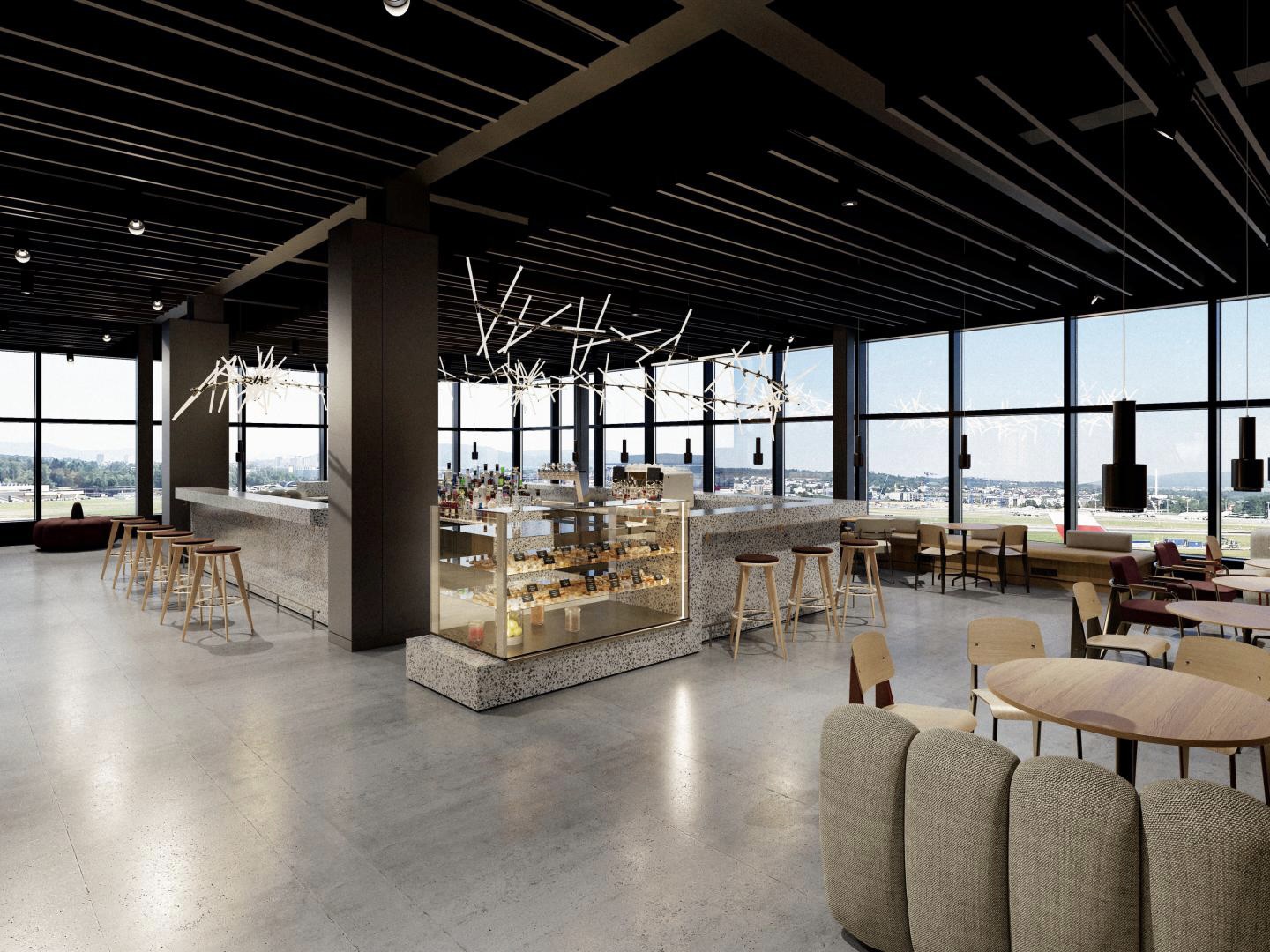
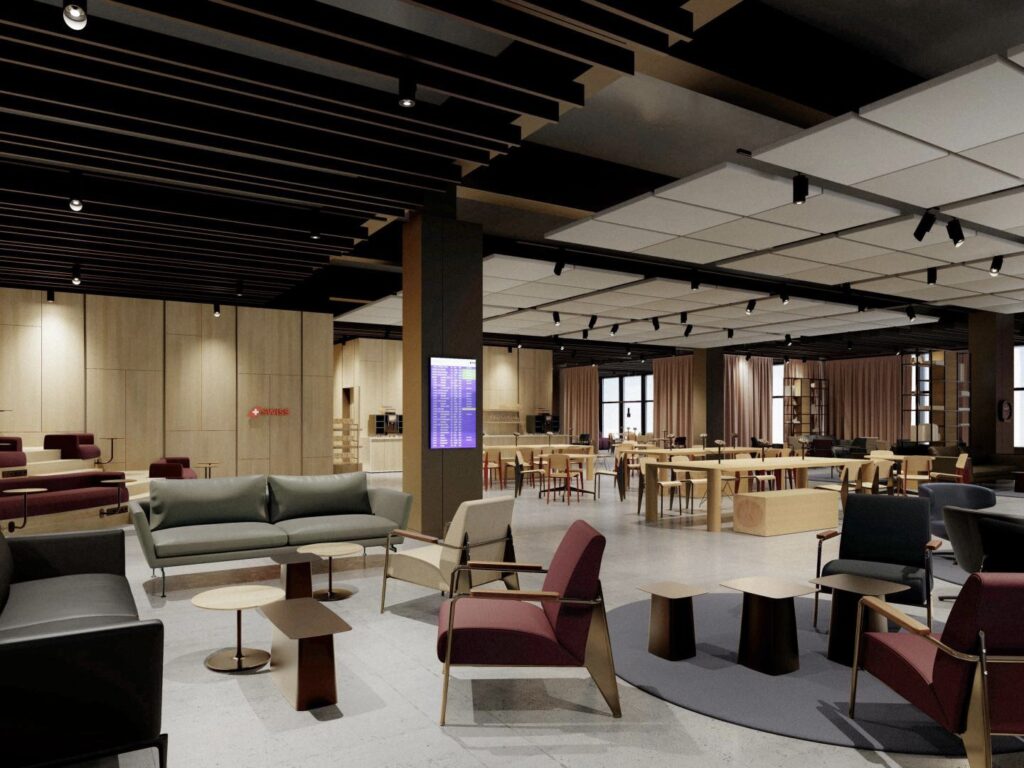
RENDERING OF THE NEW SWISS BUSINESS LOUNGE AT ZURICH AIRPORT / SWISS
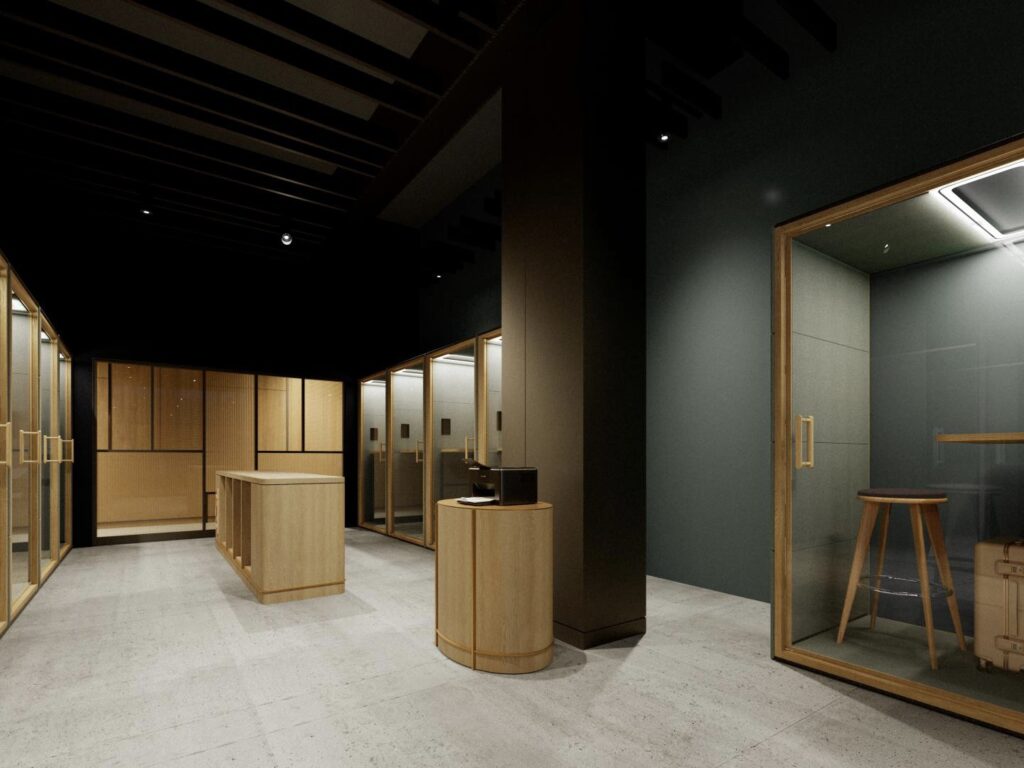
Inside, both lounges will feature more seating and dedicated areas for working and relaxing. Across the two spaces, SWISS plans to offer around 20 fully soundproofed workstations.
RENDERING OF THE NEW SWISS BUSINESS LOUNGE AT ZURICH AIRPORT / SWISS
Large windows should bring plenty of natural light into both lounges.
The Senator Lounge will get a few extras of its own. A bar along the windows will offer a 180-degree view of Runway 34, the apron, and the Alps. SWISS also plans to add a wine humidor and a dedicated maturation room for selected cheeses and cured meats.
It doesn’t get much more Swiss than that.
The Existing Dock A Lounges Will Close
Once the new spaces open in the first quarter of 2027, the current Business and Senator Lounges will close, along with the SWISS Alpine Lounge.
The Alpine Lounge offers a more casual take on the SWISS lounge experience, with chalet-inspired design and an open kitchen.
But the concept isn’t disappearing entirely.
SWISS confirmed to Points Insider that while the Alpine Lounge won’t continue as a standalone lounge, selected elements will carry over to the new lounges. The airline says the Alpine Lounge will also serve as inspiration for the new spaces.
The First and HON Circle Lounge will stick around a little longer. SWISS plans to keep it open in Dock A until 2028, when it will also move to Dock B. The airline hasn’t shared details about what that lounge will look like.
Meanwhile, Zurich Airport expects construction on the new Dock A to begin in 2027. It will be built just north of the existing dock, allowing the current facility to remain open until the new one is ready.
For passengers, the end result is what matters most. Starting next year, there will be more room to work, eat, or watch airplanes before a SWISS or partner flight from Zurich.
And apparently, somewhere for the cheese to mature, too.
With each passing day, there are fewer and fewer cities on the world map where you won’t see a United tail. And eight of these new destinations won’t have nonstop service from the U.S. on another U.S. airline.
That means new ways to get to places like Okinawa, Toulouse, Luxembourg, Ibiza, and Ljubljana without connecting overseas. And if you happen to have United MileagePlus miles, it means more places to put them to work.
If those miles are burning a hole in your pocket, there’s no need to wait until next year to start looking. Tickets for all 13 new routes are already on sale.
United’s 13 New International Routes
United’s latest expansion stretches from Japan to the Mediterranean, with most of the new service beginning in spring 2027.
Route
Starts
Aircraft
San Francisco (SFO) → Okinawa (OKA)
March 27
Boeing 777-200ER
Los Angeles (LAX) → Osaka (KIX)
March 27
TBD
Newark (EWR) → Luxembourg (LUX)
April 2
Airbus A321XLR
Washington Dulles (IAD) → Toulouse (TLS)
April 26
Airbus A321XLR
Newark (EWR) → Ljubljana (LJU)
May 12
Boeing 767-400ER
Newark (EWR) → Olbia (OLB)
May 27
Boeing 767-300ER
Denver (DEN) → Paris (CDG)
May 27
TBD
Newark (EWR) → Catania (CTA)
May 28
Boeing 767-300ER
Washington Dulles (IAD) → Milan (MXP)
May 28
TBD
Newark (EWR) → Ibiza (IBZ)
May 31
Airbus A321XLR
Newark (EWR) → Valencia (VLC)
June 2
Airbus A321XLR
Newark (EWR) → Marseille (MRS)
June 4
Airbus A321XLR
Newark (EWR) → Terceira (TER)
June 9
Boeing 737 MAX 8
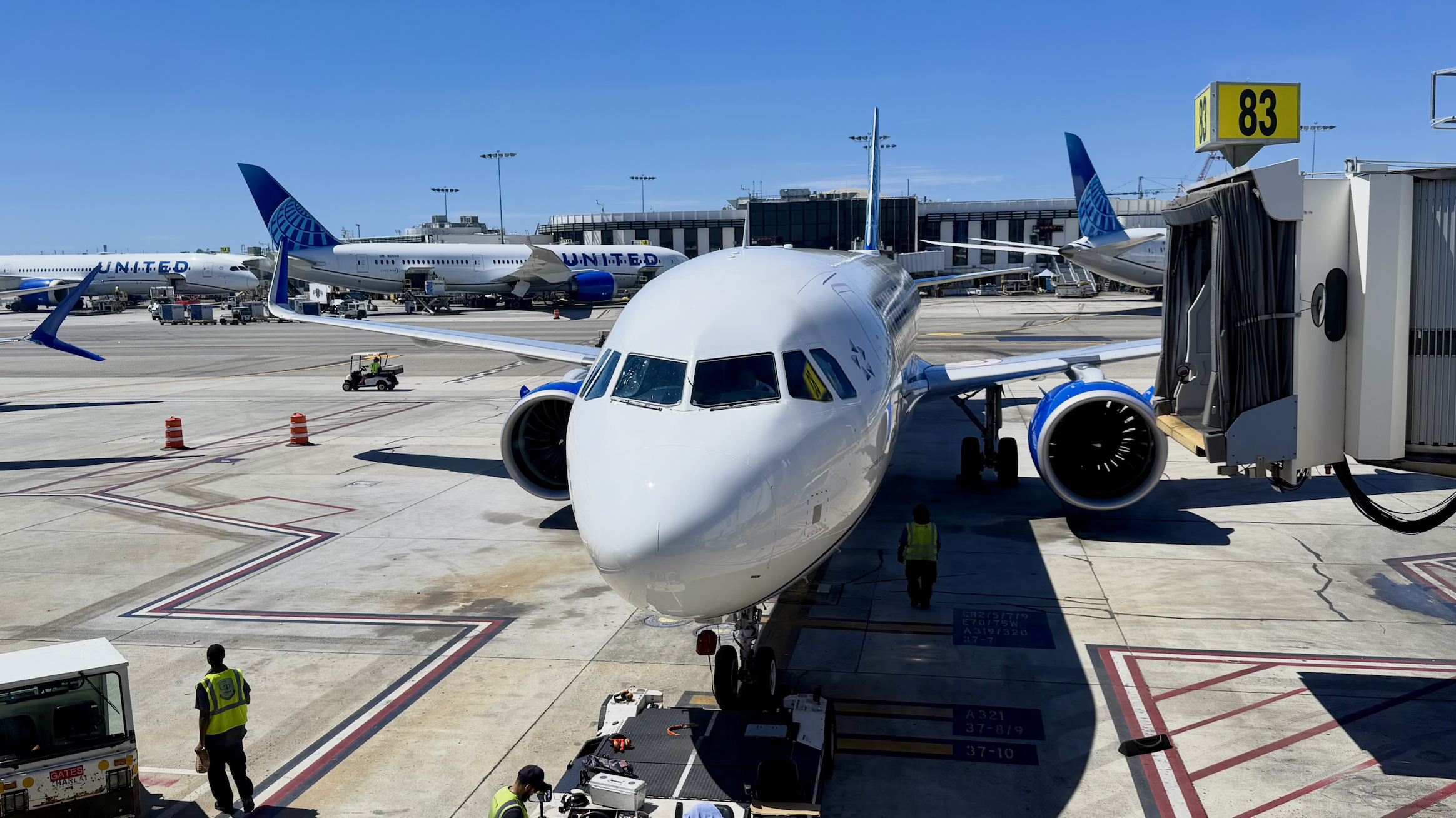
Five of the new routes will be flown by United’s brand-new Airbus A321XLR, which kicks off international service later this year. Its extended range gives United another way to serve international routes that may not have enough demand to justify a larger aircraft.
That helps explain some of the more unusual additions to the map. Toulouse and Luxembourg aren’t exactly the first cities that come to mind when a U.S. airline announces another round of flights to Europe.
But that’s part of the appeal of this particular jet.
It’s too easy to think about airline miles in terms of price. How many miles does an award cost? Did the price go up? Can you find something cheaper?
Where those miles can take you matters just as much. If not more.
United says it has added nearly 60 international destinations since 2017, giving MileagePlus members an increasingly long list of places to use their miles. These latest additions include several destinations that would otherwise require another flight, train ride, or connection after crossing the Atlantic.
Want to go to Ibiza? United will soon take you there nonstop from Newark. The same goes for Ljubljana, Toulouse, Terceira, and Valencia.
None of that guarantees a cheap award ticket. But every new route creates another opportunity to use your miles for the trip you actually want to take.
United Cardholders Have an Advantage
There’s another wrinkle worth knowing before you start searching.
United doesn’t show every MileagePlus member the same award pricing.
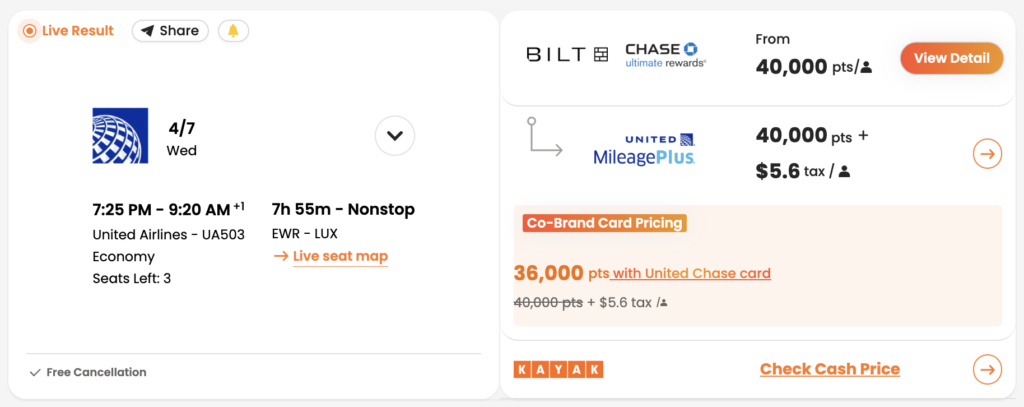
Eligible United credit card holders can receive savings of 10% or more on eligible United-operated award flights. Those with both an eligible card and Premier status can save 15% or more.
That benefit is less obvious than a free checked bag or lounge access, but potentially a lot more valuable when you’re ready to use your miles.
When searching live United award availability through PointsYeah, you can view cardholder-exclusive pricing directly in your results. That means you don’t also need to check United’s website to see if your card gets you a better deal.
United’s new routes don’t begin flying until next spring, but they’re already on sale.
So whether Okinawa caught your attention or Ibiza sounds better, you can use PointsYeah to start looking for award space now, including the cardholder pricing you’re eligible for.
We were supposed to get inside JetBlue’s new BlueHouse lounge at Boston Logan International Airport a little earlier Monday morning.
Instead, the doors stayed closed while a few last things were straightened, adjusted, and made picture-perfect. Reporters and photographers waited outside for the first look.
That seemed appropriate for an airport lounge years in the making and just three days away from greeting its first real passengers.
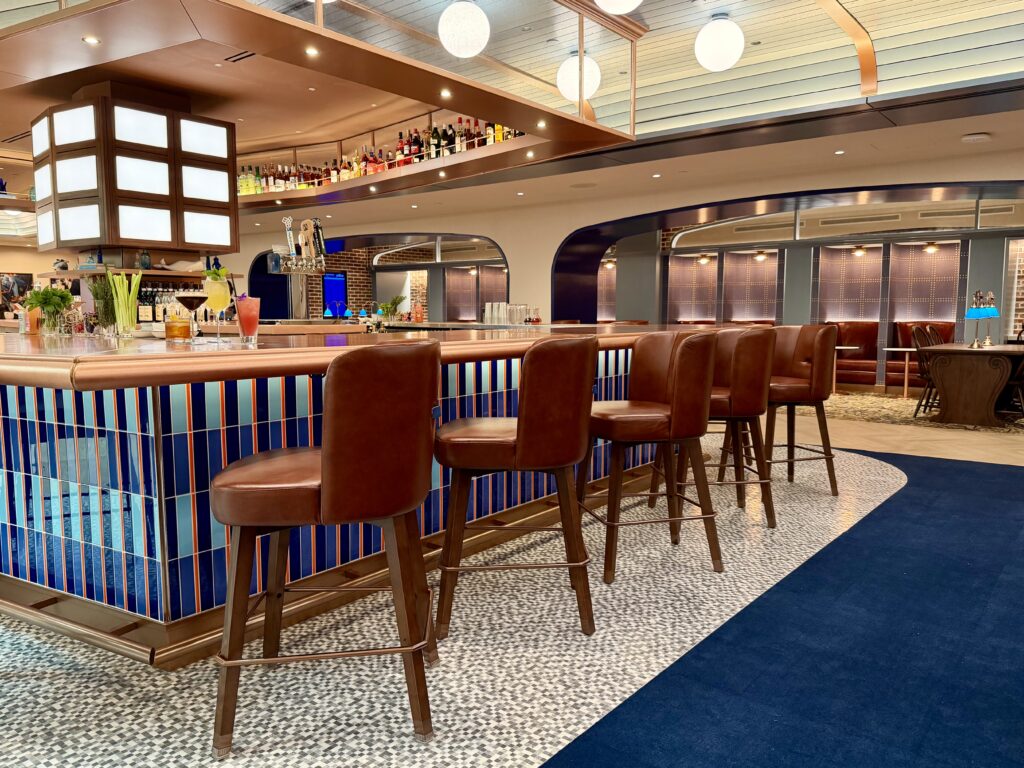
Once inside, everything was exactly where it belonged. The bar was clean, the food display was impressive, and the chairs sat exactly where someone had decided they should sit.
JetBlue employees and executives guided the group around the room, pointing out big and small details while cameras captured a version of BlueHouse Boston that probably won’t exist for very long after it opens Thursday.
That’s one of the stranger parts about previewing an airport lounge.
You can inspect the food, sit in the chairs, count the outlets, and document just about every square inch. What you can’t know is whether the kitchen keeps up when the lounge nears capacity, whether the quiet corners stay quiet, or whether anyone can find somewhere to sit on a busy afternoon.
Calling any of that a review would be a stretch. But a nearly empty lounge says plenty of other things.
For roughly the first 25 years of its existence, JetBlue didn’t have an airport lounge. In the last year, it’s opened two, and standing inside the second one makes it fairly obvious that the most interesting thing about it isn’t simply what JetBlue built in Boston.
It’s why an airline that went so long without lounges decided it could no longer live without them.
A BlueHouse That Doesn’t Look Like the Other BlueHouse
JetBlue’s two BlueHouse lounges don’t have a ton in common.
That’s by design.
Ciara Cordasco, manager of product design at JetBlue and someone who worked on designing both lounges, said the lone thread connecting the two is the color blue.
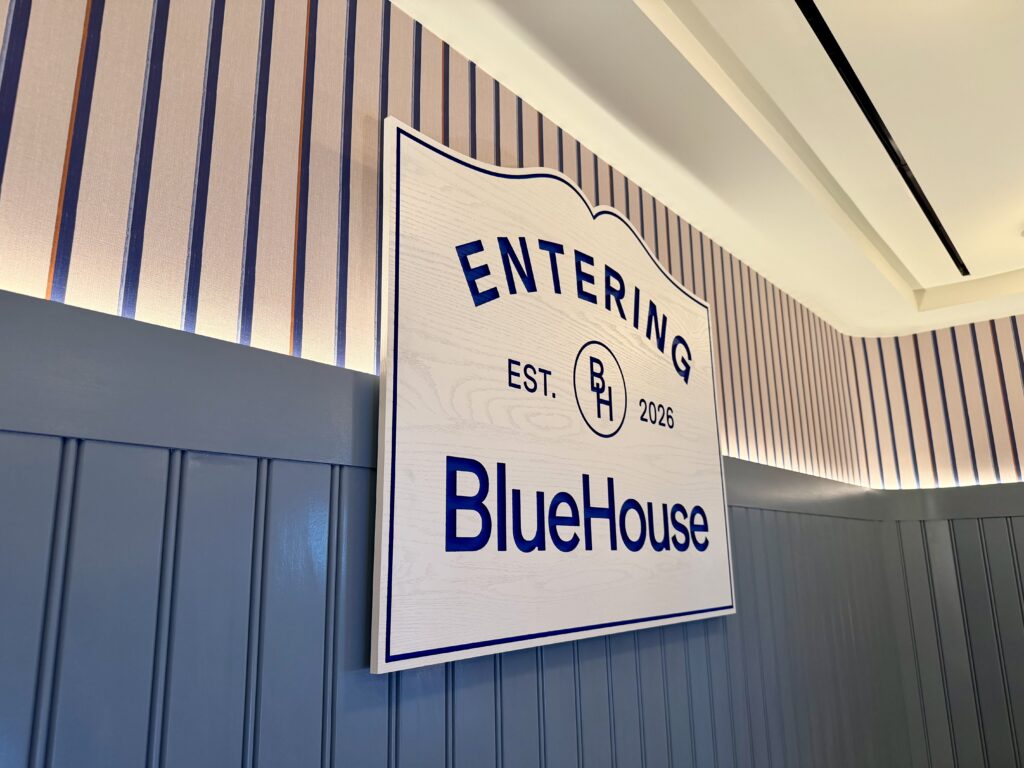
Stephanie Evans Greene, JetBlue’s senior vice president of marketing and brand, described Boston as a “love letter” to the city. JetBlue used the same language when it opened New York, but the idea gave designers plenty of freedom to decide what a love letter to Boston should actually look like.
Some of those interpretations are unmistakable.
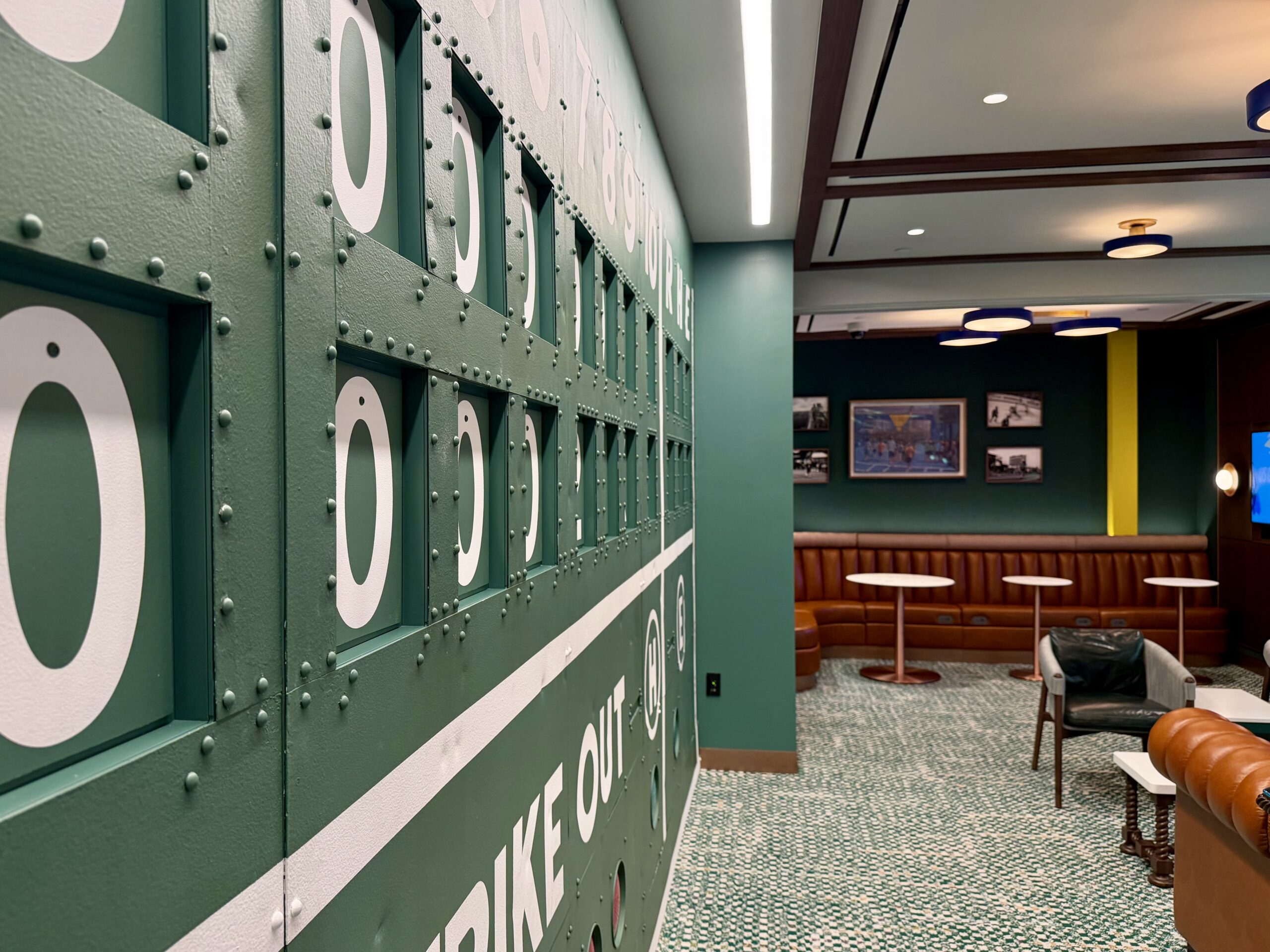
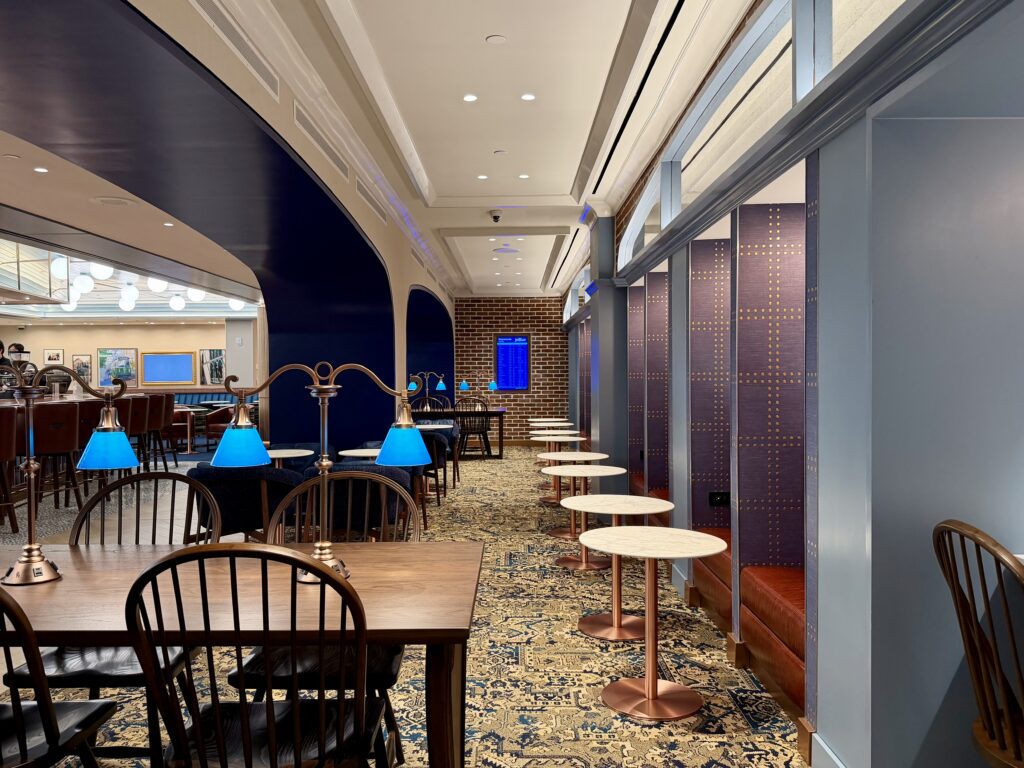
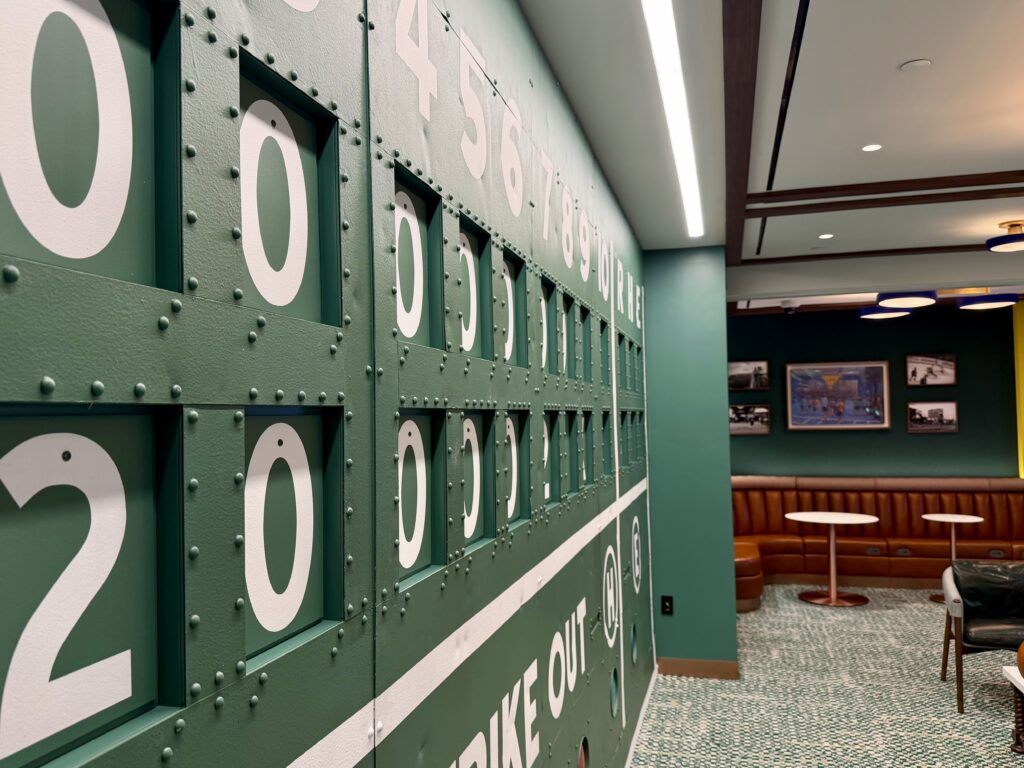
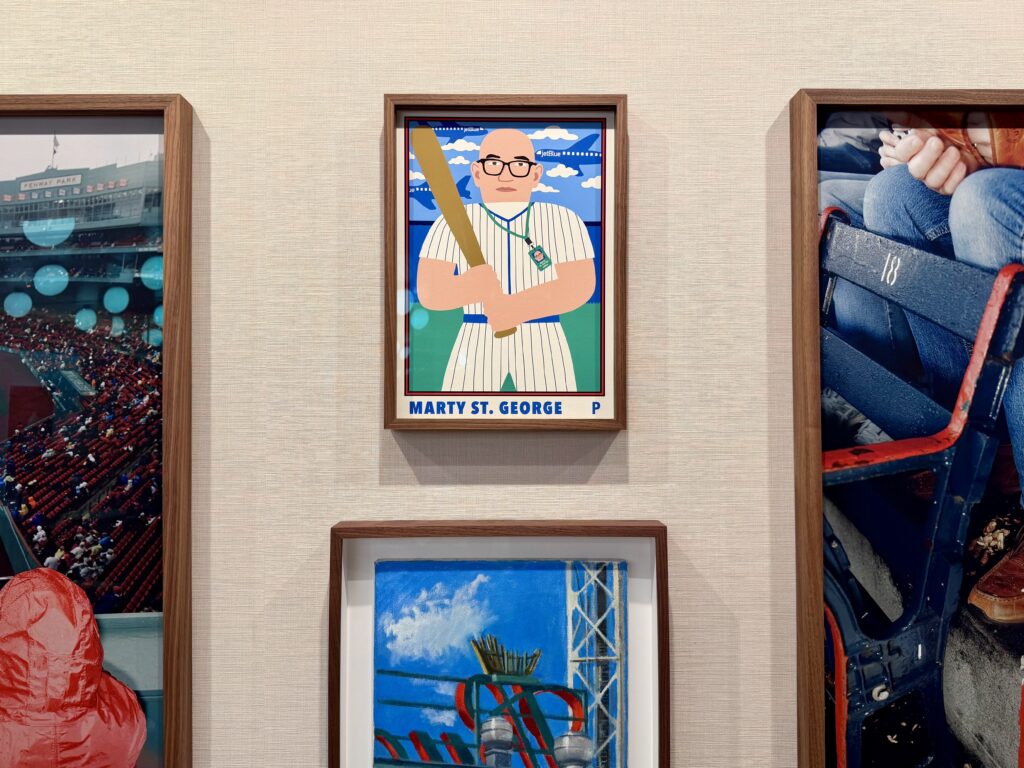
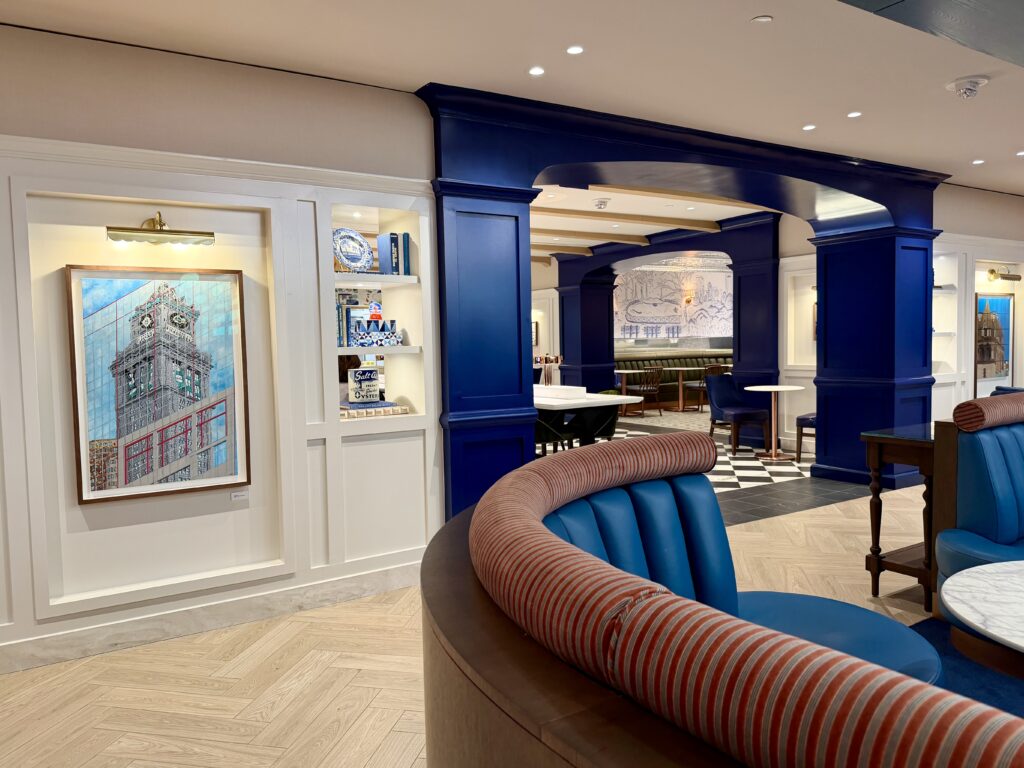
The Dugout borrows from Fenway Park’s Green Monster, baseball dents and all. Tables elsewhere were meant to look like near-replicas of those at the Boston Public Library. Local sports teams contributed memorabilia and photography, and tucked among it all is a trading card featuring JetBlue President Marty St. George, an Easter egg Evans Greene pointed out to me after the formal tour.
Hanging that wasn’t St. George’s idea.
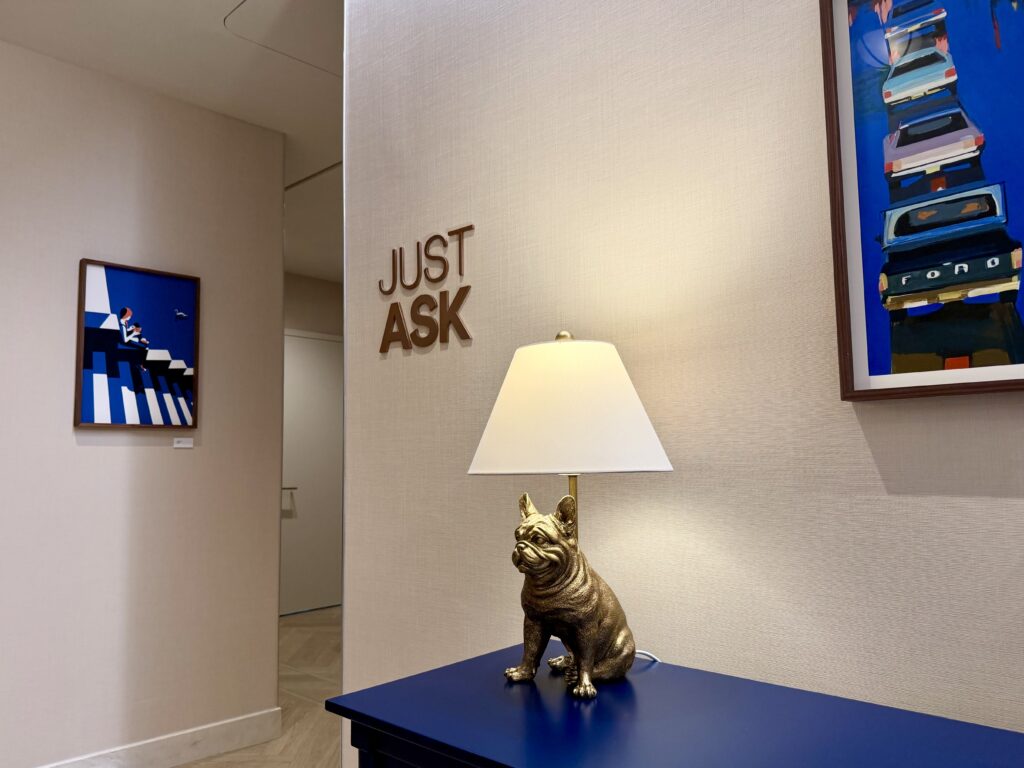
One of my favorite little details is right out front. There’s a peephole near the big blue door, and if you look through it, you’ll find Paul Revere riding an Embraer E190.
I asked Cordasco where that idea came from. At some point during the design process, she said, the question became, “What’s the wildest thing we could do?”
Apparently, this was it.
There’s a reason the Boston references are fairly easy to recognize. At JFK, JetBlue found that some of the artwork left passengers asking a pretty basic question about what, exactly, they were looking at. St. George said they made a point of avoiding that in Boston, and I also learned he had a big hand in deciding what deserved space on the walls.
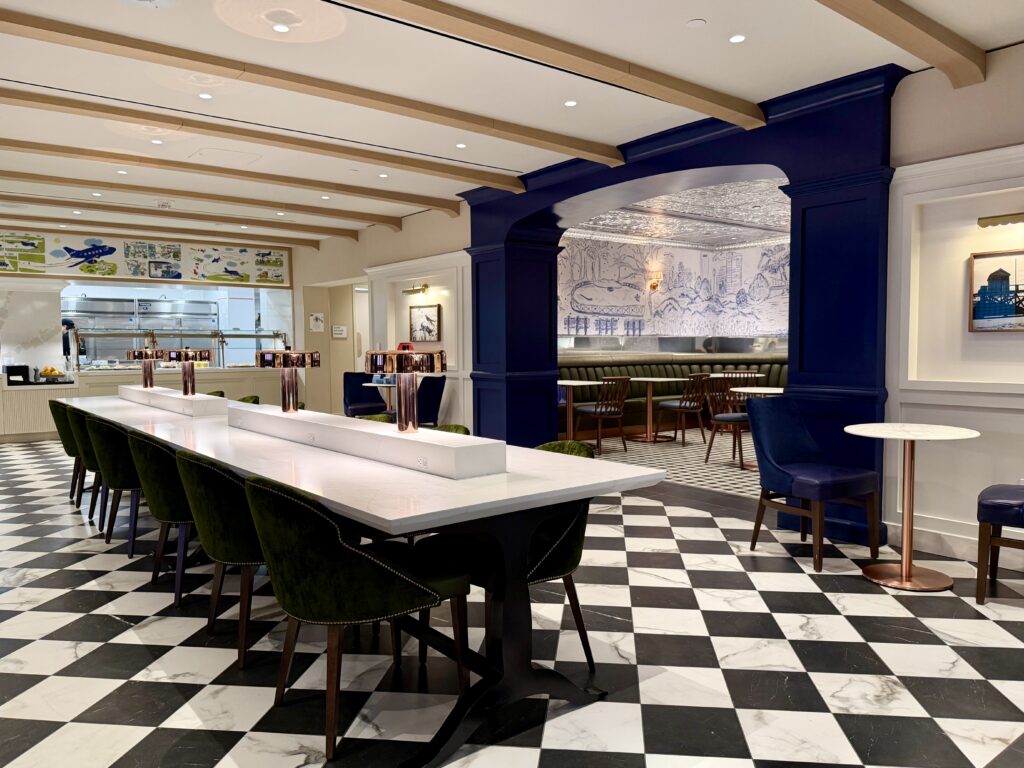
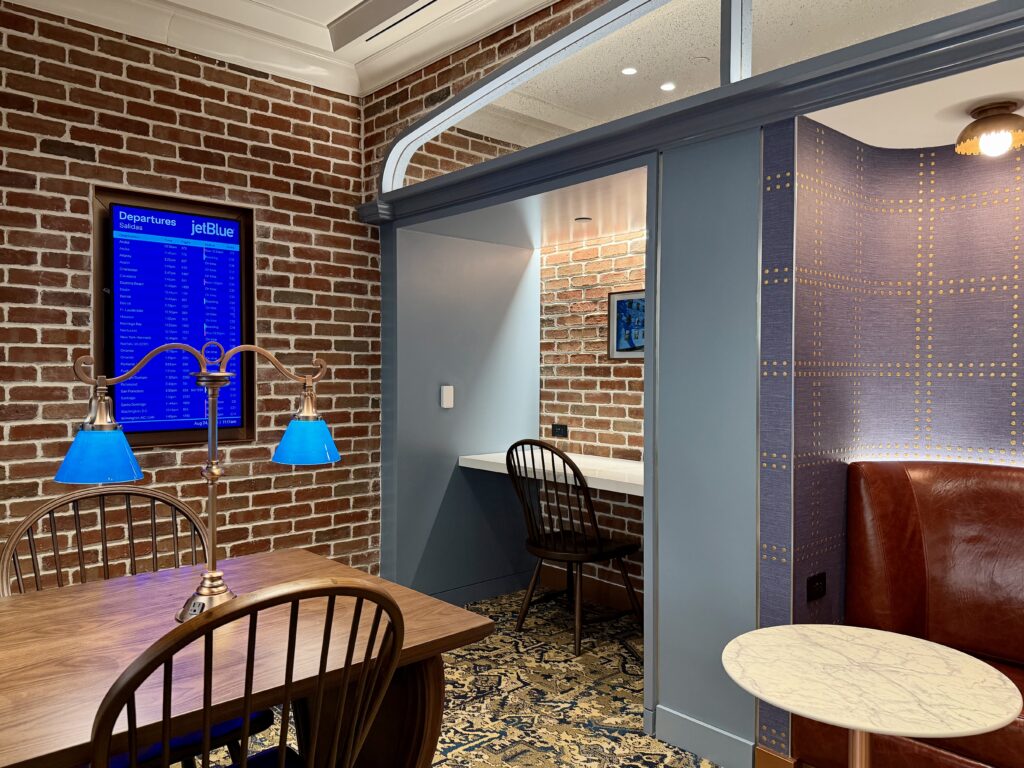
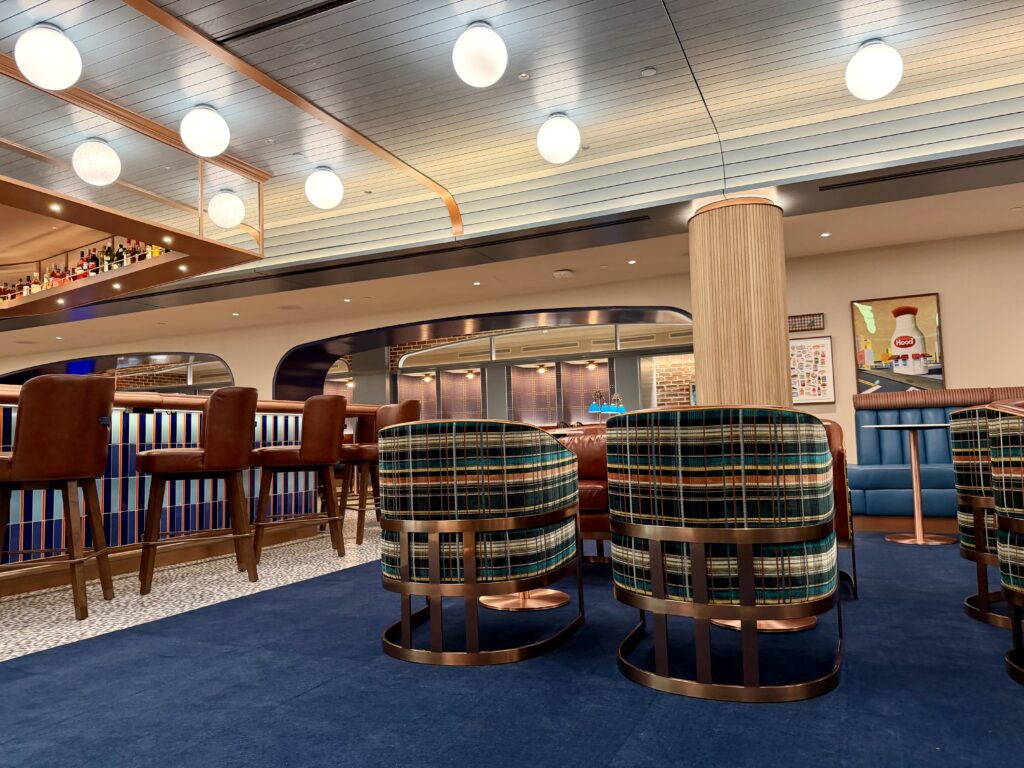
The result feels cozy for a lounge without true windows. Wood and copper finishes run through much of the space, orange accents break up all the blue, and the seating is divided into enough nooks and smaller arrangements that the nearly 12,000-square-foot lounge doesn’t feel like one enormous room
But not every lesson the airline took from New York was about design.
When I asked Ed Pouthier, JetBlue’s vice president of loyalty and personalization, about the airline’s biggest takeaway from operating its first lounge, he didn’t hesitate. It was the food. Others agreed.
JFK doesn’t have a full kitchen yet, and customers haven’t exactly been shy about telling JetBlue what they think about that.
Boston does.
That gives the airline considerably more room to play with the menu. Food will rotate seasonally, lobster rolls are among the local staples, although only in the afternoon, and George Howell Coffee is available both from self-service machines and made to order.
Work on Boston began around the same time as New York, so this isn’t BlueHouse 2.0. This new lounge wasn’t designed after JetBlue had months to figure out everything it liked and didn’t like about JFK.
But by the time Boston opens at 5 a.m. Thursday, the airline has something it didn’t have when either project began.
It knows what happens when passengers start coming through the doors.
The Strange Business of Becoming More Premium
The more interesting change at JetBlue is bigger than what’s being served for lunch near Gate C23.
JetBlue built much of its reputation by making the ordinary flying experience less ordinary. Seatback televisions weren’t exclusively for passengers at the front of the airplane, and neither were snacks people wanted to eat. At its core, the basic proposition wasn’t that JetBlue could make premium travel more luxurious. It was that sitting in economy didn’t have to feel quite so much like sitting in economy.
Airport lounges work a little differently.
By design, not everyone gets through the door. BlueHouse is still primarily a perk for some of JetBlue’s highest-value customers, although the airline is widening the ways other passengers can pay to get inside.
The lounges aren’t happening in isolation, either.
Mint already gives JetBlue a premium cabin on transcontinental and transatlantic routes, along with other markets where the airline has to put its best foot forward. JetBlue now has two BlueHouse lounges and a premium credit card that Pouthier told me continues to outperform expectations. Later this year, the airline also plans to begin rolling out BlueFirst and bring domestic first class to aircraft that have historically offered only variations of economy.
JetBlue could have gone in another direction and spent this chapter doubling down on the economy experience that made the airline unusual in the first place.
Instead, it’s building considerably more above it.
Pouthier put the direction far more plainly than I would’ve expected Monday. JetBlue, he said, is “on the cusp of becoming a premium airline.”
American, Delta, and United have had decades longer to build the premium ecosystems JetBlue is now trying to create. That’s something Pouthier acknowledged. But he sees an opportunity for JetBlue to approach premium differently, including through what he described as “affordable luxury.”
JetBlue also has some interest in doing premium differently. BlueHouse has its quirks, and Pouthier hinted that BlueFirst will come with some JetBlue-like “twists” of its own.
That’s a pretty remarkable change of pace for an airline that didn’t have a lounge or premium credit card at all until last year.
St. George didn’t pretend getting BlueHouse from an idea to an actual lounge had been easy. He described the process as painful at times, but said the result was more than worth it.
JetBlue’s own JetForward plan (the broader strategy it has been using to reshape the airline) makes the connection fairly explicit. Lounges sit alongside domestic first class and the premium card among the product and perk enhancements JetBlue says are intended to improve customer retention and acquisition.
BlueHouse isn’t simply another amenity JetBlue decided it needed to check off a list. It’s one piece of the airline JetBlue is trying to become.
I’ve been fortunate enough to see a lot of airport lounges, both at media previews like this one and the decidedly less pristine way most people experience them as passengers. A fancy bar, expensive coffee, handcrafted cocktails, comfortable furniture, and a few references to the city outside increasingly feel like the price of admission in a newly built or remodeled lounge.
JetBlue has all of those things in Boston, which is why some of the details that serve absolutely no practical purpose are more interesting to me.
Nobody needed to put Paul Revere on an E190.
It doesn’t make the lounge more functional, and nobody is going to book a JetBlue flight because they can peer through a hole in the wall and see it. Someone internally simply asked what the wildest thing they could do was and got permission to do it.
That’s pretty cool.
But when I asked Evans Greene what she thought made the lounge particularly JetBlue in ways travelers might overlook, she credited something that isn’t part of the design at all.
The people working in it.
Evans Greene said JetBlue has been particularly deliberate about selecting the crew members who work in BlueHouse because the interactions travelers have once they’re inside can be among the most memorable parts of the experience. The bar, furniture, and artwork create a sense of place, but the people ultimately have a lot to do with whether it feels like the airline whose branding is on the door.
That’s harder to photograph than a lounge-sized replica of the Green Monster.
When the Lounge Stops Looking Like This
For now, BlueHouse Boston is still pristine. JetBlue spent roughly a year and a half transforming what had been an airport food court into a lounge capable of holding 200 people.
On Thursday, it gets turned over to the passengers.
They’ll move the chairs, probably spill a coffee or two, and quickly figure out which seats everyone wants and which ones they don’t. The kitchen will get tested in a way a room full of media members never could. Some people will notice the tiny Dunkin’ figurine tucked away inside and some won’t. Someone will almost certainly read the message hidden in the mail slot on the front door and head straight for the candy closet.
Pouthier has told me on more than one occasion that there’s one thing he particularly doesn’t want to see at a JetBlue lounge, and that’s a line. Modern air travel already gives travelers enough reasons to be stressed, and his view is that getting into a lounge, and the experience once you’re inside, shouldn’t become another one.
Whether BlueHouse can deliver on that is something Monday morning couldn’t explain. That starts Thursday, when the cameras are gone and JetBlue no longer gets to call the shots on where every chair or coffee cup belongs.
The interesting part isn’t whether JetBlue can build a nice lounge. Boston is proof that JFK wasn’t a fluke.
Now JetBlue gets to find out whether it can become a more premium airline without losing the things that made it JetBlue in the first place.