Category: Perspective

Original commentary, editor’s letters, interviews, analysis, data-driven features, and opinion pieces that provide context beyond the day’s news.

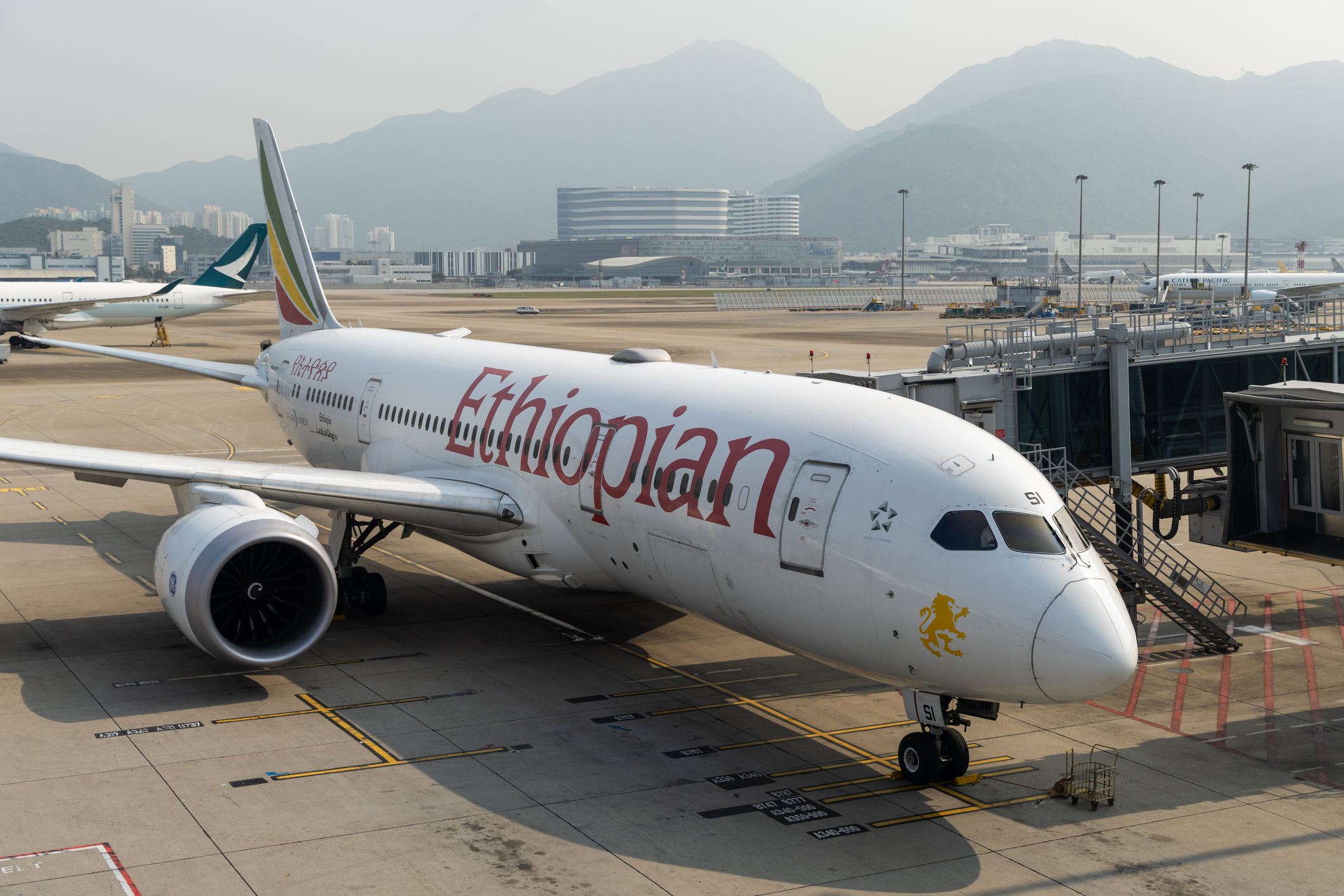
  • Is Ethiopian Airlines’ ShebaMiles the Next Mover in Points and Miles?

    Is Ethiopian Airlines’ ShebaMiles the Next Mover in Points and Miles?

    When U.S. Bank launched points transfers to airline partners less than a month ago, one addition caught my eye: Ethiopian Airlines ShebaMiles.

    It got me wondering whether ShebaMiles could be the next non-U.S. airline program to make a bigger push into the U.S. points and miles market, following programs such as Avios, Aeroplan, LifeMiles, Flying Blue, Virgin Atlantic Flying Club, and Japan Airlines Mileage Bank.

    Airline points and miles are a multibillion-dollar business and a reliable cash cow for carriers. Airlines sell billions of dollars’ worth of miles to banks and other partners every year, and during COVID, several pledged their loyalty programs as collateral to raise billions in cash. More recently, Air Canada sold a 25% stake in Aeroplan for C$2.5 billion.

    The U.S. is by far the largest miles market globally, followed distantly by Brazil. Given how profitable selling miles can be, more and more non-U.S. airlines want a piece of that cash flow.

    Domestically, the U.S. “Big Three” each pursue their own strategy, backed by a physical presence across the entire country. Foreign airlines, by contrast, have a much smaller footprint in the U.S., so they lean on miles sales and bank partnerships to generate cash and attract members from the world’s largest points and miles market.

    Origins of the Non-U.S. Airline Playbook

    The strategy was pioneered by British Airways Avios, under International Airlines Group (IAG), and later refined by LifeMiles after its parent airline, Avianca, joined Star Alliance in 2012. The formula included:

    • Buy-miles promotions
    • Bank transfer partnerships and promotions
    • Intentionally curated redemption “sweet spots” to generate word-of-mouth buzz, particularly for partner redemptions
    • Change, cancellation, and partner-redemption fees as additional revenue streams

    Other non-U.S. and regional carriers later adopted a similar model to attract members outside their home markets. Air France-KLM’s Flying Blue and Air Canada’s Aeroplan are chief among them, particularly because the U.S. market dwarfs their home markets in size.

    Ethiopian Airlines A350s at ADD airport.
    MTCURADO / ISTOCK

    COVID as a Turning Point

    When COVID hit, people stopped traveling and airlines across the industry were suffering. Several major airlines turned to their loyalty programs as collateral to raise billions in cash, making the value of these businesses impossible to ignore.

    Virgin Atlantic Flying Club is a prime example of how programs have evolved since then. In just a few years, it transformed from a currency centered largely around Virgin Atlantic flights into one of the more prominent programs in the space by expanding bank transfer partnerships, joining SkyTeam, launching online partner redemptions, and shifting to dynamic pricing on its own flights and select partners.

    As a side note, Alaska Airlines’ Atmos Rewards program took a slightly different path. Still U.S.-based and historically regional, it broadened the program’s appeal by pairing a highly competitive elite program on the West Coast with a unique co-brand credit card, a broad range of airline partners, and other benefits that extend beyond Alaska’s traditional footprint.

    The Next Movers

    More recently, the spotlight has shifted to Japan Airlines Mileage Bank, which has added partnerships with Bilt, Capital One, and most recently Citi.

    Now, it may be Ethiopian Airlines ShebaMiles’ turn. The program has already checked several boxes:

    1. Star Alliance membership
    2. A website supporting partner redemptions
    3. Buy-miles promotions
    4. Its first U.S. bank partnership

    If ShebaMiles continues following the playbook used by programs such as Avios, LifeMiles, Aeroplan, Flying Blue, Flying Club, and JAL Mileage Bank over the past 15 years, I think there are several likely next moves:

    • Creating/Maintaining a few redemption sweet spots to generate buzz, potentially while continuing to use an award chart for the time being
    • Adding more bank partners with attractive pricing for those partners, potentially below 130 basis points per mile
    • Launching bank transfer promotions
    • Introducing multi-tier and eventually dynamic redemptions on Ethiopian’s own flights, with some inventory reserved exclusively for ShebaMiles members rather than relying on the current single-tier, inventory-based system
    • Improving customer service and adding online changes, or at least cancellations, paired with change and cancellation fees
    • Adjusting fees over time as members become more familiar with the program

    Africa has also become an increasingly popular destination in recent years. I’ve personally visited the continent six times over the past 15 years and traveled through about half of it.

    There are very few places Ethiopian Airlines doesn’t fly across Africa today, apart from some North and Southern African markets served by partners such as EgyptAir and Airlink. That’s the result of a network Ethiopian began building years ago.

    Lion at Fathala Wildlife Reserve.
    Fathala Wildlife Reserve. TROY LIU / POINTS INSIDER

    Sure, United MileagePlus, Air Canada Aeroplan, and Turkish Miles&Smiles can already be used to book Ethiopian flights, but those programs only have access to the award inventory Ethiopian makes available to partners.

    If ShebaMiles eventually introduces multi-tier redemptions on Ethiopian’s own flights, with additional inventory reserved exclusively for its own members, that could become a real competitive advantage.

    U.S. customers would have another option when choosing a miles program, and I’ve never been more bullish on the future of this industry as more banks and programs enter the market.

    And with ShebaMiles becoming more relevant in the U.S., we’ve added the program to PointsYeah Live Search, making it possible to search ShebaMiles award availability alongside other supported programs.
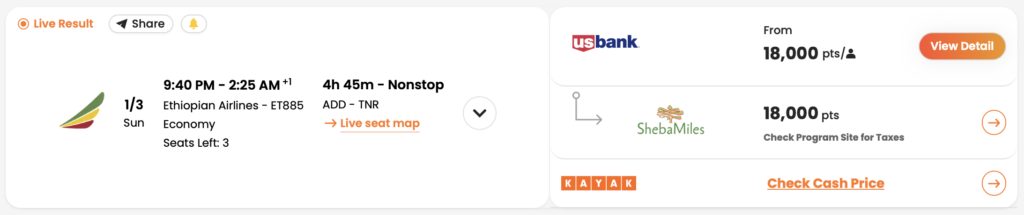

    Ethiopian award from ADD to TNR as seen through PointsYeah.
    POINTSYEAH
  • Where Everyone Wanted to Go Abroad This Summer, According to PointsYeah Search Data

    Where Everyone Wanted to Go Abroad This Summer, According to PointsYeah Search Data

    If you want to know where people traveled this summer, those numbers aren’t particularly hard to find.

    Airlines know how many passengers they carried. Hotels know how many rooms they filled. Tourism boards spend plenty of time counting visitors.

    All of those numbers tell us where people went. Award searches tell us something different. They show where people were thinking about going next.

    PointsYeah analyzed millions of award searches made between June 1 and August 15, 2026, to see which international routes travelers searched most often. Not every search turns into a trip, of course. But in the aggregate, they offer a fascinating snapshot of what travelers had on their minds this summer.

    And routes to one part of the world appeared far more often than anywhere else.

    Where Travelers Were Searching Abroad This Summer

    Here are the 20 international routes that appeared most often in award searches made through PointsYeah this summer.

    One thing to keep in mind is that each direction is counted separately. Someone searching Seoul (ICN) to Los Angeles (LAX), for example, may be looking for the return flight of a trip that started in Los Angeles.

    RankingRoute
    1Los Angeles (LAX) → Tokyo (TYO)
    2New York City (NYC) → Tel Aviv (TLV)
    3San Francisco (SFO) → Tokyo (TYO)
    4New York City (NYC) → Tokyo (TYO)
    5Seattle (SEA) → Tokyo (TYO)
    6San Francisco (SFO) → Taipei (TPE)
    7Los Angeles (LAX) → Taipei (TPE)
    8Chicago (ORD) → Tokyo (TYO)
    9London (LON) → New York City (NYC)
    10Seoul (ICN) → Los Angeles (LAX)
    11Athens (ATH) → New York City (NYC)
    12Hong Kong (HKG) → San Francisco (SFO)
    13Hong Kong (HKG) → Los Angeles (LAX)
    14Seattle (SEA) → Taipei (TPE)
    15New York City (NYC) → Taipei (TPE)
    16Seoul (ICN) → San Francisco (SFO)
    17Seoul (ICN) → Seattle (SEA)
    18Hong Kong (HKG) → New York City (NYC)
    19Delhi (DEL) → San Francisco (SFO)
    20Paris (CDG) → Los Angeles (LAX)

    It doesn’t take much studying to spot the pattern.

    Tokyo Is Extremely Popular

    Tokyo appears five times in the top 20 most-searched international routes, more than any other destination.

    The searches came from across the U.S.: Los Angeles (LAX), San Francisco (SFO), New York City (NYC), Seattle (SEA), and Chicago (ORD).

    Different starting points, same destination.

    Japan’s popularity isn’t exactly a new phenomenon. International visitors have returned in enormous numbers in recent years. For Americans, increased airline capacity across the Pacific has also made the country easier to reach from more cities.

    Then there are the reasons that don’t fit neatly into an airline schedule. The favorable exchange rate. The food. The rail network. The mix of enormous cities, smaller towns, culture, and nature that makes it relatively easy to build several very different trips around one country.

    For some, Japan has also become less of a once-in-a-lifetime destination and more of a place worth returning to.

    And the search patterns suggest plenty are still trying to get there.

    Crowds pass below colorful signs in Akihabara. The well known electronics district specializes in the sales of video games, anime, manga, and computer goods.
    SEANPAVONEPHOTO / ISTOCK

    Japan Was Only Part of the Story

    Fourteen of the 20 most-searched international routes connected North America with destinations in Asia.

    Taipei appears four times. Seoul and Hong Kong each appear three times. Delhi makes the list as well. Just beyond the top 20 were searches involving Bangkok, Singapore, Ho Chi Minh City, and other destinations throughout the region.

    That’s a much bigger story than Japan alone.

    There isn’t one clear-cut type of trip tying those places together, either. Some are enormous business and aviation hubs. Some draw travelers for food and history. Others have become popular jumping-off points for exploring elsewhere in the region.

    What stands out is how often the same Asian destinations appear from different North American cities.

    Modern office buildings in Taipei, Taiwan at dusk.
    SEANPAVONEPHOTO / ISTOCK

    Europe Is More Complicated

    Only three European cities appear among the top 20 routes, with London, Athens, and Paris making the list. But that doesn’t necessarily mean travelers were less interested in Europe.

    North America has far more nonstop routes to Europe than it does across the Pacific. That spreads searches for Europe across more city pairs, while searches for Asia are more likely to pile up on a smaller number of major routes.

    So the regional comparison isn’t quite as simple as the top 20 makes it look. What is clear is that individual routes to Asia, particularly Japan, repeatedly rose to the top.

    Then there’s the route sitting at No. 2.

    New York City (NYC) to Tel Aviv (TLV) ranks behind only Los Angeles (LAX) to Tokyo, placing it ahead of every other route involving Tokyo, Taipei, Seoul, Hong Kong, or Europe.

    It’s the most notable outlier in the top 20.

    Searches Capture the Trip Before the Trip

    Award searches aren’t bookings.

    Someone can search Tokyo today, Paris tomorrow, and Bangkok the day after that. The award seats they find might disappear. Their dates might change. They may decide the trip is too expensive or get cold feet and go somewhere else.

    But that uncertainty is also what makes the data interesting.

    Passenger statistics capture travelers after they’ve made their decisions. Search data catches them earlier, while they’re still considering all the possibilities.

    For this stretch of summer, individual routes to Asia dominated the top of the list, with Japan standing out most. The rankings don’t tell us that Asia was more popular than Europe overall, but they do show where searches were most concentrated.

    Eventually, that’ll change.

    Holiday travel will replace summer vacations. Ski destinations will start appearing more frequently. Before long, travelers will be searching for spring break and summer 2027. And we’ll soon get another look at where everyone wants to go next.

    ANA Aircraft taxiing on the runway of Haneda International Airport with Fuji Mountain Background, Tokyo
    DOCTOREGG / ISTOCK

    Where to Next?

    If there’s one practical takeaway from the rankings, it’s that plenty of other travelers may be looking for the same trip you are.

    Award availability can change quickly, particularly around busy travel periods. Searching earlier gives you more time to compare dates, airports, and programs before committing to a trip.

    And if a destination on this list has you thinking about somewhere new, that’s probably reason enough to take a look.

    {{ search-widget mode=”flight-hotel” }}